Mar 18, 2013 | Advocacy, Events
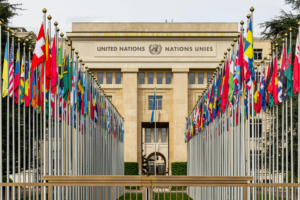
The ICJ’s Director of the International Law & Protection Programmes today addressed an international conference on strengthening cooperation in preventing terrorism, held in Baku, Azerbaijan.
In a session focussed on measures to address the conditions conducive to the spread of terrorism, Alex Conte emphasised that it is only by avoiding the creation or maintenance of conditions conducive to the spread of terrorism – including human rights violations and lack of the rule of law – that a sustainable international effort can be achieved to combat terrorism.
Identifying numerous negative trends in the national implementation of counter-terrorism obligations, Dr Conte made concrete proposals towards international cooperation aimed at ensuring that national law and practice complies with human rights and the rule of law.
ICJ-BakuConference-Statement-2013 (download full statement in PDF)

Mar 18, 2013
The ICJ today called on the Human Rights Council to take all effective measures at its disposal to halt the Israeli policy on the construction, expansion and encouragement of settlements in the occupied Palestinian territory.
Noting that the policy is in violation of obligations under international law, the ICJ’s statement was delivered in the General Debate under Item 7 of the Human Rights Council’s agenda (human rights situation in Palestine and other occupied Arab territories) during the Council’s 22nd regular session (25 February to 22 March 2013).
Israel-oPt-HRC22-Item7GD-IsraeliSettlements-NonLegalSubmission-2013 (download full statement in PDF)

Mar 18, 2013 | News
The ICJ strongly condemns today’s suicide attack on the Peshawar court complex in Pakistan.
“An independent judiciary, free from violence, threats of violence or intimidation is a basic precondition to a functioning democracy under the rule of law,” said Alex Conte, Director of ICJ’s International Law and Protection Programmes.
“The suicide attack drives home the failure of the Pakistani government to fulfill its obligation to protect the right to personal security of the millions of people living in northwest Pakistan who have to face the daily threat of suicide bombings or unlawful killings,” said Sam Zarifi, ICJ’s Asia & Pacific Regional Director.
Under the United Nations Basic Principles on the Independence of Judges, the State must take steps to protect the judiciary from threats, violence or any other interference from any quarter for any reason.
Under international law, notably the International Covenant on Civil and Political Rights, Pakistan must take active steps to ensure the safety of all persons within its territories.
Under the Beijing Statement of Principles on the Independence of the Judiciary in the LAWASIA Region, the executive authorities must at all times ensure the security and physical protection of judges and their families.
“Insurgent groups in northwest Pakistan have a long record of human rights abuses, including the use of suicide bombers to commit unlawful killings,” Zarifi added. “If this bombing was perpetrated by militants as part of a widespread or systematic attack against civilians, it constitutes a crime against humanity and must be treated as such.”
Earlier today, two suicide bombers detonated heavy explosives inside a Peshawar courthouse killing four people and injuring thirty others, including lawyers, police officers and civilians.
One of the bombers detonated the explosives in the courtroom of Judge Kulsoom Nawaz.
The Peshawar courthouse complex was attacked in November 2009, killing 19 people.
CONTACTS:
Laurens Hueting, ICJ Associate Legal Adviser, Centre for the Independence of Judges and Lawyers (Geneva), t: +41 229793848, email: laurens.hueting(a)icj.org
Sam Zarifi, ICJ Asia-Pacific Regional Director, (Bangkok); t:+66 807819002; email: sam.zarifi(a)icj.org
Sheila Varadan, ICJ Legal Advisor, South Asia Programme (Bangkok), t: +66 857200723; email: sheila.varadan(a)icj.org
Mar 18, 2013 | Advocacy, Cases, Legal submissions
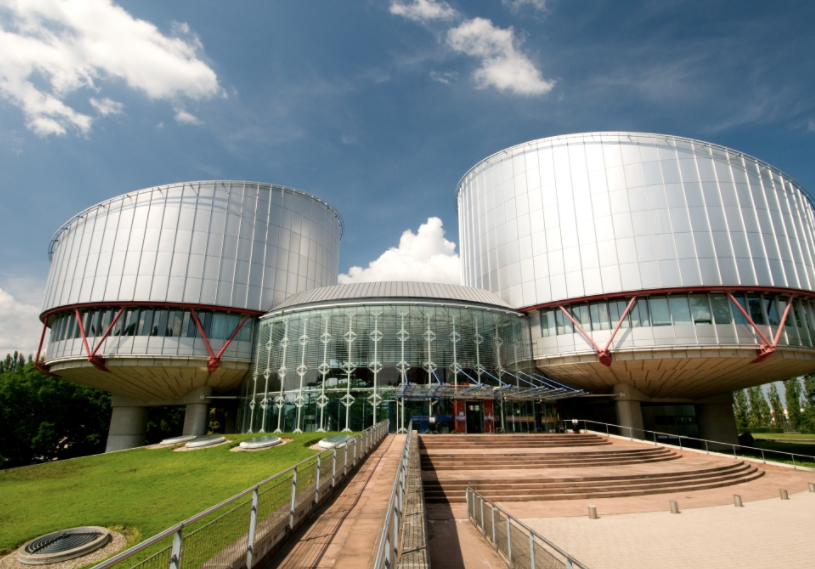
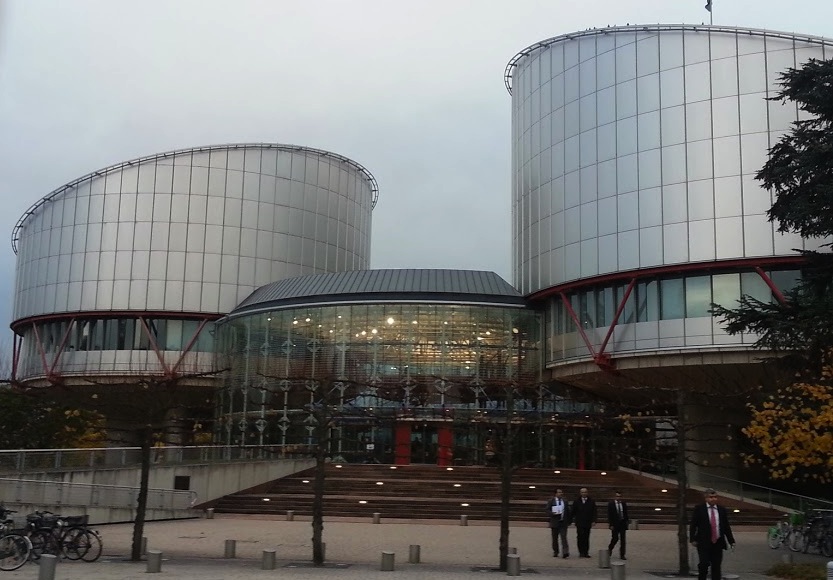 The ICJ and Amnesty International presented a third party intervention in the case Al Nashiri v Romania before the European Court of Human Rights.
In the third party intervention, the ICJ and AI outlined developments on the prohibition of arbitrary deprivation of liberty as a rule of customary international law; on the knowledge imputable to Contracting Parties at relevant times; on the duty to investigate credible allegations of human rights violations and the right to truth; and on the evidential approach to enforced disappearances.
AlNashiri_v_Romania-ICJAIJointSubmission-ECtHR-final (download the third party intervention

Mar 15, 2013 | Advocacy, Non-legal submissions
The ICJ today called on the Government of Sri Lanka to reconsider its rejection of key UPR recommendations on accountability and judicial independence and integrity.
In an Interactive Dialogue to consider the adoption of the outcome document on the Universal Periodic Review of Sri Lanka, the ICJ pointed to the urgent need for the Government to fully implement its legal obligations and commitment to initiate credible and independent actions to ensure justice, equity, accountability and reconciliation. Also pointing to the impeachment of the Chief Justice of Sri Lanka and attacks against the judiciary, the ICJ urged the Government to accept recommendations to strengthen and ensure judicial independence and the integrity of the judiciary.
The statement was made during the Human Rights Council’s 22nd regular session (25 February to 22 March 2013) under Item 6 (Universal Periodic Review), following the review of Sri Lanka in by the Council’s Working Group on the UPR.
SriLanka-HRC22-Item6-UPRSriLanka-NonLegalSubmission-2013 (download full statement in PDF)
SriLanka-UPR-StakeholderSubmission-LegalSubmission-2012 (go to webpage on the ICJ’s submission on the UPR of Sri Lanka)