Feb 25, 2013
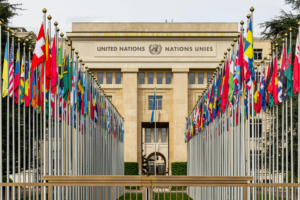
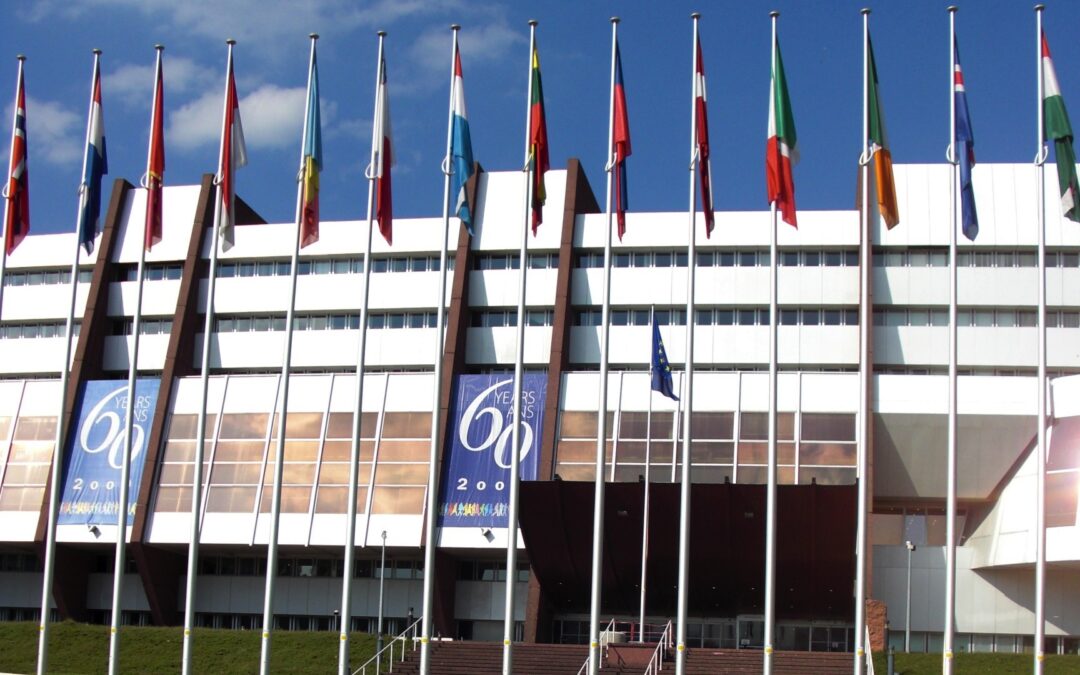
 The ICJ and ECRE presented a second joint detailed submission on the situation of detention, application procedures and remedies for asylum seekers in Greece to the Committee of Ministers of the Council of Europe.
The submission was presented in occasion of a meeting of the Committee of Ministers of the Council of Europe on the implementation by Greece of the European Court of Human Rights’ judgment in the case of M.S.S. v Belgium and Greece. The submission highlighted legal and practical shortcomings in the Greek system on detention of asylum seekers, conditions of detention, judicial review and access to an effective remedy, living conditions of asylum seekers, access to information and non-refoulement.
Greece-ICJECRE-MSS-CommitteeMinisters-2ndsubmission-legal submission-2013 (download the submission)
Photo credit: © notfrancois (the author has no involvement in nor does support this submission)
Feb 25, 2013 | Advocacy, Cases, Legal submissions
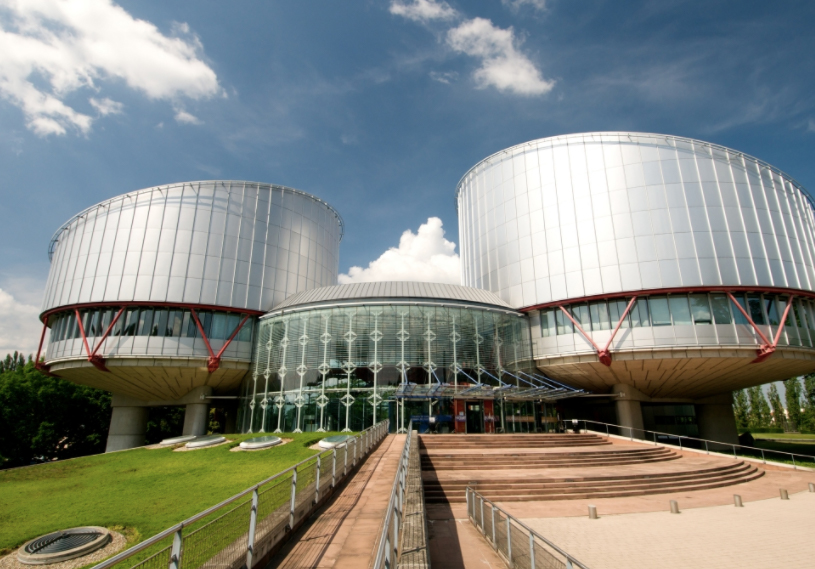
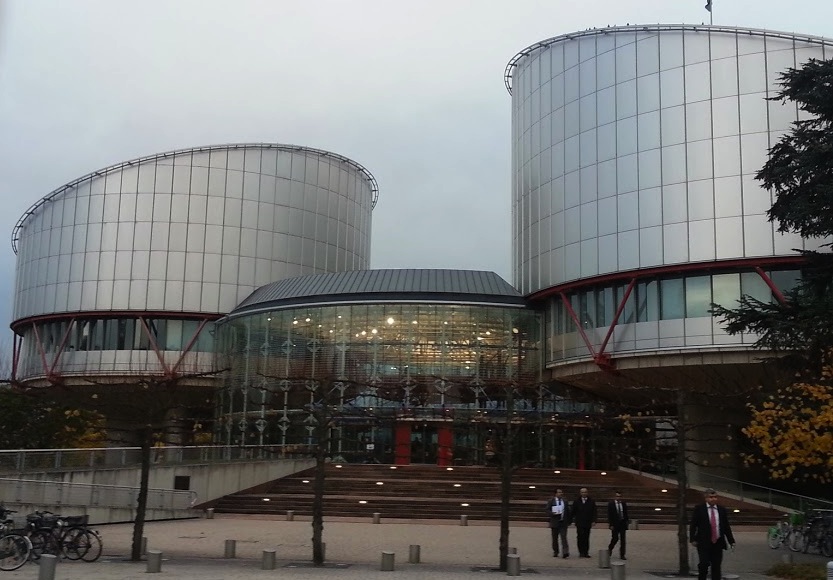 The ICJ and Amnesty International presented additional observations in the case Al Nashiri v Poland before the European Court of Human Rights.
In their supplementary third party intervention, the ICJ and AI outlined developments in light of the case El-Masri v the Former Yugoslav Republic of Macedonia on enforced disappearances, on diplomatic representations in light of the Grand Chamber’s findings on responsibility for violations outside the jurisdiction, on the gross human rights violations that detainees previously held in the USA’s secret detention and rendition programme are currently enduring, and on relevance of the Grand Chamber’s observations in El-Masri in relation to any potential resort to ex parte materials and procedures.
Poland-ICJAI-SupplAmicusBrief-AlNashiri v Poland-legal submission-2013 (download the third party intervention)

Feb 21, 2013
 Reform of the Moldovan judicial system needs further commitment from parliament, government, the judiciary and judicial bodies, if recent legislative measures are to bring real change, according to a new report.
The report Reforming the Judiciary in Moldova: Prospects and Challenges, launched today by the International Commission of Jurists (ICJ) and the Soros Foundation-Moldova (SFM), follows an ICJ mission to this country in September 2012 and analyses the recent progress made in reform of the Moldovan judicial system.
Today’s report welcomes many of the comprehensive legislative reform that have been enacted in the past year, but warns that further measures are needed to build a strong and independent judiciary, in practice as well as in law, and to ensure that effective mechanisms of judicial accountability are applied fairly and are compatible with judicial independence.
“Judges are responsible for one of the most important functions in any society – the fair and effective administration of justice. The priority that is being given in Moldova to judicial reform is therefore welcome,” said Róisín Pillay, Director of the ICJ Europe Programme. “A strong and independent judiciary is essential to ensure that everyone can be confident of a fair hearing when they come before the Courts, and of an effective remedy when their rights have been violated.”
“Judicial independence goes hand in hand with judicial accountability – judges are not above the law. But the reforms must always ensure that there are effective safeguards against any improper interference so that judges can adjudicate impartially without fear of victimization,” Pillay added.
“The Soros Foundation-Moldova is particularly concerned with the lack of equal attention to accountability, independence and transparency of the judiciary. We are confident that this could not be achieved unless every judgment is properly reasoned,” said Victor Munteanu, Justice Program Director at SFM.
The report calls the current reforms the most ambitious undertaking in decades, but warns against poor implementation of good laws and initiatives.
Among other measures, the report recommends reconsideration of the necessity of the initial five-year appointment period for newly appointed judges and modification of the system of security checks on judges.
It also stresses that any periodic evaluation of judges must not lead to the dismissal of judges before they have been given an adequate opportunity to redress any failings, and must not serve as a back door for dismissing judges.
In addition, the report emphasizes the need to raise judicial salaries as a matter of priority, and supports enhanced judicial training, in particular on human rights law.
In parallel with raising judicial salaries, consideration must be given to the current laws on early retirement of judges and the system of receiving salaries and pensions in parallel.
It further underlines the importance of reasoned judgments in ensuring a fair hearing and expresses serious concerns at the recent amendment to the Civil Procedure Code, which removes the requirement for first instance judges to give reasons for decisions in civil cases.
The ICJ recommends that the impact of this amendment should be monitored, and consideration should be given to repealing it, should it be shown to give rise to any barriers to access to justice.
Regarding accountability measures, the report finds that the removal of the requirement for the Superior Council of Magistracy’s authorization for prosecution of a judge, in regard to crimes of judicial corruption, may help to re-establish the credibility of the judiciary.
However, given the concerns as to the potential abuse, any prosecutions of judges on corruption charges under the new legal provisions, must be carefully monitored and scrutinized.
Clear and detailed procedures for disciplinary action, including for hearings before the Disciplinary Board as well as the Superior Council of Magistracy, should be developed, to ensure the greatest possible consistency and predictability in the application of disciplinary measures, the report says.
The ICJ also expresses concern at the presence of the Minister of Justice and the Prosecutor General on the Superior Council of Magistracy, and in particular their resulting power to initiate disciplinary proceedings, and recommend their removal as ex officio members.
The report was developed within the “Improving the observance of the Right to Liberty and Security of Person in Moldova” project, implemented by Justice Program of the SFM in partnership with the Superior Council of Magistracy and the Supreme Court of Justice.
The project advocates for the development of coherent and sustainable accountability mechanisms for judges.
Contacts:
Róisín Pillay, Director, ICJ Europe Programme, m +41 79 742 7128; e-mail: roisin.pillay(at)icj.org
Victor Munteanu, Director, SFM Justice Program, m + 373 22 27 00 31; e-mail: vmunteanu(at)soros.md
Moldova-ICJ-SFM Report judicial reforms-publication-2013-ENG-ROM (full text in pdf)
Moldova-Report judicial reforms-press release-2013 (full text in pdf)
Moldova-Report judicial reforms-press release-2013-ROM (full text in pdf)

Feb 19, 2013
In two recent submissions to the Committee on the Elimination of Discrimination against Women (CEDAW), the ICJ called on CEDAW to address key barriers to justice faced by women.
The submissions came as the Committee embarks on drafting a General Recommendation on women’s access to justice.
In a joint submission, the ICJ and Friedrich-Ebert-Stiftung (FES) have called on the Committee on the Elimination of Discrimination against Women (CEDAW) to reaffirm obligations on States to effectively regulate the activities of business actors in order to ensure women’s access to justice.
The submission focuses on the issue of women’s access to justice for infringements of rights committed by non-State actors, and more specifically in the context of business activities and operations.
It makes recommendations on how States might more effectively regulate business activities so as to ensure women’s protection against discrimination and inequality and access to effective and accessible remedies when they face abuses.
In a standalone submission, the ICJ presented an overview of key barriers women face across jurisdictions when seeking justice. This submission draws on findings from ICJ in-country initiatives exploring barriers to justice faced by women.
The first general discussion on the General Recommendation took place during the CEDAW’s 54th session in Geneva on 18 February 2013.
CEDAW-Submission-A2J-BHR-LegalSubmission-2013 (download joint submission by ICJ and FES)
CEDAW-Submission-Women’sA2JNormativeObstacles-LegalSubmission-2013 (download ICJ submission)