Feb 19, 2013 | News
The European Court of Human Rights today ruled that an Austrian ban on same-sex second-parent adoption is discriminatory.
The European Court of Human Rights delivered its judgment in the case of X and Others v. Austria and ruled that Austria’s Civil Code discriminates against a partner in a same-sex relationship by making it legally impossible to adopt the biological child of the other partner while permitting second parent adoptions for unmarried heterosexual couples.
The organisations that provided written submissions in this case (FIDH, ICJ, ILGA-Europe, BAAF, NELFA, and ECSOL) welcome this judgment and consider it a landmark judgment applying the European Court of Human Rights’ case law on equal treatment of unmarried couples to same-sex couples applying for second-parent adoption.
Children in same-sex families are highly vulnerable due to a lack of legal recognition and their inability to establish legal links to both of their parents.
Currently, second-parent adoption is possible in 11 European countries: Belgium, Denmark, Finland, Germany, Iceland, the Netherlands, Norway, Slovenia, Spain, Sweden and Great Britain. New legislation that would allow it is planned in France, Luxembourg and Switzerland. Moreover, as a result of the Court’s judgment, it would follow that the legislation of Austria, Andorra, parts of Bosnia and Herzegovina, Liechtenstein, Portugal and Romania should be amended to allow same-sex couples to apply for second-parent adoption, because these countries already permit unmarried heterosexual couples to do so.
Martin K.I. Christensen, Co-Chair of ILGA-Europe’s Executive Board:
“This is a very significant and important victory for rainbow families in Europe. We hope that this judgment will pave the way towards the removal of the remaining legal barriers for these families in Europe. The lack of recognition and the inability for partners in same-sex families to establish legal links to their children is not only discriminatory and creates a number of legal uncertainties, but also has a profound and detrimental impact on the everyday lives of these families and the wellbeing of the children in those families. The principle of the best interests of the child needs to be upheld without exception.”
Alli Jernow, Senior Legal Adviser, International Commission of Jurists, stated:
“With today’s decision, the Court clearly asserts that families are families, regardless of the sex of the parents, and that barriers to legal recognition and protection based on sexual orientation serve the interests of neither parents nor children.”
Souhayr Belhassen, President of FIDH, said:
“The Court recognised the right of a partner in same-sex couple to adopt another partner’s biological child when such adoptions are available for heterosexual couples. This is an important step forward towards the application of the principle of non-discrimination based on the sexual orientation and strengthening legal security and certainty for children. This ruling should guide not only domestic courts, but also the legislator in European states that have not yet amended their legislation in that direction”.
Juha Jämsä, the Vice-President of NELFA, said:
“This is an important day for European LGBT families. We feel very hopeful that this case will lead to our children’s rights gaining better recognition throughout Europe. No group of children should be discriminated against because of their parents’ sexual orientation, gender identity or gender expression”

Feb 15, 2013 | News
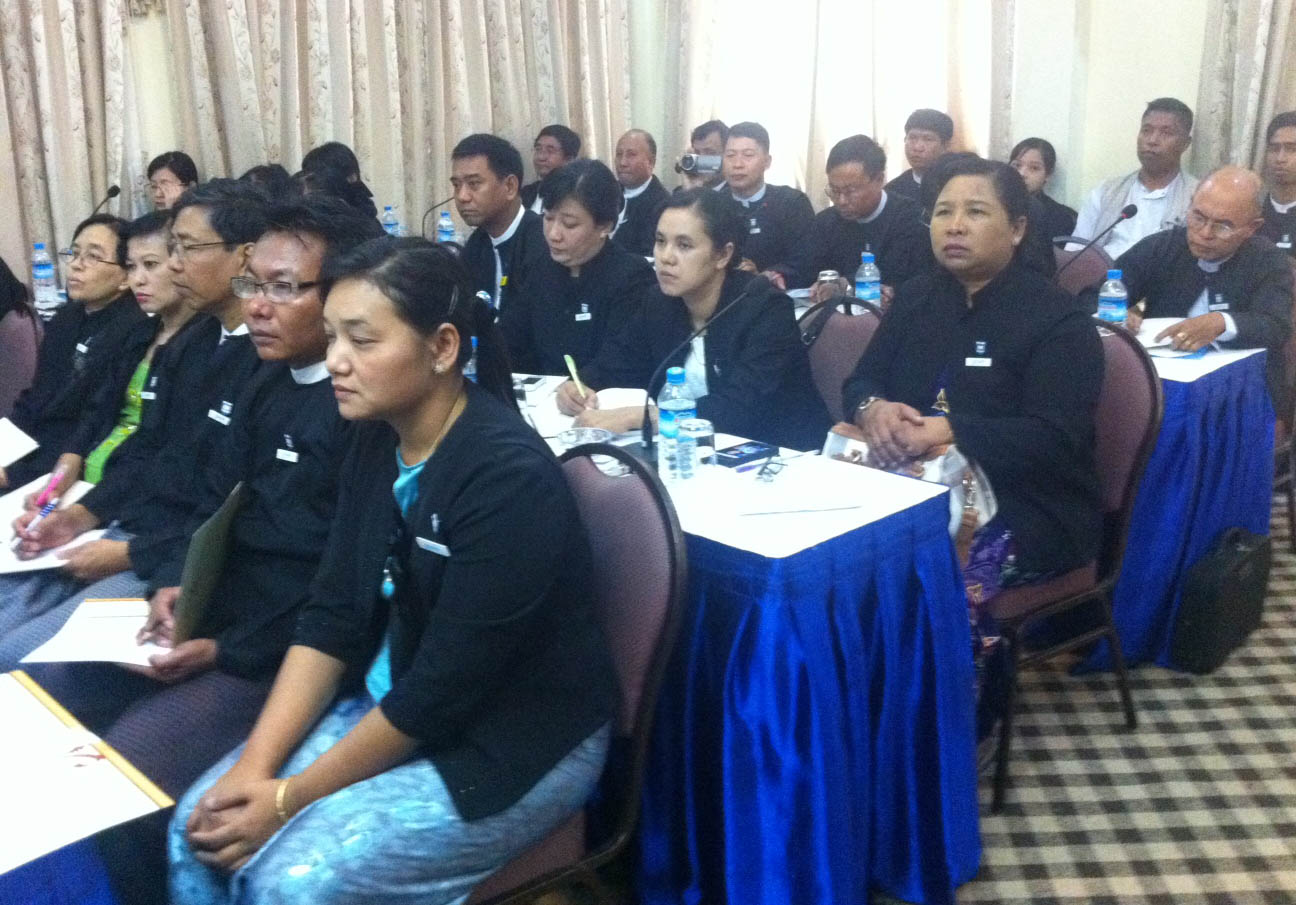 The ICJ, in collaboration with the Office of the Attorney General of the Union of Myanmar, held a two-day academic seminar in Naypyitaw entitled “The Prerogative Writs under the 2008 Constitution of Myanmar”.
At the event, which took place on 14 – 15 February 2013, opening remarks were given by His Excellency Dr. Tun Shin, Attorney General of the Union of Myanmar and Mr. Saman-Zarifi, Regional Director for Asia and the Pacific of International Commission of Jurists, to a total of approximately 40 public prosecutors and judges.
The aim of the seminar was to discuss and contribute to the application of the recently re-introduced prerogative writs, namely, habeas corpus, mandamus, prohibition, quo warranto and certiorari, under Myanmar’s 2008 Constitution which came into force in early 2011.
The seminar allowed ICJ to not only gain a deeper insight into the current writ practices in Myanmar but also permitted the Office of the Attorney General to draw best practices from other countries, such as Australia, Philippines and Malaysia.
The topics addressed during the seminar were the importance of prerogative writs in ensuring justice and upholding the rule of law; specific international standards on the independence of prosecutors and their role in the justice system; how writ cases are handled, challenges faced by the prosecutors and the burden of proof; and the powers of the judiciary to promulgate its own rules to ensure fundamental rights, as in the case of the Supreme Court in Philippines.
Panelists included Justice John Dowd AO QC, former Chairman of the International Commission of Jurists; Justice Adolfo Azcuna, Chancellor of the Philippine Judicial Academy and former Justice of the Supreme Court of the Philippines; and Mr. Andrew Khoo of the Malaysian Bar Council.

Feb 15, 2013 | News
The ICJ today expressed its great concern at reports that the police in Zimbabwe have carried out what appears to be an unjustifiable raid against human rights defenders, Zimbabwe Peace Project (ZPP).
On 11 February 2013, police reportedly raided the offices of ZPP, a non-profit organization comprising of non-governmental organizations (NGO) and church-based organizations, and confiscated mobile phones, wind up radios, files with donor information, political violence reports and DVDs.
“The continuous attacks against NGOs by law enforcement agencies clearly shows that there are systematic assaults on human rights defenders which are closing the democratic space within which human rights defenders operate”, said Martin Masiga, Deputy Director of the ICJ Africa Regional Program. “It appears that the police are trying to discourage human rights defenders from engage with citizens of Zimbabwe to exchange information concerning their rights and freedoms, as the country heads for a referendum and election during the course of the current year”.
The police undertook the raid pursuant to a search warrant issued by the Superintendent of the C.I.D Law and Order Division of the Zimbabwe Republic Police (ZRP).
The search warranted stated that there were reasonable grounds to believe that ZPP had committed offences in terms of the Criminal Law (Codification and Reform) Act, the Immigration Act, and the Customs and Excise Act.
On the same evening eight police officers were discovered by the security team that provides rapid response for the ZPP at the ZPP premises, after an alarm had been tripped.
The police officers demanded to gain access into the office of ZPP Director, Jestina Mukoko. However the office was locked and they could not enter. These officers did not have a search warrant.
The ICJ welcomes the statement of the Co-Minister of Home Affairs, the honourable Theresa Makone, which says that the Cabinet is concerned “over the overzealousness of some police officers”, and that the police “must follow the basic principle of policing” which is to investigate “to arrest rather than arresting to investigate”.
The ICJ urges the Zimbabwean government to ensure that it protects human rights defenders in accordance to United Nations Human Rights Defenders Declaration, endorsed by all the States including Zimbabwe.
The ICJ further urges the Zimbabwean government to stand by its commitments to the Zimbabwean Constitution, the African Charter on Human and Peoples’ Rights and the International Covenant on Civil and Political Rights, to which it is a state party. These instruments expressly guarantee the right to the freedom of opinion, expression and association.
Lastly, the ICJ further urges the police in Zimbabwe to conduct impartial investigations into allegations of violations of human rights, to hold accountable those responsible for human rights abuse and to protect human rights defenders and NGOs that work for the protection of human rights in Zimbabwe.
Contact:
Martin Okumu-Masiga, Deputy Director of the ICJ Africa Regional Programme, t: +27110248268; e-mail: martin.okumu-masiga@icj.org

Feb 15, 2013
 The ICJ wrote to the Nigerian President Goodluck Jonathan to call his attention to the ruling by the Court of Justice of the Economic Community of West African States in the case SERAP vs The Federal republic of Nigeria.
In this case the ECOWAS Court recently ruled that Nigeria had violated its obligations under the Article 24 of the African Charter on Human Rights and People’s Rights, which provides: “All peoples shall have the right to a general satisfactory environment favourable to their development”.
The case concerns activities by oil companies operating in the Niger Delta, whose operations were identified as the cause of severe pollution of water, land and the general environment where people of the Niger Delta live.
The ICJ is asking the Nigerian President to ensure the enforcement of the ruling by the competent authorities in the Niger Delta and the Federal Government.
Nigeria-ICJ letter to President-advocacy-2012 (full text of the letter in pdf)

Feb 13, 2013 | Адвокаси, Юридические заявления
Международная комиссия юристов представляет свое юридическое заключение, относительно возможного лишения адвокатской лицензии Разии Нурмашевой и Искандера Алимбаева, адвокатов Алматинской городской коллегии адвокатов.
Производство, возбужденное в отношении адвокатов, ставит вопрос о соблюдении норм и стандартов международного права, в частности, международных обязательств Казахстана по защите роли адвокатов и их права на справедливое судебное разбирательство.
Kazhakstan-Expert legal opinion Nurmasheva-legal submission-2012-RUS (полный текст, PDF)