Oct 15, 2012 | Incidencia
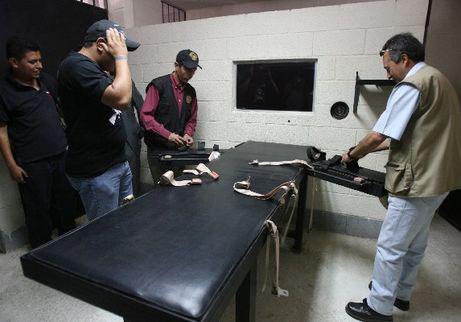
Hoy, 58 países conservan la pena de muerte. Entre estos países se encuentra Guatemala.
Dentro de su acción en defensa y promoción de los derechos humanos, la CIJ aboga por la abolición de la pena de muerte en el mundo y apoya los esfuerzos para alcanzar este objetivo.
Desde la óptica de los derechos humanos, la pena de muerte constituye una pena inhumana y degradante por su carácter irreversible e irreparable y por atentar contrael bien jurídico fundamental del derecho a la vida.
Existe actualmente una tendencia generalizada a la abolición de la pena capital; según Amnistía Internacional más de dos tercios de los países la han erradicado de sus sistemas de administración de justicia.
Sin embargo, Guatemala conserva aún la pena de muerte. El país atraviesa por un período de moratoria de hecho en la ejecución de la pena de muerte de 14 personas debido a la ausencia de regulación normativa del indulto.
Es necesario mencionar como avance en la materia, la conmutación de 12 penas de muerte por la pena de prisión máxima dentro del período 2006-2010, lo cual significa un primer paso en el camino hacia la erradicación de esta sanción dentro de la legislación interna.
El presente documento tiene por objeto sistematizar los estándares internacionales establecidos en la aplicación de la pena de muerte en aquellos países que aún la conservan, con énfasis en Guatemala.
Para ello, se utiliza el marco normativo internacional, específicamente instrumentos y jurisprudencia del sistema universal de protección de derechos humanos, del sistema europeo y del sistema interamericano.
El enfoque tiene dos aspectos principales: la pena de muerte como una violación del derecho a la vida; y las normas internacionales que deben respetarse al momento de emitir una condena de este tipo y al ejecutarla.
Guatemala-Estandares internacionales relativos a la aplicacion de la pena de muerte-publications-2012-spa (full text in pdf)
Oct 11, 2012
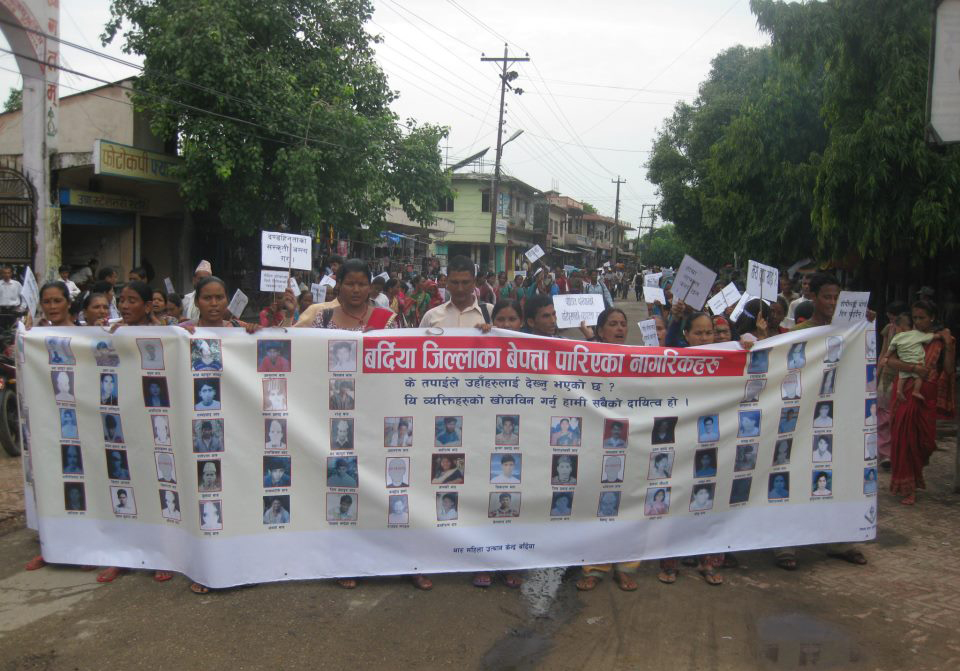 Nepal’s government must ensure accountability for the thousands of violations perpetrated by security forces and Maoists during the country’s civil war, as documented in a new report by the UN, the ICJ said today.
In a Briefing Paper “ Compromising Justice: Nepal’s Proposed Ordinance on Commission on Disappeared Persons, Truth and Reconciliation (2012)” issued today, the ICJ highlighted recent efforts by the Nepali government to undermine accountability by weakening proposed transitional justice mechanisms and promoting suspected violators.
The ICJ also welcomed the report by the Office of the High Commissioner on Human Rights (OHCHR) conflict-era human rights violations, released against the direct protest of the Government of Prime Minister Baburam Bhattarai. The “OHCHR Conflict Report” documents approximately 9000 violations, with responsibility pointing to both the State and the Maoists.
“This sobering report chronicles the devastating human impact of the human rights and humanitarian law violations that continue to burden the victims and their families,” said Sam Zarifi, ICJ’s Asia director. “We applaud the OHCHR but also urge it and the international community to not relegate this report to the shelf, but to ensure that it is introduced at all levels as a basis for advocating for truth, justice, and reparations.”
“This report is all the more important as it comes against the backdrop of systematic efforts by Nepal’s government to avoid accountability and in fact to reward some of those suspected of serious violations,” Zarifi said.
ICJ’s Briefing Paper “ Compromising Justice: Nepal’s Proposed Ordinance on Commission on Disappeared Persons, Truth and Reconciliation (2012)” highlighted the serious shortcomings of a proposed Ordinance issued by the Cabinet that backtracks on previous commitments to justice included in the country’s 2006 Comprehensive Peace Accord, the 2007 Constitution, as well as decisions of the Supreme Court.
ICJ reiterated its strong condemnation of the promotion of Kuber Singh Rana to IGP of the Nepal Police 13 September 2012, and of Raju Basnet to Brigadier General 4 October 2012. Both men have been implicated by the country’s Supreme Court in decisions ordering full investigations of their culpability.
“Instead of supporting the Nepali criminal justice system and the promised transitional justice mechanisms, the Nepali government is actively reneging on its promises to the Nepali people to provide truth, accountability and reconciliation,” Zarifi said.
As reaction has mounted against the promotions by national and international actors, the ICJ also noted with concern the growing climate of intimidation faced by judges, lawyers and human rights defenders.
There are credible reports of intimidating phone calls against those contesting the promotions.
Public demonstrations on 7 and 9 October 2012 were met with unnecessary use of force by the police, including lathi charges resulting in over a dozen injuries.
“Nepal’s international supporters should press the government to meet its commitments and its obligations under international law,” Zarifi said. “Meanwhile, all countries have an obligation to cooperate in investigation and prosecution of any individuals facing credible allegations of serious violations of international human rights law and humanitarian law, including prosecution of suspected perpetrators under the doctrine of universal jurisdiction.”
Contact:
In Kathmandu, for ICJ, Govinda Sharma: t +977-985-106-1167
In Bangkok, for ICJ Asia-Pacific, Sam Zarifi: t +66-807-819-002
Nepal-TJ Ordinance accountability-analysis brief-2012

Oct 10, 2012
 The ICJ presented its views on the Russian Federation’s compliance with the Convention against Torture, highlighting torture and ill-treatment in detention, impunity, and refoulement to face torture.
The International Commission of Jurists highlighted, in its submission, situations of widespread practice of torture and other ill-treatment in detention, especially in pre-trial detention facilities, and impunity for torture and ill-treatment, particularly in the North Caucasus. The ICJ also raised concerns about the transfer of suspects to member States of the Shanghai Co-operation Organisation, in violation of the principle of non-refoulement, and the failure of the Russian Federation to cooperate with the UN mechanisms, especially with regard to visits by the Special Procedures.
Russia-UNCAT-legal submission-2012 (download the ICJ submission)
Oct 10, 2012 | News
 On the tenth annual World Day against the Death Penalty, the ICJ urges the President of India to grant clemency to Mohammed Ajmal Amir Kasab.
“There is no doubt that Kasab’s crimes were heinous causing immeasurable suffering but execution is not the answer,” said Sam Zarifi, ICJ Asia Pacific Regional Director. “Putting him to death would be a significant step backwards for India. It would end the eight-year hiatus on executions and disregard the call in repeated UN General Assembly Resolutions that all States should observe an immediate moratorium on the death penalty with a view towards full abolition.”
October 10, 2012 is the World Day against the Death Penalty. The ICJ considers the death penalty to constitute a violation of the right to life and a form of cruel and inhuman punishment.
The ICJ calls on all countries to abolish the death penalty.
“The death penalty violates the inherent dignity of the person,” Zarifi added. “And as we have seen in India as well as all over the world, it is not possible to administer capital punishment without some degree of inconsistency, subjectivity and arbitrariness.”
More than 150 of 192 United Nations member states have either abolished the death penalty or do not practice it.
In South Asia, Nepal abolished the death penalty in its 1997 Constitution and Sri Lanka has not carried out an execution since 1976.
Kasab, a 25-year old Pakistani national, was sentenced to the death for his role in the Mumbai terrorist attack in 2008.
The Supreme Court confirmed Kasab’s death sentence on 29 August 2012, upholding the judgment of the Bombay High Court on 21 February 2011 and the sentence handed down by a lower court in May 2010. On 18 September 2012, Kasab sent a four-line handwritten mercy plea to the President of India.
The Maharashtra Home Ministry recommended rejecting the mercy plea on 24 September 2012 and Governor of Maharashtra, K Sankaranarayan, advised the same on 29 September 2012. The petition has now been forwarded to the Union Government.
CONTACT:
Sam Zarifi, ICJ Asia-Pacific Regional Director, t: +41(0)22 979 38 00; sam.zarifi(at)icj.org
Sheila Varadan, ICJ Legal Advisor, South Asia Programme, t: +66 857200723; sheila.varadan(at)icj.org

Oct 9, 2012 | Agendas, Events
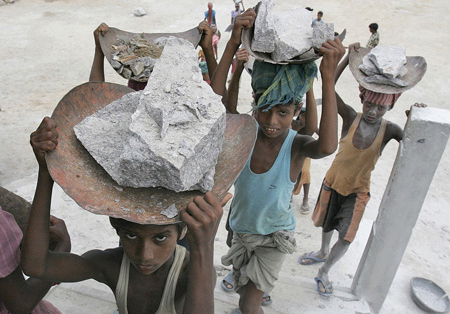 Under the title “Urging States and private companies to meet their obligations”, the workshop is taking place from 14 to 17 October 2012 in Sion, Switzerland.
The ICJ is sponsoring this international seminar that will provide all stakeholders with a space to discuss businesses’ impacts on the rights of the child and the international obligations of States in this context, identify practices, instruments and models as well as relevant partners to work for the promotion of the rights of the child in the context of business activities.
The programme of the workshop can be downloaded here:
Universal – Business and Child Rights – Workshop Programme – Event-2012
Universal – Business and Child Rights – Workshop Programme- Event – 2012 – Fr (English)