Oct 29, 2012 | Events
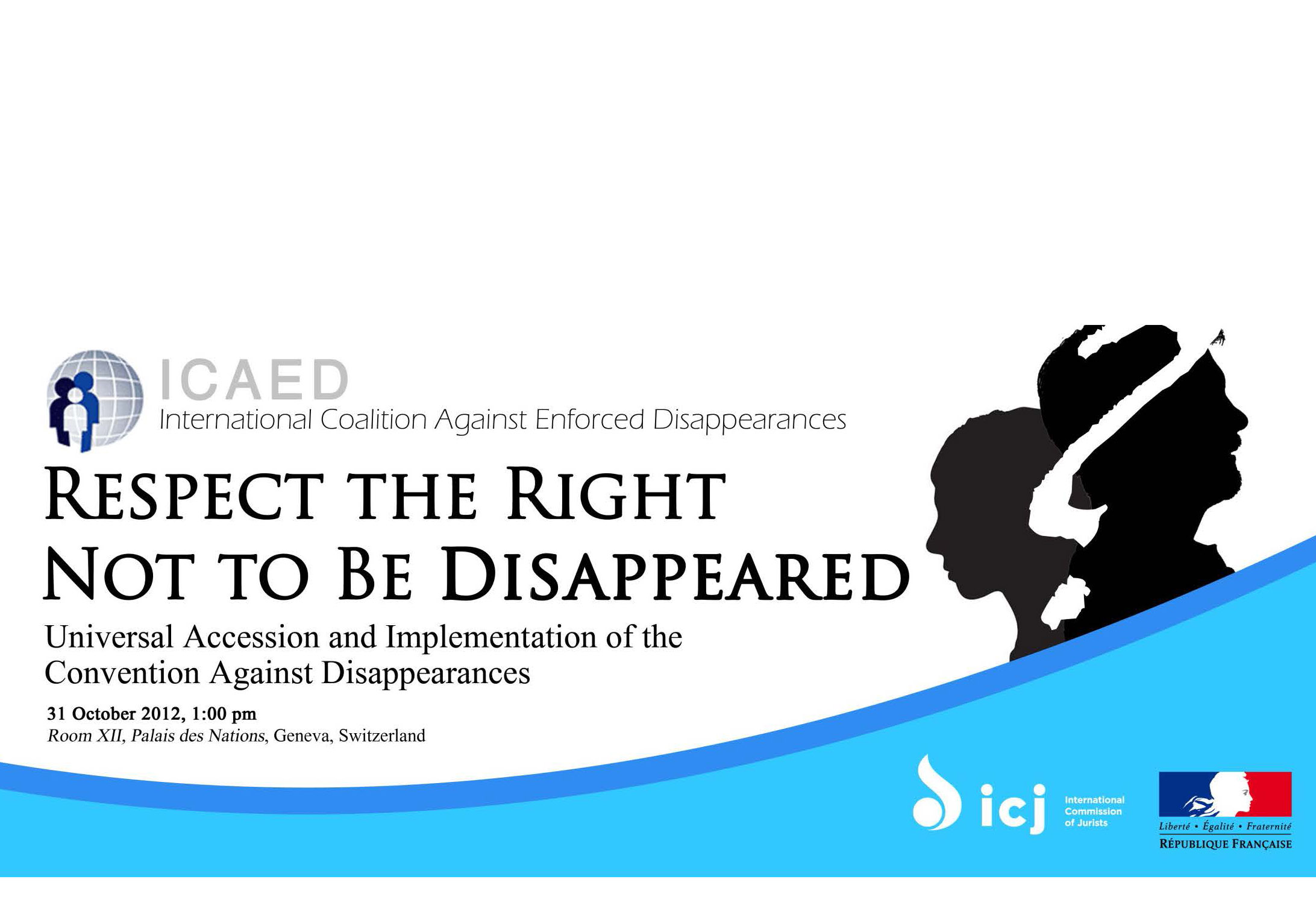 On 31 October the ICJ is co-sponsoring a side event with the Permanent Mission of France on “Respect the right not to be disappeared – Universal accession and implementation of the Convention against disappearances”.
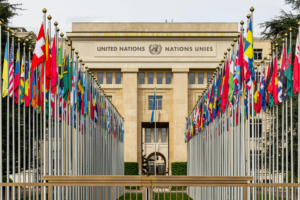
This parallel event to the session of the Committee on Enforced Disappearance and the Working Group on Enforced and Involuntary Disappearances will take place at the Palais des Nations in Geneva, Room XII, from 1 to 3 PM (13.00-15.00).
UN-ICAED enforced disappearances – Event-2012

Oct 25, 2012 | Advocacy, Non-legal submissions
 During a half-day of general discussion held today by the Human Rights Committee, the ICJ supported the establishment by the Committee of a General Comment on the right to security and liberty of the person under article 9 of the International Covenant on Civil and Political Rights (ICCPR).
As an update to its General Comment No 8 of 1982, the Human Rights Committee (the Committee) has commenced a process to develop a new General Comment on article 9 of the ICCPR. Responding to a list of issues prepared by the Committee for potential expansion within the General Comment, the ICJ supported the initiative and called for clarification of certain issues in this work.
The ICJ’s submission and statement also called on the Committee to give express consideration to the following thematic issues within the General Comment:
- The meaning of ‘arbitrary’ deprivation of liberty;
- Application of article 9 in international and non-international armed conflicts, including in the context of administrative detention;
- Control orders and other mechanisms involving restrictions of movement and the extent to which such mechanisms might interfere with liberty rights;
- Detention of asylum-seekers and irregular migrants; and
- The role and accountability of legal entities.
The Committee is scheduled to consider and adopt a first draft of the General Comment during its session in March 2013. The ICJ intends to make substantive submissions on this first draft.
ICJ-HRCttee-GCArticle9-IssuesStatement-non-legal submission (2012) (download in PDF)
ICJ-HRCttee-GCArticle9-IssuesSubmission-non-legal submission (2012) (download in PDF)
HumanRightsCommittee-Issues-Article9 (download in Word)
Oct 22, 2012 | Events
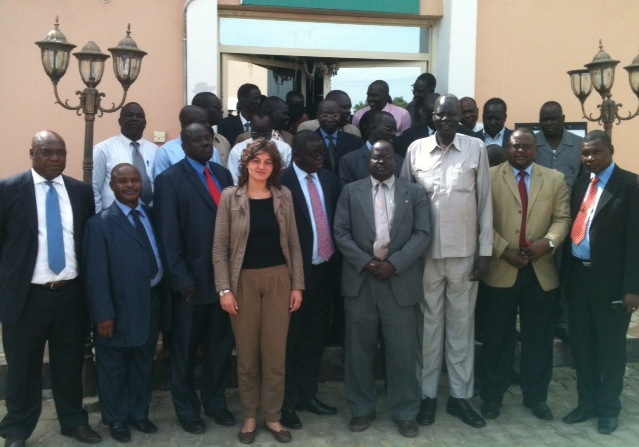
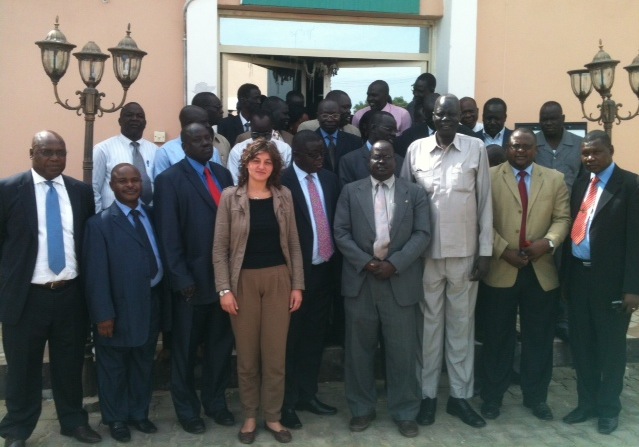 The ICJ is holding a workshop on access to justice and the right to fair trial from 22 to 24 October in Juba, South Sudan.
The workshop, organized in collaboration with the South Sudan Law Society, is aimed at judges, prosecutors, lawyers, and legal staff of the Ministry of Justice. It covers inter alia general fair trial standards, the role of the prosecutor and an independent legal profession, and specific standards applicable to arrest, pre-trial detention and trial proceedings. An ICJ delegation consisting of Judge Charles Mkandawire (ICJ Commissioner and Registrar of the SADC Tribunal), President Judge Anaclet Chipeta (High Court of Malawi), former Judge Thomas Masuku (High Court of Swaziland), Arnold Tsunga (ICJ Africa Regional Programme Director) and Ilaria Vena (CIJL Associate Legal Adviser) lead the training and debate sessions, together with representatives of the South Sudan Law Society.
SouthSudan-WorkshopFairTrial-Agenda-October2012 (download the agenda of the workshop)

Oct 15, 2012 | Events
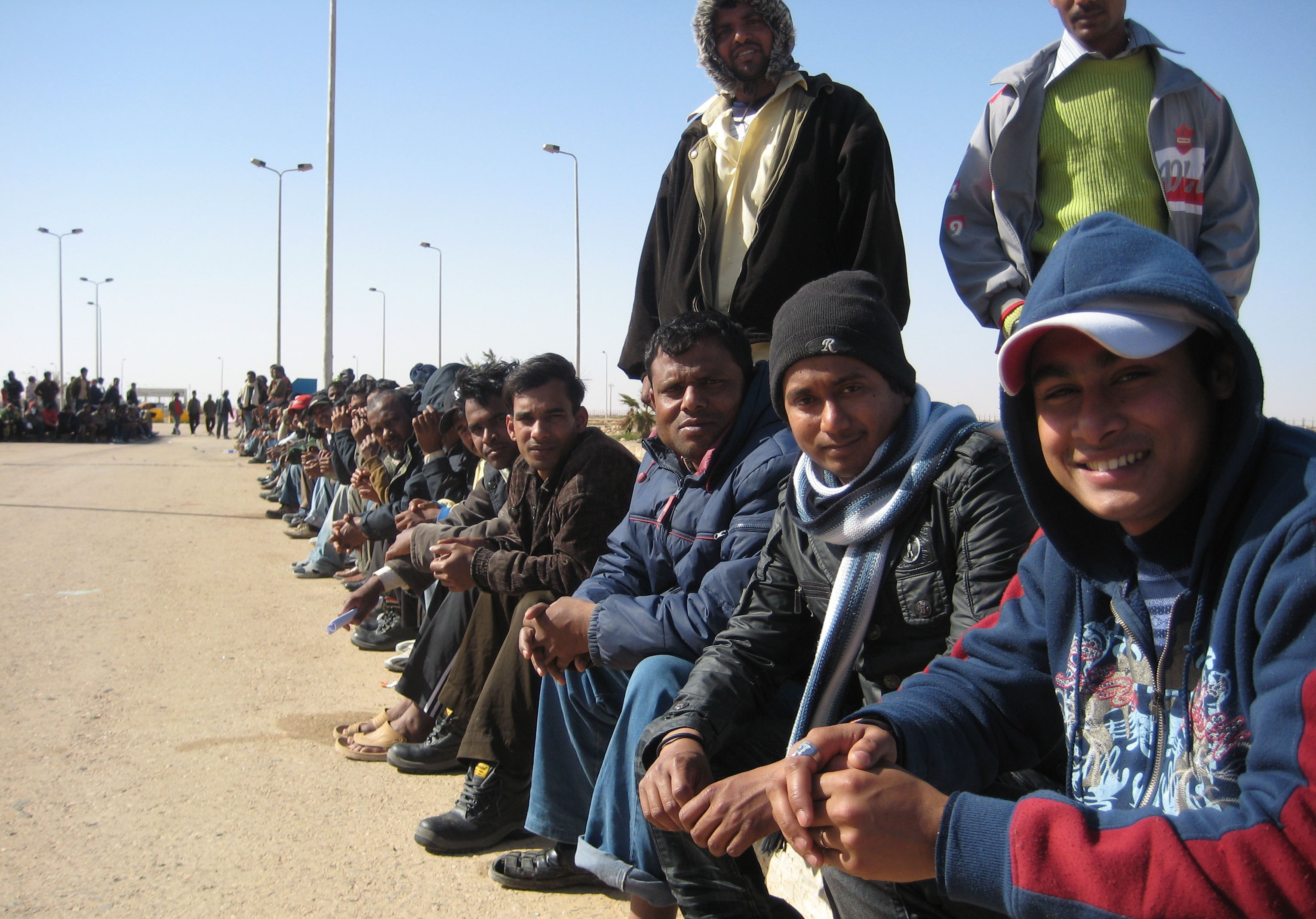 The ICJ, OSCE and Group 484 are holding a training on migration and international human rights law starting on Tuesday 16 October in Kladovo (Serbia).
The training has been organised by the Organisation for Security and Cooperation in Europe (OSCE) and the Serbian NGO “Group 484” and will be given by the International Commission of Jurists. It will focus on international protection of migrants and asylum seekers, the principle of non-refoulement, and human rights in expulsion procedures, drawing from the jurisprudence of the European Court of Human Rights, of the UN human rights systems and from EU law. The training will be centered on the ICJ Practitioners Guide no. 6: Migration and International Human Rights Law.
Serbia-agenda-migration-2012 (download the agenda of the training)
Photo credit: © Stabilisation Unit/DFID (the DFID has no involvement in nor does support this event)
Oct 15, 2012
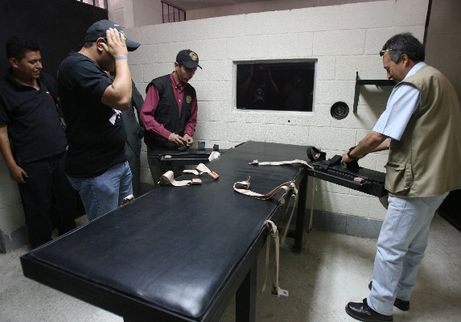
Hoy, 58 países conservan la pena de muerte. Entre estos países se encuentra Guatemala.
Dentro de su acción en defensa y promoción de los derechos humanos, la CIJ aboga por la abolición de la pena de muerte en el mundo y apoya los esfuerzos para alcanzar este objetivo.
Desde la óptica de los derechos humanos, la pena de muerte constituye una pena inhumana y degradante por su carácter irreversible e irreparable y por atentar contrael bien jurídico fundamental del derecho a la vida.
Existe actualmente una tendencia generalizada a la abolición de la pena capital; según Amnistía Internacional más de dos tercios de los países la han erradicado de sus sistemas de administración de justicia.
Sin embargo, Guatemala conserva aún la pena de muerte. El país atraviesa por un período de moratoria de hecho en la ejecución de la pena de muerte de 14 personas debido a la ausencia de regulación normativa del indulto.
Es necesario mencionar como avance en la materia, la conmutación de 12 penas de muerte por la pena de prisión máxima dentro del período 2006-2010, lo cual significa un primer paso en el camino hacia la erradicación de esta sanción dentro de la legislación interna.
El presente documento tiene por objeto sistematizar los estándares internacionales establecidos en la aplicación de la pena de muerte en aquellos países que aún la conservan, con énfasis en Guatemala.
Para ello, se utiliza el marco normativo internacional, específicamente instrumentos y jurisprudencia del sistema universal de protección de derechos humanos, del sistema europeo y del sistema interamericano.
El enfoque tiene dos aspectos principales: la pena de muerte como una violación del derecho a la vida; y las normas internacionales que deben respetarse al momento de emitir una condena de este tipo y al ejecutarla.
Guatemala-Estandares internacionales relativos a la aplicacion de la pena de muerte-publications-2012-spa (full text in pdf)