Aug 20, 2012 | News
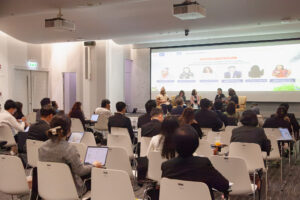
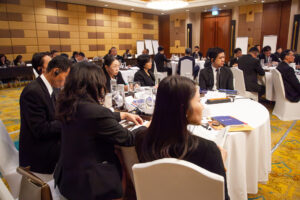
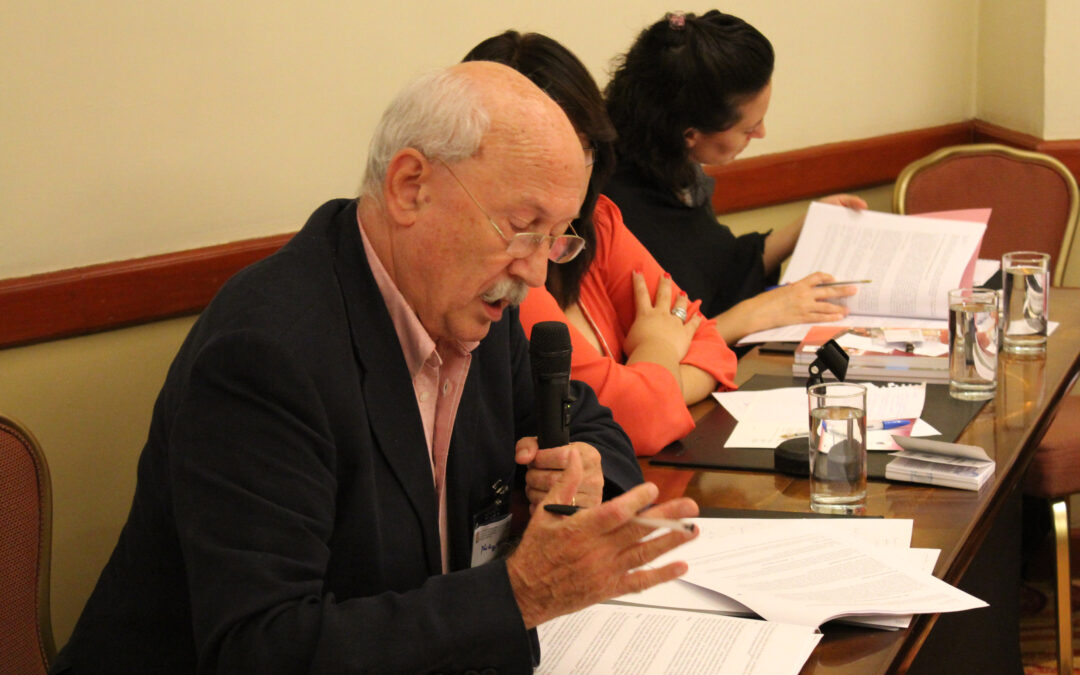
With the support of ICJ Commissioner Justice Philippe Texier, the ESCR Programme and the Central America Regional Office organized a two-day workshop in San Salvador on August 16 and 17, 2012.
A group of 25 representatives of human rights and development NGOs as well as trade unions, lawyers and academic experts participated in a first consultation on access to justice for victims of violations of economic, social and cultural rights.
The discussions tackled obstacles and advances in the field of access to justice with regard to the legal and institutional frameworks, as well as in the administration of justice and material issues.
Coming from very different backgrounds, the participants valued the opportunity to work together and share their experience related to economic, social and cultural rights (ESCR) of a variety of rights-holders and their attempts to seek justice.
This first consultation and workshop will be followed by other activities in the course of the national project.
Background of the workshop
With national projects such as the one in El Salvador, the ICJ programme on Economic, Social and Cultural Rights aims at contributing to improve accountability for human rights violations and access to justice for all, including for victims of threats against and violations of economic, social and cultural rights.
The ICJ has embarked on research processes at national level to identify obstacles and opportunities for access to justice, as well as on consultation and collaboration processes with national allies to define strategies to address gaps.
Depending on the needs identified, the ICJ will support the implementation of recommendations and steps that includes trainings and legal interventions.
Aug 17, 2012 | News
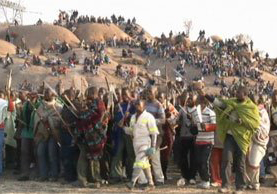 The ICJ has observed with deep concern the tragic and violent events that took place at the Lonmin mines since 10 august 2012, when miners embarked on a collective action for an increase in wages.The lives that have been lost during this short period bring to the fore various issues concerning the realization of economic and social rights, including the sensitive issue of business and human rights. Poverty, lack of employment and many other socio-economic issues sometimes lead to frustrations, which in turn manifest themselves in violence.

Aug 14, 2012 | Advocacy, Non-legal submissions
 The ICJ made a written submission and presented several oral statements during the second session of the open-ended intergovernmental working group (IGWG).From 13 to 17 August 2012, the second session of the open-ended intergovernmental working group (IGWG) to consider the possibility of an international regulatory framework on the regulation, monitoring and oversight of the activities of private military and security companies (PMSCs) was held in Geneva, pursuant to the mandate given to the IGWG under Human Rights Council resolution 15/26 (2010). The ICJ was amongst a small number of NGOs participating in this second session.

Aug 12, 2012
 Taddeucci, a national of Italy, and McCall, a national of New Zealand, are an unmarried same-sex couple who moved together to Italy to be close to Taddeucci’s family. But McCall was denied a residency visa.
The visa was denied on the grounds that he was neither a “spouse” nor a family member of an Italian citizen. The Italian courts refused to recognize their relationship, forcing the couple to leave Italy in order to be able to live together.
They applied to the European Court, arguing that their rights to non-discrimination and to the enjoyment of family life had been violated.
The ICJ, ILGA-Europe and NELFA submitted a joint third party intervention arguing that conditioning residency on marital status constitutes discrimination on the basis of sexual orientation, given that in many countries same-sex couples are denied access to marriage, and that unmarried couples are families regardless of formal legal status. As families, their relationship should be leally recognised and protected by the state.
Italy-Taddeucci_&_McCall_v_Italy-legal submission-2012-Eng (text in PDF)

Aug 9, 2012 | News
 The ICJ is urging the Syrian authorities to immediately and unconditionally release Mazen Darwish, a prominent human rights lawyer and defender, and President of the Center for Media and Freedom of Expression (SCM).