Cameroon: Opposition leader Kamto must be released

Cameroon: Opposition leader Kamto must be released

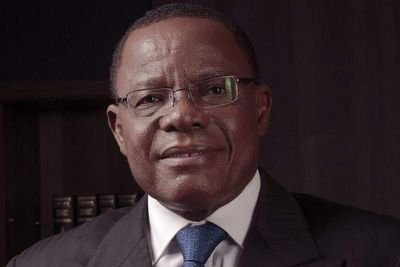
The ICJ expressed its grave concern today at the arrest, detention and criminal charges brought against Maurice Kamto, leader of the opposition party Cameroon Renaissance Movement (CRM), and other CRM activists.

The ICJ called for the immediate release of Maurice Kamto, who is also former Commissioner of the ICJ.

The arrest of Maurice Kamto, on 28 January, came following the violent breakup by the security forces of opposition demonstrations on 26 January.

Maurice Kamto is said to face charges of sedition, insurrection and inciting violence.

There are reports that he and other arrested persons have begun a hunger strike.

The ICJ is concerned that Maurice Kamto and other opposition leaders may be prosecuted for the exercise of rights protected under international law, including the rights to freedom of expression, association, assembly and political participation

The ICJ called on the Cameroon authorities to fully safeguard the human rights of Maurice Kamto and the other detainees, including the rights to liberty, fair trial, and freedom from ill-treatment, guaranteed under Cameroonian and international law.

Contact:

Arnold Tsunga, ICJ Africa Director; t: +27716405926, or +254 746 608 859 ; e: arnold.tsunga(a)icj.org

Solomon Ebobrah, Senior Legal Adviser, ICJ Africa Regional Programme, t: +234 8034927549 ; e: solomon.ebobrah(a)icj.org
Turkey: Dismissal of judges and prosecutors tainted by unfairness, says ICJ

Turkey: Dismissal of judges and prosecutors tainted by unfairness, says ICJ

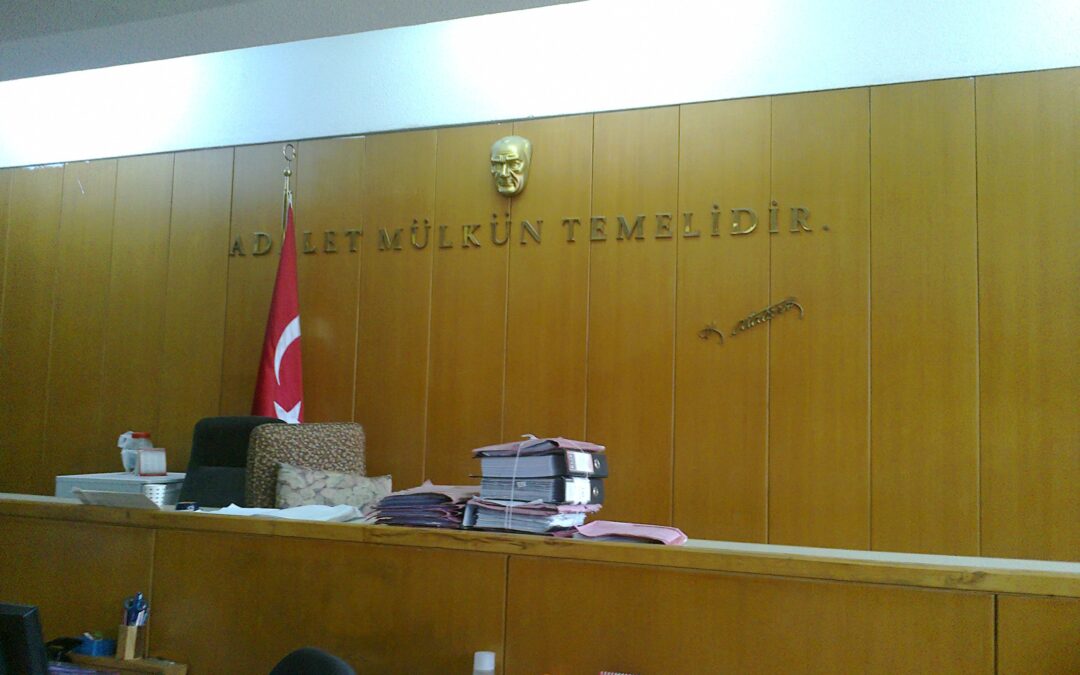
The ICJ is concerned that the dismissal of 17 judges and prosecutors by Turkey’s Council of Judges and Prosecutors on 10 January, for alleged membership of or connections with the “Fetullahist Terrorist Organisation” (FETÖ) did not respect their right to a fair trial.

The decision by the Council of Judges and Prosecutors (CJP) is particularly problematic because it lacks any reasoning on the individual situation of each judge and prosecutor.

The ICJ points out that international law provides that judges may be dismissed only through a fair hearing before an independent authority. The lack of individual reasoning in dismissal decisions strikes at the heart of the right to a fair hearing.

Furthermore, the ICJ recalls its conclusions in the 2018 report Justice Suspended that, within the current constitutional framework, the Council of Judges and Prosecutors (CJP) is not provided with the guarantees necessary to ensure its institutional independence.

Despite the state of emergency having been lifted since last July 2018, extraordinary powers given to the Council of Judges and Prosecutors to dismiss judges and prosecutors during the State of Emergency were extended for 3 years by Law no. 7145. It is unacceptable in a State governed by the rule of law that judges and prosecutors – whatever charges may be against them – be dismissed without respect for the right to a fair procedure, in disregard of international standards.

Considering that the Council of State has not delivered a single decision about dismissed judges and prosecutors during the state of emergency, in more than two years now, it seems likely that it would take at least two years before the recent decision of the CJP is reviewed by an independent judicial authority. Until then, absent further action by the CJP, the reasons for the dismissals will not be known by the purged judges and prosecutors, or by the general public.

The ICJ calls on the CJP to revoke its order and re-examine the cases under the ordinary dismissal procedures and on the Turkish Government and Parliament to modify the constitutional rules on the CJP to ensure its full independence.

Finally, the ICJ expresses concern at the conviction of the former head of the judges’ organisation YARSAV, Mr Murat Arslan, for alleged membership of FETÖ. There are credible reports of violations of the right to a fair trial in the proceedings, including four changes of judges during the proceedings, often without reasons given and without re-examination of witnesses, significant limitations to the defence access to evidence before trial and use of witnesses with undisclosed identity. The ICJ considers that these allegations of violations of the right to a fair trial should be thoroughly re-examined in appeal before an independent court and in full respect of Mr Arslan’s fair trial rights.

Background

On 10 January, the Council of Judges and Prosecutors made use for the first time of special powers to dismiss judges and prosecutors without complying with the ordinary procedure, invoking extraordinary powers enacted by Law No 7145 of 31.07.2018. This legislation inserted into ordinary law several powers that had previously existed under the state of emergency legislation.

One of the amendments made by Law No 7145 of 31.07.2018 was to the Decree Law No 375 dated 1989. A Temporary Article (Article 35) was added to the Decree. On the basis of this article, the General Assembly of the Constitutional Court, the Presidency Councils of Court of Appeal, the Council of State, the General Assembly of the Council of Judges and Prosecutors, a Commission set up by the Ministry of National Security, and the Presidency of the Court of Audit, were each authorised to take dismissal decisions for public officials/judges and prosecutors under their mandate for three years from the date of the endorsement of the law No 7145.

Based on this amendment, on 10 January 2019 the Council of Judges and Prosecutors took its first decision (Decision No. 2019/1) by dismissing 17 judges and prosecutors (6 Public prosecutors, 3 Members of Administrative Court, 7 judges of of Tax Court) based on the allegation of membership to FETÖ.

International law and standards provide that disciplinary proceedings should be conducted by an independent authority or a court with all the guarantees of a fair trial and provide the judge with the right to challenge the decision and sanction. Disciplinary sanctions should be proportionate.

The UN Basic Principles on the independence of the judiciary set out international standards for discipline, suspension and removal of judges, including in order to ensure impartiality and independence of courts and tribunals as required by international law (including the International Covenant on Civil and Political Rights and the European Convention on Human Rights). The Basic Principles state that a:

“charge or complaint made against a judge in his/her judicial and professional capacity shall be processed expeditiously and fairly under an appropriate procedure. The judge shall have the right to a fair hearing. The examination of the matter at its initial stage shall be kept confidential, unless otherwise requested by the judge. …

The Consultative Council of European Judges (CCJE) adds that “a Head of State, Minister of Justice or any other representative of political authorities cannot take part in the disciplinary body.”

Contact

Massimo Frigo, ICJ Senior Legal Adviser for the Europe and Central Asia Programme, t: +41 22 979 3805, e: massimo.frigo(a)icj.org
Turkey: training modules on migration and asylum law

Turkey: training modules on migration and asylum law

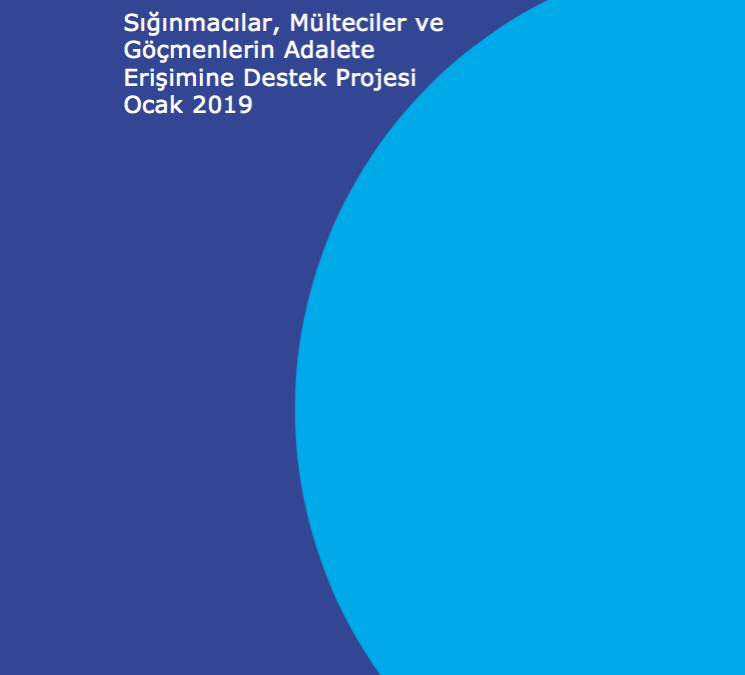
Today the ICJ has published four training modules on Migration and Asylum Law. The modules are based on the trainings and training materials for Turkish lawyers provided on international human rights law relating to migration and asylum as part of the project Fostering Access to Rights for Migrants, Refugees and Asylum-Seekers in Turkey. Each module is covering different topic:

The modules can be found and downloaded in Turkish by clicking on the module name above.

The project “Fostering Access to Rights for Migrants, Refugees and Asylum-Seekers in Turkey” is funded by the European Instrument for Democracy and Human Rights (EIDHR) of the European Union.

ICJ joins call for UN action on China

ICJ joins call for UN action on China

The ICJ today, alongside dozens of other non-governmental organizations, called on the UN Human Rights Council to adopt a resolution addressing the situation in China, at its upcoming March 2019 session.

The NGOs urge a resolution that would call on China, among other things:

  • to provide independent international human rights experts with unfettered access to all parts of the country, including areas populated by ethnic and religious minorities;
  • to promptly reform national security legislation to meet international standards, and to stop using such laws in ways that violate human rights;
  • to release individuals — including human rights defenders and lawyers among others — unjustly or arbitrarily detained.

The letter reads as follows:

30 January 2019

At upcoming session of Human Rights Council, States should pass resolution to address human rights violations in the People’s Republic of China

Your Excellency,

The past year was marked by vitally important monitoring and review of China’s human rights situation by the United Nations human rights system. The upcoming session of the UN Human Rights Council provides a key opportunity to reinforce the issues raised over the last year, and express collective concern about worsening rights abuse in China and the government’s failure to follow through on its obligations and commitments.

Considerable information has been available in the last year for governments to deepen their understanding of the situation in the country, spanning two UN reviews and nearly two dozen expert letters or opinions, including a full paragraph in the annual update from the UN High Commissioner for Human Rights. Nonetheless, the Chinese state, at the direction of the Chinese Communist Party, continues to suppress dissent and undermine efforts to hold it accountable to its obligations under international agreements.

Millions in the country face dire abuses of their fundamental human rights – be they members of ethnic groups, practitioners of Islam, Tibetan Buddhism or Christianity, human rights defenders, feminists, petitioners, lawyers, journalists, professors or students. Uyghurs and Tibetans are particularly targeted with discriminatory policies and practices. Furthermore, these abuses increasingly affect individuals and communities beyond China’s borders.

In light of this, the international community must push with one voice for change. We urge your government to contribute to and support a resolution on the human rights situation in China.

In doing this, you will join with others to make clear that no State’s development model or economic and political influence can exempt it from its international human rights obligations. If China seeks to be a responsible member of the United Nations and global actor, it should be open to and engage with criticism, rather than seek to deflect or discredit views with which it disagrees.

Such a resolution and any other joint action at the Council should:

  • urge prompt, unfettered and independent access to all parts of the country, in particular Uyghur, other Turkic Muslim and Tibetan areas, by independent international human rights experts, including the UN High Commissioner for Human Rights and relevant UN Special Rapporteurs;
  • demand an end to the abuse of national security legislation as a means of criminalising the work of human rights defenders, freedoms of expression, association, religion or belief and subverting due process, and call on China to seek technical assistance from UN experts to this end, including at the Office of the High Commissioner for Human Rights (OHCHR).
  • call for the immediate release of any and all individuals subjected to unlawful and unjustified deprivation of liberty, in particular those held extra-legally or in extended pre-trial detention, and provide remedies and reparations to address harsh treatment, at times including torture, and loss of livelihoods.
  • express support for the OHCHR and UN Country Team to take steps to expand, improve and regularise monitoring and reporting of the situation in China.

Resisting efforts by China to shield itself from international scrutiny, analysis, and reporting is essential to preventing widespread impunity for violations which, in some cases and based on available reporting, may amount to crimes against humanity. This resistance has the greatest, and perhaps only, chance of success when conducted jointly, and when backed by a multi-pronged multilateral and bilateral effort.

We therefore urge you to take advantage of this moment, and the platform of the Human Rights Council, to convey to China the need to open itself to international monitoring and reporting, and the need for rapid and drastic improvement of its human rights performance across all civil, cultural, economic, political, and social rights.

In so doing, you will demonstrate your commitment to supporting the Chinese, Tibetan and Uyghur human rights communities – those most central to sustainable change, and yet those most vulnerable in the struggle for it. You will also send a clear message to the Chinese government that such abuses cannot be tolerated or ignored, and that the international community will defend the universality of human rights.

Please rest assured, your Excellency, of our highest consideration, and our willingness to engage with you on these issues in the days and weeks to come.

Sincerely,

  • Asian Forum for Human Rights and Development (FORUM-ASIA)
  • Asociación Cultural Tibetano-Costarricense
  • China Human Rights Accountability Center
  • China Labour Bulletin
  • Christian Solidarity Worldwide
  • CIVICUS
  • Core Group for the Tibetan Cause
  • Free Tibet
  • Frontline Defenders
  • Grupo de Apoio ao Tibete
  • Human Rights in China
  • Humanitarian China
  • International Campaign for Tibet
  • International Commission of Jurists
  • International Federation for Human Rights (FIDH)
  • International Service for Human Rights
  • International Tibet Network Secretariat
  • Lawyers for Lawyers
  • Lawyer’s Rights Watch Canada
  • LUNGTA – Actief voor Tibet
  • Network of Chinese Human Rights Defenders
  • PEN America
  • Safeguard Defenders
  • Students for a Free Tibet
  • Students for a Free Tibet Denmark
  • Swedish Tibet Kommitten
  • The Rights Practice
  • Tibet House, Moscow
  • Tibet Initiative Deutschland
  • Tibet Justice Center
  • TIBET LIVES
  • TibetMx Querétaro
  • Tibet Society UK
  • Tibet Support Group Netherlands
  • Tibet Watch
  • Tibetan Youth Association Europe
  • Uyghur Human Rights Project
  • West Africa Human Rights Defenders Network (ROADDH)
  • World Organisation Against Torture (OMCT)
  • World Uyghur Congress

Relevant Background

The below points summarize key updates from the last six months and provide additional detail for the substance of a resolution. It is important to note that joint action should not preclude continuing the positive practice of raising the overall deterioration of human rights in China through bilateral statements under the full range of dialogues and general debates on the Council’s agenda.

  • In August 2018, a review by the Committee on the Elimination of Racial Discrimination declared that western China’s Xinjiang region was akin to a ‘no-rights zone’, and urged the government to take prompt action to disclose information about internment camps and to release the up to one million Uyghurs, Kazakhs and other Muslim minorities arbitrarily detained there.
  • In her update to the September 2018 session of the Human Rights Council, the UN High Commissioner on Human Rights Michelle Bachelet echoed the Committee’s concerns, noting ‘deeply disturbing allegations of large-scale arbitrary detentions of Uighurs and other Muslim communities, in so called re-education camps across Xinjiang’ and adding that her Office has also received ‘reports… of patterns of human rights violations in other regions’. She requested access for her Office to all regions of China.
  • At the Universal Periodic Review of China in November 2018, the consistency of recommendations related to the need to improve respect for minority rights in general, and in particular address serious violations in Xinjiang and Tibet, was remarkable. Similarly, key issues of interest to the diverse human rights community in mainland China – freedom of expression and opinion, freedom of religion or belief, civil society space, ‘residential surveillance in a designated location’, and protections for LGBTI individuals – were clearly articulated.
  • Over 2018, the UN Special Procedures issued at least 21 official communications on China, on issues ranging from access to education and cultural rights for Uyghurs and Tibetans; to due process violations, including risk of torture and suppression of the legal profession; to forced evictions and occupational safety risks for electronics workers. Also in 2018, the Working Group on Arbitrary Detention adopted at least two opinions, concerning two citizen journalists and three lawyers, deeming their detentions in China arbitrary under international human rights law.
  • Naming specific individuals is critical; this contributes to sustained attention and improved conditions. Those who have been the subject of Communications by Special Procedures and, in some cases, referred to in the Concluding Observations of UN treaty bodies, include: Huang Qi, Li Yuhan, Jiang Tianyong, Qin Yongmin, Tibetan language advocate Tashi Wangchuk, Uyghur intellectual Ilham Tohti, and human rights lawyer Wang Quanzhang, sentenced after a closed trial on 26 December 2018 to four and a half years imprisonment for subversion of State power.
  • An additional Communication by 10 Special Procedures, issued in August 2018, called for the removal of legal provisions permitting ‘residential surveillance in a designated location’, echoing concerns of the Committee against Torture that this constitutes de facto incommunicado detention.

The letter may be downloaded in PDF format here: UN-HRC40-OpenLetter-China-2019

The ICJ has repeatedly raised concerns about violations of rights of human rights lawyers in China. See for instance:

Translate »