Colombia: ICJ joins 300 NGOs expressing concern about human rights violations before UN Human Rights Council

Colombia: ICJ joins 300 NGOs expressing concern about human rights violations before UN Human Rights Council

The ICJ joined over 300 civil society organisations in a statement to the UN Human Rights Council to express deep concern about the situation of human rights in Colombia during the presentation of the annual report of the UN High Commissioner for Human Rights.

The statement reads as follows:

“Thank you Madam President,

On behalf of the undersigned organisations, we thank the High Commissioner for her annual report, particularly on activities undertaken in Colombia. The situation in the country confirms the need for continued monitoring and provision of technical assistance by her Office

Throughout the eight weeks of mass protests that have spread to different cities throughout the country, we’ve seen killings, excessive use of force, acts amounting to torture and other ill-treatment, enforced disappearances, sexual violence, arbitrary detentions and attacks, including cyber-attacks against those exercising their right to protest, all of which constitute flagrant human rights violations. These violations are taking place in spite of a Supreme Court ruling ordering the security forces to refrain from acting violently and arbitrarily in a systemic manner during demonstrations, and calls by human rights mechanisms to cease these violations.

The protests are rooted in structural demands linked to the respect for human rights, and other concerns including poverty, inequality, growing social injustices, impunity, systemic racism and systematic violence against human rights defenders -including social, campesino, trade union and indigenous leaders and the press. They are also a result of the continued failure to fully implement the 2016 Peace Accord.

We urge the Council to call on Colombia to cease the use of violence and to respect the right to peaceful protest; to independently investigate human rights violations committed in this context; to accept the visit of the Special Procedures; and facilitate the building of social consensus around structural demands.

Finally, we ask the High Commissioner, through her Office in Colombia, to prepare a report on the human rights violations committed during the protests.

Thank you Madam President.”

Libya: Berlin II Conference must prioritize accountability and transitional justice

Libya: Berlin II Conference must prioritize accountability and transitional justice

The Second Berlin Conference on Libya, taking place on 23 June, should focus on ensuring accountability for crimes under international law and guaranteeing that the transitional justice process is fully consistent with international law and standards as its key priorities, the ICJ said today.

هذا البيان الصحفي متوفر باللغة العربية أيضاً

“The Berlin II Conference must bring accountability to the top of the political agenda in Libya”, said Saïd Bernarbia, the ICJ MENA Director.

“The necessity to hold the 24 December elections cannot sideline the need for the Libyan authorities to hold perpetrators of crimes under international law to account and to end impunity for past and ongoing human rights abuses. Time and again experience from around the world has shown that accountability is crucial for a sustainable political solution.”

The 19 January 2020 Berlin Conference Conclusions stressed “the need to hold accountable all those who have violated provisions of international law”, and encouraged the Libyan authorities to strengthen “transitional justice institutions, including prosecution initiatives, reparations, truth-seeking and institutional reform.” A dedicated Working Group on human rights and international humanitarian law was created to implement such conclusions.

The Berlin II Conference must follow up on these commitments and give priority to ensuring that crimes under international law committed by all parties in Libya be effectively investigated with a view to holding perpetrators to account.

The transitional justice process must be prioritized with a view to establishing the truth about past and ongoing gross human rights violations and abuses, upholding victims’ right to remedies and reparations, including by providing guarantees of non-repetition”, Benarbia said.

The Berlin II Conference should also support the work and mandate the UN Independent Fact-Finding Mission on Libya established by the Human Rights Council in June 2020.

Download this press release in PDF form here.

Contact

Said Benarbia, Director, ICJ Middle East and North Africa Programme, t: +41-22-979-3817; e: said.benarbia(a)icj.org

Asser Khattab, Research and Communications Officer, ICJ Middle East and North Africa Programme, e: asser.khattab(a)icj.org

Venezuela: un Poder Judicial politizado que es una herramienta de represión más que un defensor del Estado de derecho

Venezuela: un Poder Judicial politizado que es una herramienta de represión más que un defensor del Estado de derecho

La CIJ, en un informe que presentó hoy, afirmó que el Poder Judicial de Venezuela se ha convertido en una herramienta para que el Poder Ejecutivo controle políticamente al país, en lugar de ser un mecanismo de defensa del Estado de derecho en el país.

El informe Jueces en la cuerda floja de 58 páginas, documenta el deterioro de la independencia judicial en Venezuela debido al control y la influencia política sobre el Poder Judicial, y debido al rol que ha desempeñado el Tribunal Supremo de Justicia (TSJ) en el quebrantamiento de la independencia de los jueces en todo el país.

“La justicia es un derecho humano y es un derecho fundamental para la protección de otros derechos. Sin las garantías esenciales de independencia e imparcialidad de los jueces, no tenemos justicia. Hoy, en Venezuela, el derecho a la justicia no está garantizado, en la medida en que no tenemos un sistema de jueces independientes e imparciales”, dijo Carlos Ayala, vicepresidente de la CIJ.

El Tribunal Supremo de Justicia, controlado desde hace mucho tiempo por el Poder Ejecutivo, ha gestionado el colapso del Estado de derecho en el país, ya que más del 85% de los jueces ocupan cargos provisionales, están sometidos a presiones políticas, y reciben presiones directas para que emitan decisiones judiciales en favor del gobierno y en contra de personas defensoras de derechos humanos y disidentes políticos.

“La captura política del TSJ ha colocado a los jueces en la cuerda floja en Venezuela, haciéndolos incapaces de defender el Estado de derecho, proveer la rendición de cuentas por las numerosas y graves violaciones de derechos humanos que ocurren en el país, y proteger los derechos del pueblo venezolano”, dijo Sam Zarifi, Secretario General de la CIJ.

De esta manera, la CIJ ha recomendado a Venezuela despolitizar el Poder Judicial en general y en particular el Tribunal Supremo de Justicia. El informe también establece una serie de recomendaciones específicas para lograr estos objetivos, en particular:

  • Avanzar en los procesos de nombramiento de jueces de acuerdo con las disposiciones constitucionales y las normas internacionales;
  • Establecer mecanismos independientes y autónomos dentro del Poder Judicial para la selección de jueces y para el ejercicio de las funciones disciplinarias;
  • Reforzar la transparencia y la responsabilidad del sistema judicial.

Asimismo, la CIJ ha hecho un llamado a las autoridades venezolanas para que cumplan con el derecho internacional de los derechos humanos y los estándares internacionales relacionados con la independencia judicial, así como con las decisiones y recomendaciones de diferentes órganos del Sistema de Naciones Unidas y del Sistema Interamericano de Derechos Humanos, y para que permitan el acceso al país de procedimientos y mecanismos internacionales de derechos humanos que contribuyan a la rendición de cuentas y al restablecimiento del Estado de derecho.

La CIJ también insta al Consejo de Derechos Humanos de la ONU a mantener un mecanismo adecuado para la rendición de cuentas de las graves violaciones de derechos humanos ocurridas en el país, hasta que los fiscales, los tribunales y las cortes venezolanas sean capaces de investigar, procesar y juzgar eficazmente dichas violaciones con independencia e imparcialidad.

Contacto

Carolina Villadiego Burbano, Asesora Legal para América Latina de la CIJ. email: carolina.villadiego@icj.org

Venezuela-Judges on the tightrope-Publications-Reports-Thematic reports-2021-SPA

Venezuela: politicized judiciary tool of repression rather than defender of rule of law  

Venezuela: politicized judiciary tool of repression rather than defender of rule of law  

Venezuela’s judiciary has become a tool for political control of the country by the Executive branch rather than a defender of the rule of law, said the ICJ in a report launched today.

The 55-page report Judges on the Tightrope documents the undermining of judicial independence in the country, due to the political control or influence on the judiciary, and because of the role the Supreme Court of Justice (SCJ) has played in undermining the independence of judges around the country.

“Justice is a human right and it is a fundamental right for the protection of other rights. Without the essential guarantees of the independence and impartiality of judges, we do not have justice. In Venezuela today, the right to justice is not guaranteed, to the extent that we do not have a system of independent and impartial judges,” said Carlos Ayala, ICJ’s vice president.

Venezuela’s Supreme Court of Justice, long controlled by the country’s Executive branch, has overseen a collapse of the rule of law in the country, with some 85 percent of judges holding provisional posts that subject them to political pressure, and courts receiving direct pressure to return verdicts in support of the government and against human right defenders and critics of the government.

“The political takeover of the SJC has placed judges on a tightrope in Venezuela, rendering them unable to defend the rule of law, to provide accountability for the many gross human rights violations in the country, or to protect the rights of the Venezuelan people”, said Sam Zarifi, ICJ’s Secretary General.

The ICJ recommended Venezuela to depoliticize the judiciary in general, and specifically the Supreme Court of Justice. In addition, the report sets a series of specific recommendations to achieve these goals, in particular by:

  • Advancing with appointment processes for judges in accordance with constitutional provisions and international standards;
  • Establishing independent and autonomous mechanisms within the judiciary for the selection of judges and for exercising of disciplinary functions; and
  • Strengthening transparency and accountability in the justice system.

The ICJ called on Venezuelan authorities to comply with international human rights law and international standards related to judicial independence, as well as with the decisions and recommendations that different bodies in the United Nations and Inter-American Human Rights System have made, and allow access to the country for international human rights procedures and mechanisms that will contribute to accountability and the restoration of the rule of law.

The ICJ also urged the UN Human Rights Council to maintain a mechanism to address proper accountability for gross human rights violations until the Venezuelan prosecutors, courts and tribunals are capable of effectively investigating, prosecuting and judging with independence and impartiality those violations.

Contact

Carolina Villadiego Burbano, Latin American Legal and Policy Adviser, email: carolina.villadiego(a)icj.org

Download

Venezuela-Judges on the tightrope-Publications-Reports-Thematic reports-2021-ENG

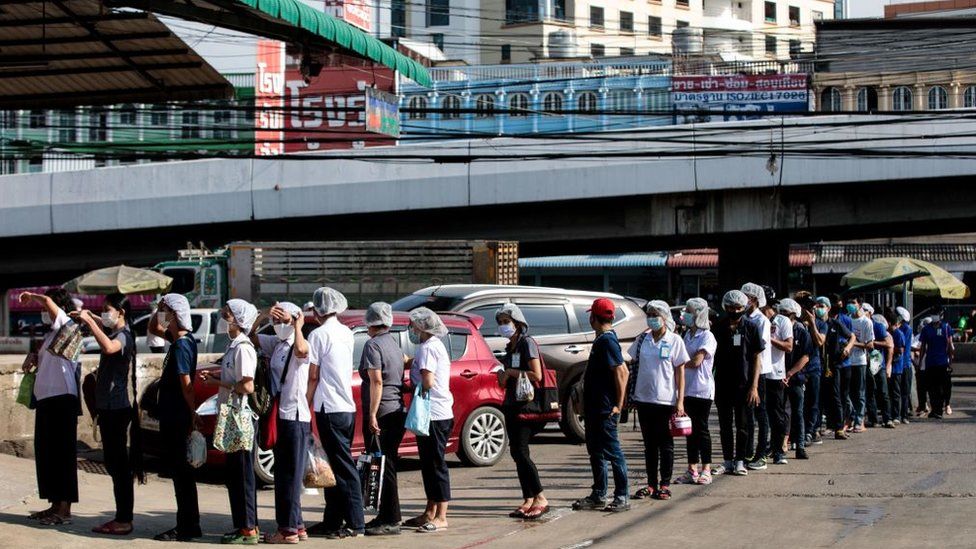
Thailand: New ICJ report highlights intensified online restrictions   

Thailand: New ICJ report highlights intensified online restrictions   

The Thai authorities should immediately reform laws, policies and practices that have led to increasing violations of human rights in the digital sphere, the ICJ said in a new report launched today.

The 75-page report, Dictating the Internet: Curtailing Free Expression and Information Online in Thailand, documents a range of laws that does not comply with international human rights law and standards. These laws contain vague and overbroad provisions, wrongly criminalize free expression or prescribe disproportionately harsh penalties, and are applied without independent oversight mechanisms.

These arbitrary restrictions have intensified in response to the COVID-19 pandemic and pro-democracy protests.

“The Thai authorities have continued their systematic abuse of existing and new deficient laws to curtail not only the right to freedom of expression, opinion and information online, but also the rights to peaceful assembly, health and other rights,” said Sam Zarifi, ICJ’s Secretary General.

The Thai authorities have also pressured and co-opted big technological companies to improperly restrict or block content on their platforms, through court-enforced demands and the filing of criminal complaints for failing to comply.

The report further documents how the Thai authorities have failed to adequately protect individuals against the human rights abuses of private actors, who include companies harassing its critics through legal processes and perpetrators of online speech inciting discrimination, hostility or violence.

The report provides specific recommendations to the Thai authorities and technological companies in the communications sector to safeguard in law and practice the rights to expression, opinion and information online as well as offline. These recommendations call for the authorities to, among other recommendations:

  • Repeal or substantially amend criminal law provisions that criminalize or unduly restrict human rights online, and review existing laws or develop legislation to protect against SLAPP lawsuits and the incitement of discrimination, hostility or violence;
  • Cease harassment and persecution of all individuals for merely exercising their human rights online;
  • Refrain from future charges and drop all existing charges against individuals and social media companies facing prosecution for alleged violations of non-human rights compliant laws, and immediately release all held in pre-trial detention or imprisoned on conviction for such cases; and
  • Refrain from restricting or blocking online content unless the decision to block has been undertaken following a full analysis applying international human rights law and standards, and authorized pursuant to an order by an independent and impartial judicial authority.

“The Thai authorities must act urgently to stem this deteriorating trend of human rights violations and abuses in the digital space, by repealing or substantially amending its laws, policies and practices in line with Thailand’s international legal obligations,” added Zarifi.

The report follows on from the ICJ’s December 2019 regional report entitled Dictating the Internet: Curtailing Free Expression, Opinion and Information Online in Southeast Asia assessing non-human rights compliant legal frameworks and case studies across Southeast Asia, including Thailand.

Report Launch

The report will be launched on 22 June 2021. The launch includes a panel discussion, which draws together human rights defenders, diplomats, journalists, lawyers and civil society to discuss the increasing attacks on freedom of expression and information online in Thailand through non-human rights compliant laws and practices.

The discussion will include as panelists:

  • Sam Zarifi, Secretary General, International Commission of Jurists;
  • Poonsuk Poonsukcharoen, Thai Lawyers for Human Rights (TLHR); and
  • Chavarong Limpattamapanee, Chairman, National Press Council, Thailand.

Download

The full report is available in English here and in Thai here. The executive summary of the report is available in English and Thai. (PDF)

Contact

Sam Zarifi, ICJ Secretary General, e: asiapacific@icj.org, t: +66-62-702-6369

See also

ICJ, ‘Southeast Asia: ICJ launches report on increasing restrictions on online speech’, 11 December 2019

ICJ, ‘Vietnam: authorities must act to safeguard rights online and end harassment of those expressing themselves – ICJ new report’, 9 December 2020

Translate »