Apr 30, 2021 | News
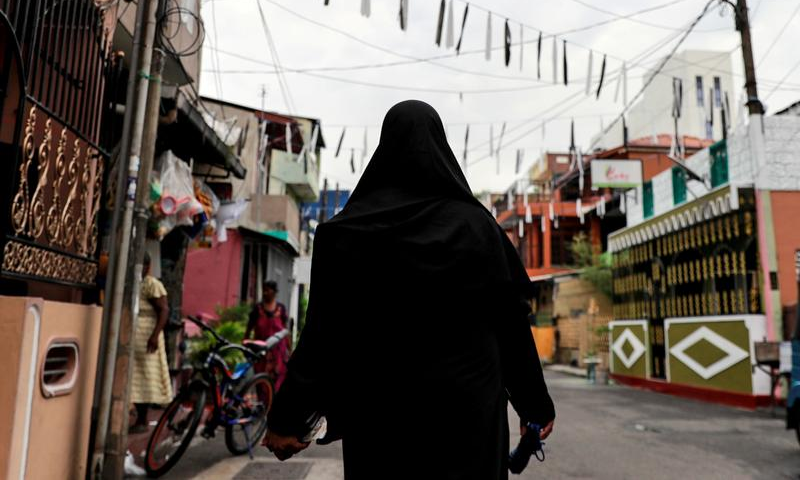
The ICJ today condemned the Sri Lankan cabinet’s approval of the proposed ban on face coverings, which, if adopted by Parliament would directly discriminate against Muslim women
The Cabinet on 27 April approved the proposal put forward by Minister of Public Security Sarath Weerasekara on March 13 to ban face coverings including the burqa and niqab citing national security grounds.
The ICJ has called on the Sri Lankan Parliament to categorically reject this discriminatory proposal as a violation of the right to freedom of religion.
“The Sri Lankan Government’s justification for banning face coverings rings hollow during a time when it has quite sensibly made the wearing of face masks in public mandatory to address the COVID-19 pandemic,” said Ian Seiderman, ICJ’s Legal and Policy Director.
The Government of Sri Lanka temporarily banned full-face coverings by way of an emergency regulation in the aftermath of terrorist attacks on Easter April 2019, in which 269 people were killed and at least 500 others injured. This ban resulted in the stigmatization and harassment of Muslim women, including those who were only wearing a hijab (head covering).
“While the Sri Lankan Government has an obligation to protect its inhabitants from the threats to their lives and well-being, that protection is a part of, and not in conflict with, its overall duty to protect human rights,” said Ian Seiderman.
Freedom of religion and belief is guaranteed under article 18 of the International Covenant on Civil and Political Rights (ICCPR), to which Sri Lanka is a party. Freedom to have or adopt a religion or belief of one’s choice is similarly guaranteed by Article 10 of the Sri Lankan Constitution. Article 14 (1) (e) ensures the freedom to manifest one’s religion in worship, observance, practice and teaching.
The UN Human Rights Committee has affirmed that under the ICCPR “the observance and practice of religion or belief may include not only ceremonial acts, but also such customs as the wearing of distinctive clothing or head coverings.”
The ICJ concurs with Ahmed Shaheed, the UN Special Rapporteur on Freedom of Religion or Belief, who has stressed that “burqa bans are incompatible with international law guarantees of the right to manifest one’s religion or belief and of freedom of expression.”
“While the authorities may take necessary and proportionate steps to confirm a person’s identity to meet a specific security concern, a blanket ban on face coverings in the name of national security does not hold water,” Seiderman said. “It would invariably result in discriminatory practices and lead to the stigmatization of Muslim women,” he added.
Under ICCPR article 18(3) any limitation on freedom of religion must be non-discriminatory and must be necessary and proportionate to protect public safety, order, health, or morals or the fundamental rights and freedoms of others.
The UN Human Rights Committee has consistently held that under international law, a blanket ban on face coverings cannot be justified as necessary or proportionate to its stated legitimate aim of promoting public safety, while recognizing the need for States, in certain contexts, to be able to require that individuals show their faces. Even this restriction, however, would generally only apply to veils that fully cover faces and not, for example, to head coverings.
Contact
Osama Motiwala, ICJ Asia-Pacific Communications Officer, e: osama.motiwala(a)icj.org
Apr 29, 2021 | News
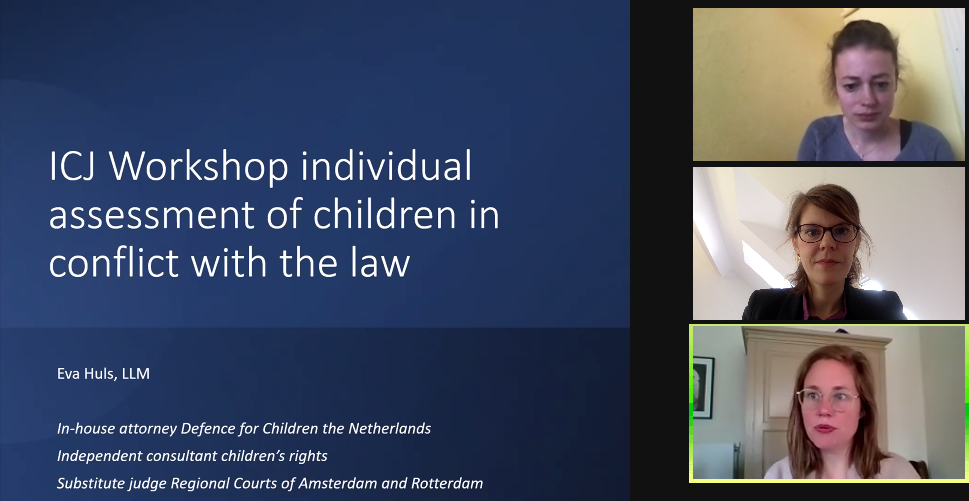
It is important to involve children suspected or accused of breaching the law, in the proceedings in a rights-based way, agreed judges, prosecutors and probation officers during a seminar for Czech and Slovak professionals, organised by the ICJ and Forum for Human Rights on 28 and 29 April.
The individual assessment according to Article 7 EU Directive 2016/800 on procedural safeguards for children suspected or accused in criminal proceedings should serve as a genuine right of the child, rather than as evidence, the seminar was told.
Speakers at the seminar emphasized that the actions of children often only reflect how they were treated by adults – including by parents, teachers, or public authorities, who have failed to address systemic inequalities and situations of discrimination. The contact of the child with the justice system provides an opportunity to help the child, to show them that they have rights and an important role in the society, and involve them actively in the proceedings, experts said. The environment in which the child grows up may have an important impact on the child’s behaviour.
During the seminar, professionals and experts discussed a number of practical questions, such as how to work with information in a child’s case: how sources in reports and assessments for the court should be as objective as possible, up to date, and how sources should be verified, so that information is not doubled or amplified in the individual assessments.
A considerable part of discussion in the seminar was dedicated to restorative justice principles and how these can serve professionals in contact with children in the justice system, in order to ensure the rights-based approach.
Restorative justice experts pointed out that most children grow out of crime without any intervention, and so minimum intervention is usually the best approach to prevent crime in the future. They explained the benefits of giving the child the feeling of control and involving them in the search for solutions, so they will feel respected, and are more likely to see the process as fair and are more likely to follow the decision made.
Practical exercises were part of the seminar and participants actively engaged and shared their concerns and challenges they encounter in their work.
The two seminars gathered over 50 judges, public prosecutors, probation officers and experts from the Ministry of Justice from both countries working in the field of child justice or family law. Experts included Mikiko Otani, ICJ Commissioner and member of the Committee on the Rights of the Child, Dainius Puras, former UN Special Rapporteur on the Right to Health, as well as judges and academics other EU Member States and from the European Forum on Restorative Justice, FORUM and the ICJ.
See the full agenda here:
In English
In Czech
The PRACTICE project is implemented by the ICJ-EI and Forum for Human Rigths aims at building the capacity of judges and other relevant professionals to ensure effective individual assessments of children in criminal proceedings in the Czech Republic and Slovakia. It supports the implementation of EU Directive 2016/800, as well as international human rights law obligations of the states concerned. In the second part of the project the ICJ-EI will draft and publish recommendations on individual assessments of children with specific vulnerabilities, to support an EU-wide interpretation and application of Article 7 of Directive 2016/800, in light of international human rights law.
This project was funded by the European Union’s Rights, Equality, and Citizenship Programme (2014-2020). The content of this publication represents the views of ICJ only and is its sole responsibility. The European Commission does not accept any responsibility for use that may be made of the information it contains.
Apr 29, 2021 | News
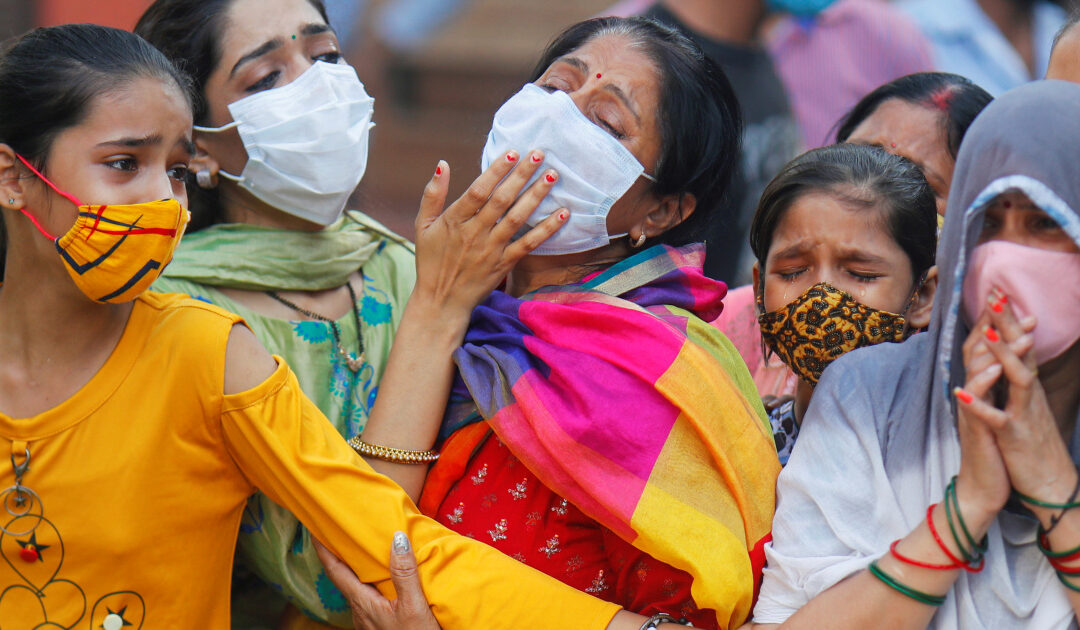
The Indian Government must urgently remedy failures that have aggravated the impact of the second wave of the Covid-19 pandemic and led to people in the country suffering record-high rates of infection and death, said the ICJ today.
The ICJ urged India’s central and state governments to comply with judicial orders regarding guaranteeing access to adequate, timely and nominally priced oxygen supply, hospital beds, COVID-19 medicines, COVID-19 tests and vaccines, in line with India’s constitutional and international legal obligations.
“The Indian federal and state governments failed to prepare for the predictable second wave of the COVID-19 pandemic, aggravating the horrific impact of the pandemic and the avoidable tragedy of between 1,500 to over 3,000 deaths daily,” said Sam Zarifi, ICJ’s Secretary General.
Since 15 April India has reported more than 200,000 cases per day and on 27 April, it reported 360,960 – the highest globally – in a devastating second wave, with the official number of deaths hovering at over 1,500 – 3,000 per day, and feared to be higher actually.
Many hospitals have reportedly turned away patients due to lack of space and some hospitals have reportedly asked those they admit to sign forms accepting the risk in case of death caused by exhaustion of oxygen supply.
The government’s failures have driven people to seek recourse in the courts. At least 11 High Courts across the country have taken cognizance of the crisis and have passed orders regarding matters including access to oxygen supply and oxygen tankers, access to medicines such as Remdesivir and to hospital beds; restriction on black marketing and private hoarding of medicines and oxygen; and prevention of violations of COVID19 regulations relating to mask wearing and social distancing.
Courts have also ordered that accurate data on COVID19 cases and deaths be relayed by the state government. The Indian Supreme Court also took suo moto cognizance of the issue and has called for a report from the central government on issues related to supply of oxygen, essential drugs, vaccine pricing.
The Delhi High Court on 21 April asked the central government to ensure that “the emergent needs of various hospitals in Delhi… would be met so that no causalities are suffered on account of discontinuing the supply of Oxygen to seriously ill COVID patients.” On 27 April, the Delhi High Court asked the Delhi government to ensure transparency in accounting of supply of oxygen and drugs to prevent hoarding and black-marketing.
The Bombay High Court on 22 April gave directions to ensure uninterrupted oxygen supply to city hospitals, access to medicines and beds, and tests.
“While the ICJ commends the Indian judiciary in trying to respond to this crisis urgently, the fact remains that a lack of a national public health strategy by the Indian Government has resulted in acute shortages of essential drugs, oxygen, and hospital beds in places where they are needed,” said Zarifi.
India is obligated under Article 12, International Covenant on Economic, Social and Cultural Rights (ICESCR), to guarantee the right to health. Under Article 12(c), ICESCR, the Indian State is required to prevent, treat and control all diseases including epidemic diseases such as COVID-19. Moreover, Article 12(d), ICESCR, requires India to create conditions that allow for “medical service and medical attention” to all in the event of a sickness, such as COVID-19. The minimum core obligations under Article 12, ICESCR, include, among others, provision of essential drugs, and a national public health strategy and a plan of action on the basis of epidemiological evidence, addressing the health concerns of the whole population. The Indian State has failed egregiously in meeting its minimum core obligations under the right to health.
The ICJ recommends, in line with decisions of Indian courts, that the Indian federal government work effectively with various state governments and other entities to remove bottlenecks in supply of medicines and oxygen, and set up additional facilities for COVID19 patients. The Indian government must also promote and model COVID appropriate behavior such as masking and social distancing and begin preparing for any subsequent waves of the pandemic.
Contact
Maitreyi Gupta, ICJ India Legal Adviser, t: +91 77 560 28369 e: maitreyi.gupta(a)icj.org
Apr 26, 2021 | News
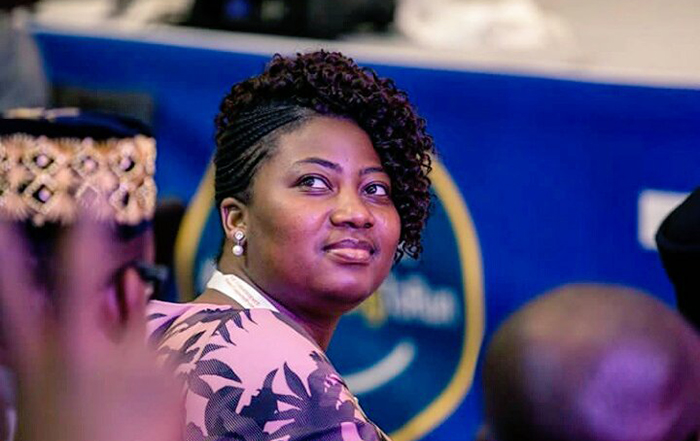
Today the International Commission Jurists called on the Zimbabwean authorities to allow for detained Member of Parliament, Joana Mamombe to be returned to hospital in order to for her to receive essential medical care.
On Thursday 22 April, MP Mamombe, who is a Member of the main opposition party Movement for Democratic Change (MDC) Alliance, was rushed to hospital from prison after complaining of serious illness. The following day, against a doctor’s advice that she remain under medical care at Parktown Hospital, prison officials forced her to leave by prison officials who returned her to prison. A video shared widely on social media shows an ailing and frustrated Mamombe, stating that she was in pain and would not leave the hospital as she just received injections.
“The Zimbabwean prison officials have abandoned their primary obligation to ensure the humane treatment of a person in its custody. They have failed Joana Mamombe in refusing to provide her access to medical care and treatment, and placed her life and well-being in jeopardy,” said Kaajal Ramjathan-Keogh, ICJ Africa director.
The ICJ has previously expressed concern about the lawfulness of Joana’s Mamombe arrest and detention (see background below).
Background
The ICJ has been monitoring the situation around the “weaponization” of criminal law in Zimbabwe, as well as the treatment of remand detainees and convicted persons. In May 2020, Mamombe along with opposition activists Netsai Marova and Cecilia Chimbiri were arrested and detained for attending a protest during Covid-19 lockdown. They alleged that they were subsequently abducted from police custody by State agents, sexually assaulted, and forced to drink each other’s urine. They were missing for two days following this abduction before they were discovered on a roadside 90km away from Harare. They were subsequently arrested for allegedly having lied about their treatment in custody and for “faking” their abduction. Since May 2020, the three women have been arrested and detained several more times. Despite Mamombe appearing in court 129 times over the last 12 months, she has been repeatedly denied bail.
Under Article 50(d) of the Zimbabwean Constitution, any person who is detained, including a sentenced prisoner, has the right to receive medical treatment. This requirement is provided for under several international treaties to which Zimbabwe is a party, including the International Covenant on Civil and Political Rights – (Articles 6, 7 and 10), the International Covenant on Economic, Social and Cultural Rights (Article 12), the UN Convention against Torture (Article 16), and the African Charter on Human and People’s Rights. The revised UN Standard Minimum Rules for the Treatment of Prisoner (Mandela Rules) provides in Rule 27 that “All prisons shall ensure prompt access to medical attention in urgent cases. Prisoners who require specialized treatment or surgery shall be transferred to specialized institutions or to civil hospitals” and that “Clinical decisions may only be taken by the responsible health-care professionals and may not be overruled or ignored by non-medical prison staff.”
These rules were endorsed by the African Commission on Human and Peoples’ Rights in its Resolution on the Collaboration between the African Commission on Human and Peoples’ Rights and Partners on Promoting the revised United Nations Standard Minimum Rules for the Treatment of Prisoners.
The ICJ has observed with concern ongoing violations of the right to health of prisoners and remand detainees by the Zimbabwean authorities. For instance, despite the risks that are posed by COVID-19 in prisons, detainees were not allowed to sanitize their prison cells or wear adequate PPE in prison.
Contact:
Kaajal Ramjathan-Keogh, ICJ Africa Director, Kaajal.Keogh(a)icj.org
Tanveer Jeewa, Media and Legal Consultant, Tanveer.Jeewa(a)icj.org
Apr 26, 2021 | News
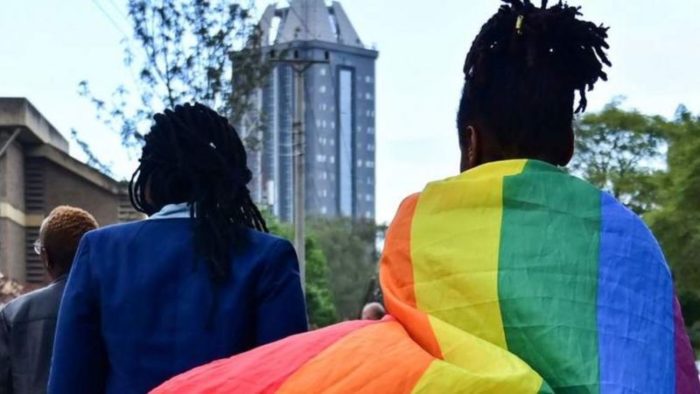
Homophobia is against African notions of ubuntu.
Over the past month, the killings of four gay men have made headlines in South Africa. Lonwabo Jack, a 22-year-old gay man, was killed on his birthday, 18 April. Earlier in April, two more gay men, were killed – Nathaniel Mbele in Vanderbijlpark and Sphamandla Khoza in Durban.
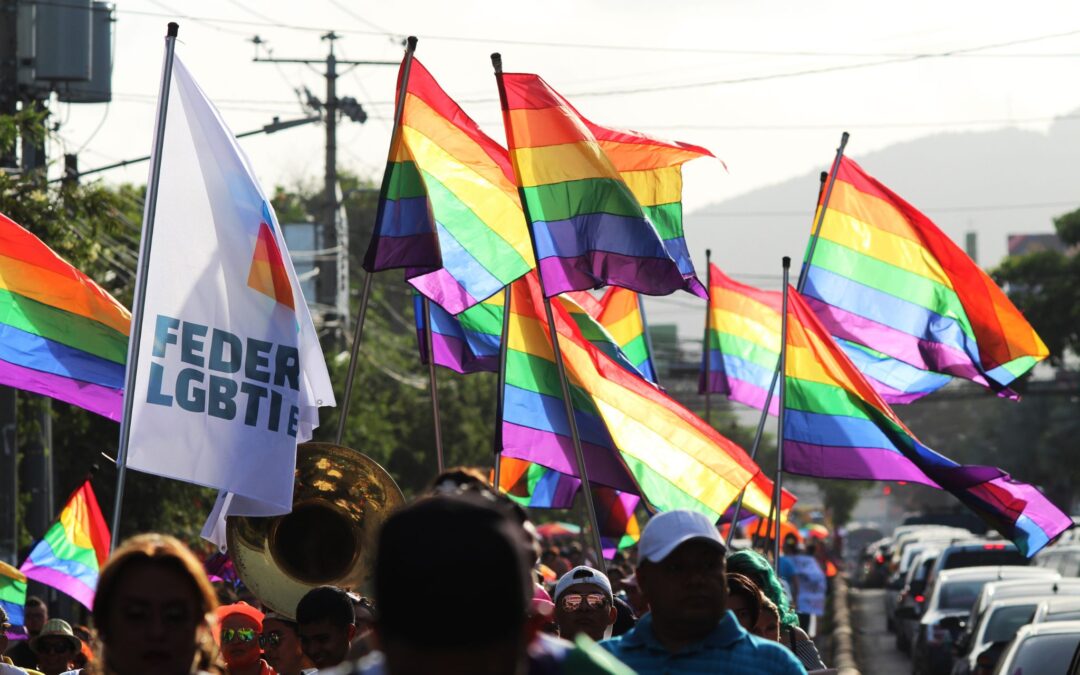
Lonwabo Jack’s killing occurred just two days after advocates for the human rights of lesbian, gay, bisexual, transgender and intersex people (LGBTI) led protests in front of Parliament in Cape Town demanding that the South African government address the countrywide homophobic violence that continues unabated.
The group Justice for Lulu, founded after Andile “Lulu” Ntuthela, a 40-year-old gay man, was killed in the Eastern Cape on 10 April. The group handed a memorandum to Parliament calling, among other things, for an urgent debate on hate crimes. The Gay and Lesbian Alliance of South Africa (GLASA), in turn, called for the government to speed up the adoption and enactment of the Prevention and Combating Hate Crimes and Hate Speech Bill B9 of 2018.
These hate crimes and attacks on the LGBTI community have been ongoing for many years. Homophobia is endemic in South Africa, despite the comprehensive and progressive legal framework, including legal protection for the human rights of LGBTI persons.
As attested to by the ICJ’s recent report, “Invisible, Isolated, and Ignored: A report on Human Rights abuses on Sexual Orientation and Gender Identity/Expression in Colombia, South Africa and Malaysia”, and illustrated by these ongoing attacks, these legal protections do not translate into real protection of human rights in practice.
“South Africa is a heteronormative society where patriarchy is deeply rooted; this contributes to violence and discrimination against LGBTI persons. The view that homosexuality is un-African is held by many. Political and cultural leaders have in the past publicly espoused anti-gay sentiments and this encourages discriminatory attitudes and violence against people based on their real or imputed sexual orientation, gender identity or expression”, said Kaajal Ramjathan-Keogh, Director of ICJ Africa.
Section 9(3) of the South African Constitution provides that the State may not unfairly discriminate directly or indirectly against anyone on the ground of sexual orientation, and the African Charter on Human and Peoples’ Rights (African Charter) grants protection against prohibited discrimination, and entitles every person to equal protection of the law.
Additionally, the African Charter entitles every individual to respect of their life and the integrity of their person, and prohibits torture, cruel, inhumane or degrading punishment and treatment.
In its Resolution on ‘Protection against Violence and Other Human Rights Violations against Persons on the basis of their real or imputed Sexual Orientation or Gender Identity’, the African Commission strongly urged “States to end all acts of violence and abuse, whether committed by State or non-state actors, including by enacting and effectively applying appropriate laws prohibiting and punishing all forms of violence including those targeting persons on the basis of their imputed or real sexual orientation or gender identities, ensuring proper investigation and diligent prosecution of perpetrators, and establishing judicial procedures responsive to the needs of victims.”
Notwithstanding South Africa’s legal obligations, LGBTI persons face significant barriers in accessing justice and effective remedies for human rights violations; particular challenges affect the criminal justice system, resulting in many cases concerning the protection of human rights of LGBTI persons not reaching the courts.
These barriers to access to justice and effective remedies for human rights violations include experiences of discrimination within the criminal justice system, as well as societal homophobia and transphobia. This is in contravention of South Africa’s duties under international, regional and national law to afford every person equal protection of the law.
The Prevention and Combatting of Hate Crimes and Hate Speech Bill needs to be adopted as a matter of urgency. It is important as measure of deterrence and to ensure that perpetrators of hate crimes be brought to justice.
The ICJ condemns the killings of members of the LGBTI community and calls on the South African government to acknowledge the discrimination, hatred and violence that LGBTI persons face every day in South Africa and to act decisively to address these harms.
Progressive legislation is not enough, the criminal justice system needs to be sensitized and educated to eliminate experiences of societal homophobia and transphobia. We echo the demands in this joint statement by multiple human rights organizations in South Africa.
Whatever one’s real or imputed sexual orientation, gender identity or expression, nobody should have to live in fear, everyone should be able to have trust in the police and judicial system. The homophobic acts and sentiments in South Africa are against African notions of ubuntu. Society cannot be free, until all its people are free, and treated with dignity.
Contact:
Nokukhanya (Khanyo) Farisè, Legal Adviser (Africa Regional Programme), e: nokukhanya.farise(a)icj.org
Tanveer Rashid Jeewa, Communications and Legal Officer, e: tanveer.jeewa(a)icj.org