Feb 4, 2021 | Agendas, Events, News
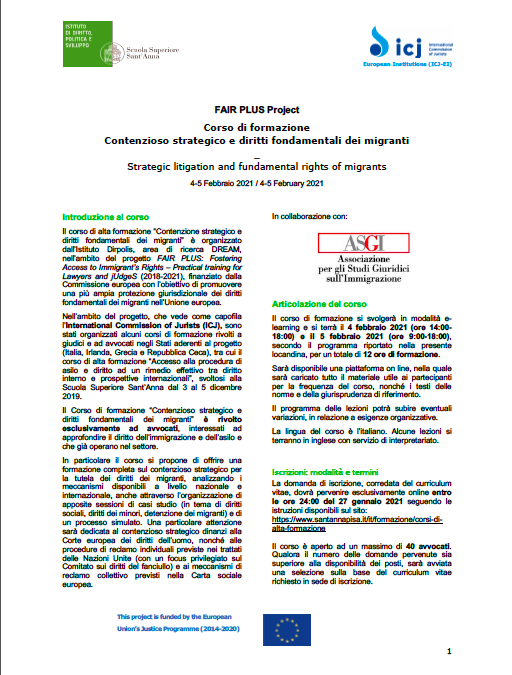
Today, the ICJ in collaboration with Scuola Universitaria Sant’Anna is holding an online training seminar on strategic litigation and fundamental rights of migrants.
The two-day training (4-5 February 2021) brings together 40 lawyers working in the field of migration and refugee law in Italy.
Experts from ASGI (Association for Juridical Studies on Immigration), ICJ and Scuola Universitaria Sant’Anna will provide an overview and analysis of redress mechanisms available at national and international level to migrants and their representatives. The training pays particular attention to strategic litigation before the European Court of Human Rights, the individual complaint procedures under the UN treaties with a focus on the Committee on the Rights of the Child, and to the collective complaint mechanism under the European Social Charter. The training will also cover social rights, children’s rights, immigration detention, and a moot court exercise.
See the full agenda here.
This training is a part of FAIR PLUS project. It was carried out with the financial support of the European Union’s Justice programme (2016-2020). Its contents represents the views of ICJ only and is its sole responsibility. The European Commission does not accept any responsibility for use that may be made of the information it contains.
Feb 4, 2021 | Advocacy, News
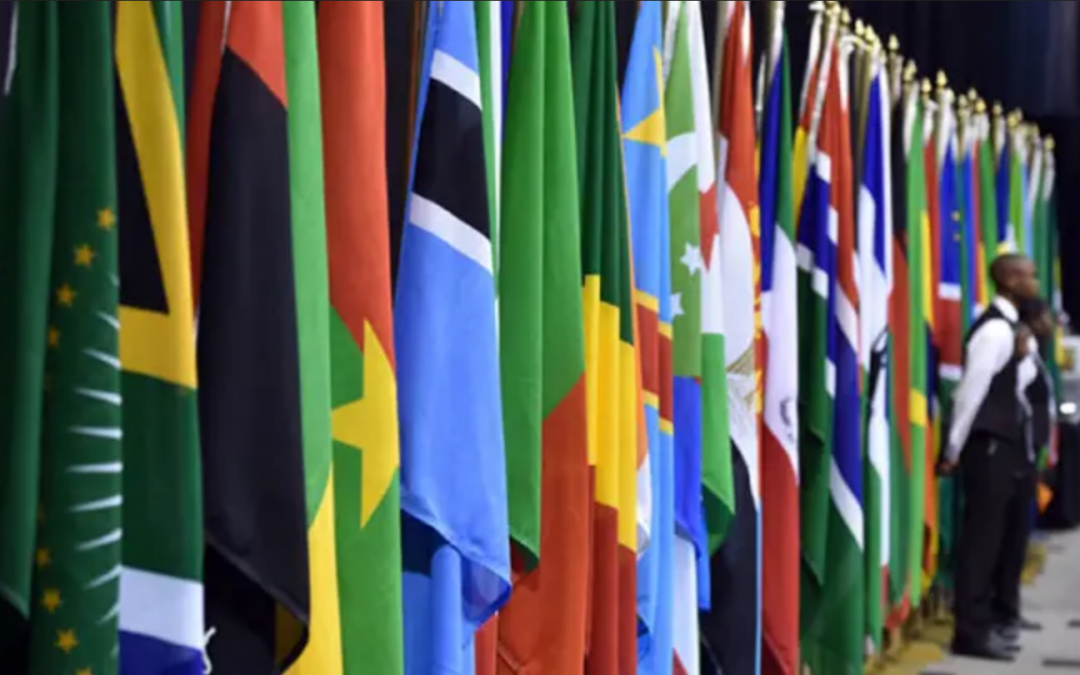
The ICJ, in a letter to the Chairperson of the African Union, recommended that the African Union acknowledge that COVID-19 vaccines are a “public good” and all States must ensure access to these vaccines in order to realize the human rights of their inhabitants.
The African Charter on Human and People’s Rights, to which most AU Member States are Party, provides that “every individual shall have the right to enjoy the best attainable state of physical and mental health” (Art 16(1)). The Charter also places an obligation on the States Parties to take all “necessary measures to protect the health of their people and to ensure that they receive medical attention when they are sick” (Art 16(2)).
This obligation must be understood consistently with the equivalent Article 12 of the International Covenant on Economic, Cultural and Social Rights (ICESCR), to which most AU Member States are also Party. That provision protects the right to the “highest attainable standard of physical and mental health”, and requires States to take all necessary measures to realize this right including to ensure “the prevention, treatment and control of epidemic, endemic, occupational and other diseases” (Art 12(1)(c)). Vaccines, for some such diseases including COVID-19, are necessarily an integral part of prevention, treatment and control.
“It is essential for the process of vaccine procurement and allocation to be in line with international human rights standards. The African continent and its people cannot afford to be left behind, and the best way to ensure that does not happen is to move forward and prioritize each individuals right to health and corresponding human rights.” –
Justice Sanji Monageng, ICJ Commissioner, Botswana
Therefore, under these treaties and other internationally binding human rights law, it is clear access to certain vaccines is necessary to fulfill a human right, must not be seen as a privilege. Vaccines are a public good and should be treated as such by States. This understanding was affirmed by the UN Committee on Economic, Social and Cultural Rights (CESCR) in December in a statement on universal and equitable access to vaccines. CESCR stressed that: “every person has a right to have access to a vaccine for COVID-19 that is safe, effective and based on the application of the best scientific developments”. It further implored States to “give maximum priority to the provision of vaccines for COVID-19 to all persons”.
Recommendations of the International Commission of Jurists
The AU will be expected by the constituents of its Members to fulfil its proper leadership function in terms its Constitutive Act an ensure the promotion and protection of human rights in Africa. To this end, the ICJ calls upon the AU to adopt resolutions:
- Calling on all member States to ensure that their COVID-19 responses, including vaccine acquisition and distribution, comply with international human rights law and standards including those particularly relating to the rights to health and to duty ensure this right is realized through international cooperation.
- Calling on all member States to endorse and fully participate in the WHO’s COVID-19 Technology Access Pool.
- Calling on all member States to openly support the approval and implementation of a waiver of intellectual property rights in terms of the TRIPS agreement in order to ensure equitable and affordable access of COVID-19 vaccines and treatment for all.
- Calling on all member States to urgently publish public, comprehensive vaccine rollout plans and transparently provide clear and full health-related information to their populations.
- Calling on all participants in COVAX to endorse and fully participate in the WHO’s COVID-19 Technology Access Pool.
- Calling on the WTO to respond expeditiously and favourably to the proposal communicated by India and South Africa for waiver of IP protection for vaccines.
To read the full submission, click here.
Contact
Kaajal Ramjathan-Keogh, ICJ Africa Director Kaajal.Keogh(a)icj.org +27 84 5148039
Tanveer Jeewa, Media and Legal Consultant Tanveer.Jeewa(a)icj.org

Feb 3, 2021 | News
The Pakistani authorities must end their ongoing persecution of the Ahmadiyya religious minority, which is now extending across borders, said Amnesty International, Human Rights Watch and the ICJ, following an attempt by the Pakistan Telecommunications Authority (PTA) to shut down the website of the Ahmadis’ US-based community.
On 24 December 2020, the PTA sent a legal notice to the administrators of trueislam.com, stating that the site was in violation of Pakistan’s Constitution, and warning they could be charged with blasphemy – a charge potentially carrying the death penalty – for referring to themselves as Muslims. The site’s administrators have also been threatened with a fine of 500 million PKR (US$3.1 million) if they fail to take the website down.
The trueislam.com website provides general information about Ahmadi history and beliefs, details the work carried out by the Ahmadi community in the US, including blood drives and veterans’ support, and features interviews with prominent community members such as the actor Mahershala Ali.
“Ahmadis in Pakistan have long been the target of systematic attacks, and successive Pakistani governments have failed to respect, protect and promote their human rights, forcing many to flee to other countries. The PTA’s efforts to close down their US website shows that even then, a life free from discrimination can be out of reach,” said Samira Hamidi, Deputy Regional Director at Amnesty International.
“Digitally policing Ahmadis on what they can or can’t preach, no matter where they are, is a flagrant violation of Pakistan’s legal obligations under the International Covenant on Civil and Political Rights to which the country is a state party. We urge the PTA to desist from its targeted campaign against Ahmadis and to ensure that everyone in Pakistan is able to express themselves and profess their religion freely, without fear of reprisals or discrimination.”
According to a PTA press release on 22 January 2021, access to trueislam.com has now been blocked in Pakistan. Amnesty International has been shown an email sent by the head of the PTA on 27 December 2020 to various servers in the country, instructing them to remove access to the website, along with three others related to the Ahmadi community.
“Pakistan has an obligation to protect the rights to freedom of expression and religion online every bit as much as in places of worship or in public spaces. Far from facilitating such protection, the PTA is extending its long arm to violate the rights of persons well beyond Pakistan’s own borders,” said Ian Seiderman, ICJ Legal and Policy Director.
The administrators of the website told Amnesty International that prior to receiving the notice, they received emails from various sources filled with hate speech.
“I was suddenly inundated with hate-filled messages from extremists on my email. And then a few days later, on December 24, the PTA emailed me a notice threatening criminal prosecution and fines for blasphemy and giving 24 hours to remove the trueislam.com website,” said Amjad Mahmood Khan, a US-based Ahmadi lawyer who was targeted.
“It’s obvious the PTA seeks to prosecute US citizens operating a US-based website. This is an unprecedented act to extend the reach of Pakistan’s abominable blasphemy laws to US citizens, and it’s a new frontier in persecution for Ahmadis worldwide,” Khan said.
The legal notice to trueislam.com is part of a broader pattern of state overreach by the PTA in recent months, which has included issuing notices to Google and Wikipedia to remove “sacrilegious content”.
“The attempt to extend Pakistan’s persecution of Ahmadis to other jurisdictions is a dangerous escalation. The Pakistani government should end its policing of Ahmadi speech outside the country and focus on providing an enabling environment for free speech, expression, and freedom of religion inside Pakistan,” said Brad Adams, Asia director at Human Rights Watch.
Background
The Pakistani penal code explicitly discriminates against religious minorities and targets Ahmadis by prohibiting them from “indirectly or directly posing as a Muslim.” Ahmadis are banned from declaring or propagating their faith publicly, building mosques, or making the Muslim call for prayer. For more information on the persecution of the Ahmadiyya community in Pakistan, see here.
On 25 December 2020, the Pakistan Telecommunications Authority issued a press release saying that Google and Wikipedia had been issued notices. On 28 December 2020, the Lahore High Court Chief Justice Qasim Khan ordered the Federal Investigative Agency to issue notices to Google, stating that shutting down websites was not enough.
For more information about the law on blasphemy in Pakistan, see here.
Contact
Reema Omer, ICJ’s Senior International Legal Advisor (South Asia), reema.omer(a)icj.org
Feb 2, 2021 | News
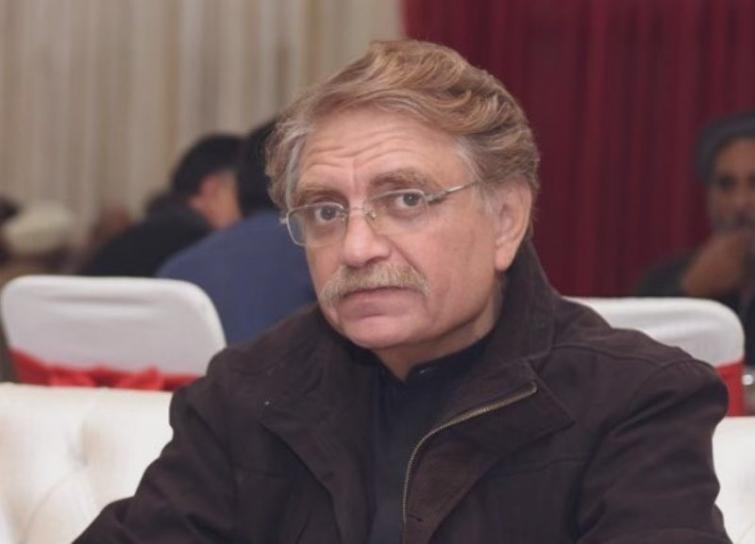
The ICJ today denounced the decision by Pakistani authorities to conduct the trial of Idrees Khattak, a leading human rights defender, in a military court.
Idrees Khattak is charged with “spying” among other offenses, related to his monitoring of violations by military forces in 2009. He was forcibly disappeared by the Pakistani Military Intelligence in November 2019. His whereabouts remained unknown until June 2020, when military authorities informed the Commission of Inquiry on Enforced Disappearances that he was being tried under the Official Secrets Act, 1923.
The Peshawar High Court yesterday dismissed a petition challenging the jurisdiction of the military courts in this case. Under international standards, including the International Covenant on Civil and Political Rights to which Pakistan is a party, civilians such as Idrees Khattak must not be subject to the jurisdiction of military tribunals.
“Idrees Khattak was subjected to the serious crime of enforced disappearance and instead of bringing the perpetrators of this violation to account, the Pakistani military has kept him arbitrarily detained and is now violating his rights further by subjecting him to a military court,” said Sam Zarifi, ICJ’s Secretary General.
“The Pakistan government must immediately release Idrees Khattak. If there is real and credible evidence implicating him in a cognizable crime, he should be tried by a civilian court and his right to a fair trial should be fully respected,” said Zarifi
The ICJ has found proceedings before Pakistani military courts fall well short of national and international laws requiring fair trials before independent and impartial courts:
- Judges are part of the executive branch of the State and continue to be subjected to military command;
- The right to appeal to civilian courts is not available;
- The right to a public hearing is not guaranteed;
- A duly reasoned, written judgment, including the essential findings, evidence and legal reasoning, is denied; and
- The death penalty may be implemented after unfair trials.
Idrees Khattak has been charged on multiple counts related to spying and other conduct “prejudicial to the safety or the interests of the State” under Section 3 of the Official Secrets Act as well as section 59 of the Pakistan Army Act, 1952. The Pakistan Army Act gives military courts jurisdiction to try civilians for certain offences under the Official Secrets Act.
The alleged conduct for which Idrees Khattak has been charged dates back to July 2009 – ten years before his enforced disappearance.
A group of 10 independent experts appointed by the UN Human Rights Council have characterized Idreek Khattak’s case as “emblematic of a series of documented enforced disappearances in Pakistan, where many human rights defenders are similarly silenced for their legitimate work of monitoring, documenting and advocating against a range of human rights violations and attacks against minorities.”
The ICJ calls on Pakistani authorities to immediately release Idrees Khattak.
The ICJ also calls on Pakistani authorities to ensure military courts only have jurisdiction to try military personnel for military offences and to bring procedures of military courts in conformity with international standards.
Contact
Sam Zarifi, ICJ’s Secretary General, sam.zarifi(a)icj.org
Reema Omer, ICJ’s Senior International Legal Advisor (South Asia), reema.omer(a)icj.org
Additional information
In July 2017, in its Concluding Observations after Pakistan’s first periodic review under the International Covenant on Civil and Political Rights (ICCPR), the UN Human Rights Committee stated that it was concerned by the jurisdiction of military courts over civilians and allegations of fair trial violations in military courts’ proceedings.
The Human Rights Committee recommended that Pakistan “review the legislation relating to the military courts with a view to abrogating their jurisdiction over civilians and their authority to impose the death penalty” and “reform the military courts to bring their proceedings into full conformity with articles 14 and 15 of the Covenant in order to ensure a fair trial.”
Jan 26, 2021 | News
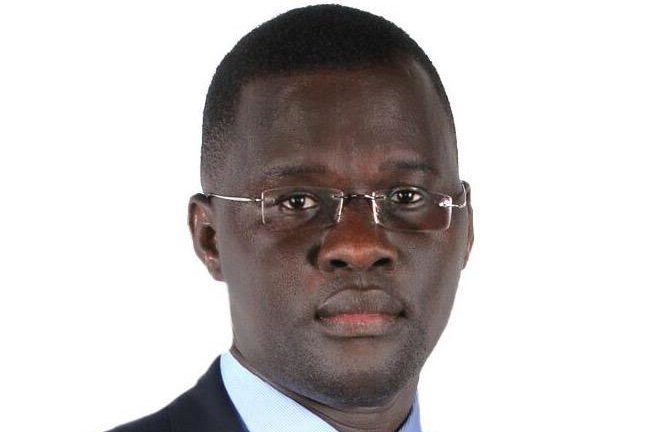
Lawyers for Lawyers (L4L) and the ICJ condemn the spurious charges under the Anti-Money Laundering brought against Ugandan lawyer and human rights defender Nicholas Opiyo and call for them to be dropped.
The organizations consider that this action stands to impede work of lawyers in the country of carrying out their professional functions, particularly regarding human rights work.
There do not appear to be legitimate grounds for these charges or the ongoing prosecution. The organizations are further concerned at numerous alleged violations surrounding the arrest, detention and pre-trial proceedings.
Nicholas Opiyo, Executive Director of Chapter Four Uganda, a civil rights charity working to defend human rights and civil liberties, was arbitrarily arrested on 22 December 2020, not informed of the reason for his arrest and effectively held in incommunicado detention for a prolonged period.
On 22 December 2020, plain clothed law enforcement officers who did not identify themselves seized Mr. Opiyo from a restaurant, along with four other individuals, including three lawyers.
He was later charged under section 3 (c) of the Anti-Money Laundering Act on allegations that he acquired USD 340,000 through the bank account of Chapter Four Uganda, knowing that “the said funds were proceeds of crime”.
Chapter Four Uganda have confirmed that these are legitimate donor funds for lawful purposes.
Sophie de Graaf, the Director of Lawyers for Lawyers, said:
“Lawyers play a vital role in the protection of the rule of law and human rights. It is the responsibility of lawyers to protect and establish the rights of citizens from whatever quarter they may be threatened. Their work is indispensable for ensuring effective access to justice for all. To fulfil their professional duties effectively, lawyers should be able to practice law freely and independently, without any fear of reprisal.”
Kaajal Ramjathan-Keogh, ICJ’s Africa Director, added:
“Uganda is required under its Constitution and under its international legal obligations, to respect and protect the independence of lawyers. These baseless charges seek to intimidate and harass Mr. Opiyo and interfere with his work as a lawyer”.
Lawyers for Lawyers and the ICJ call on the Ugandan authorities to drop the spurious charges against Mr. Opiyo and to ensure that his rights to due process and fair trial are fully respected.
The organizations emphasize that the responsibilities authorities must comply with Uganda’s international legal obligations to ensure that members of the legal profession can carry out their professional functions without harassment and improper interference, including arbitrary arrest and incommunicado detention.
Background
Article 23 of Uganda’s Constitution stipulates that suspects under detention should be brought before a court of law within 48 hours from the time of arrest. Article 27 of Uganda’s Constitution requires that a person charged with a criminal offence should be informed immediately of the charges against them. Article 28 of the Ugandan Constitution guarantees for every person the right to a fair hearing and the right to legal representation. These rights are protected under the International Covenant on Civil and Political Rights and the African Charter on Human and Peoples Rights, to which Uganda is a party.
International and regional standards on ensuring the independence of lawyers are set out in the UN Basic Principles on the Role of Lawyers (UN Basic Principles) and the Principles and Guidelines on the Right to a Fair Trial and Legal Assistance in Africa.
Contact:
Kaajal Ramjathan-Keogh, ICJ Africa Director Kaajal.Keogh(a)icj.org +27 84 5148039
Tanveer Jeewa, Media and Legal Consultant Tanveer.Jeewa(a)icj.org