Jan 15, 2021 | Advocacy, Cases, Legal submissions
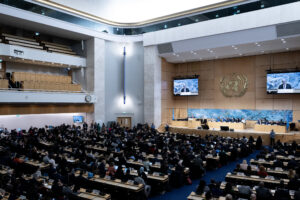
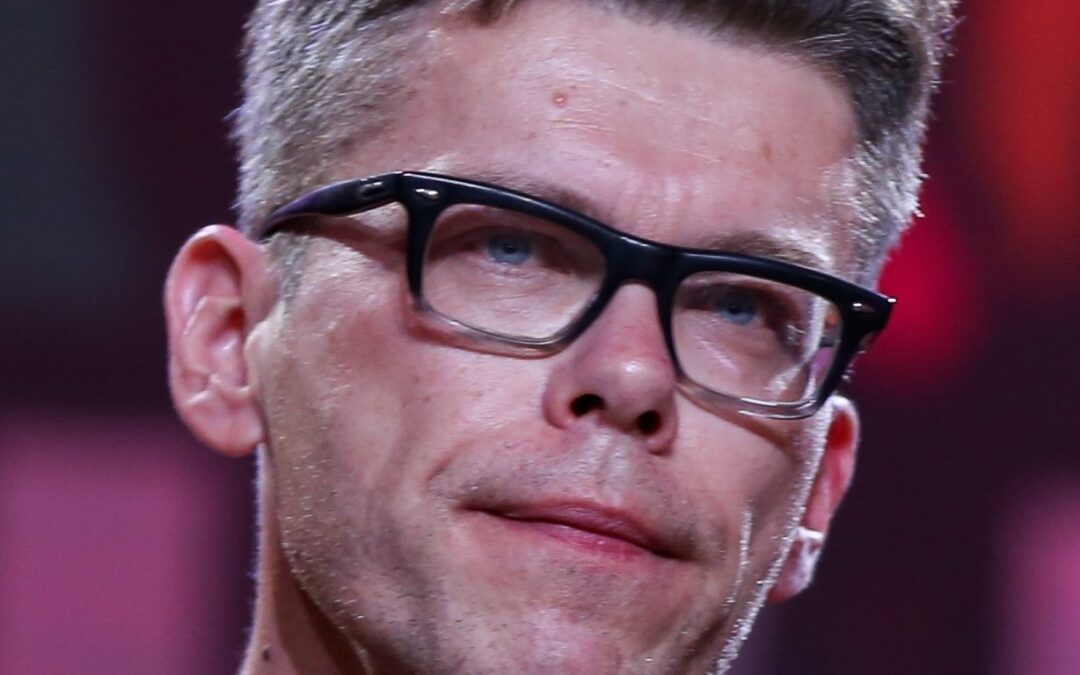
The ICJ and Amnesty International have submitted today to the European Court of Human Rights their intervention in the case of Judge Igor Tuleya who alleges that the seven disciplinary proceedings brought against him have affected his reputation as a judge and undermine the authority of the judiciary.
Judge Igor Tuleya contests that the disciplinary proceedings brought against him were in violation of his right to respect for private life and of his right to an effective remedy against violation of human rights.
The case takes place in the context of the “reform” of the judiciary in Poland, involving policy measures and legislative changes approved between late 2015 and 2020, which have seriously compromised the independence of the judiciary.
The intervention focuses on three main issues:
- The scope of application of Article 8 and Article 13 in cases relating to disciplinary proceedings against judges, in light of international standards on disciplinary proceedings and measures and effective domestic remedies; of the Court’s Convention jurisprudence; and of general principles on the rule of law and the role and independence of the judiciary.
- The situation of the independence of the judiciary in Poland as the context in which to assess the application of Articles 8 and 13.
- The scope of Article 10 as applied to judges, including those engaged in the administration of the judiciary.
ECtHR-AmicusBrief-Tuleya_v_Poland-Advocacy-Legal-Submission-2020-ENG (download the third party intervention)
Jan 14, 2021 | News
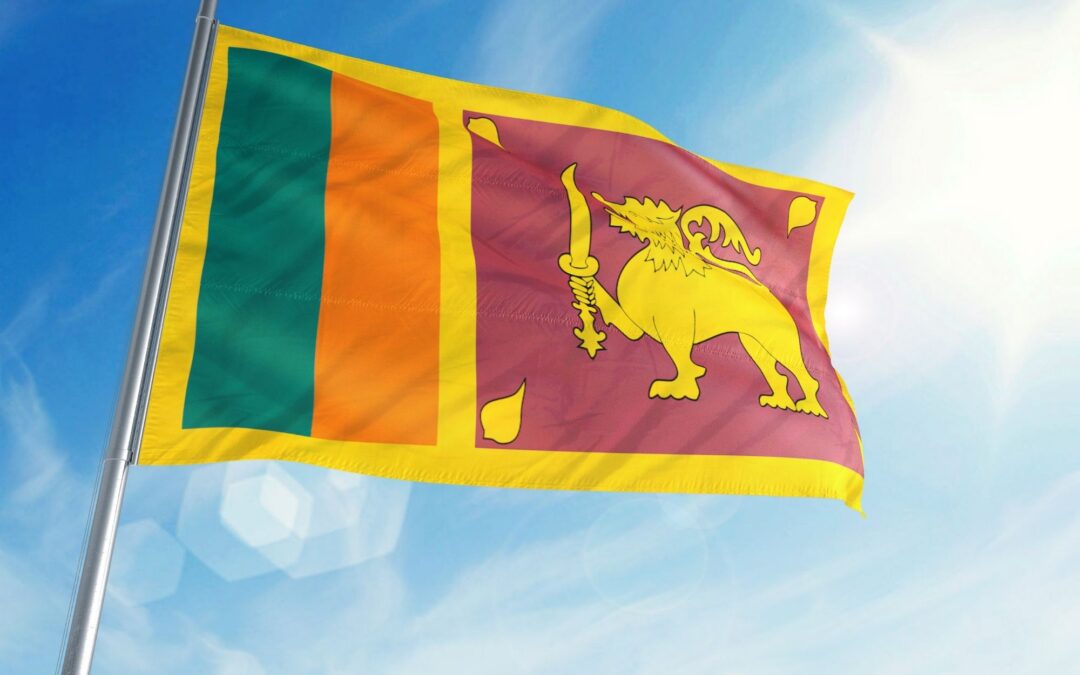
The ICJ today deplored the comprehensive failure of the Sri Lankan authorities to ensure accountability for conflict-era crimes, marked by the dropping of charges and release of all five accused in the Joseph Pararajasingham murder trial.
Parliamentarian Joseph Pararajasingham was killed by unidentified gunmen on 25 December 2005 while he attended Christmas mass at the Batticaloa St. Mary’s Cathedral, in the Eastern Province of Sri Lanka. Eight other people, including his wife, were injured during the firing.
Yesterday, the Batticaloa High Court acquitted and ordered the released of all five accused, including former-LTTE cadre and now-Member of Parliament, Sivanesathurai Chandrakanthan alias ‘Pillaiyaan’, in the trial of Pararajasingham, a former Tamil National Alliance Parliamentarian. The judgment was delivered after the Attorney General’s Department (AG) informed the Court that it would not proceed with the prosecution. The AG provided no reason publicly for this decision.
“The shelving of this case five years after it began, is a blow to the victims of this serious human rights atrocity.” said Ian Seiderman, ICJ’s Legal and Policy Director.
“This constitutes yet another marker of Sri Lanka’s consistent failure to hold accountable perpetrators of serious conflict-era crimes,” he added.
In November 2020, the AG had informed the Batticaloa High Court that he intended to proceed with the case, notwithstanding the Court of Appeal deemed inadmissible important evidence of the prosecution’s case.
The UN Office of the High Commissioner on Human Rights Investigation on Sri Lanka (2015) had already concluded that “there are reasonable grounds to believe that the Karuna Group (of which Chandrakanthan was a member) killed Joseph Pararajasingham, and that it was aided and abetted by security and army personnel.”
The acquittal in Pararajasingham’s murder case follows that of another Tamil Parliamentarian Nadarajah Raviraj, where an all-Sinhalese jury acquitted five persons including three Navy intelligence officers in December 2016, a decade after his murder.
The UN High Commissioner for Human Rights identified both these cases, in which no progress had been made, emblematic of Sri Lanka’s dismal record on accountability.
The ICJ called on the Attorney General’s Department to reopen fresh investigations into the murder of the deceased legislator so as to ensure justice and justice for the victims of this atrocity.
The ICJ notes that the Attorney General maintains the dual role of public prosecutor and as attorney for the State, positions which are prone to come into tension. The former UN Special Rapporteur on the Independence of Judges and Lawyers, Monica Pinto, following her mission to Sri Lanka in 2016 observed that “there is a general perception that, first and foremost, the [Attorney General’s] department defends the interests of the government and not the public’s interest.”
Background
Sivanesathurai Chandrakanthan who broke away from the Liberation Tigers of Tamil Eelam (LTTE) in 2004, functioned as a paramilitary, in support of the then-Rajapaksa Government. He is presently the leader of Tamil Makkal Viduthalai Pulikal (TMVP), a political party aligned to the Government and was voted into Parliament at the 2020 General Elections.
Investigation into the killing only began in 2015, after a new government was formed following elections which saw the defeat of Rajapaksa. Chandrakanthan was taken into remand custody on 11 October 2015 when he arrived at the Criminal Investigation Department to record a statement in relation to the assassination of the late Tamil politician. The Attorney General indicted that Chandrakanthan (who was 3rd accused) in the High Court of Batticaloa for offences committed under the Penal Code and the Prevention of Terrorism Act. He was granted bail for the first time in November 2020 after the primary evidence against the accused was deemed inadmissible by the Court of Appeal. The case was fixed for January 11 only after the AG informed courts he intended proceeding with the case notwithstanding the Appeal Court ruling.
Contact
Osama Motiwala, ICJ Communications Officer, Asia & Pacific programme, e: osama.motiwala(a)icj.org

Dec 21, 2020
The ICJ has issued its Annual Report 2019, which offers a concise summary of the work carried out by the ICJ over the past year.
Human rights work is tough at the best of times and while some years it feels like more progress is being made than lost, in other years the challenges faced seem almost overwhelming.
In 2019 the ICJ has continued its work in defense of the rule of law and human rights but there is no doubt that this has been a challenging year and that more challenges, predictable and unpredictable, await us in the years ahead.
These threats are serious but over the past seven decades the ICJ has learned how to face dark times effectively. As the lawyers of the human rights movement, we have fostered global institutions and grassroots human rights defenders; drafted international treaties and used them to defend the rights of individuals; worked hand in hand with the most marginalized people and advocated for their rights face to face with the most powerful authorities.
In early 2019, the ICJ was able to bring together its Commissioners, Sections and Affiliates, and supporters in a full Congress that emphasized the organization’s commitment to the core mandate issues that have directed our work for almost 70 years. These continued challenges include the fettered and ineffective judiciaries that cannot properly dispense justice (or worse, become tools of injustice), the continued marginalization of vulnerable groups, attacks on rights defenders and the inaccessibility of justice.
The Tunis Declaration that resulted from the 2019 Congress reaffirmed the ICJ’s unyielding commitment to defend and advance the rule of law and human rights at a time when commitment to them by States and other powerful actors has been wavering.
The Declaration also stressed that not only are human rights and the rule of law indispensable to the betterment of the human condition but must also be harnessed to address contemporary challenges identified by the Commission including those posed by resurgent authoritarian populism, unprecedented movements of people driven by increasing social disparity and climate change and intrusive new technologies.
These challenges in 2019 all prefigured, and were aggravated by, the unprecedented and catastrophic impact of the Covid-19 pandemic on lives and livelihoods, the repercussions of which can be expected to impact human rights development for years to come.
Throughout 2019, the ICJ has continued working against discrimination that inhibits access to justice and accountability, particularly barriers to justice on the basis of gender in Asia and the Middle East and North Africa and discrimination on the basis of sexual orientation and gender identity in Asia, Africa, and Europe.
We have pushed for accountability for human rights violations in Latin America, Asia and the Middle East, and pushed to develop new global norms necessary to hold businesses responsible for their impact on human rights
As existing and new threats to human rights and the rule of law evolve and emerge the ICJ knows that it needs to adapt to be able to meet these challenges.
In 2019, we accelerated efforts to make sure the ICJ has sufficient resources and an infrastructure that is fit for purpose, which included investing in a number of new systems and processes to support staff, improve accountability and ensure we are capable of delivering the ICJ’s expertise in a way that really benefits the lives of the people on whose behalf we work.
The implementation of some of these changes, such as technological improvements that facilitated information and resource sharing, have immediately helped us continue our work despite the movement restrictions that are currently binding our Commissioners, staff and partners. However, some of the changes we have attempted have taken longer than we hoped to implement and we know we have more work to do to guarantee we are ready to address the challenges ahead.
It can be hard to remain optimistic when there is so much work to do but the ICJ has proven itself as an organization that can stand fast in the face of extraordinary pressures and bring to bear a weight, that far exceeds its resources, in bringing about real change that improves lives. With your support we will keep doing the good work that is showcased in this report and will continue working towards our vision of a rule of law that upholds the dignity and human rights of every person everywhere.
(Message from Sam Zarifi, ICJ Secretary General)
Download
Universal-ICJ AnnualRep 2019-Publications-Annual Report-2020-ENG
Dec 21, 2020 | News
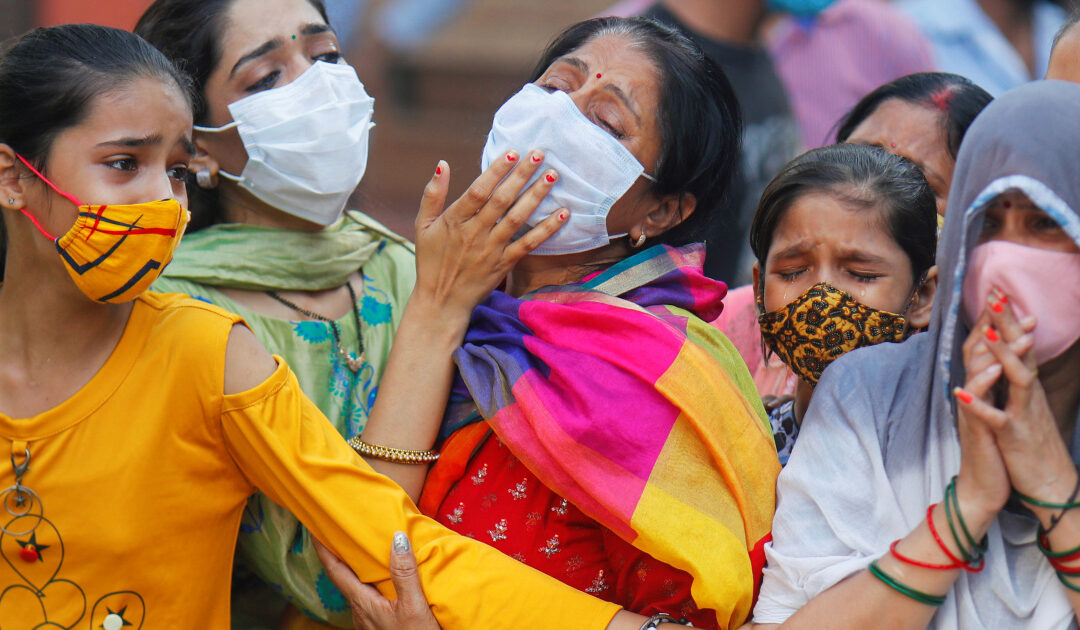
We are all about to celebrate the festive season. For a large number of people, there will be little to celebrate. Rule of Law & Human Rights violations are taking place, daily, unaccounted for and affecting their lives.
Here are some example:
- Failure to access healthcare of all people in India, Libya and South Africa;
- Enacting effective bans on abortion in some states in the USA;
- Failure to adequately tackle skyrocketing domestic violence around the globe during lockdown;
- Rights of refugees, stateless persons and destitute migrants being trampled on worldwide;
- LGBT minorities refused access to shelters;
- Ban on sexual education in Poland;
- Hungary’s prohibition of legal gender recognition;
- Curtailing of due process and fair trial rights;
- … and more
For almost a year, the ICJ has been on the front lines to document, advocate and provide efficient legal tools for civil society and the legal community to stop these abuses.
Please click on Donate, as little as 5 US$, to support ICJ fight against these repeated attacks on the most basic of Human Rights.
Dec 21, 2020 | News
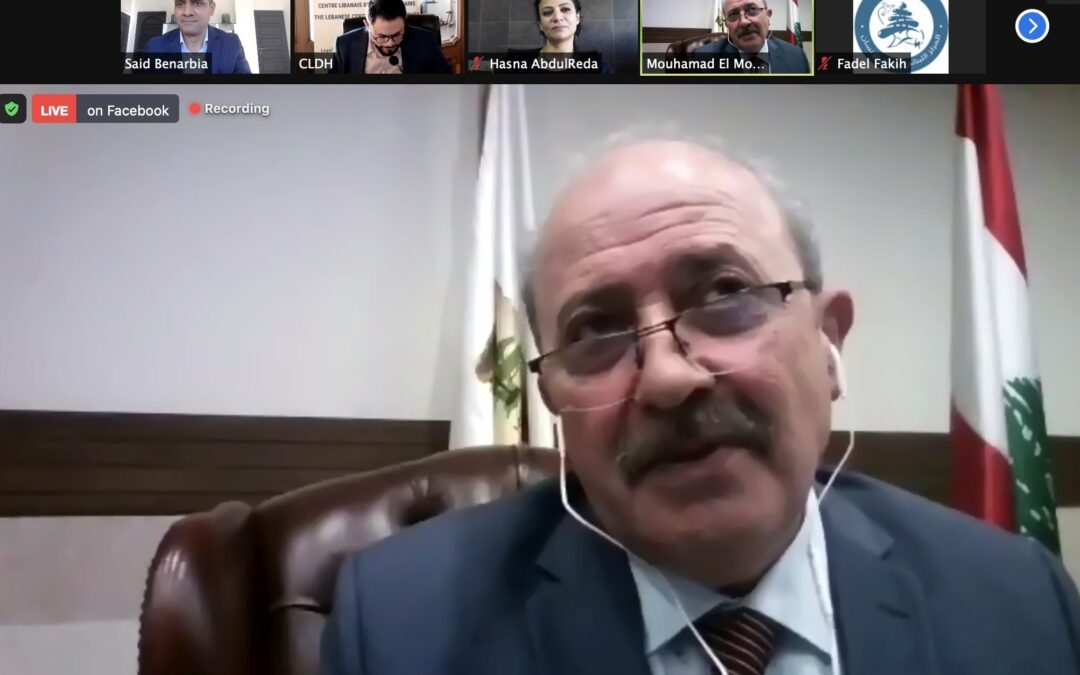
Today, the Lebanese Center for Human Rights (CLDH) and the ICJ held a joint webinar on migrants and refugees in Lebanon. The organizations addressed the situation of migrant workers and refugees including their legal and social status and the violations to which they are exposed.
The ICJ and CLDH called on the Lebanese authorities to adopt and enforce just, fair and effective legal and policy frameworks to address the entry and stay of refugees and migrants in Lebanon, and ensure the protection of their human rights in full compliance with Lebanon’s obligations under international law, particularly their non-refoulement obligations.
The ICJ launched its recent report Unrecognized and Unprotected: The Treatment of Refugees and Migrants in Lebanon, which undertakes an assessment of the Lebanese legal framework governing the treatment of migrants and refugees in the country, including their entry and stay.
The report concludes that the legal and policy gaps, together with the executive’s excessive and unchecked powers in shaping and implementing migration-related policies, have led to serious violations to refugees’ and migrants’ human rights in Lebanon.
The ICJ presented the findings and key recommendations of its report, which included urging the Lebanese government to ensure that no individual is transferred to a country where he or she faces a real risk of persecution or other forms of serious harm, such as torture or other cruel, inhuman or degrading treatment or punishment.
Procedural obstacles preventing migrant workers and refugees from accessing justice, such as lacking residency papers, were examined by CLDH.
The webinar, facilitated by CLDH’s Executive Director Fadel Fakih, commenced with opening remarks from Said Benarbia, Director of the ICJ’s Middle East and North Africa Programme, and Wadih Al-Asmar, President of CLDH. Attendees included civil society, lawyers, and members of the Lebanese Bar association.
Underscoring that Lebanon is obligated to protect the rights of refugees and asylum seekers despite not being a State party to the 1951 Refugee Convention, as these rights are guaranteed by other international conventions ratified by Lebanon including the International Covenant on Civil and Political Rights (ICCPR) and the UN Convention against Torture and other Cruel, Inhuman and Degrading Treatment or Punishment (UNCAT), Al-Asmar called on the Lebanese State to abandon its repressive security approach towards refugee populations, and to abolish the exploitative Kafala sponsorship system.
Benarbia addressed how normative gaps, together with restrictive provisions of the 1962 Law of Entry and Exit, including those criminalizing “irregular entry,” undermine the right of refugees to an individual examination of their asylum claim, their right to liberty and security of person, and their right to an effective legal remedy for human rights violations.
He pointed out that laws and policies impacting on migrants and refugees should be adopted and implemented by legally constituted civilian authorities, subject to legislative oversight and judicial review.
CLDH members Hasna Abdul Reda and Rabih Keyrouz focused on the obstacles that continue to impede migrant workers and refugees from accessing justice in Lebanon. CLDH Programme Manager, Josiane Noun, presented CLDH’s Legal Aid Programme and support services that the organization has made available to migrant workers and refugees.
Kouakou Adjo Delphine, representing the Alliance of Migrant Domestic Workers in Lebanon, discussed the challenges domestic migrants face in accessing justice for human rights violations.
The conference concluded with an open discussion between panelists and participants where possible solutions to enhance the protection afforded to migrant workers and refugees in Lebanon were discussed.