Nov 23, 2020
The ICJ has published a legal briefing paper setting out the international legal framework concerning enforced disappearance and extrajudicial killings.
The paper analyses the elements and characteristics of enforced disappearance and extrajudicial killings; describes the international institutions in charge of monitoring relevant States’ obligations; and summarizes key international standards on victims’ rights and on the duty to investigate, prosecute and sanction.
The briefing paper is published as part of ICJ’s project “Promoting justice for extrajudicial killings and enforced disappearances in Colombia, Guatemala and Peru,” supported by the European Union and is implemented under the ICJ’s Global Accountability Initiative.
The briefing paper is available in Spanish.
Contacts:
Kingsley Abbott, Director of Global Accountability and International Justice, email: kingsley.abbott(a)icj.org
Rocío Quintero M, Legal Adviser, Latin America, email: rocio.quintero(a)icj.org
Carolina Villadiego Burbano, Legal and Policy Adviser, Latin America, email: carolina.villadiego(a)icj.org
Colombia-Marco juridico-Advocacy-Analysis brief-2020-SPA (full report in Spanish, PDF)
Nov 20, 2020 | News
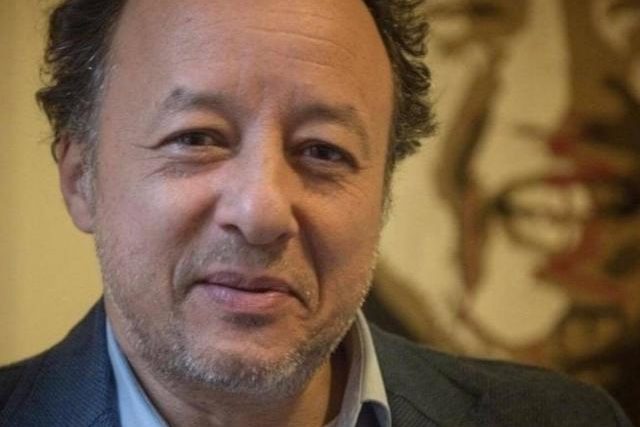
The ICJ today called on the Egyptian authorities to immediately and unconditionally release human rights defenders Gasser Abdel-Razek, Mohamed Bashseer and Karim Ennarah.
The detainees, senior staffers of the Egyptian Initiative for Personal Rights (EIPR), a leading human rights organization, were targeted in connection with their human rights work.
The arrests are part of a broader, relentless campaign by the military and government to intimidate and silence civil society organizations, including through such means as trumped-up “terrorism” charges and sham judicial proceedings.
“By arresting Mohamed Bashseer, Karim Ennarah and Gasser Abdel-Razek, and charging them with terrorism-related offences, the Egyptian government led by President Al-Sisi are writing a new, terrifying chapter in their repression playbook,” said Said Benarbia, Director of ICJ’s Middle East and North Africa Programme.
“Their crackdown on independent civil society must end.”
On 19 November 2020, Gasser Abdel-Razek, EIPR’s Executive Director, was arrested by security forces from his home in Maadi, Cairo. He appeared before the Supreme State Security Prosecution (SSSP) and charged in case No. 855/2020 with, among other charges, “joining a terrorist group” and “spreading false news.”
On 15 November 2020, EIPR’s Administrative Manager Mohamed Bashseer, was arrested at his house in Cairo. On 17 November 2020, Karim Ennarah, EIPR’s director of the criminal justice programme, was also arrested.
They both face similar charges in the same case No. 855/2020, together with other numerous lawyers and human rights defenders, including Mohamed El-Baqer and Mahienour al-Massry.
Over the past seven years, EIPR has been subjected to a pattern of harassment and persecution by the military and government.
In 2016, the assets of EIPR’s founder and former executive director, Hossam Bahgat, were frozen and he was subjected to a travel ban since then.
On February 2020, Patrick George Zaki, an EIPR researcher, was arrested at Cairo Airport by National Security Agency officers who reportedly subjected him to torture, including with electric shocks. He was charged by a public prosecutor with, among other charges, “spreading false news” and “inciting protest without authorization”. He remains in custody
The recent arrests of the three senior EIPR officials follow a visit by a number of European ambassadors and other diplomats to the EIPR Cairo offices on 3 November 2020, during which the human rights situation in Egypt was discussed.
“The international community and in particular States engaging in political and security cooperation with Al-Sisi’s regime must not overlook the serious violations against human rights defenders taking place in the country,” added Benarbia.
“They should demand an end to these violations and ensure that individuals and independent human rights groups are able to do their legitimate and critical human rights work freely and without intimidation.”
Contact
Said Benarbia, Director, ICJ Middle East and North Africa Programme, t: +41-22-979-3817; e: said.benarbia(a)icj.org
Download the Arabic version
Egypt-EIPR crackdown-News-2020-ARA
Nov 20, 2020
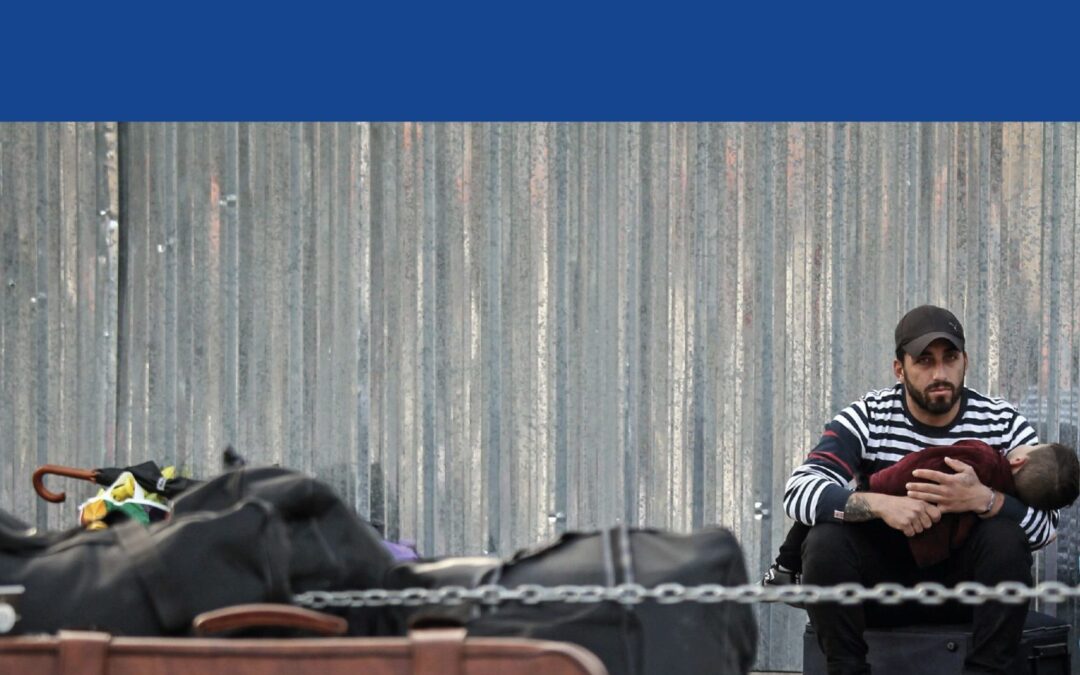
In a report published today, the ICJ calls on the Lebanese authorities to adopt and enforce a just, fair and effective legal and policy framework to address the plight of refugees, migrants and stateless persons and ensure the protection of their human rights in full compliance with Lebanon international law obligations.
In particular, the ICJ calls on the Lebanese authorities to strictly comply with their non-refoulement obligations, including by ensuring that no individual is transferred to a country where he or she faces a real risk of persecution or other forms of serious harm, such as torture or cruel, inhuman or degrading treatment or punishment.
“Lebanon has the highest refugee population per capita of any country in the world, yet it lacks any framework or procedures for individuals claiming international protection to have access to an effective process for determining their entitlement to such protection”, said Said Benarbia, ICJ MENA director.
“It is high time for the Lebanese authorities to address this normative gap and reverse their harmful policies and practices that undermine refugees’ human rights, including their right to not be subjected to refoulement.”
In its report Unrecognized and Unprotected: The Treatment of Refugees and Migrants in Lebanon the ICJ analyses how normative gaps, together with restrictive provisions of the 1962 Law of Entry and Exit, including those criminalizing “irregular entry”, undermine the right of refugees to an individual examination of their asylum claim, their right to liberty and security of person, and their right to an effective legal remedy against human rights violations.
The Lebanese authorities should ensure that no-one is deprived of their liberty solely on grounds of their immigration status, including in cases of “irregular entry” or stay. Detention must only be resorted to when there is both a clear legal and factual basis to justify it, and when it is necessary, reasonable and proportionate in the circumstances of the individual case at hand.
In the report, the ICJ expresses concern that legal and policy gaps – coupled with excessive and unchecked powers to adopt and implement migration and asylum-related policies on the part of the authorities, such as the General Security Office, local municipalities, the Ministry of Labour and the Lebanese army – are the reasons why violations of the human rights of refugees, migrants and stateless persons are rife in Lebanon.
In light of this, the ICJ calls on the Lebanese Council of Ministers and Parliament to ensure that all migration and asylum-related policies fully comply with Lebanon’s obligations under international law.
The restrictions on Syrian refugees with respect to their residency and freedom of movement and the raids and arbitrary arrests and detentions they are subjected to effectively continue to force many of them to return to Syria. Their return in those circumstances is anything but voluntary and amounts to constructive refoulement.
“Lebanon should establish a moratorium on all removals to Syria and ensure that internationally protected individuals are not transferred to a country where they face a real risk of persecution,” Benarbia added.
The restrictions and high costs imposed for obtaining or renewing legal residence permits in Lebanon force many migrants and refugees to remain in the country “illegally”, contributing to significant violations of their right to freedom of movement and to making them further liable to detention and deportation.
Background:
The ICJ addresses a number of recommendations for the Lebanese authorities in this report, including the following:
1. Become a party to the following treaties:
- the 1951 UN Refugee Convention and to its 1967 protocol;
- the 1954 UN Convention relating to the Status of Stateless Persons and the 1961 Convention on the Reduction of Statelessness;
- the International Convention on the Protection of the Rights of All Migrant Workers and Members of Their Families;
2. Ensure that people entitled to international protection, chiefly refugees, are not penalized for their “illegal” entry and stay;
3. Ensure that migrants, refugees, asylum seekers and stateless persons have – at all times and regardless of their immigration status under domestic law – the right to access the courts, to claim and be granted an effective remedy and reparation for violations of civil, political, economic, social and cultural rights recognized under international law;
4. Ensure that all allegations of torture and other ill-treatment against refugees and migrants, including those instances linked to death in police and military custody, be investigated promptly, independently and thoroughly, and those responsible be held to account.
Contact
Said Benarbia, Director, ICJ Middle East and North Africa Programme, t: +41-22-979-3817; e: said.benarbia(a)icj.org
Download
Lebanon-Migrant rights-Publications-Reports-Thematic reports-2020-ENG (full report in English, PDF)
Lebanon-refugees report-News-2020-ARA (story in Arabic, PDF)
Lebanon-Migrant rights-Publications-Reports-Thematic reports-2020-ARA (full report in Arabic, PDF)
Nov 20, 2020 | News
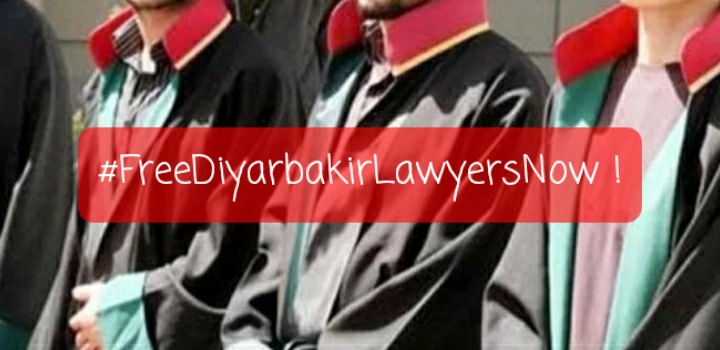
The ICJ expressed today its deep concern at the arrest of some 26 lawyers and the investigation of around 100, including lawyers active in the defence of human rights, in South East Turkey.
The arrests and investigations are on charges of “establishing organizations in favour of an illegal organisation”, an offence often used to arrest human rights defenders in Turkey.
Around 26 lawyers were arrested this morning, 20 November, at around 5 a.m. and taken to the Anti-Terror Branch of the Police in Diyarbakır in South East Turkey as part of an investigation against the Democratic Society Congress. The ICJ understands that around 100 lawyers are concerned by this investigation that also concerns the Lawyers Association for Freedom (ÖHD).
“We are concerned that these lawyers have been arrested under vague charges that are often used in Turkey to target human rights defenders ,” said Roisin Pillay, Director of the ICJ Europe and Central Asia Programme,
“Unless law enforcement officers and prosecutors promptly substantiate such charges with adequate evidence, as well as demonstrating valid grounds for their detention, the lawyers must be released immediately.”
The ICJ will follow the case closely to ascertain whether international law and standards are respected in any action against the lawyers concerned.
“Lawyers are often subject to bogus charges in Turkey to curb their work, including in defence of human rights, and the exercise of their freedom of expression,” added Roisin Pillay.
The ICJ stressed that lawyers should never be subject to arrest for the legitimate exercise or defence of human rights or for the exercise of their professional functions. In the event that any of the lawyers arrested on 20 November are subject to charges for cognizable crimes consistent with Turkish and international law, they must be brought promptly before a court to further consider whether specific grounds exist to justify their continued detention. If charged, they must be ensured the right of fair trial by an independent and impartial court.
Background
It is understood from documents shared by unofficial sources that lawyers’ houses in Diyarbakır have been raided as a part of an ongoing investigation conducted against the Democratic Society Congress (“DSC”). DSC was established in 2007 and continued its work at the premises of Diyarbakır municipality in between 2011-2014. Its members included deputies, mayors, and councillors. The Speaker of the Parliament of the time, officially invited the DSC to the meetings of the Constitutional Reconciliation Commission in 2012. However, following the state of emergency declared in July 2016 a criminal investigation against the DSC was initiated. In 2018, the building of the DSC was raided under this investigation and information about the Congress was gathered during that operation. It is understood that the arrests were made based on information obtained in that search. In the search warrant issued by the public prosecutor today, security forces were asked to look for “organisational documents” such as books, journals, articles, newspapers etc. as evidence. From this warrant, it is clear that the operation conducted against lawyers are not related to acts of violence.
The detained lawyers and human rights defenders are: Lawyers Association for Freedom co-chair Av. Bünyamin Şeker, İHD Adıyaman branch head av. Bülent Temel, ÖHD and İHD member lawyers Abdulkadir Güleç, Eshat Aktaç, Serdar Talay, İmran Gökdere, Diyar Çetedir, Serdar Özer, Feride Laçin, Gamze Yalçın, Gevriye Atlı, Resul Tamur, Cemile Turhallı Balsak, Ahmet Kalpak, Devrim Barış Baran, Neşet Girasun, Sedat Aydın, Mahsum Batı, Şivan Cemil Özen and Haknas Sadak, former TTB Central Council Member and still Honorary Board member Dr. Şehmus Gökalp, HRFT Diyarbakır Representation Office employee, Social Service Expert Serkan Delidere, MED Prisoner and Convict Families Association of Legal and Solidarity Associations Federation (TUHAD-FED) executive Diyar Dilek Özer and federation member Leyla Ayaz, DİVES member Süleyman Okur, Bağlar Municipality Council member Panayır Çelik,
Contact:
Roisin Pillay, e: roisin.pillay(a)icj.org
Massimo Frigo, e: massimo.frigo(a)icj.org
Nov 19, 2020 | News
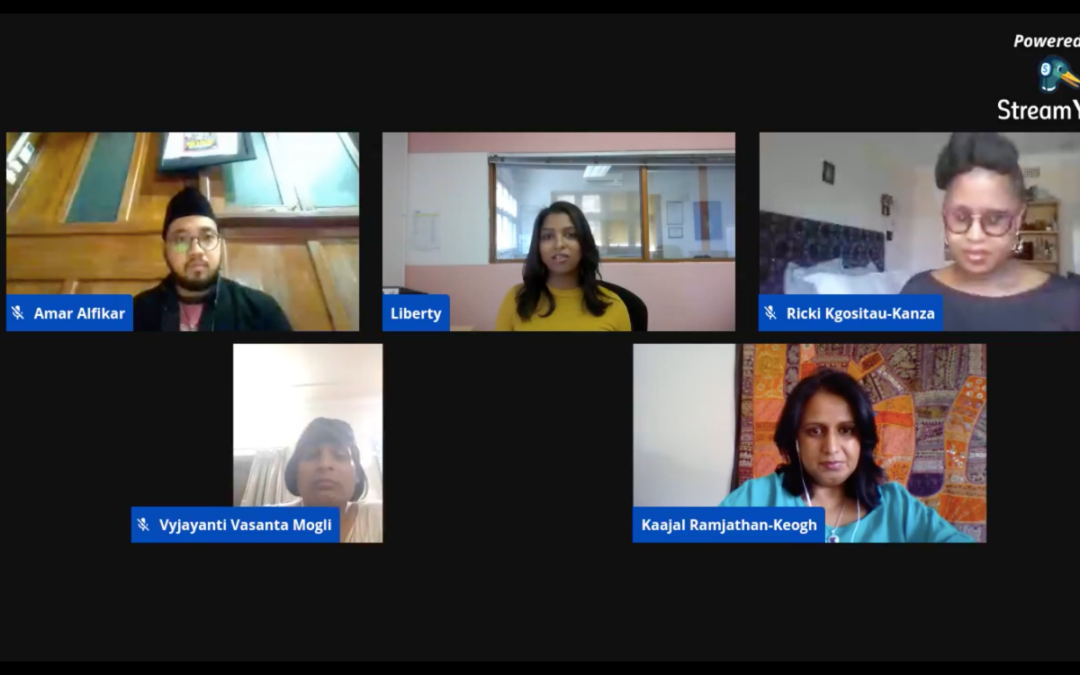
On 18 November 2020, the ICJ hosted a Facebook Live with four transgender human rights activists from Asia and Africa. It highlighted the stark reality between progressive laws and violent lived realities of transgender people.
The 20th November 2020 marks the Transgender Day of Remembrance (TDOR), the day when transgender and gender diverse people who have lost their lives to hate crime, transphobia and targeted violence are remembered, commemorated and memorialized.
The discussions focused on their individual experiences of Transgender Day of Remembrance in their local contexts, the impact of COVID-19 on transgender communities and whether laws are enough to protect and enforce the human rights of transgender and gender diverse people.
The renowned panelists were from four different countries, Amar Alfikar from Indonesia, Liberty Matthyse from South Africa, Tshepo Ricki Kgositau-Kanza from Botswana and Vyjayanti Vasanta Mogli from India. The panel was moderated by the ICJ Africa Regional Director, Kaajal Ramjathan-Keogh.
The panel aimed to provide quick glimpses into different regional contexts and a platform for transgender human rights activists’ voices on the meaning of Transgender Day of Remembrance and the varied and devastating impacts of COVID-19 on transgender people.
The speakers discussed the meaning that they individually ascribe to Transgender Day of Remembrance. A common theme running across the conversations was that it is not enough to highlight issues and concerns of the transgender community only on this day. Instead, these discussions should be part of daily conversations about the human rights of transgender people at the local and international level.
Liberty Matthyse discussed the importance of remembering the transgender persons who have lost their lives over the past years, and added:
“South Africa generally is known as a country which has become quite friendly to LGBTI people more broadly and this, of course, stands in stark contradiction to the lived realities of people on the ground as we navigate a society that is excessively violent towards transgender persons and gay people more broadly.”
Amar Alfikar describes his work as “Queering Faiths in Indonesia”. This informs his understanding of what Transgender Day of Remembrance means in his country and he believes that:
“Religion should be a source of humanity and justice. It should be a space where people are safe, not the opposite. When the community and society do not accept queer people, religion should start giving the message, shifting the way of thinking and the way of narrating, to be more accepting, to be more embracing.”
It was clear from the discussions that a lot of the issues that have become prominent during the COVID-19 pandemic, have not arisen due to the pandemic. In fact, the COVID-19 pandemic has had the effect of a magnifying glass, amplifying existing challenges in the way that transgender communities are treated and driven to margins of society. Speaking about the intersectionality of transgender human rights, Vyjayanti Vasanta Mogli said:
“I don’t think LGBT rights or transgender rights exist in isolation, they are part of a larger gamut of climate change, racial equality, gender equality, the elimination of plastics, and all of that.”
The panelists had different opinions on whether it is enough to rely on the law for the recognition and protection of the human rights of transgender individuals.
The common denominator, however, was that the laws as they stand have a long way to go before fully giving effect to the right of equality before the law and equal protection of the law without discrimination of transgender people.
Tshepo Ricki Kgositau-Kanza, who was a litigant in a landmark case in Botswana in which the judiciary upheld the right of transgender persons to have their gender marker changed on national identity documents, explained the challenges with policies which, on their face, seem uniform:
“Uniform policies… are very violent experiences for transgender persons in a Botswana context where the uniform application of laws and policies is binary and arbitrarily assigned based on one’s sex marker on one’s identity document which reflects them either as male or female. Anybody in between or outside of that kind of dichotomy is often rendered invisible and vulnerable to a system that can easily abuse them.”
This conversation can be viewed here.
Contact
Tanveer Jeewa, Communications Officer, African Regional Programme, e: tanveer.jeewa(a)icj.org