Nov 26, 2020 | Advocacy, News
Pakistani authorities should urgently and impartially investigate a surge in violent attacks on members of the Ahmadiyya religious community, Human Rights Watch, Amnesty International, and the ICJ said today.
The authorities should take appropriate legal action against those responsible for threats and violence against Ahmadis.
Since July 2020, there have been at least five apparently targeted killings of members of the Ahmadiyya community. In only two of the cases have the police taken a suspect into custody. Pakistani authorities have long downplayed, and at times even encouraged, violence against Ahmadis, whose rights to freedom of religion and belief are not respected under Pakistani law.
“There are few communities in Pakistan who have suffered as much as the Ahmadis,” said Omar Waraich, head of South Asia at Amnesty International. “The recent wave of killings tragically underscores not just the seriousness of the threats they face, but also the callous indifference of the authorities, who have failed to protect the community or punish the perpetrators.”
On November 20, a teenage assailant is alleged to have fatally shot Dr. Tahir Mahmood, 31, as he answered the door of his house in Nankana Sahib district, Punjab. Mahmood’s father and two uncles were injured in the attack. The police reported that the suspect “confessed to having attacked the family over religious differences.”
Several recent attacks have occurred in the city of Peshawar, in Khyber Pakhtunkhwa province. On November 9, Mahmoob Khan, 82, was fatally shot while waiting at a bus station. On October 6, two men on a motorcycle stopped the car of Dr. Naeemuddin Khattak, 57, a professor at the Government Superior Science College, and fired five shots, killing him. His family said he had a “heated argument over a religious issue” with a colleague a day before. Jamaat-i-Ahmadiyya, a community organization, issued a statement saying Khattak had previously received threats and was targeted because of his faith.
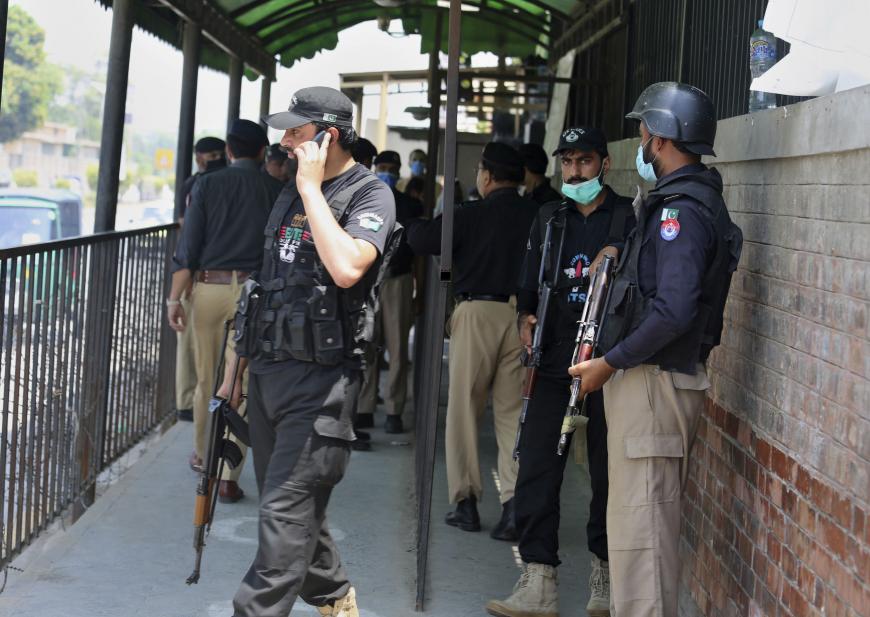
On August 12, Meraj Ahmed, 61, was fatally shot as he was closing his shop in Peshawar. On July 29, an alleged 19-year-old assailant killed Tahir Ahmad Naseem, 57, inside a high-security courtroom. Naseem was facing trial for blasphemy accusations. In a video that circulated on social media, the suspect states that Naseem was a “blasphemer.”
Successive Pakistani governments have failed to protect the human rights and security of the Ahmadiyya community. The penal code explicitly discriminates against religious minorities and targets Ahmadis by prohibiting them from “indirectly or directly posing as a Muslim.” Ahmadis are banned from declaring or propagating their faith publicly, building mosques, or making the Muslim call for prayer.
The authorities arbitrarily arrest, detain, and charge Ahmadis for blasphemy and other offenses because of their religious beliefs. The police have often been complicit in harassment and bringing fabricated charges against Ahmadis or have not intervened to stop anti-Ahmadi violence. The government’s failure to address religious persecution of Ahmadis has facilitated violence against them in the name of religion.
“Pakistan was part of the consensus at the UN General Assembly that required that states take active measures to ensure that persons belonging to religious minorities may exercise fully and effectively all their human rights and fundamental freedoms without any discrimination and in full equality before the law,” said Ian Seiderman, legal and policy director at the International Commission of Jurists. “The Pakistani government has completely failed to do so in the case of the Ahmadis.”
The Pakistani government also promotes discriminatory practices against Ahmadis. For example, all Pakistani Muslim citizens applying for passports are obliged to sign a statement explicitly stating that they consider the founder of the Ahmadi community an “imposter,” and consider Ahmadis to be non-Muslims.
Pakistani laws against the Ahmadiyya community violate Pakistan’s international legal obligations under the International Covenant on Civil and Political Rights (ICCPR), which Pakistan ratified in 2010, including the rights to freedom of conscience, religion, expression, and association, and to profess and practice one’s own religion.
Independent experts of the United Nations Human Rights Council, including the special rapporteurs on the freedom of religion or belief and the UN special rapporteur on minority issues, and the special rapporteur on extrajudicial, summary or arbitrary executions, have previously expressed concern at the persecution of the Ahmadiyya community in Pakistan.
“Pakistan’s federal and provincial governments should take immediate legal and policy measures to eliminate widespread and rampant discrimination and social exclusion faced by the Ahmadiyya community in Pakistan,” said Patricia Gossman, associate Asia director at Human Rights Watch. “The government should repeal the blasphemy law and all anti-Ahmadiyya provisions.”
Contact
In Brussels, for Human Rights Watch, Patricia Gossman: +32-472-982-925; or +1-347-322-8638 (WhatsApp); or gossmap@hrw.org. Twitter: @pagossman:
In Geneva, for the International Commission of Jurists, Ian Seiderman: e: ian.seiderman(a)icj.org
In Colombo, for Amnesty International, Omar Waraich: +44 7378 980870 (mobile); or omar.waraich@amnesty.org.
Nov 26, 2020 | Advocacy, News
Today, the ICJ joined other NGOs in condemning the Thai police’s use of force against peaceful protesters marching to the national parliament in Bangkok on November 17, 2020.
The statement reads:
We, the undersigned organizations, condemn the Thai police’s unnecessary and excessive use of force against peaceful protesters marching to the national parliament in Bangkok on November 17, 2020. We are concerned that authorities could employ similar measures when facing protesters who have declared they will march to the Siam Commercial Bank headquarters on November 25.
On November 17, police set out barriers and barbed wire to prevent a peaceful march organized by pro-democracy movements from reaching the parliament. Protesters planned to protest outside the parliament as members of parliament and senators debated seven different proposals for constitutional amendments, including an amendment proposed by the lawyers’ non-governmental organization iLAW (Internet Law Reform Dialogue), which was supported by the People’s Movement and its allies. Police refused to let protesters through the barriers, and when the demonstrators acted to breach those barriers, police crowd control units used water cannons laced with purple dye and an apparent teargas chemical, as well as teargas grenades and pepper spray grenades, to forcibly disperse thousands of demonstrators, including students, some of whom are children. Water cannons were first used at approximately 2:25 pm and police continued their efforts to disperse protesters, with constant use of water cannons, teargas and pepper spray into the evening.
Police also failed to prevent violence between pro-democracy protesters and royalist “yellow shirts” near the Kiak Kai intersection, near the parliament. Initially, riot police separated the two groups. However, video posted on social media later showed police officers informing the royalist protesters that they would withdraw and seconds later they vacated their position between the two groups. During the ensuing skirmishes, both sides were filmed throwing rocks and wielding clubs. Live broadcasts included sounds that appeared to be gunfire.
The Erawan Medical Centre reported that there were at least 55 protesters injured, mostly from inhaling teargas. It also reported that there were six protesters who suffered gunshot wounds. The injured included children: a kindergartener and elementary school students.
Although some pro-democracy protesters engaged in violent conduct in responding to royalist protesters, we emphasize that the overwhelming number of protesters were entirely peaceful. Furthermore, we wish to emphasize that while specific participants of an assembly who engage in violence are subject to a response that is lawful, strictly necessary and proportionate, they also retain all other human rights including the right to life, to security of person and to freedom from torture and other cruel, inhuman or degrading treatment or punishment.
International human rights law, as expressed in the International Covenant on Civil and Political Rights (ICCPR), which Thailand acceded to in 1996, protects the rights to freedom of expression (article 19) and peaceful assembly (article 21). But Thai authorities have routinely enforced censorship and stifled public assemblies, meetings, and discussions about human rights, political reforms, and the monarchy’s role in society.
In General Comment 37, which sets out the content Thailand’s legal obligations in guaranteeing the right of peaceful assembly, the United Nations Human Rights Committee—the body responsible for interpreting and applying the ICCPR—made clear that there is a presumption in favor of considering assemblies to be peaceful. Isolated acts of violence by individuals should not be attributed to others, to the organizers, or to the assembly as such. While the right of peaceful assembly may in certain cases be limited, the onus is for the State to justify any restrictions, which must pass the tests of legality, legitimacy, and necessity and proportionality.
Read the full statement in English and Thai.
Nov 25, 2020
In a Briefing Paper published today, the ICJ calls on the Nepal authorities to do more to protect the right to health of all its inhabitants, as COVID-19 cases continue to rise while lockdown restrictions remain relaxed.
According to data from the World Health Organization, Nepal has since the onset of the pandemic recorded over 220,000 positive cases of COVID-19 and COVID-19 has contributed to over 1,300 deaths. However, in line with trends globally, the human rights impact of the pandemic extends beyond direct infections and deaths.
“The response of the government in Nepal to COVID-19 has been marred by a failure to fully respect the right to health of those living in Nepal. Unfortunately, despite repeated interventions by the Nepal Supreme Court the government’s public health responses often remain inconsistent with Nepal’s international human rights obligations,” said Mandira Sharma, the ICJ’s Senior International Legal Adviser in Nepal.
The Briefing Paper highlights a number of concerns with the COVID-19 response measures adopted by Nepal:
- Nepal has failed to fully implement Supreme Court orders relating to its obligations to realize the right to health in the context of COVID-19;
- Quarantine centres and isolation wards set up by the government have often lacked essential staff and services, which has compromised the health and welfare of those staying in them;
- Health services unrelated to COVID-19, including maternal reproductive health services and emergency medical services, have been compromised resulting in significant violations of the right to health and preventable deaths;
- The responsible authorities have failed to take sufficient measures to hold accountable of private healthcare providers who have unlawfully refused treatment on the basis of suspicion that a patient is COVID-19 positive;
- There has been insufficient protection and support to health workers who work under difficult circumstances often without the necessary equipment and PPE and have suffer societal stigma, discrimination and assault.
- There has been a lack of effective measures to protect the rights of women and girls exposed to gender-based violations and who have experienced difficulty in accessing justice during lockdown periods. Access to reproductive health services have been compromised.
- The authorities have failed to take sufficient measures to protect persons deprived of their liberty in overcrowded prisons that commonly lack adequate sanitation, healthcare and other services to ensure health and safety of prisoners.
- There has been a general failure of the Government to ensure that healthcare goods, services and facilities are accessible and affordable to all without discrimination of any kind.
The Briefing Paper outlines the international and domestic law and standards applicable to Nepal’s COVID-19 response measures, including jurisprudence of recent the Supreme Court judgments.
It makes a number recommendations to the responsible authorities with a view to achieving compliance with Nepal’s human rights obligations and more effective protection of the rights to health and other human rights in the context of the COVID-19 pandemic.
Contact:
Mandira Sharma, ICJ Senior International Legal Adviser, e: Mandira.Sharma(a)icj.org
Download
Nepal-Right to health-Advocacy-analysis brief-2020-ENG (full paper in PDF)
Nov 23, 2020 | Incidencia, Publicaciones
El documento informativo contiene un resumen de los aspectos claves del marco jurídico internacional en materia de desaparición forzada y ejecución extrajudicial.
Para ello, en primer lugar, el documento contiene una conceptualización (definición y elementos constitutivos) de estos crímenes, según el derecho internacional.
Adicionalmente, el documento presenta las instancias internacionales que monitorean específicamente el cumplimiento de las obligaciones de los Estados en materia de desaparición forzada y ejecuciones extrajudiciales.
Por último, el documento cierra con un recuento de los principales estándares internacionales relacionados con los derechos de las víctimas y el deber de los Estados de investigar, enjuiciar y sanciona a los responsables de estos crímenes.
El documento informativo fue elaborado como parte del proyecto “Promoviendo justicia para ejecuciones extrajudiciales y desapariciones forzadas en Colombia, Guatemala y Perú”, que se implementa con el apoyo de la Unión Europea. El proyecto hace parte la Iniciativa Global de Justicia y Rendición de Cuentas de la CIJ.
Contactos:
Kingsley Abbott, Director de la Iniciativa Global de Justicia y Rendición de Cuentas de la CIJ, correo electrónico: kingsley.abbott@icj.org
Rocío Quintero M, Asesora Legal, América Latina, correo electrónico: rocio.quintero@icj.org
Carolina Villadiego Burbano, Asesora Legal, América Latina, correo electrónico:
carolina.villadieg@icj.org
Colombia-Marco juridico-Advocacy-Analysis brief-2020-SPA (documento en español, PDF)
Nov 23, 2020 | Agendas, Events, News
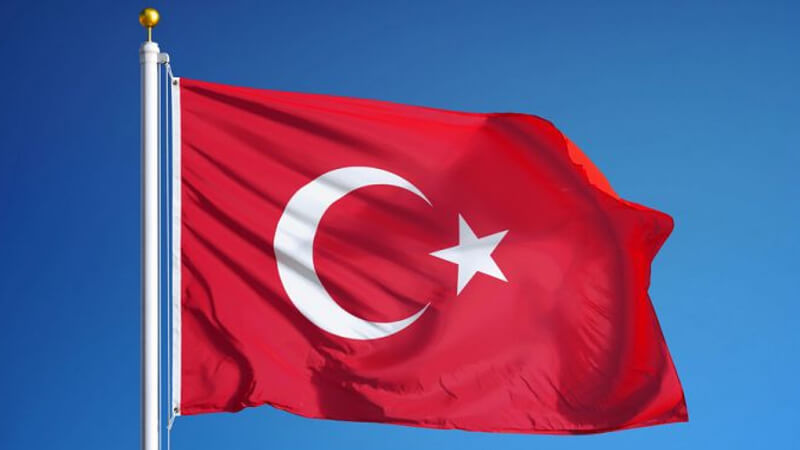
The International Commission of Jurists and the Human Rights Joint Platform (IHOP) invite you to a Zoom workshop where Turkish and international experts will discuss the plight of violence against women in Turkey in light of the Council of Europe’s Istanbul Convention.
To participate, please register by writing an email to ihop@ihop.org.tr (the Human Rights Joint Platform).
Join our great panel of speakers:
– Dame Silvia Cartwright, ICJ Commissioner, former Governor-General and High Court judge of New Zealand, former CEDAW member
– Prof. Dr. Feride Acar, former Member of CEDAW, former Chair of GREVIO
– Zuzanna Warso, Lawyer, Helsinki Foundation for Human Rights of Poland
– Hülya Gülbahar, Women rights activist, Lawyer
– Nebahat Akkoç, Chair of KAMER Foundation
– Yasemin ÖZ, Lawyer, Kaos GL
– Feray Salman, General Coordinator of the Human Rights Joint Platform (IHOP)
– Massimo Frigo, ICJ Senior Legal Adviser
IHOPICJ-ZoomConference-WomenAccess2Justice-Agenda-2020-ENG (download the agenda in English)
IHOPICJ-ZoomConference-WomenAccess2Justice-Agenda-2020-TUR (download the agenda in Turkish)
The event is part of the REACT project: implemented jointly by ICJ and IHOP, this project seeks to support the role of civil society actors in turkey in ensuring effective access to justice for the protection of human rights. This project is funded by the European Union. The views expressed in the event do not necessarily reflect the opinion of the EU.