Dec 8, 2020
An opinion editorial by Carolina Villadiego Burbano, ICJ Latin America Legal and Policy Adviser, and Carlos Lusverti, ICJ consultant.
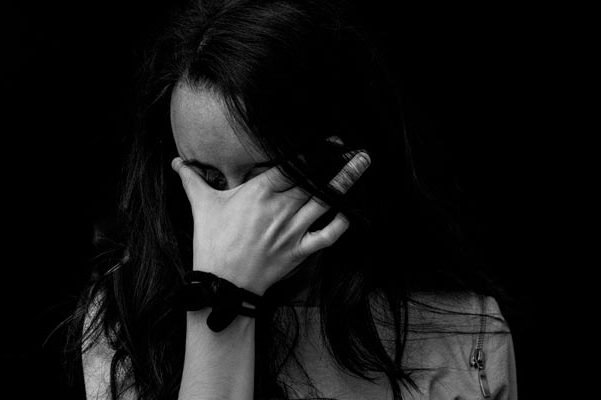
Around the world, women’s human rights have been severely and adversely affected during the COVID-19 pandemic, and Venezuela is no exception to this trend.
The more general ongoing human rights crisis that Venezuela has faced since 2014, which has had a disproportionate impact on women and girls, and the COVID-19 pandemic and the sometimes ill-conceived government measures to tackle the pandemic have combined to aggravate the situation of women’s human rights.
This was recently well expressed in a 2020 October Resolution on Venezuela by the UN Human Rights Council. It is against this backdrop that we discuss the health risks and the gender-based violence that women are facing during the pandemic in Venezuela with the aim to provide some recommendation for authorities.
Health risks for women
According to the Economic Commission for Latin America and the Caribbean (ECLAC), women in Latin America are “particularly affected by the pressure on health systems because they account for 72.8% of people employed in the sector in the region”.
The Venezuelan healthcare system was in a critical state before the COVID-19 pandemic engulfed the country, and the pandemic has aggravated the situation. For many years, several institutions and organizations have been expressing about the dire state of the health system in the country.
Since the pandemic struck, the Inter-American Commission of Human Rights (IACHR) and Human Rights Watch have called on the need to protect Venezuelans’ rights to health; the OHCHR has provided similar statements.
During the pandemic, the already limited health services have been primarily focused on responding to COVID-19. This has resulted in a diminished access to non-COVID-19 related health services, including those needed for sexual and reproductive care and for pregnant women.
A group of 91 Civil society organizations and additional individuals have expressed concerns about cases of pregnant women suspected of COVID-19 who have been denied timely care and the suspension of pre and postnatal care services in maternal health centers.
They stressed the need for the authorities to act to guarantee women’s rights, including access to sexual and reproductive care for women and girls.
Also, women in disproportionate numbers are responsible for dependents or people in need of care within their homes, and this has exposed them to additional risks during the pandemic.
The Asociación Venezolana de Educación Sexual Alternativa (AVESA), a local NGO, documented how the lockdown/quarantine measures increased home care tasks and deepened the economic problems women were already experiencing.
It is clear the Venezuelan authorities must act more effectively to protect women’s rights during the pandemic in line with their legal obligations under international human rights law.
Venezuela is party to several human rights treaties that provide for this legal obligation, including the Inter-American Convention for the Prevention, Punishment and Eradication of Violence against Women (“Convention of Belém do Pará”) and the UN Convention on the Elimination of all Forms of Discrimination against Women (“CEDAW”).
The CEDAW Committee has stated that States should “address the disproportionate impact of the pandemic on women’s health”; “provide sexual and reproductive health as essential services”; “protect women and girls from gender-based violence”; and “strengthen institutional response, dissemination of information and data collection”, among other recommendations.
Additionally, Venezuelan authorities should adopt policies related to the prevention and treatment of COVID-19 with gender perspective, considering the intersectional approach and the different contexts in which may women live in Venezuela, including situations of poverty.
Also, authorities should ensure proper resource allocation to the health system, guarantee the health right of the health workers, and provide sexual and reproductive health services for all women.
Home is an unsafe place for women
In 2019, Venezuelan civil society organizations reported that in 58.6% of the cases of violence against women, the perpetrators were their current partners; and in an additional 7.7% of the cases, the attacks were perpetrated by former partners.
According to the media monitoring done by COTEJO, during that year around 107 women were victims of femicides.
The United Nations Population Fund (UNFP) representative in Venezuela said that during the first semester of 2020 there were more femicides than people dying from COVID-19. Also, the Attorney General’s office reported on 185 cases during 2020.
From the start of the pandemic and until early October, most courts and tribunals were closed. As a result, women faced even greater obstacles in securing access to justice.
The OHCHR has reported that it observed “a lack of due diligence in investigative proceedings related to cases of gender-based violence” in Venezuela.
In addition, as reported by the Centro de Justicia y Paz (CEPAZ), a local NGO, there are several obstacles for access to justice for women, including the dereliction of police responsibilities when women go to file complaints or the lack of rapid answers from prosecutors that result in victims needing to repeatedly to ask them for information.
The Venezuelan authorities must better tackle gender-based violence according with their legal obligations under international law, including the Inter-American Convention of Belem Do-Pará that stresses that the state must “apply due diligence to prevent, investigate and impose penalties for violence against women” (Article 7b).
Also, authorities should do better to ensure that the justice system provide services for women victims of gender-based violence, including the adoption of specific protocols for the effective investigation and the protection of victims.
Venezuelan authorities should comply with the recent ruling of the Inter-American Court of Human Rights (Lopez Soto case of 2018), and must implement compulsory permanent training programs for public servants that work in the justice and the health care systems, who intervene in cases of women victims of any type of violence.
Finally, Venezuelan authorities must allow the legitimate action of the humanitarian organizations, who can provide humanitarian aid with gender perspective during the COVID-19 pandemic.
Venezuela-Women at Risk-News-op-eds-2020-ENG (full op-ed in PDF)

Dec 7, 2020 | News
The ICJ called today on the Council of the EU, the European Parliament and the European Commission to give a central role to the judiciary and ensure effective judicial remedies to prevent and redress human rights violations, in the draft Regulation on “Terrorist Content Online”.
The call comes as the final phase of the negotiations between the EU institutions on the draft Regulation begin this Thursday 10 December..
The ICJ is concerned that without procedures that incorporate core rule of law principles in the Regulation, there is a risk of improper and overreaching suppression of content that will undermine freedom of expression and other rights online.
Among the ICJ ‘s concerns with the proposal as it currently stands, is that it does not provide for mandatory judicial authorization and judicial review of orders by national authorities to remove content online deemed to be “terrorist”.
According to draft Article 4 of the proposal, national “competent authorities” would have the power to issue a decision requiring a hosting service provider to remove “terrorist” content or disable access to it within one hour from receipt of the removal order.
The ICJ considers that the power to issue removal orders to censor content online within an hour, without prior judicial authorisation, risks leading to excessive, arbitrary or discriminatory interference with the freedoms of expression, religion, assembly and association online as well as with rights to privacy and data protection of persons residing or present in EU Member States.
Under international and EU human rights law applicable to EU Member States, any restriction on these rights must be prescribed by law so that their application is clear and foreseeable, must be necessary and proportionate in the circumstances of the individual case, must be non-discriminatory and must allow access to an effective remedy. Furthermore, any person must have access to a court of law to access justice against breach of their rights.
The proposal, if approved without modifications, would allow – as yet undetermined – national authorities to order the removal of content online from host service providers, even if these are residing outside of their State or of the EU, without any authorisation from a court of law.
Furthermore, the definition of “terrorist” content relies heavily on a recent EU Directive on Combatting terrorism (2017/541) that allows for excessively wide criminalisation of forms of expression, such as the offence of “glorification of terrorism”.
The proposal is also likely to trigger a jurisdictional quagmire among EU Member States that will in the medium term be counter-productive to the objective of countering terrorism.
The power of a non-judicial authority of a Member State to issue orders binding upon public and private entities of another Member State, without prior judicial approval on the constitutionality and lawfulness of the order and of the rights in each jurisdiction, will seriously undermine mutual trust among jurisdictions, a core principle for the functioning of the EU Area of Freedom, Security and Justice. This is particularly important in light of the serious threats to the Rule of Law occurring in certain EU Member States that are already impairing the functioning of other EU criminal cooperation instruments, such as the European Arrest Warrant.
The ICJ therefore calls on all the actors heading the negotiations on the EU Regulation on “Terrorist Content Online” to adjust the current draft in order to provide for a central role of judicial authorities of EU Member States in the scheme of the Regulation by requiring designated “competent authorities” under Article 4 of the Regulation to be judicial authorities; to provide for judicial review, and to include adequate safeguards in the Regulation to ensure the protection of the human rights of any person subject to their jurisdiction.
Background
In 2018 the European Commission published a proposal of the EU Regulation on “Terrorist Content” Online. The aim of the Regulation is to establish uniform rules to prevent the misuse of hosting services for the dissemination of terrorist content online.
The Regulation has been since discussed by the Council of the EU and the European Parliament, who are currently in the final stages of negotiation in the EU legislative procedure in closed sessions among representatives of the European Parliament, the Council of the EU and the European Commission (the so-called trialogue procedure).
Contact:
Karolina Babicka, Legal Adviser, Europe and Central Asia Programme, e: karolina.babicka(a)icj.org
Massimo Frigo, Senior Legal Adviser, Europe and Central Asia Programme, e: massimo.frigo(a)icj.org, t: +41 79 749 99 49
Dec 2, 2020 | News
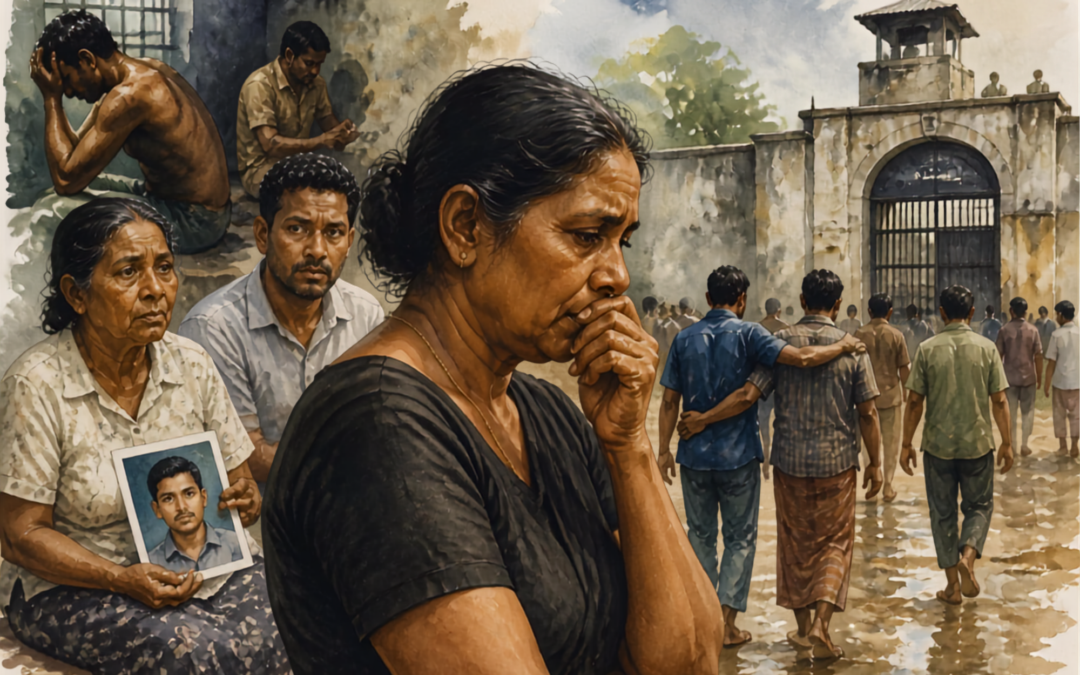
The ICJ today called upon the Sri Lankan authorities to conduct a prompt, thorough and impartial investigation into the events involving the use of lethal force by prison guards at Mahara prison on 29 and 30 November, which left at least nine inmates killed and over hundred others injured.
The action by the guards was taken in response to unrest resulting from protests by inmates over unsafe and overcrowded conditions in the context of the COVID-19 pandemic.
The ICJ also called for urgent measure to address the unsafe conditions in Sri Lankan prisons to protect the right to health and life, including where necessary by releasing detainees.
“The tragic events of Mahara prison are a consequence of the failure of the Sri Lankan authorities to effectively address the situation of prison conditions, which has turned into a full blown human rights and public health crisis in the wake of the COVID-19 pandemic”, said Ian Seiderman, ICJ Legal and Policy Director
The unrest was the culmination of a series of protests staged by the prisoners demanding an increase in coronavirus testing and new isolation facilities for infected prisoners. According to Senaka Perera, President of the Committee for Protecting the Rights of the Prisoners, around 200 inmates of the Mahara prison have been infected with COVID-19.
While the Minister of Rehabilitation and Prison Reforms and the Inspector General of Police have instructed the Criminal Investigation Department to probe the unrest caused at the Mahara Prison, the Minister of Justice has formed a separate five-member committee, chaired by former High Court Judge Kusala Saorini Weerawardena, to conduct its own investigation.
The ICJ recalls that under international law, the use of lethal force by State authorities is only permissible where strictly necessary to protect life. This standard should govern any investigation, and those responsible for unlawful conduct resulting in death or injuries to prisoners must be held to account.
“In addition to ensuring accountability and redress for any violations at the Mahara Prison, the authorities must act swiftly to meet the legitimate grievances of detainees throughout the country”, added Ian Seiderman.
“An effective response is not optional, but is necessary to fulfill the State’s legal obligation to provide for equal access to healthcare and health services to prisoners, who are among the most vulnerable to the ravages of COVID-19 in highly unsafe, enclosed and overcrowded environments.” Seiderman added.
The incident follows a wave of similar protests in several other prisons in the country. On 18 November, five inmates who were under quarantine at the Old Bogambara Prison attempted to break out and an inmate was shot dead when the prisoner officers opened fire at the fleeing inmates.
The ICJ called for the release of detainees who are particularly at risk of losing their life or suffering severe health effects from COVID-19. This would also apply to other convicts who could be released without compromising public safety, such as those sentenced for minor, non-violent offences.
Background
Speaking in Parliament on Monday, Minister of Rehabilitation and Prison Reforms Dr. Sudharshini Fernandopulle stated that the Government has taken steps to reduce overcrowding by directing COVID-19 positive prisoners out of the prisons to the Welikanda Hospital and moving all women inmates to the Kandakadu Rehabilitation Centre. She also stated that a mechanism has been put in place to obtain bail for those arrested for minor drug offences. Moreover, a presidential pardon has been granted to over 600 convicts of minor offences who were in remand due to their inability to pay the required fine.
Several UN bodies, including the WHO and OHCHR, came together in recommending that States consider limiting the deprivation of liberty including pretrial detention, to a measure of last resort and enhance efforts to resort to non-custodial measures.
Contact
Osama Motiwala, Communications Officer – osama.motiwala(a)icj.org
Nov 29, 2020 | News
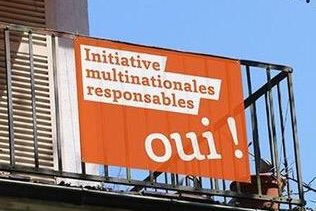
The ICJ and its Swiss section (ICJ-CH) regret the results of the vote yesterday in Switzerland rejecting the popular initiative for responsible businesses. While the majority of the popular vote approved the initiative, there was no majority of voters in a majority of Cantons.
Under the Swiss constitution, to be approved, such initiative amending the constitution needs the majority of both the popular vote in Switzerland and in a majority of Cantons part of the Swiss Confederation.
“The strong support gathered by this initiative, expressed in the majority of the popular vote, is encouraging, and a strong message that the Federal Parliament and the Federal Council must take into account in the process of the implementation of the legislative counter-proposal and in further legislation,” said Marco Sassòli, ICJ commissioner.
A counter-proposal prepared by the Federal Council is now approved by default. This counter-proposal foresees due diligence obligations for some sectors and reporting obligations, but no specific legal liability.
The proposed initiative would have required multinationals based in Switzerland to respect human rights also abroad, and to carry out human rights due diligence to identify and prevent potential human rights abuses.
It would also have clarified the multinational’s legal responsibility for violations of internationally recognized human rights and environmental norms by enterprises that it controls and operate abroad.
Nov 26, 2020
The ICJ has published global guidance on the use of videoconferencing in judicial proceedings, particularly in the context of the COVID-19 pandemic.
The briefing note supplements more general guidance on the Courts and COVID-19 issued in May 2020.
The guidance recognizes the challenges faced by judiciaries in balancing the right to health of judges and others involved in court proceedings, with the fundamental role of the judiciary in securing access to justice, legal protection of human rights, and the rule of law.
It sets out a series of recommendations based on an analysis of relevant provisions of treaties and other international instruments, as well as international and regional jurisprudence.
While encouraging judiciaries and other authorities to seek to ensure availability of videoconferencing capabilities for litigants who voluntarily choose to use it, as well as in certain other circumstances, the guidance also highlights limits on the non-consensual imposition of videoconferencing on certain kinds of hearings, particularly criminal trials and judicial review of deprivation of liberty.
Among the topics covered are the following:
– ensuring public access to proceedings conducted by videoconference;
– the scope for videoconferencing in criminal proceedings, and the particular issues with its use in criminal trials;
– serious concerns with non-consensual imposition of videoconferencing for the judicial review of deprivation of liberty;
– essential considerations for ensuring the right to a lawyer in any use of videoconferencing.
Read also
The guidance is part of a wider body of ongoing work by the ICJ on human rights, the rule of law, and COVID-19. Other publications can be found here.
Download
Universal-videoconferencing courts and covid-Advocacy-2020-ENG (full paper, in PDF, in English)
Universal-videoconferencing courts and covid-Advocacy-2020-ARA (full paper, in PDF, in Arabic)
Universal-videoconferencing courts and covid-News-Press Release-2020-ARA (Press Release, in PDF, in Arabic)