Nov 11, 2020 | Advocacy, News
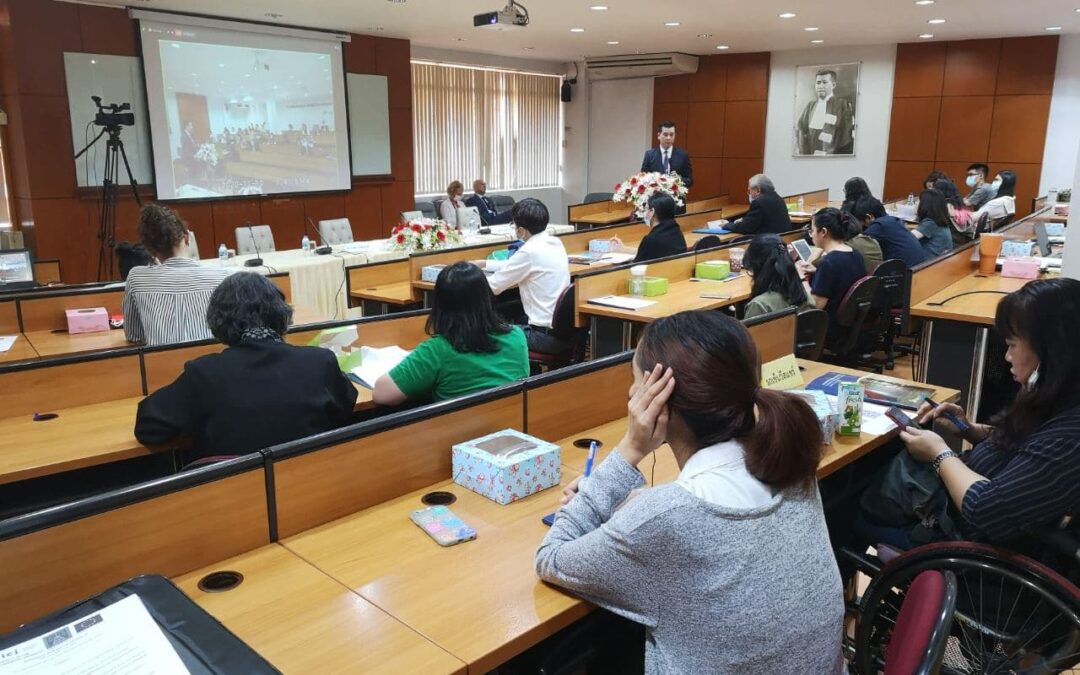
The ICJ, human rights advocates and other experts emphasized the State obligation to protect that right to health of all persons without discrimination at a public seminar held on 10 November 2020.
The ICJ sponsored the event on “Human Rights, Right to Health, and the Coronavirus Disease (COVID-19) Pandemic” in collaboration with the Delegation of the European Union to Thailand, Thammasat University’s Faculty of Law, and the Ministry of Justice’s Department of Rights and Liberties Protection Department.
Participants in the event included interested members of the public, students, human rights academics, and members of civil society organizations.
Welcome remarks were delivered by Giuseppe Busini, Deputy Head of the European Union Delegation to Thailand and Professor Jaturon Tirawat, Director of Thammasat University’s Public International Law Centre.
Dr. Seree Nonthasoot, Member of the UN Committee on Economic, Social and Cultural Rights in an opening address recalled the obligations of Thailand under International Covenant on Economic, Social and Cultural Rights to protect the right of everyone to the enjoyment of the highest attainable standard of physical and mental health. This includes ensuring the right of access to health facilities, goods and services on a non-discriminatory basis. Among these elements are access to housing and sanitation, potable water and essential drugs. He also highlighted the need to implement a national public health strategy and plan of action to make COVID-19 vaccine a global common good.
ICJ Legal Adviser Timothy Fish Hodgson provided a briefing about human rights effects wrought by the COVID-19 pandemic, as exposed in the ICJ report – Living Like People Who Die Slowly: The Need for Right to Health Compliant COVID-19 Responses. He emphasized the particularly acute and discriminatory impact of the pandemic on already marginalized people around the world, particularly on non-citizens, older persons, women and girls, LGBT persons, persons deprived of their liberty, persons with disabilities, sex workers and healthcare workers.
A panel discussion regarding the economic social and cultural rights during and post COVID-19 pandemic, moderated by Chonlathan Supphaiboonlerd, Associate National Legal Advisor of the ICJ, addressed the measures taken by the Thai government to control the spread of COVID-19 and to mitigate social and economic impacts of the pandemic, especially their human rights effects on persons with disabilities, refugees, asylum seekers, persons deprived of their liberty, indigenous peoples and migrant workers in Thailand.
The panel included Nareeluc Paichaiyapoom, Director of International Human Rights Law Division, Department of Rights and Liberties Protection, Ministry of Justice; Dr. Lalin Kovudhikulrungsri, Faculty of Law, Thammasart University; Naiyana Thanawattho, Executive Director, Asylum Access Thailand; Dr. Siwanoot Soitong, Bangkok Legal Clinic, Faculty of Law, Thammasat University; Nattaya Petcharat, Stella Maris Seafarer’ Center Songkhla; and Suebsakun Kidnukorn, Researcher, Area Based-Social Innovation Research Center (Ab-SIRC), Mae Fah Luang University.
Watch the recording of the seminar here.
Further reading
Thailand: The ICJ and other human rights groups make supplementary submission to the UN Human Rights Committee
Nov 3, 2020 | Advocacy, Non-legal submissions
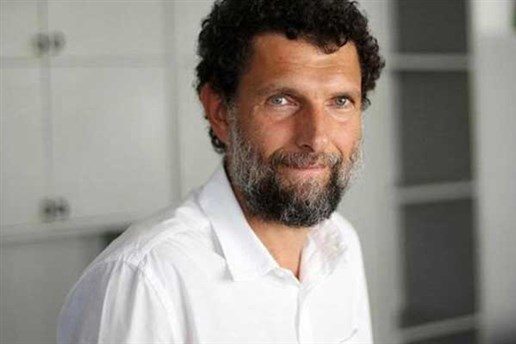
Today, the ICJ, jointly with Human Rights Watch and the Turkey Human Rights Litigation Support Project presented a submission to the Council of Europe’s Committee of Ministers on the Execution of the judgment Kavala v. Turkey by the European Court of Human Rights.
The ICJ, Human Rights Watch and the Turkey Human Rights Litigation Support Project have reported to the Committee of Ministers that new charges against Osman Kavala lack concrete evidence and have been brought in disregard of the ECtHR’s judgment whose execution the Committee is supervising.
The three NGOs have invited the Committee of Ministers to:
- consider adopting the relevant recommendations formulated in their submission of 29 May 2020;
- take further steps to end immediately Mr. Kavala’s ongoing detention, which has now exceeded three years;
- recognise at its 1390th 1-3 December 2020 meeting that the continuing detention of Osman Kavala violates Article 46 of the Convention concerning the binding nature of final judgments of the ECtHR and may trigger Article 46(4) infringement proceedings against Turkey; and
- take the necessary general measures identified in the NGOs submission of 29 May 2020 to implement the ECtHR’s ruling concerning Article 5 and 18 of the Convention in Kavala v. Turkey and its findings in relation to human rights defenders.
In their initial submission dated 29 May 2020, the NGOs underlined that decisions taken to prolong Mr. Kavala’s detention had been guided by political expediency and there had been a concerted political effort by the Turkish authorities to prevent Mr. Kavala’s release. These bases for their action are evident in the sequence of court orders prolonging Mr. Kavala’s detention, the actions of the executive and prosecutors in relation to the judicial procedures against him, and the lack of due consideration of the ECtHR’s findings and objective deliberation as to the legality of any deprivation of liberty. The NGOs made several recommendations to the Committee of Ministers, on the issues of the general and individual measures, to ensure full implementation of the ECtHR’s judgment and Mr. Kavala’s immediate release on the ground that the Court’s judgment clearly applies to his ongoing detention.
In its judgment on Kavala v. Turkey, the EUropean Court of Human Rights, on 10 December 2019, found violations of Article 5(1) (right to liberty and security), Article 5(4) (right to a speedy decision on the lawfulness of detention) and Article 18 (limitation on use of restrictions on rights) of the European Convention on Human Rights taken together with Article 5(1). The Court required the Government of Turkey to take measures to end the detention of human rights defender Osman Kavala and to secure his immediate release. The Court stated that any continuation of Mr. Kavala’s detention would prolong the violations and breach the obligation to abide by the Court’s judgment in accordance with Article 46(1) of the Convention. The judgment became final on 11 May 2020.
Despite the Court’s clear findings and mandatory order, Mr. Kavala remains in detention as of the date of this submission.
Turkey-Kavala_v_TurkeyExecution-JointSubmission2-HRWICJTHRLP-2020-ENG

Nov 3, 2020 | News
The government of Nepal should act without delay to carry out the National Human Rights Commission’s recommendations, particularly those concerning Nepal’s obligation to investigate and, where justified by the evidence, prosecute those accused of serious abuses, Human Rights Watch and the ICJ said today.
On October 15, 2020, the National Human Rights Commission (NHRC) published 20 years of data, naming 286 people, mostly police officials, military personnel, and former Maoist insurgents, as suspects in serious crimes. In particular, the information relates to cases where its investigators concluded there is evidence warranting investigation and prosecution for abuses including torture, enforced disappearance, and extrajudicial killing.
In addition to domestic use, the data should provide important guidance to the United Nations in vetting Nepali security forces for peacekeeping missions, and to other countries for efforts to ensure international justice, including in their obligations to prosecute or extradite individuals suspected of responsibility for crimes under international law. They will also be of use to the United States in carrying out vetting requirements under the “Leahy laws” that prohibit military assistance to military and security forces implicated in serious human rights abuses.
“The National Human Rights Commission has taken an important step in publishing this information, which will be an essential tool for the UN and foreign governments in their engagement with Nepali security forces,” said Meenakshi Ganguly, South Asia director at Human Rights Watch. “The report highlights just how little progress there has been to establish meaningful human rights protections to address conflict era violations and ongoing abuses.”
The culture of impunity in Nepal is contributing to ongoing serious human rights abuses, the groups said. There have been numerous credible allegations of extrajudicial executions, torture, and ill-treatment, sometimes resulting in custodial deaths, and deaths resulting from the unlawful and excessive use of force in policing demonstrations in recent years. In many such cases, the authorities have refused even to register complaints, much less carry out effective investigations or prosecutions.
International and foreign authorities, including prosecutors and judicial authorities, should be aware of the commission’s data when considering targeted sanctions for people accused of serious violations, or preparing criminal cases under the principal of universal jurisdiction against those allegedly responsible for crimes such as torture and enforced disappearances, Human Rights Watch and the International Commission of Jurists said.
Particularly serious violations and abuses were committed between 1996 and 2006 during an armed conflict between government security forces and Maoist rebel forces. The former Maoist party in now part of the government. Since the conflict ended, the former enemies have effectively joined ranks to successfully shield their supporters from accountability, fostering a culture of impunity that continues to protect those responsible for ongoing extrajudicial killings and deaths in custody allegedly resulting from torture.
The NHRC said in its report that the government had mostly failed to act against suspects, despite being informed of the commission’s findings. Human Rights Watch and the International Commission of Jurists have not independently investigated all the cases documented, but the Nepal government is under an obligation to thoroughly and impartially investigate the allegations in the report with a view to bringing those responsible for these crimes to justice. Altogether the NHRC has recommended action against 98 police officers, 85 soldiers, and 65 members of the former Communist Party of Nepal (Maoist).
The NHRC presented and analyzed its findings and recommendations spanning two decades, since its establishment in 2000. It has registered 12,825 complaints and reached conclusions in 6,617 cases, making 1,195 recommendations to the government. The recommendations have been carried out fully in only 13 percent of cases, partially carried out in 37 percent, and not carried out at all in the remaining 50 percent. The government has often carried out recommendations to make payments to victims or their families but has very rarely investigated or prosecuted abuses.
In a March 6, 2013 ruling, the Supreme Court decided that the NHRC has the authority to refer these cases to the attorney general and prosecutors for investigation and prosecution, yet the NHRC has been unwilling to use that authority. The NHRC has also chosen not to use its prerogative to name those allegedly responsible for the abuses until now, waiting until the last days of the outgoing commissioners’ terms to publish the report.
“While releasing this report is an important step toward addressing entrenched impunity in Nepal, it has exposed the fact that the commission has struggled with a lack of investigative capacity, failing in many cases to summon alleged perpetrators or demand documentation,” said Mandira Sharma, senior international legal advisor at the International Commission of Jurists. “Had the NHRC used its authority to request prosecution from the attorney general where it has gathered sufficient evidence, it would have made a real contribution in tackling impunity and in addressing police failures in investigating ongoing cases of rights violations.”
The NHRC has long been dogged by political interference in the appointment of commissioners, and a widely perceived reluctance to confront the government or other powerful institutions, such as the army and political parties, that oppose accountability for rights abuses. In 2019 the government proposed amendments to the 2012 National Human Rights Commission Act that would further undermine its independence.
To download the full statement with additional information, click here. (PDF)
Contact
For International Commission of Jurists, in Nepal, Mandira Sharma (Nepali, English): +977-9851048475 (mobile); or mandira.sharma@icj.org.
Nov 2, 2020 | Advocacy, Cases, Legal submissions
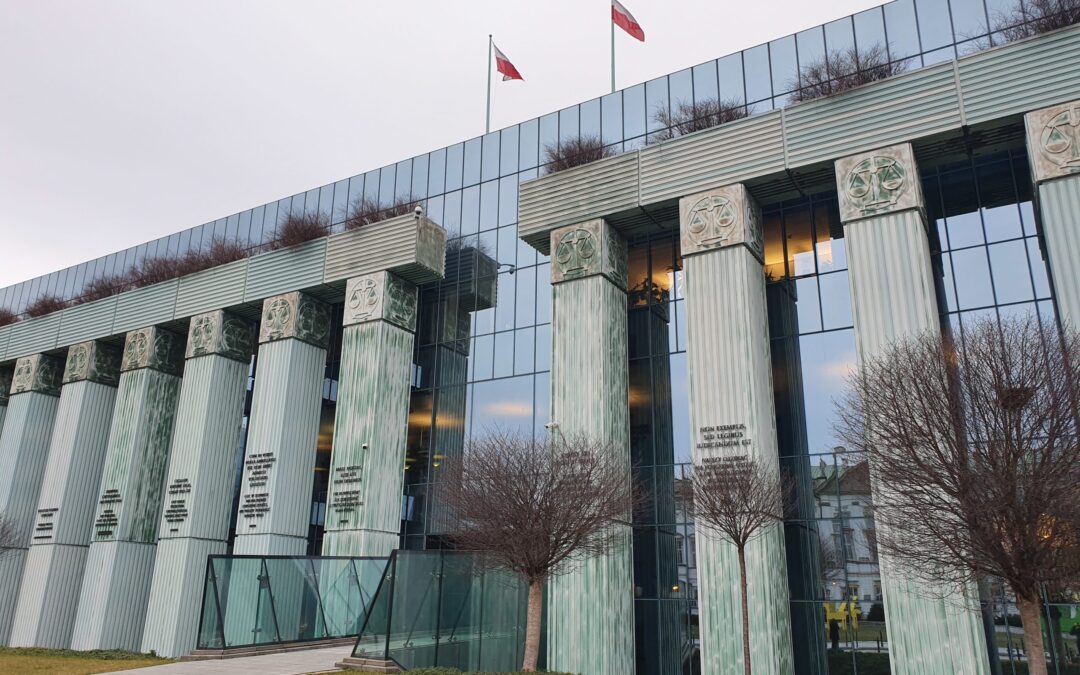
The ICJ submitted today a third party intervention to the European Court of Human Rights in a key case challenging the independence of the Disciplinary and Extraordinary Chambers of Poland’s Supreme Court.
In the case of Reczkowicz and Others v. Poland, the European Court of Human Rights will consider whether the recently established Disciplinary and Extraordinary Chambers of the Supreme Court of Poland may be considered an “independent and impartial tribunal” in order to satisfy the requirements of the right to a fair trial under article 6 of the European Convention on Human Rights (ECHR).
In its third party intervention, the International Commission of Jurists has submitted that a court cannot be considered as independent whenever the body that has appointed its members lacks guarantees of independence from the executive and legislative powers as enshrined in standards of the Council of Europe and the United Nations, including that at least half of its members be judges elected by their peers.
It further concluded that a court composed by judges appointed by a non-independent body or via a non-independent procedure will not be capable of constituting an independent and impartial tribunal under article 6 ECHR.
Poland- ECtHR-Reczkowicz and Others v Poland – TPI – ICJ – 2020 -ENG (download the third party intervention)
Nov 2, 2020 | News
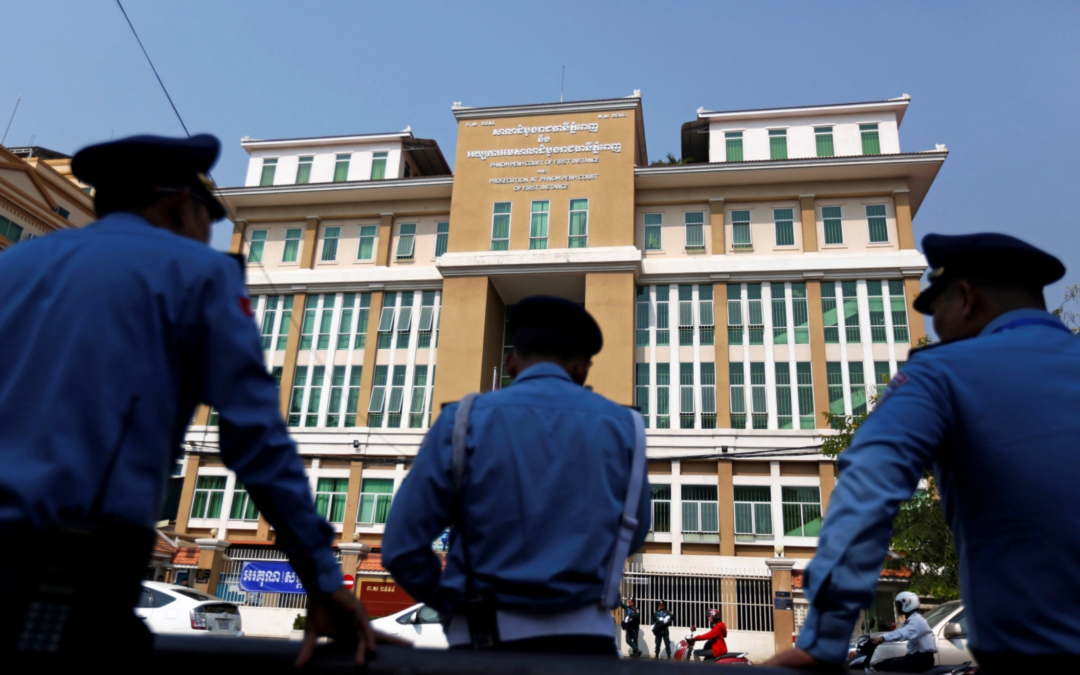
Today, the ICJ and 56 civil society organizations called for an end to attacks on independent media by the Royal Government of Cambodia (“RGC”).
Amidst an increasingly repressive landscape, the organizations called on the RGC to:
- End harassment of journalists and media outlets;
- Immediately drop apparently politically motivated charges against journalists and unconditionally release those held in detention for exercising their rights to freedom of expression and information;
- Repeal or significantly amend repressive laws that unjustifiably impede media freedom and freedom of expression, including media freedom, so as to allow for a vibrant and free media landscape in line with its international human rights obligations;
- Immediately reverse revocations of media licenses to facilitate media freedom and the right to freedom of expression and information; and refrain from similar revocations of media licenses in the future.
Download the joint statement in English and Khmer.
Contact
Kingsley Abbott, Senior Legal Adviser, ICJ Global Accountability Initiative e: kingsley.abbott(a)icj.org
See also
ICJ, ‘Cambodia: authorities must end increasing crackdown on human rights defenders’, 11 September 2020
ICJ, ‘Cambodia: ICJ and 64 organizations call for immediate withdrawal of Draft Law on Public Order’, 13 August 2020
ICJ, ‘ICJ and 31 organizations jointly urge Governments to call for respect of human rights in Cambodia’, 22 July 2020
ICJ, ‘Cambodia: State of Emergency bill violates the rule of law’, 8 April 2020