Oct 30, 2020
As the country votes in a referendum Sunday, the ICJ called on the Algerian authorities to withdraw proposed constitutional amendments and reboot the flawed and inadequate amendment process so as to ensure wide public participation and debate in achieving reform.
In a briefing paper published today, the ICJ emphasized that central objective of the process should be to ensure that the amendments and the rule of law and human rights provisions in particular fully comply with Algeria’s international law obligations.
On 7 May, a set of draft Constitutional amendments were released by the Committee of experts, established by the President, Abdelmadjid Tebboune, in response to the mass protest movement (Hirak) that erupted across Algeria since February 2019.
The final draft was approved by the Algerian Parliament on 10 September and will be voted on by the Algerian people in a referendum on 1 November.
ICJ’s briefing paper analyses both the drafting process and the content of the proposed draft Constitution in light of international law and standards, providing a number of recommendations to the Algerian authorities to bring the process of amending the Constitution into compliance.
The ICJ is concerned that such process has failed to respect the principles of inclusiveness, participation and transparency. The arrangements relating to the role and powers of the President, the military and judiciary stand as an obstacle to a clean break form authoritarianism and decades of poor human rights practices in Algeria.
The ICJ called for a Constitution that lays the foundations for the establishment of the rule of law, the separation of powers and judicial independence.
“Under the constitutional amendments, the military is unaccountable, the president’s powers are unbridled, and the judiciary is subordinated to the President and the executive,” said Said Benarbia, the ICJ’s MENA Programme Director.
“The amendments are a roadmap to the past, not to a genuine democracy in Algeria,” he added.
The consultation process took place hastily and briefly in the middle of the Covid-19 pandemic and with restrictions on the right to freedom of assembly, against the backdrop of the government’s crackdown on the Hirak leaders, activists and journalists.
“Only a constitutional reform process that allows for the requisite public participation and direct discussion to take place can lead to a Constitution reflective of the views of large categories of the society,” said Benarbia.
“The failure to satisfy this standard undermines the right of all Algerians to take part in the conduct of public affairs and to freely determine and choose the form of their Constitution and government.”
Background
In the briefing paper, the ICJ makes a number of recommendations to the Algerian authorities, including to ensure:
- Adequate time and facilities are provided for the Constitution-making process to allow for a comprehensive public dialogue and the production of a draft Constitution that fully represents the views of Algerians.
- The full accountability and civilian oversight of the armed forces and their effective subordination to a legally constituted civilian authority, and that their role is adequately defined in the Constitution and specifically limited to matters of national defence.
- The rule of law is fully embedded in the framework for the functioning of the State, including by ensuring the clear separation of powers, attribution of competences and checks and balances between the legislature, the executive and the judiciary.
- That the High Judicial Council is independent from the executive, including by amending its composition to exclude the President from its membership and ensuring that the majority of members are from the legal profession and are elected by judges; that it is pluralistic and gender representative; and that it is empowered to uphold the independence of the judiciary.
- The primacy of international human rights law over domestic law. To this end, unequivocally assert that internal law, including the Constitution, cannot be invoked or deployed as a justification for non-compliance with human rights treaties to which Algeria is a party or customary international law.
- That permissible limitations or restrictions to human rights are undertaken only for a legitimate purpose as defined in international human rights law, are precise, free of ambiguity, limited in time and necessary and proportionate to the legitimate purpose.
Contact:
Said Benarbia, Director, ICJ Middle East and North Africa Programme, t: +41-22-979-3817; e: said.benarbia(a)icj.org
Download
Algeria-NewConstitution-Advocacy-Analysis Brief-2020-ENG (full briefing paper, English, in PDF)
Algeria- New Constitution-News-2020-ARA (full story, Arabic, in PDF)
Algeria- New Constitution-Advocacy-Analysis Brief-2020-ARA (full briefing paper, Arabic, in PDF)

Oct 30, 2020
The ICJ published today its new Guidance on Extraditions and Expulsion in Central Asia, an essential tool for judges, prosecutors, law enforcement officers, lawyers and NGOs in the region to implement these procedures in full respect of international law.
The Guidance is the fruit of the long-term work of the ICJ to bring proceedings for the transfer of suspects in Central Asian countries, in particular extraditions and expulsions, in line with States’ obligations under international law, including international human rights and refugee law. It addresses the application by judges and prosecutors of international law and standards in extradition and expulsion proceedings.
This Guidance has been informed by a comparative legal study conducted by the ICJ on the practices of national security-based transfers in countries of the Commonwealth of the Independent States, the European Union and the United States of America. In this study, the ICJ identified shortcomings and provided recommendations to all the countries examined.
Following this mapping, the ICJ, together with the UN Office on Drugs and Crimes (UNODC), the Regional Office for Central Asia of the Office of the UN High Commissioner for Human Rights (OHCHR), the General Prosecutor’s Office of the Republic of Uzbekistan and the Constitutional Chamber of the Supreme Court of Kyrgyzstan convened two Central Asia international expert workshops for judges and prosecutors from Kazakhstan, Kyrgyzstan, Tajikistan, Turkmenistan and Uzbekistan, with the participation of international experts from several European countries.
This Guidance provides practical recommendations for judges and prosecutors in the region to uphold international law in extraditions and other procedures for transfer of suspects.
Their purpose is not only to promote the legal compliance of such measures and the rights of those subject to them, but also their effectiveness, in particular in the fight against impunity.
Universal-Extradition&ExpulsionsCA-Publications-Guidance-2020-ENG (Guidance in English)
Universal-Extradition&ExpulsionCA-Publications-Guidance-2020-RUS (Guidance in Russian)
Watch the ICJ, OHCHR and UNODC event on extraditions and expulsion in Central Asia and how to comply with human rights law
Oct 30, 2020 | Advocacy, Non-legal submissions
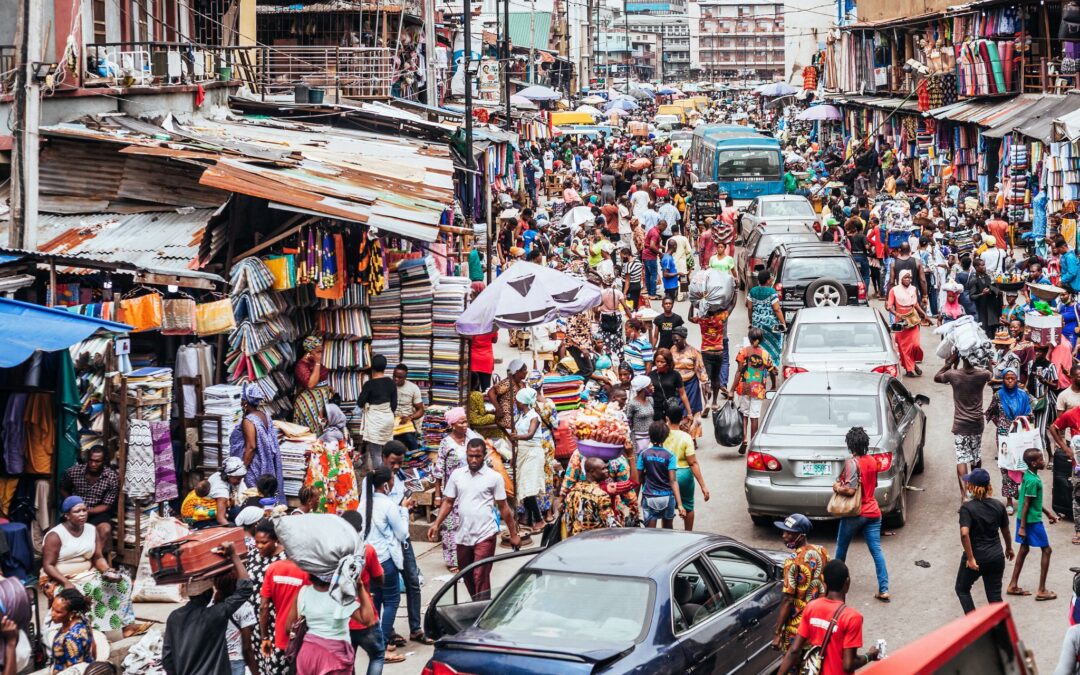
The Gauteng Township Economic Development Bill aims to promote local economic development in designated townships by creating and facilitating the creation of viable township businesses. The Bill establishes a Development Fund whose economic benefits and incentives are strictly reserved for citizens and permanent residents only.
The Bill would prohibit most non-citizens from large swathes of economic activity.
“This would include documented non-citizens like asylum seekers and refugees most of whom are not eligible for social assistance. It might prevent many non-citizens from making a living and could leave many destitute and homeless,” the ICJ Africa Director Kaajal Ramjathan-Keogh said.
“The Bill might also fuel existing xenophobic sentiment and could result in recurrences of xenophobic violence. Courts in South Africa have repeatedly warned government officials and departments against conduct that risks perpetuating xenophobia.”
If this Bill were to be enacted, South Africa would fall short of its requirements under both national and international law.
The ICJ has thus submitted their comments to the Gauteng Provincial Government, which you can find below.
Watch the animation on this issue
Oct 30, 2020 | Agendas, Events, News
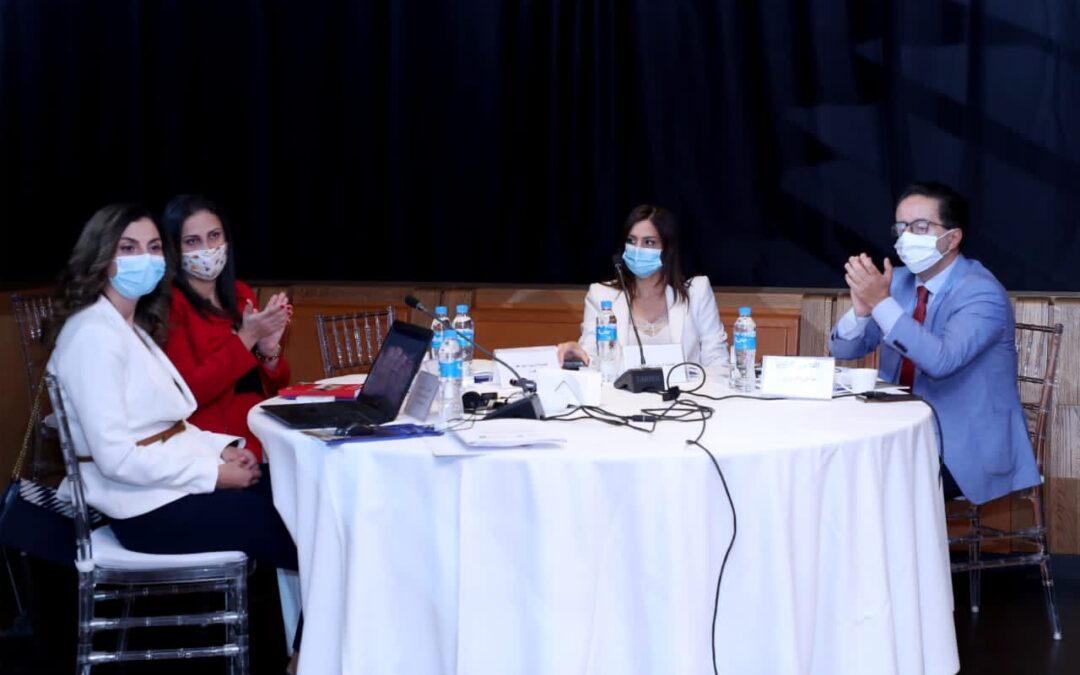
From 27 to 28 October 2020, the ICJ, in collaboration with the National Commission for Lebanese Women (NCLW), held a seminar on recommended practice with respect to evidentiary standards in the investigation, prosecution and adjudication of sexual and gender-based violence offences in Lebanon.
Consultations held by the ICJ with the Lebanese authorities and with practitioners in July 2019 revealed the need to support and bolster the capacity of criminal justice system actors to effectively investigate, prosecute, adjudicate and sanction SGBV, prompting the ICJ, together with NCLW, to organize the seminar.
The seminar accordingly aimed to address the significant gaps in law and procedure and practical obstacles to ensuring key evidence be identified, collected and assessed in a manner consistent with international standards, including Lebanon’s obligations under international human rights law. It also aimed to provide a platform to connect Lebanese judges, prosecutors, police officers, lawyers, forensic practitioners and international experts, with a view to identifying solutions that will ensure women and girls’ effective access to justice for SGBV in Lebanon, in addition to accountability for, and protection from, SGBV.
The discussions predominantly focused on the international law and standards that apply to the identification, gathering, storing, admissibility, exclusion and evaluation of evidence in SGBV cases and how such standards may be used to fill gaps and strengthen domestic law and practice. Participants also discussed the adverse impact patriarchal and other harmful stereotypes have on investigation, prosecution and adjudication processes.
The seminar commenced with opening remarks from NCLW’s President and the International Commission of Jurists’ Middle East and North Africa Programme Director. Speakers included practitioners from international and domestic courts and tribunals, as well as ICJ staff.
The seminar followed the publication of ICJ guidance and recommendations to criminal justice actors in its report Accountability for Sexual and Gender-Based Violence in Lebanon, published on 22 October 2020.
Informed by international law and standards, the ICJ will now formulate recommendations based on the identification by the seminar’s participants of the reforms needed with respect to the Lebanese framework and practice. These recommendations will be included in the ICJ’s forthcoming publication on evidentiary rules and recommended practices in cases of SGBV in Lebanon, which will be published and disseminated among practitioners in Lebanon.
Oct 28, 2020 | News
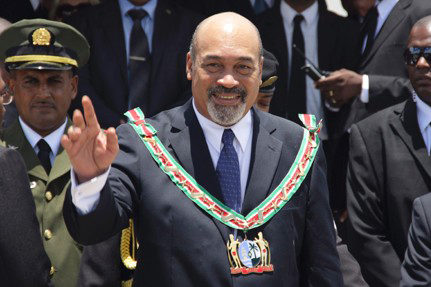
On Friday, 30 October 2020, the Military Court of Suriname (“Krijgsraad”) is expected to resume the appeal process against Suriname’s former president Desi Bouterse. The ICJ will maintain its longstanding monitoring of this trial, which began in 2012.
As of 2020, the trial monitoring exercise will be led by Godfrey Smith SC who is a Senior Counsel, former Attorney General of Belize, and a former High Court judge and acting Justice of Appeal of the Eastern Caribbean Supreme Court.
The Court has announced that the general public will not be permitted to attend the hearing due to the COVID-19 measures.
While Suriname has a general obligation to ensure that trials are public, some restriction on public attendance of a trial maybe appropriate and even necessary to protect public health.
However, the authorities retain a duty to make accommodation for public access to the proceedings, for example by making the proceedings available through video transmission. In this respect, it is critical that efforts be made to ensure transparency, both in the process and in the outcome of the hearing.
Background to the 2020 Hearing
Desi Bouterse was sentenced on 29 November 2019 to 20 years in prison while he was still president of the country. He was found guilty of planning and ordering the murder of 15 political prisoners on 8 December 1982 at the military barracks of Fort Zeelandia. No arrest warrant has ever been issued in relation to either the charge, the conviction or the sentence.
The appeals process started on 22 January 2020. However, after one of the judges fell ill, the case was postponed to 31 March 2020. The merits of the case have not yet been heard.
As with many pending matters in Suriname, the trial was postponed several times due to the COVID-19 pandemic.
The ICJ maintains that the judicial process should run its course with due impartiality, independence and fairness to all parties concerned, and insists that the principles of the rule of law be respected by all.
The ICJ reminds the authorities of the State’s obligation to ensure a fair trial by a competent, independent, and impartial tribunal as guaranteed under article 14 of the International Covenant on Civil and Political Rights, to which Suriname is a party. It also recalls the obligation to ensure accountability for gross human rights violations, including the extrajudicial killings of which Desi Bouterse is accused.
Contact:
Godfrey Smith SC, ICJ monitor of the trial of former President Bouterse, t: 501-610-3114, e: godfrey(a)byronsmithlaw.com