Oct 27, 2020
An opinion piece by Boram Jang, Legal Adviser at the ICJ Asia & the Pacific Programme
On 15 October 2020, the Sri Lankan authorities imposed a curfew in parts of Katunayake Free Trade Zone (KFTZ) after hundreds of workers at the Brandix Fashion Ware factory in Minuwangoda tested positive for COVID-19. More than 1500 people connected to the garment factory have been infected with COVID-19 since October 9, and four factories, Chiefway Katunayake, Next Manufacturing, Naigai and Okaya Lanka, shut down.
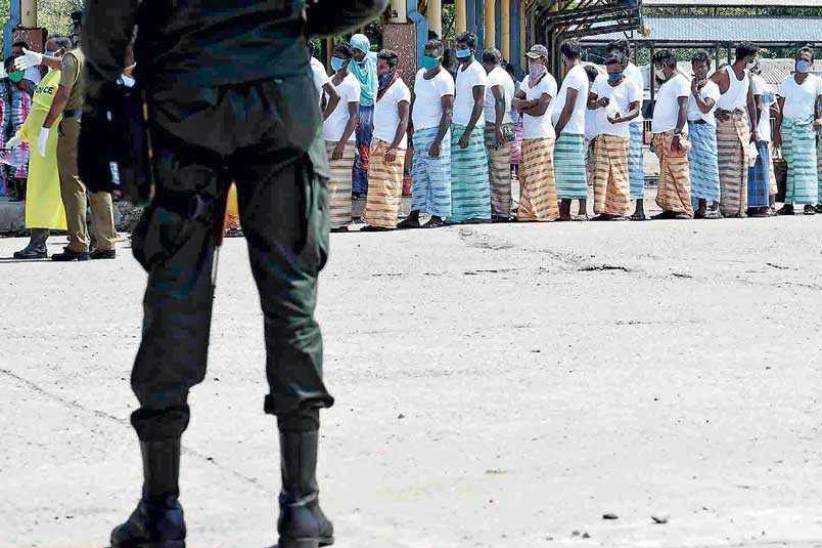
Many KFTZ workers migrate from rural areas in Sri Lanka, and live in overcrowded boarding houses with minimum facilities. Some of these also accommodate pregnant women and mothers with their children. In an attempt to control the spread of Covid-19, the military was called in on 11 October to round-up workers, late at night and early in the morning, to forcibly take them to makeshift quarantine centers.
According to the media and civil society reports, soldiers raided the workers’ boarding rooms, telling them they had five to ten minutes to pack their bags. The workers boarded crowded buses and headed for quarantine centers which were not established according to procedures established by law.
Trade unions and human rights activists spoke out that during this course of action by military, the workers were not informed where the center was located nor provided with protective masks. They weren’t allowed to speak at all and children were separated from their mothers.
When the workers arrived at the center, they were given some food, which many workers found inedible. The facility itself had not been cleaned, toilets were flooded and unsanitary, and no polymerase chain reaction (PCR) tests had been conducted on any of the workers upon their admission to the center. In short, the military-led response to the threat of infection ended up subjecting the workers to greater threat of contagion as well as numerous indignities.
A more sensible way forward is to ensure that responses to the pandemic comply with human rights principles, especially as we hear of more accounts of inappropriate or heavy-handed military behavior in reaction to this public health crisis.
The manner in which the Sri Lankan government and the military have handled the recent outbreak among the workers has been deeply troubling. The lack of clear information provided to the workers, unsafe transportation, unsanitary quarantine facilities established without a legal basis, and failing to conduct tests prior to loading workers onto buses and upon admission to the center, and absence of judicial oversight is in clear violation of basic COVID-19 regulations adhered by the government.
At the heart of all these problems, a heavily militarized and politicized COVID-19 response lies.
In March, Sri Lanka’s first case of COVID-19 was reported. The government set up the National Operation Centre for Prevention of COVID-19 Outbreak (NOCPCO) to prevent the spread of the disease. However, instead of putting a medical professional or civil officer in charge of the Centre, the Rajapaksa government picked Lieutenant General Shavendra Silva, an alleged war criminal, to head the NOCPCO.
Silva was the commander of the 58th Division of the Sri Lankan Army, which was identified by multiple UN investigatory bodies as having been involved in the commission of serious crimes and human rights violations during the last stages of Sri Lanka’s decades-long armed conflict which ended in 2009.
President Rajapaksa has also appointed retired and currently serving military officials to other key public sector positions including the Secretary of the Ministry of Health, the Director General of the Disaster Management Centre, and the Director General of the Customs Department.
After delaying for several weeks, a countrywide curfew was suddenly declared on March 20 without adequate steps to supply essentials goods and medicines to the people. The President also gave full powers to the police to arrest people for violating curfew.
More than Over 60,000 people have been arrested for alleged curfew violations and although most them had been released on bail, the police stated that they will be prosecuted on the advice of the Attorney General’s Department when the normal court proceedings begin once the COVID-19 epidemic is over.
The violators can be prosecuted in magistrate court and if convicted, can be imprisoned up to six months and fined up to Rs. 2000. Lawmakers argued about the curfew’s legality, but it continued to be enforced in several regions, as part of the state’s coronavirus containment strategy.
The military may have to conduct law enforcement functions during a state of emergency such as public health crisis. As the UN human rights guidance provided, the military may only be deployed in a law enforcement context for limited periods and specifically defined circumstances.
When the military conducts law enforcement functions, they should be subordinate to civilian authority and accountable under civilian law, and are subject to standards applied to law enforcement officials under international human rights law.
However, in Sri Lanka now, there is no public discussion or transparency about the actions and decisions of the military during the Covid-19 response. All decisions related to the public health crisis are being made by the NOCPCO with Silva at the helm, without any judicial or Parliamentary oversight, nor any public institutional processes informing those decisions and holding him accountable to them.
Vulnerable ethnic and religious groups are acutely affected by the militarization of the public health response. Tamil organizations and politicians have continuously called for the demilitarization of the North-East. Having the military to oversee the public health policy and to act as the State’s first responders also normalize military occupation, exacerbate the existing ethnic divides, and further deteriorate human rights in Sri Lanka.
Most of the quarantine facilities are located in the North and East of the country, which still remain occupied by the Sri Lankan military.
Despite local concerns about locating quarantine centers in areas already subject to ethnic and political tensions, the government ignored the local concerns and turned schools and educational establishments in the Northern and Eastern Provinces into the quarantine centers.
Furthermore, Muslims in Sri Lanka, have also complained about inappropriate State policies and violations of their freedom to worship. The government mandated compulsory cremations for Muslims who had died after contracting the virus, going against Islamic burial practices and World Health Organisation (WHO) guidelines.
While certain limitations on human rights may be undertaken to confront the public health crisis, such limitations, in keeping with the Siracusa Principles, must be for a specific public health purpose, established by law, non-discriminatory and necessary and proportionate to addressing public health.
Sri Lanka’s involvement of the military at every level, with limited parliamentary and civilian oversight raises serious human rights and rule of law concerns. Public health officials have expressed disagreements with medical authorities in terms of statistics and strategy for managing the outbreak.
The government will only be able to implement successful public health measures and maintain public support and confidence when its policies in response to the pandemic are evidence-based, human rights compliant, and transparent.
Download the Op-Ed in Tamil and Sinhala.
Homepage photo credit: Shehan Gunasekara
First published in Daily FT on 27 October: http://www.ft.lk/opinion/Sri-Lanka-Vulnerable-groups-pay-the-price-for-militarisation-of-COVID-19-response/14-708073
Oct 27, 2020 | Advocacy, Cases, Legal submissions
The ICJ and Amnesty International have presented today a third party intervention before the European Court of Human Rights in the case of the premature dismissal of Judge Waldemar Zurek from his position in the National Judicial Council.
In the case Zurek v. Poland, the ICJ and Amnesty International presented submissions on the scope of application of the right to a fair trial under Article 6.1 of the European Convention on Human Rights (ECHR) in cases relating to the role of an independent judiciary and its members through self-governance mechanisms (such as the National Council of the Judiciary) in light of international standards on judicial councils, judicial appointments, the judicial career and security of tenure; of the Court’s Convention jurisprudence; and of general principles on the rule of law and the role and independence of the judiciary.
They further submitted obervations on the scope of the right to freedom of expression under Article 10 ECHR as applied to judges, including those engaged in the administration of the judiciary.
ECtHR-AmicusBrief-Zurek_v_Poland-Advocacy-Legal-Submission-2020-ENG (download the third party intervention)
Oct 27, 2020 | Events, News
On 2-3 December 2020, the ICJ will convene the 11th annual Geneva Forum of Judges & Lawyers, on the Role of Indigenous and other Traditional or Customary Justice Systems in Access to Justice, the Rule of Law and Human Rights.
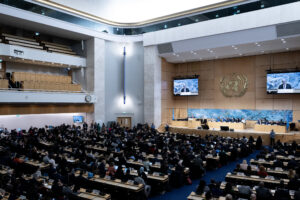
The Geneva Forum of Judges and Lawyers is an annual global meeting of senior judges, lawyers, prosecutors and other legal and United Nations experts, convened by the International Commission of Jurists (ICJ) through its Geneva-based Centre for the Independence of Judges and Lawyers.
The 8th Forum, in 2017, the 9th Forum in 2018 in Bangkok, and the 10th Forum in 2020 in Nairobi, considered the role of indigenous and other traditional or customary justice systems at the global level, as well as in the particular regional contexts of Asia and Africa.
Interim findings and recommendations were set out in the reports from the 8th, 9th and 10th Fora. The September 2019 report of the UN Special Rapporteur on the rights of indigenous peoples following her participation in the 9th Forum addressed indigenous justice..
As a reference for the Forum discussions and to assist the broader range of stakeholders, the ICJ published, and has subsequently updated, a Compilation of International Sources on Indigenous and other Traditional or Customary Justice Systems, including relevant provisions of global and regional treaties, UN and other inter-governmental declarations, and the jurisprudence and recommendations of expert Committees and Special Procedures established by treaties and the UN Human Rights Council.
The culmination of the Geneva Forum process on indigenous and other traditional or customary justice systems will be the 11th Geneva Forum on 2 and 3 December 2020, followed by publication by ICJ of a final set of global recommendations.
Due to the COVID-19 pandemic, the 11th Geneva Forum will be convened online, with participants from around the world.
Participation in the Forum is by invitation only and the Forum discussions will not be broadcast.
The concept note for the Forum may be downloaded here (PDF): GF2020 Concept Note 27-10-2020
The programme for the Forum may be downloaded here (PDF): GF2020 Programme 21-10-2020
The list of participants (subject to final confirmation) can be downloaded here (PDF): Public list of Participants_2020 ICJ Geneva Forum
For more information contact matt.pollard(a)icj.org.
The 2020 Geneva Forum of Judges & Lawyers is made possible by the support of the Republic and Canton of Geneva, Switzerland.
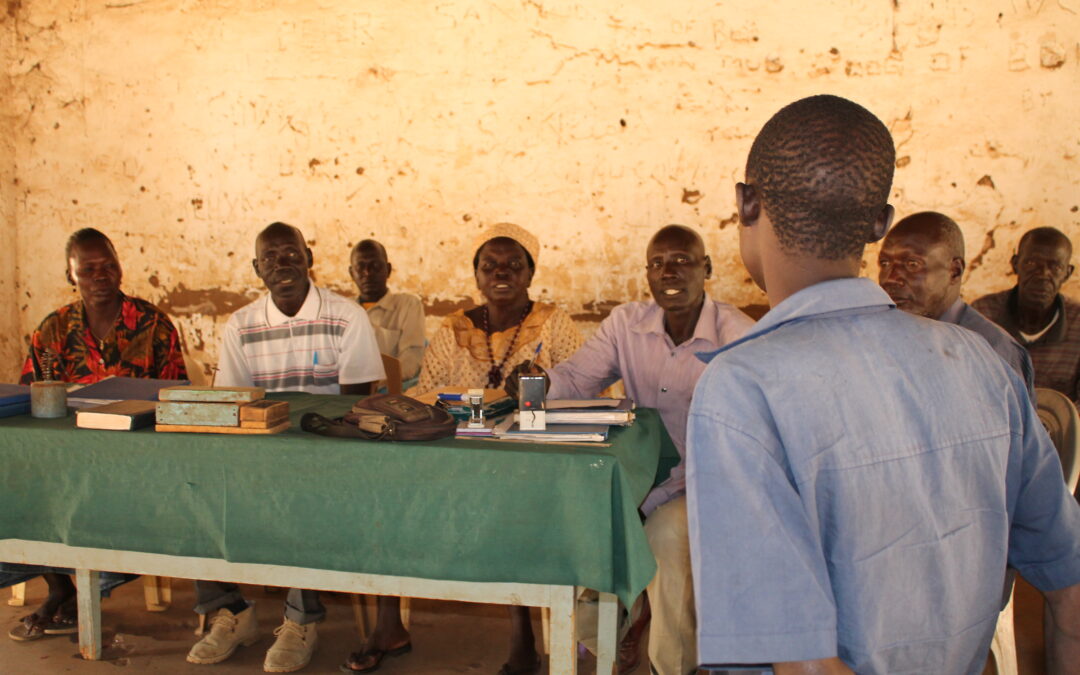
Photo: Traditional leaders preside over a case in B-Court, Nyang Payam, Torit County, South Sudan. Photo Credit: UNDP South Sudan2016Angelique Reid ©2016 United Nations
Oct 27, 2020 | Agendas, Events, News
The International Commission of Jurists and the Human Rights Joint Platform (IHOP) invite you to a conversation on the past and current situation of the fight against impunity in Turkey with eminent international and Turkish expert.
Registation is on a first come first served basis by writing to: ihop@ihop.org.tr
Join our speakers:
– Juan Mendez, former UN Special Rapporteur on Torture
– Wilder Taylor, Former Secretary-General of ICJ and chair of Uruguary NPM
– Luciano A. Hazan, Member of the UN Working Group on Enforced and Involuntary Disappearance
– Melis Gebeş, Lawyer, Truth Justice and Memory Center:
– Feray Salman, General Coordinator of Human Rights Joint Platform
IHOPICJ-ZoomConference-ImpunityTurkey-Agenda-2020-ENG (download the agenda in English)
IHOPICJ-ZoomConference-ImpunityTurkey-Agenda-2020-TUR (download the agenda in Turkish)
The event is part of the REACT project: implemented jointly by ICJ and IHOP, this project seeks to support the role of civil society actors in turkey in ensuring effective access to justice for the protection of human rights. This project is funded by the European Union. The views expressed in the event do not necessarily reflect the opinion of the EU.
Oct 27, 2020 | News
The ICJ today condemned the adoption of amendments to the Sri Lankan Constitution, which serve to expand the powers of the President, while encroaching on the powers of the parliament and courts.
The 20th Amendment to the Constitution was passed into law on 22 October, with 156 of the 225 parliamentarians voting in favour of the amendment, after a mere two-day debate, overruling the Opposition’s request for at least four days of deliberation.
The ICJ noted that the Amendment undoes most of the reforms brought about by the 19th Amendment adopted only in 2015. Critically, it introduces judicial appointment procedures which are incompatible with principles of the justice by reintroducing the Parliamentary Council, consisting only of political actors.
That body serves to merely advise the President, regarding appointments to the judiciary and other key public institutions.
The 20th amendment gives the President sole and unfettered discretion to appoint all judges of the superior courts. Under international standards, appointments to the judiciary should not be vested solely with the executive.
Given the gravity of the constitutional changes, the ICJ expressed regret that the Government had suspended Standing Order 50 (2), which requires every bill to be referred to the relevant Sectoral Oversight Committee for consideration prior to being debated in parliament.
“It is appalling that Constitutional amendments with such far reaching consequences on the constitutional governance of the country were rushed through in such haste, especially at a time Sri Lanka battles with its largest COVID-19 outbreak to date,” said Ian Seiderman, ICJ’s Legal and Policy Director.
The ICJ welcomes the alteration made to some of the problematic provisions of the 20th Amendment Bill during Committee Stage, particularly in relation to presidential immunity and the time period within which the president can dissolve Parliament.
The ICJ nonetheless is particularly concerned with the decision of the Minister of Justice to introduce entirely new provisions at Committee Stage, particularly in relation to the increase of the number superior court judges. The Supreme Court Bench will be increased from 11 to 17 and Court of Appeal from 12 to 20. These substantive amendments were not part of the gazetted 20th Amendment bill, the provisions of which were challenged before the Supreme Court by as many as 39 petitioners.
“While an increased number of judges may reduce court delays and expedite the judicial process, introducing substantive amendments such as this at Committee Stage is problematic at multiple levels,” Seiderman added.
“Sneaking in substantial changes at the last stage of the legislative process where there is no opportunity for public comment or judicial review is not consistent with democratic processes under the rule of law.”