Oct 27, 2020
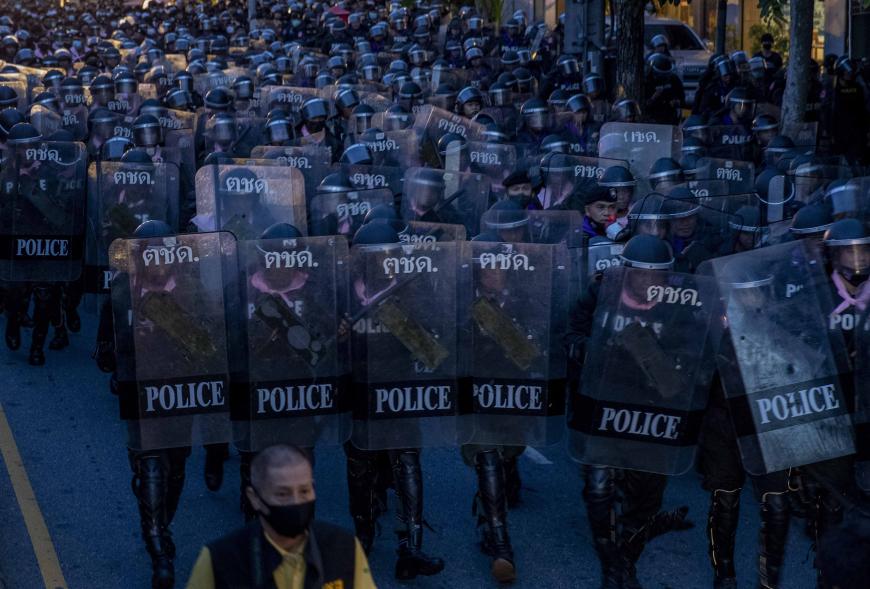
The ICJ today published a legal briefing analyzing the implementation of Thailand’s Emergency Decree on Public Administration in Emergency Situation B.E. 2548 (2005) in response to protests in 2020.
The ICJ welcomed the Thai government’s decision on 22 October 2020 to lift the Serious Emergency Situation in Bangkok but said the longstanding Emergency Decree of 2005 and emergency measures taken recently are non-compliant with Thailand’s international human rights obligations.
The legal briefing looks at restrictions in law and practice that were imposed under the Decree between 15 and 22 October 2020, after the “serious emergency situation” was declared by Thailand’s Prime Minister, in light of international human rights law.
The ICJ in the legal briefing recommends that Thailand should remove the criminal liability for the protesters who are prosecuted or at risk of prosecution under the Emergency Decree for merely exercising their rights to freedom of expression and assembly as guaranteed under international and Thai law.
During the protests between 13 and 22 October 2020, at least 90 people, including protest leaders, have reportedly been arrested, mostly for violating the Emergency Decree.
The ICJ urges Thailand to ensure that affected populations shall have access to judicial remedies in respect of alleged violations under the emergency laws. The regulations, notifications, decisions and actions of officials exercising powers under the emergency law during the “serious emergency situation” must be subject to review by the courts, and ensure the affected persons’ right to access to an effective remedy.
The legal briefing also underscores the need for Thailand to repeal and amend several provisions of the Emergency Decree.
The legal briefing focuses on four primary areas of concern, namely:
- the emergency power;
- the limited scrutiny by the courts;
- legal immunity from prosecution; and
- emergency decree measures.
Thailand is still under a nationwide state of emergency as part of the COVID 19 restrictions.
Background
On 15 October 2020, Thailand’s Prime Minister invoked the Emergency Decree declaring a “serious emergency situation” in the areas of Bangkok in response to the student-led anti-government protests that took place between 13 and 15 October 2020. Protesters called for the Prime Minister’s resignation, constitutional amendment and reform of the monarchy.
The Prime Minister, General Prayuth Chan-ocha, claimed that the declaration of the serious emergency situation was necessary to “end the situation in an efficient and prompt manner, to ensure compliance with the law, and to sustain national order and public interest”.
The restrictions included: prohibition of a gathering of five or more people, dissemination of publications or any means of communication containing texts which intend to distort information and instigate fear among the population. The competent officials, who may not be law enforcement officials, are, among other powers, authorized to arrest and detain persons suspected of having a role in causing the emergency situation, or being an instigator, a propagator, a supporter of such act or concealing relevant information relating to the act which caused the emergency situation; summon any person to report to the competent official; seize or attach arms, goods, consumer products, chemical products or any other materials; and prohibit any act or any instruction to perform an act to the extent that is necessary for maintaining the security of the state, the safety of the country or the safety of the population.
Nevertheless, protests in Thailand have continued despite government ban and efforts by the authorities to prevent them. On 16 October 2020, it was reported that polices forcibly dispersed peaceful protesters at Pathumwan intersection in Bangkok in which thousands of people, including many students, took part. Officials forcibly dispersed the protestors by using water cannons – which, according to the UN Guidance On Less-Lethal Weapons in Law Enforcement, should only be used in situations of serious public disorder where there is a significant likelihood of loss of life, serious injury or the widespread destruction of property. The water was laced with blue dye and an undisclosed chemical irritant to drive back protesters.
The state of serious emergency situation in Bangkok was lifted on 22 October 2020 by the Prime Minister, saying that the situation had eased and the violence was at an end.
In the legal briefing, the ICJ expressed concerned that the emergency declaration in response to the protests had activated provisions of the 2005 Decree that remain non-human rights compliant. The Decree has been used to impose a blanket restriction on freedom of expression and assembly by imposing a general ban on peaceful public demonstrations.
Download
Legal Briefing in English and Thai.
Further reading
Thailand: measures under the Emergency Decree to address the COVID-19 outbreak must conform to international law
More Power, Less Accountability: Thailand’s New Emergency Decree, August 2005
Implementation of Thailand’s Emergency Decree in Thailand’s Three Southern Provinces, July 2007
Oct 26, 2020 | News
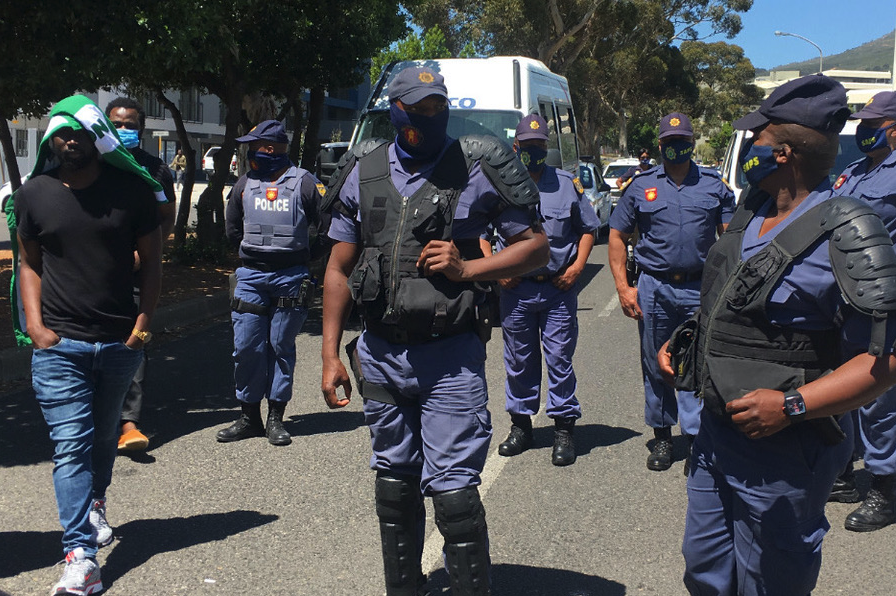
The ICJ and Lawyers Alert today called on the Nigerian authorities to undertake immediate independent and thorough investigations into credible allegations of extrajudicial killings by the military responding to mass protests against the SARS police unit.
Those responsible for criminal conduct must be brought to justice and held to account, the two organizations said.
The authorities must respect their international legal obligations under international law and cease the unlawful, unnecessary and disproportionate use of force in response to Nigerians’ lawful protest actions.
Protest actions have escalated over the last two weeks as Nigerians have staged a series of protests under the #EndSARS movement. Thousands of people joined the demonstrations, demanding an end to police brutality and corruption.
Reports confirm that more than 56 people have died over the two weeks of protest actions, including 38 protesters who were killed, on the 20 October alone, as a result of the Nigerian military opening fire on thousands of peaceful protesters.
“The right to peaceful assembly is guaranteed under international law, including the International Covenant of Civil and Political Rights (ICCPR) which Nigeria has acceded to. Nigeria’s brutal responses to the peaceful demonstrations, including the use of lethal force on force protestors, not only violates this right but also their right to life,” said Kaajal Ramjathan-Keogh, ICJ Africa Regional Programme Director.
Lawyers Alert Executive Director Rommy Mom said: “The Nigerian government’s responses to the protests have undermined the rule of law. Groups and persons should not be afraid to approach the Judicial Panels of Inquiry to lay their grievance towards identification of culpable SARS officers for appropriate sanctions and the compensation of victims.” The organizations recall that under international law, the use of lethal force by law enforcement officials is permissible only when strictly necessary to protect life.
Police in the SARS unit are credibly alleged to be responsible for a widespread practice of torture and other serious human rights violations.
In addition to ending these violent attacks on protestors, the ICJ and Lawyers Alert call on the Nigerian government to address the demands of protestors and embark on comprehensive reform of the police, with emphasis on oversight functions, tethering oversight to civil society groups, the National Human Rights Commission and the constitutional oversight body of the Nigeria police.
“These protests have gained momentum outside Nigeria and have extended beyond the local borders to Ghana, United Kingdom and South Africa. The world’s attention is currently on Nigeria, as the global support for protestors rise amidst further police brutality. The Nigerian government must ensure that it respects and protects the human rights of all in accordance with its obligations under international law,” added Ramjathan-Keogh.
Background
Founded in 1992, the Special Anti-Robbery Squad (SARS) was mandated to “investigate cases involving armed robbery and kidnapping”. However, since its inception, there have been widespread complaints by Nigerians about the conduct of SARS This year Amnesty International issued a report, documenting at least 82 cases of torture, ill treatment and extra-judicial execution by SARS during the period of January 2017 and May 2020
In addition to the ICCPR, Nigeria is party to the UN Convention against Torture and the African Charter on Human and Peoples’ Rights (African Charter), which guarantees the right to life under Article 4 and the right to assemble freely with others under Article 11. These rights are also respectively protected under sections 33(1) and 40 of the Nigerian Constitution.
Article 6 of the ICCPR prohibits the arbitrary deprivation of life.
Principle 9 of the UN Basic Principles on the Use of Force and Firearms by Law Enforcement Officials affirm that:
Law enforcement officials shall not use firearms against persons except in self-defence or defence of others against the imminent threat of death or serious injury, to prevent the perpetration of a particularly serious crime involving grave threat to life, to arrest a person presenting such a danger and resisting their authority, or to prevent his or her escape, and only when less extreme means are insufficient to achieve these objectives. In any event, intentional lethal use of firearms may only be made when strictly unavoidable in order to protect life.
Contact
Kaajal Ramjathan-Keogh, Director of ICJ’s Africa Regional Programme, c: +27845148039, e: kaajal.keogh(a)icj.org
Tanveer Jeewa, Communications Officer, tanveer.jeewa(a)icj.org
Homepage photo credit: Tshwanelo Mathwai
Oct 26, 2020 | Advocacy, News
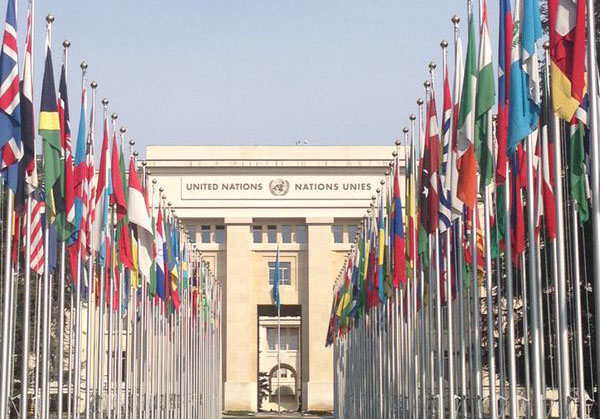
As the sixth session if the Open-Ended Intergovernmental Working Group (OEWG) working on a draft treaty convenes, the ICJ welcomes the Revised Draft treaty and calls on States to work to overcome political obstacles an make substantial progress towards completing its work on this much needed treaty.
The session, which takes place from 26 to 30 October, has before it a second Revised Draft of a Legally Binding Instrument, presented by the Chairmanship of the OEWG. The ICJ welcomes this draft as a very good basis for negotiations, though it considers that certain provisions still require revision and refinement.
The session takes place in the difficult and uncertain backdrop of the COVID-19 pandemic, with its serious impacts on human rights such as the right to health and strains on the capacity of States and society to tackle its consequences.
The ICJ is especially concerned at the adverse impact of the restrictions imposed on civil society participation deriving from the rules adopted by the UN for the holding of meetings, while at the same time understanding that meetings cannot be held in the normal manner particularly given the recent increase of COVID cases in Geneva.
In general and with some exceptions, the Second revised Draft LBI reflects changes in the text, structure and organization of the draft articles that improve its potential to serve as an effective protective instrument, as well as increase its overall coherence. The ICJ considers the second Revised draft as a good starting point for negotiations which states should engage into without further delay.
Universal-ICJ comments on BHR treaty 2-Advocacy-2020-ENG (full statement in PDF)
Oct 26, 2020 | News
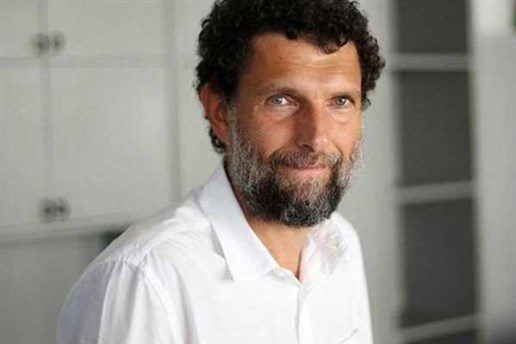
A new bogus indictment against human rights defender and businessman, Osman Kavala, and US academic, Henri Barkey, for allegedly spying and attempting to overthrow Turkey’s constitutional order is politically motivated and bereft of legal credibility, Human Rights Watch and the ICJ said today.
The indictment, alleging the two were involved in the July 15, 2016, attempted military coup, demonstrates Turkey’s blatant refusal to abide by a European Court of Human Rights judgment, finalized in May 2020, which ordered Kavala’s release, and not only prolongs ongoing violations of his rights but gives rise to new ones.
An Istanbul court on October 8 accepted the indictment and has scheduled a first trial hearing against Kavala, who was been in Istanbul’s Silivri Prison since November 2017, and Barkey, who lives in the US, for December 18.
“The new case against Osman Kavala and Henri Barkey demonstrates the Turkish authorities’ flagrant misuse of the courts for political ends and their fundamental disregard for the basic principles of criminal justice,” said Hugh Williamson, Europe and Central Asia director at Human Rights Watch.
“Defying the European Court of Human Rights order to release Kavala has confirmed the Court’s conclusion that Turkey is using detention and prosecution to silence a human rights defender.”
The 64-page prosecutor’s indictment, dated September 28, accuses Kavala and Barkey of “securing for purposes of political or military espionage information that should be kept confidential for reasons relating to the security or domestic or foreign policy interests of the state” (under Turkish Penal Code article 328), punishable with up to 20 years in prison, and “attempting through force and violence to overthrow the constitutional order of the Republic of Turkey or introduce a different order or prevent this order” (article 309), punishable with life in prison without parole.
The indictment recycles unsubstantiated accusations, which previously circulated in the pro-government Turkish media, that Kavala and Barkey were involved in espionage and in the 2016 attempted military coup. The indictment provides no credible evidence linking them with any criminal activities. (Further details about the content of the indictment are provided below.)
In a December 2019 judgment, which became final on May 11, the European Court of Human Rights ruled that the evidence on which Kavala was detained for the Gezi protests and the 2016 coup attempt was insufficient and agreed that Kavala’s detention and the charges against him “pursued an ulterior purpose, namely to silence him as a human rights defender.”
On September 3, the Council of Europe Committee of Ministers, acting in its supervisory capacity for the implementation of European Court judgments, issued a decision ordering the Turkish government to ensure Kavala’s release, pointing to “a strong presumption that his current detention is a continuation of the violations found by the Court.”
On September 29, pro-government media reported that the Istanbul prosecutor’s office had prepared the new indictment against Kavala and Barkey. On the same day, Turkey’s Constitutional Court postponed its review of Kavala’s application regarding the legality of his continuing detention, which had been scheduled for that day.
On October 1, the Council of Europe Committee of Ministers issued a second decision calling on Turkey to ensure Kavala’s immediate release, expressing “deep concern that the applicant has still not been released” and announcing that an interim resolution would be issued at the Committee of Ministers’ December 1-3 session if Kavala had not yet been released.
“Turkey is bound by the ruling from European Court to free Kavala immediately, and the ruling covers his detention under the latest case against him,” said Roisin Pillay, director of the ICJ Europe and Central Asia Programme.
“The new indictment presents no new grounds to justify his detention, and it is imperative that Turkey ends the persecution campaign against him by releasing him and dropping all charges.”
For more Human Rights Watch reporting on Turkey, please visit:
http://www.hrw.org/europecentral-asia/turkey
For more ICJ work on Turkey, please visit:
https://www.icj.org/search/?fwp_search=Turkey&submit=Search
Contact
Massimo Frigo, Senior Legal Adviser, ICJ Europe and Central Asia Programme, t: +41-22-979-3800; e: massimo.frigo(a)icj.org
Turkey-Kavala case-News-press release-2020-ENG (story with additional information, in PDF)
Oct 23, 2020 | News
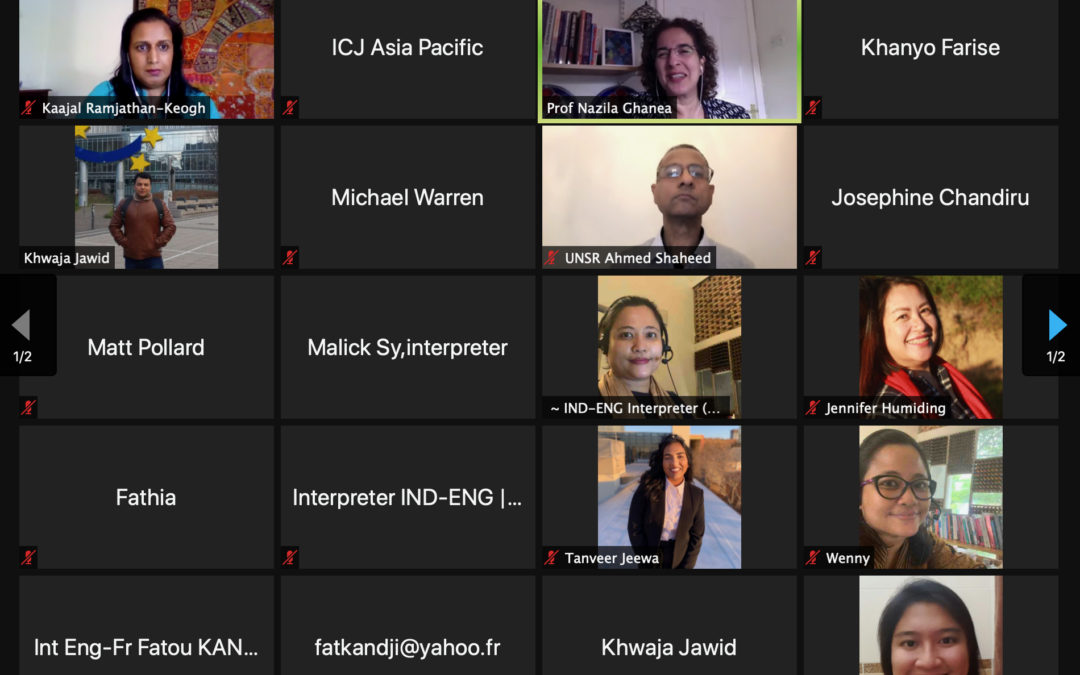
On 21 and 22 October, the ICJ and Cordaid held a webinar series aimed at tackling the challenges of protecting and promoting women’s human rights and access to justice for women in the context of religious and customary laws in operation around the world.
At its global 2019 Congress in Tunis, the ICJ identified the problem, concluding that: “Worldwide, increasing attacks on the rule of law have intensified longstanding inequalities and compounded intersecting forms of discrimination against women and girls and persons from marginalized groups. This has limited their enjoyment of human rights and their effective access to justice. Moreover, in many countries, culture, tradition, or religion are being used to justify laws, policies and practices that discriminate against women and girls.”
In light of the obstacles for women, the ICJ together with Cordaid created this webinar platform for an exchange of views and strategies among human rights defenders, justice sector actors and those from the religious community. Participants came from Asia, the Middle East and Africa. Webinar 1 addressed the ways in which custom and religion shape the ability of women to access justice. The meeting also grappled with the perceived clashes between women’s human rights and pathways to justice based on custom and religion.
“Custom and religious preferences are not superior to women’s rights, they operate simultaneously,” said Nazila Ghanea, Associate Professor in International Human Rights Law at the University of Oxford.
Speakers included Professor Nazila Ghanea, Clara Rita Padilla, a lawyer from the Philippines with experience on women’s sexual and reproductive rights, Josephine Chandiru, Executive Director of Stewardwomen from South Sudan, and Claudine Tsongo, Director of Dynamique des Femmes Juristes. They focused on practical subjects, including the persistence of certain religious and cultural practices which have the potential to negatively affect women’s ability to defend their human rights. The session was moderated by ICJ Africa’s director, Kaajal Ramjathan-Keogh.
Webinar 2, moderated by ICJ Commissioner and CEDAW Committee Member, Nahla Haidar, discussed obligations under international human rights law and best practice to ensure access to justice in cultural and religious contexts.
UN Special Rapporteur on Freedom of Religion or belief, Professor Ahmed Shaheed explained that “custom and religious law are, in some countries, used as cover to discriminate against women or to stop them from getting justice. These are not issues which are only present in the global south, they are rampant globally.”
Participants discussed practical measures which could be adopted by States, international organizations and civil society, to eliminate practices which exacerbate women’s inequality. In this regard, Shareena Sheriff from Sisters in Islam based in Malaysia, shared her experience on how they successfully embarked on advocacy to eliminate the harmful practice of Female Genital Mutilation in her country. She explained how Sisters in Islam worked closely with various stakeholders including community members, religious and justice actors to raise awareness on this issue.
Many speakers endorsed the importance of creating platforms such as the webinar to allow different voices from around the world to contribute their experience so as to learn from one another.
Contact
Nokukhanya (Khanyo) Farisè, Legal Adviser (Africa Regional Programme), e: nokukhanya.farise(a)icj.org
Tanveer Jeewa, Communications Officer (Africa Regional Programme), e: tanveer.jeewa(a)icj.org
Watch
The first webinar is available here.
The second webinar is available here.
Read
The report on the Tunis Declaration is available here.
Cordaid, Diverse Pathways to Justice for all: Supporting everyday justice providers to achieve SDG16.3, September 2019, available here.
Download
Universal-ICJ The Tunis Declaration-Advocacy-2019-ENG (the Tunis Declaration, in PDF)
Universal-ICJ Congresses-Publications-Reports-2019-ENG (the ICJ Congresses booklet, in PDF)