Aug 11, 2020 | News
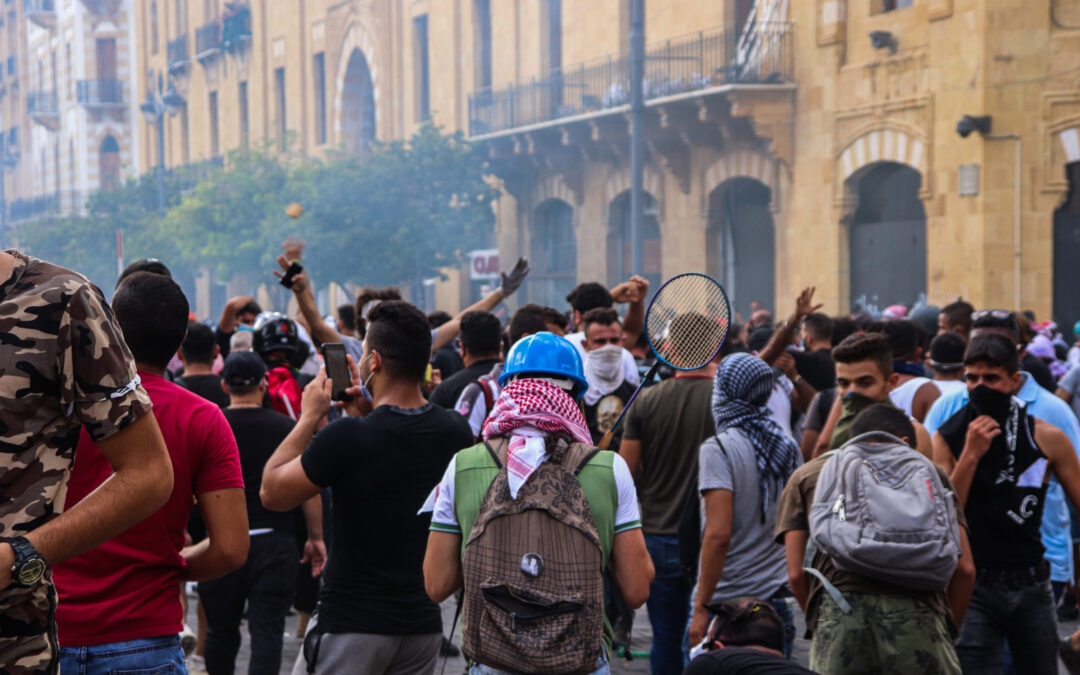
The ICJ is concerned at reports that on 8 and 9 August, Lebanese security forces, including Internal Security Force (ISF) units, parliamentary police and the army, employed excessive and unlawful force against hundreds of protestors, resulting in the injury of more than 700 people and dozens of hospitalizations.
The ICJ called on the Lebanese authorities to protect the rights to freedom of peaceful assembly and expression and refrain from using excessive and unlawful force against protestors demanding justice for the 4 August explosions in Beirut’s port district.
The explosions devastated the city’s infrastructure and resulted in the death, injury and internal displacement of large numbers of its inhabitants.
The ICJ stressed that credible allegations of excessive and unlawful use of force in the context of the protests must be promptly, thoroughly and impartially investigated and those responsible must be held to account.
According to information available to the ICJ, at least 14 journalists and media personnel covering the protests were among the wounded.
According to reports, a policeman also died after falling down an elevator shaft while being chased by protesters. While there were reports that some demonstrators threw rocks and firecrackers at security forces, reports also indicate that the security forces’ response was indiscriminate and, in some instances, excessive.
“Many protestors in Lebanon continue to be met with excessive and unlawful force by security agencies, telling the same grim story of how the Lebanese authorities habitually respond to unwelcome political expression and the grievances of the Lebanese public,” said Kate Vigneswaran, the ICJ’s Middle East and North Africa Programme Senior Legal Adviser.
“The people of Beirut have the right to peacefully express their outrage, at alleged official malfeasance that apparently contributed to last week’s tragic devastation, and to expect security forces will comply with the law,” she added.
Information from ICJ interviews with three protestors, and substantiated by reports by multiple media and news agencies, reveal that security forces fired large quantities of tear gas, in addition to rubber bullets, at protestors in several locations in central Beirut, including a gathering of at least 10,000 people including children at Martyr’s Square and those who occupied Parliamentary and ministerial buildings.
Reports also indicate that live ammunition was fired by security forces during the protests, namely birdshot.
A protestor interviewed by the ICJ stated that he was shot in the arm by a rubber bullet and in the leg by a pellet gun, the latter lodging shrapnel into various parts of his body.
Social media reports reveal that some protestors were shot in the face and eyes with rubber bullets. The ISF has denied using rubber bullets.
According to another protestor, government loyalists attacked her in the presence of ISF officers and the army as she filmed scenes outside the American University Hospital, threatening her with violence and by breaking her mobile phone.
Similar reports of security forces indiscriminately beating and harassing protesters have surfaced on social media platforms.
International law, governing the use of force by law enforcement officers, which is binding on Lebanon, mandates that force is only permissible as a last resort for the sole purpose of protecting life or preventing serious injury from an imminent threat, if strictly necessary and only to the extent necessary for the performance of their duty.
All use of force must be discriminate and proportionate to the threat of harm.
The ICJ has called for a prompt, transparent, independent and impartial investigation into the 4 August explosions by a special, independent mechanism, given the documented lack of independence in certain parts of the Lebanese judiciary, which was echoed by other human rights organizations and members of the international community.
Lebanon’s President dismissed the call as “a waste of time” and instead urged the Lebanese judiciary to act swiftly to probe the incident.
Prime Minister Hassan Diab announced his cabinet’s resignation on Monday following widespread calls for the political establishment to resign from their posts following the explosion. Nine members of Parliament, two government Ministers and the Lebanese Ambassador to Jordan had also resigned from their posts over the weekend.
“The explosions were devastating for the people of Beirut, resulting not only in the loss of life and massive injuries, but severe curtailment of their rights to housing and health and their other socio-economic rights,” said Vigneswaran.
“Based on the response of the Lebanese authorities thus far, and given their poor track record in pursuing and realizing accountability, it is clear that there is an urgent need for a proper accountability mechanism to investigate the explosions and respond to victims’ demands and calls for justice. A change in government is not enough,” she added.
Contact
Kate Vigneswaran, Senior Legal Adviser, ICJ Middle East and North Africa Programme, t: +31-62-489-4664; e: kate.vigneswaran(a)icj.org
Download
Full story with additional information: Lebanon-Protests-News-Press releases-2020-ENG
Arabic version: Lebanon-Protests-News-Press releases-2020-ARA
Photo Credit: Aya Nehme
Aug 10, 2020 | News
Today, the ICJ published the recommendations from a workshop on strengthening the work of the specialized bodies of the Bar Association on the protection of the rights of lawyers in Tajikistan, held in December 2019.
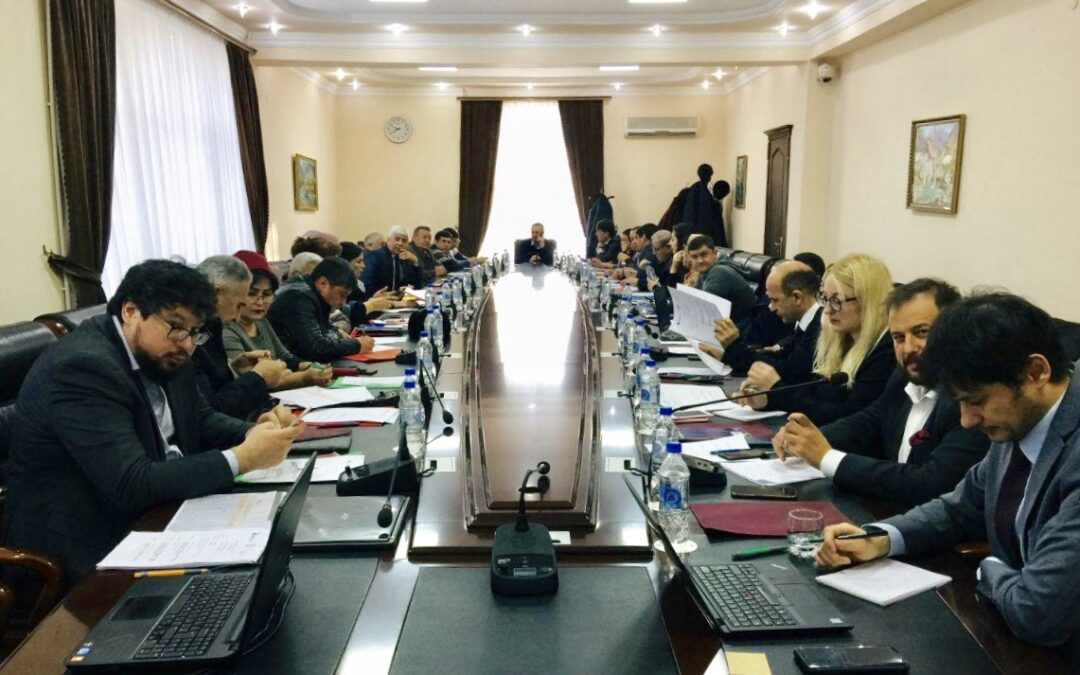
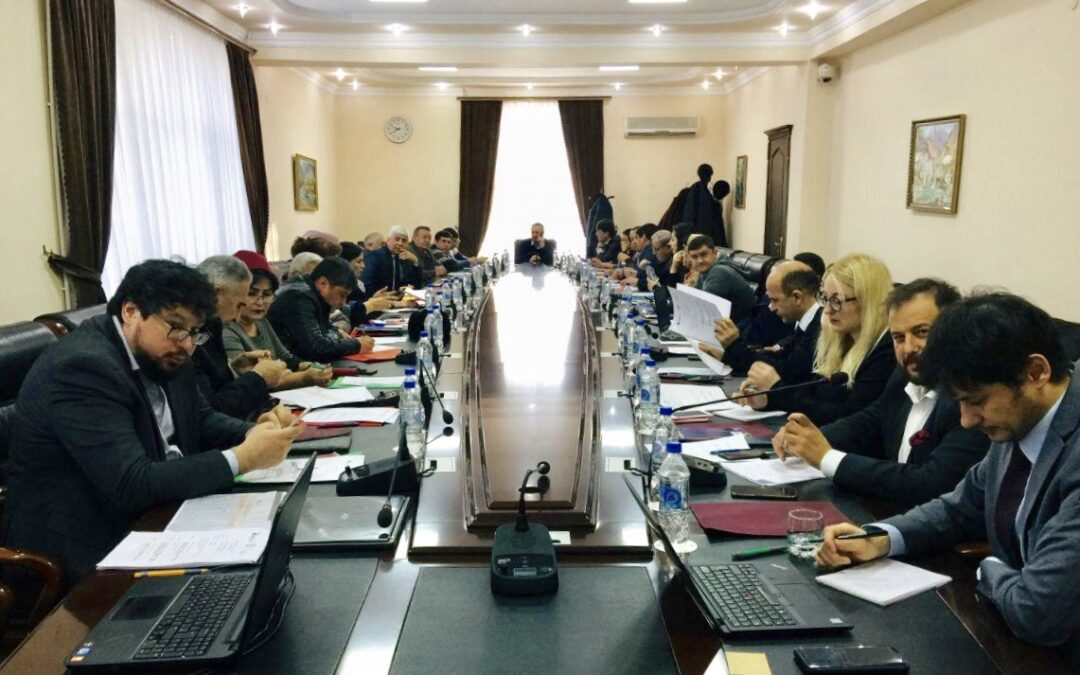
The event was held on 16 and 17 December 2019 in the city of Gulistan in the North of Tajikistan for members of the Commission for the Protection of the Rights of Lawyers (CPRL) of the Union of Lawyers of the Republic of Tajikistan.The ICJ organized this seminar in cooperation with the Union of Lawyers of Tajikistan and the Legal Policy Research Centre, Kazakhstan.
The President of the Tajikistan Union of Lawyers, heads of regional departments of the Union of Lawyers, who are members of the Commission on the protection of the rights of lawyers, and other lawyers took part in the two-day discussion.
Based on the outcome of this discussion, the participants elaborated the recommendations to strengthen the work of the Commission. Those recommendations are provided below.
The recommendations have been formulated on the basis of the views expressed by members of the Tajikistan Union of Lawyers addressing the situation in Tajikistan, and are not intended necessarily to reflect the legal or policy positions or other views of the ICJ or to be applicable to other contexts.
This set of recommendations deals with key challenges faced by the CPRL in upholding the independence, security and effective work of lawyers in Tajikistan. However, the list of these issues is not exhaustive nor comprehensive and should be further reviewed in light of ongoing developments in the legal profession and the justice system as a whole.
The recommendations should be read in light of the international law obligations of Tajikistan to protect the right of access to a lawyer, to a fair trial and to effective remedies for violations of human rights, including under the International Covenant on Civil and Political Rights, and international standards on the role of lawyers, including the UN Basic Principles on the Role of Lawyers.
Recommendations in English (PDF)
Recommendations in Russian (PDF)
Aug 10, 2020 | Новости
Сегодня Международная комиссия юристов (МКЮ)_опубликовала рекомендации по итогам семинара по усилению работы специализированных органов Коллегии адвокатов по защите прав адвокатов в Таджикистане, проведенного в декабре 2019 года.
Данное мероприятие было проведено 16-17 декабря 2019 года в городе Гулистан на севере Таджикистана и было организовано для членов Комиссии по защите прав адвокатов («Комиссия») Союза адвокатов Республики Таджикистан. Семинар проводился МКЮ совместно с Союзом адвокатов Таджикистана и Центром исследования правовой политики (Казахстан).
За два дня в обсуждении приняли участие председатель Союза адвокатов Таджикистана, руководители региональных подразделений Союза адвокатов, которые являются членами Комитета по защите прав адвокатов, и другие адвокаты. По итогам обсуждения участники подготовили рекомендации по усилению деятельности Комиссии, которые приведены ниже.
Рекомендации были разработаны на основе мнения членов Союза адвокатов Таджикистана относительно ситуации в Таджикистане и не обязательно отражают правовую или политическую позицию и иные взгляды МКЮ, а также могут не быть применимыми в других контекстах.
Данный перечень рекомендаций касается основных проблем, с которыми сталкивается Комиссия при обеспечении независимости адвокатов, их безопасности и эффективной работы в Таджикистане. При этом перечень рассматриваемых вопросов не является исчерпывающим и всеобъемлющим, но подлежит дальнейшему редактированию в свете происходящих процессов в адвокатуре и системе правосудия в целом.
Рекомендации подлежат прочтению в свете международно-правовых обязательств Таджикистана по защите права на доступ к адвокату, справедливое судебное разбирательство и эффективные средства правовой защиты от нарушения прав человека, в том числе в соответствии с Международным пактом о гражданских и политических правах, а также международными нормами в отношении роли адвокатов, включая Основные принципы ООН, касающиеся роли юристов.
Рекомендации на русском языке (PDF)
Рекомендации на английском языке (PDF)
Aug 7, 2020 | News
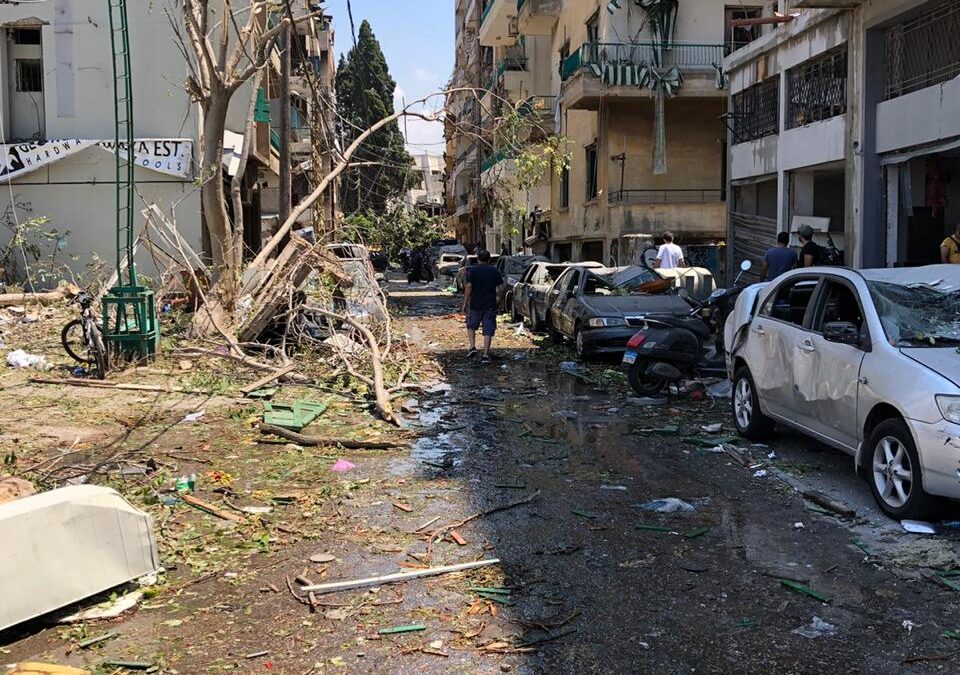
The ICJ deplores the explosion at Beirut’s port district on 4 August 2020 that caused a large number of fatalities and casualties and calls for the prompt establishment of a special, independent, impartial and transparent mechanism to investigate the devastating blast with a view to ensuring accountability and redress for the victims.
The shockwave from the blast rippled across Lebanon’s capital, killing at least 157 people and injuring some 5,000 others, according to latest figures. The death toll is expected to rise as emergency services continue to search for dozens of missing persons under the debris of destroyed buildings. The Governor of Beirut estimates that the widespread destruction caused by the explosion has left some 300,000 people without shelter after their homes were rendered uninhabitable.
“Tuesday’s explosion has immeasurably compounded the suffering of a society already reeling from political unrest, prolonged economic mismanagement and a surge in COVID-19 cases,” said Said Benarbia, Director of the ICJ’s Middle East and North Africa Programme.
“Given the Lebanese legal system’s politicization and lack of independence and accountability, Lebanon should work with the United Nations to establish a special, independent mechanism to carry out the investigation in line with international law and standards with a view to establishing the facts, making recommendations for appropriate accountability measures, including criminal prosecutions if warranted, and for preventing such a catastrophe from happening again.”
According to international human rights law and standards, and specifically the Minnesota Protocol on the Investigation of Potentially Unlawful Death, the probe into the explosion must be prompt, thorough, independent, impartial and transparent.
While the Lebanese authorities have pledged to conduct a “transparent investigation” into the blast and mete out “severe punishment” to those responsible, given the Lebanese justice system’s systemic flaws and shortcomings, the persistent allegations of corruption, and a long-entrenched culture of impunity and de facto immunity of the country’s political leadership, the ICJ considers that the Lebanese authorities would not be capable of conducting such an investigation in a manner compatible with international human rights law and standards. The organization has extensively documented how improper executive influence and interference have continued to undermine the independence of the Office of the Public Prosecutor and of Lebanon’s judiciary. As a result, allegations of political corruption, chronic mismanagement and systematic abuses of power have not been investigated and have therefore gone unpunished over the years, eventually fuelling the 2019-2020 popular uprising against the government and the political system.
The ICJ has called on the Lebanese authorities to introduce and implement extensive legal and policy reforms to strengthen judicial independence and accountability in the country. None of these reforms have materialized.
“The independent mechanism should have a mandate to establish the truth, provide adequate, effective and prompt redress and reparation to the victims for the harm suffered, including through the award of compensation, and by ensuring that those responsible are held to account,” Benarbia concluded.
The ICJ further calls on the international community to support the establishment of such a mechanism.
The international community should also provide humanitarian aid and facilitate its delivery within the country ensuring that it reaches first the most in need and vulnerable among the population as they struggle to access healthcare, shelter, food and water.
The Lebanese authorities must be transparent and ensure the right of each individual to receive the necessary information on the potential health risks in the aftermath of the explosion, including as result of exposure to toxic fumes. Consistent with their obligations under international human rights law and standards to guarantee the rights to life and health, the Lebanese authorities must also take all necessary measures to prevent people from suffering additional harm.
Thus far, a number of Beirut port officials have been placed under house arrest pending the Lebanese authorities’ investigation into the explosion. With respect to this, the ICJ calls on the authorities to ensure due process and fair trial guarantees to persons deprived of their liberty who may eventually be charged with criminal offences.
Background information
President Michel Aoun and Prime Minister Hassan Diab have linked the blast to a stockpile of approximately 2,750 tons of ammonium nitrate, which had been stored in a waterfront warehouse at Beirut’s Port district for at least six years. The circumstances surrounding the ignition of the highly combustible material, however, remain unclear.
Furthermore, reports indicate that customs officials overseeing the ammonium nitrate’s storage at the warehouse contacted Lebanese officials, including members of the judiciary, on multiple occasions to alert them to the danger posed by such storage and to seek guidance on how to deal with it, but their repeated calls were ignored.
The explosion strikes Lebanon as it grapples with multiple crises, including the COVID-19 pandemic, and against the backdrop of an ongoing popular protest movement against rampant corruption, dysfunctional institutions and sectarian power structures, in addition to an acute State-induced socio-economic crisis that has eroded living standards and left many destitute and literally hunger-stricken. Successive governments and legislative authorities have consistently failed to effectively address these hardships and institute comprehensive and necessary reforms.
Contact
Said Benarbia, Director of the ICJ Middle East and North Africa Programme, t: +41 22 979 38 17; e: said.benarbia(a)icj.org.
Download
English (PDF)
Arabic (PDF)
Aug 7, 2020 | Advocacy, Agendas, News
On 6-7 August the ICJ co-hosted a symposium on threats to judicial independence in East and Southern Africa.
The event was held with the collaboration of the Africa Judges and Jurists Forum, the Kenyan Section of the International Commission of Jurists Kenya Section, Open Society Initiative for Southern Africa, Southern Africa Development Community Lawyers Association, Malawi Law Society, Pan African Lawyers Association, East Africa Lawyers Association and the American Bar Association.
Recent actions taken to undermine judicial independence in East and Southern Africa include proposed constitutional amendments, executive interference with the functioning of the Judicial Service Commissions and verbal as well as physical threats against judges.
Participants in the symposium included judges, lawyers, academics and civil society representative. ICJ Commissioner and former Chief Justice of Kenya Dr Willy Mutunga, and Professor Jill Ghai of Katiba Institute delivered the key note addresses.
Dr Willy Mutunga speaking to challenges of judicial independence in the political context of Kenya in his keynote address, said “I believe that the independence of the judiciary… is about the integrity of the judicial officers… Building peoples’ confidence in the judiciary and the judicial officers depends on the integrity of the institution and its judicial officers and staff.”
In her address, Professor Jill Ghai evaluated various ways in which independence of the judiciary is undermined, taking into account examples from various countries.
“We must not relent in letting the Executive know that we are watching whenever there are attempts to undermine the judiciary,” Ghai said in closing.
ICJ Secretary General Sam Zarifi that judicial independence was facing genuine threats, not just in Africa but throughout the world.
“The issue of judicial independence has been at the heart of the ICJ’s work for the last 70 years almost… We have been defending the rule of law and human rights. For both of those the independence of the judiciary is absolutely essential,” Zarifi said.
On the second day of the symposium, participants into four groups discussed the nature of challenges and weaknesses in the Executive-Judiciary relations, litigation as a strategy for protecting judicial independence, strategies for increasing social and political activism in defence of judicial independence, and the prospects and strategies for regional and international advocacy in the age of COVID-19 respectively.
In his closing remarks, outgoing ICJ Regional Director Arnold Tsunga flagged Malawi as a recent case study where the judiciary had demonstrated its independence when the Constitutional Court nullified the 2019 presidential election results, citing widespread irregularities.
Watch the proceedings of the symposium here:
Welcome and keynote address
Closing remarks
Contact:
Justice Mavedzenge (ICJ Legal Advisor) t: +27793889990 e: justice.mavedzenge(a)icj.org
Shaazia Ebrahim (ICJ Media Officer) t: +27716706719 e: shaazia.ebrahim(a)icj.org