Sep 1, 2020 | News, Publications, Reports, Thematic reports
In a new report published today, the ICJ called on all States to ensure that their responses to the public health emergency brought on by the COVID-19 comply with the international human rights law and the right to health.
The report emphasized the particularly acute and discriminatory impact of the pandemic on already marginalized people and the need for access to health facilities, goods and services necessary to combat COVID-19 without discrimination.
The report Living Like People Who Die Slowly: The Need for Right to Health Compliant COVID-19 Responses documents the adverse human rights effects wrought by the COVID-19 pandemic.
The title comes from the words of Mama Yuli, an Indonesian transwoman, who has said that the pandemic left many elderly transwomen feeling like “they live like people who die slowly”.
The report emphasizes the need for a human rights and rule of law-based approach to the pandemic, with States working cooperatively to address a health crisis that by its nature knows no national boundaries.
“The COVID-19 pandemic is public health crisis that presents immeasurable threats to human rights and the rule of law globally, said Ian Seiderman, the ICJ’s Legal and Policy Director.
“But what is crucial is that States responses themselves not only respond immediately and effectively to COVID-19 as a public health emergency, but also as a human rights crisis”, he added.
Building on the ICJ’s earlier responses to COVID-19, the report details the disproportionate impact of COVID-19 on non-citizens, older persons, women and girls, LGBT persons, persons deprived of their liberty, persons with disabilities, sex workers and healthcare workers.
The report also emphasizes the need for the provision of health information by State authorities in the context of COVID-19 and scrutinizes measures taken by States which have often curbed the rights to freedom of expression, information and privacy.
For example, though “contracting tracing” measures may be effective they must also be human rights compliant and information gathered through such measures should not be used inappropriately or as an instrument of repression of individuals and human defenders.
Acknowledging the interconnectedness of all human rights, the report emphasizes the need for States to ensure provision and protection of access to the “social determinants of health” such as housing, food and water, themselves also internationally protected rights.
The report provides recommendations to States that may assist in ensuring right to health and human rights compliant responses to COVID-19.
The ICJ called on States to respect the various guidance offered by UN human rights treaty bodies and independent experts on how best to comply with their human rights obligations while responding to the pandemic.
The human rights system provides important guidance to States that was not available, for example, during the 1918 influenza pandemic, which ultimately resulted in an estimated 50 million deaths.
“States must heed these calls for a human rights and rule of law-based response to COVID-19, as failure to do so will certainly result in death and human suffering that can still be avoided,” said Seiderman.
The report also raises the importance of compliance by businesses, including particularly private actors in the healthcare sector, with their responsibility to respect human rights, including the right to health.
This will be critical, for example, in ensuring the success of combined efforts of States and private companies in the development and ultimate distribution of a COVID-19 vaccine.
Contact
Timothy Fish Hodgson, ICJ Legal Adviser on Economic, Social and Cultural Rights, t: +27828719905 e: timothy.hodgson@icj.org
Download
Universal-Global Health COVID-19 Exec Sum-Publications-Reports-Thematic Reports-2020-ENG (Executive Summary, in PDF)
Universal-Global Health COVID-19-Publications-Reports-Thematic Reports-2020-ENG (Full report, in PDF)
Myanmar-ICJ-Right-to-Health-Report-2021-BUR.pdf (Full report in Burmese)
Read also
Human Rights in the time of COVID-19: Front and Centre – ICJ news, articles, op-eds, legal blogs, videos
COVID-19 Symposium: COVID-19 Responses and State Obligations Concerning the Right to Health (Part 1)
COVID-19 Symposium: COVID-19 Responses and State Obligations Concerning the Right to Health (Part 2)
Watch
Sep 1, 2020 | Noticias
Hoy, la CIJ llamó a la Organización de los Estados Americanos (OEA) a respetar la autonomía e independencia de la Comisión Interamericana de Derechos Humanos (CIDH), como órgano encargado de promover la observancia de los derechos humanos en las Américas, incluso respecto de sus funciones administrativas básicas.
El Secretario General de la OEA se ha negado a respaldar la decisión unánime tomada por la Comisión Interamericana en enero de 2020, de renovar el mandato del Secretario Ejecutivo de la CIDH, Paulo Abrão, cuyo mandato expiró el 15 de agosto.
La negativa a renovar un mandato no puede hacerse sobre la base de denuncias presentadas, sino que éstas deben ser previamente resueltas en un plazo razonablemente breve, con base en los principios del debido proceso para todas las partes interesadas.
La CIJ señala la importancia de tramitar oportunamente las quejas realizadas por el personal conforme a los principios del debido proceso para todas las partes, y de contar con procedimientos transparentes e independientes para ello.
La CIJ recuerda que es fundamental asegurar la independencia y la autonomía de la Comisión Interamericana, lo que necesariamente incluye su Secretaría Ejecutiva y las funciones relacionadas con el proceso de nombramiento de su titular.
El Secretario General de la CIJ, Sam Zarifi, mencionó que “la CIDH ha desempeñado un papel fundamental en las Américas para promover los derechos humanos y proteger a las víctimas de violaciones de derechos humanos”. Agregó que “la situación requiere una resolución urgente que garantice el respeto de los principios de independencia y autonomía de la CIDH”.
Sep 1, 2020 | Advocacy, News
Today the ICJ called on the Organization of American States (OAS) to respect the autonomy and independence of the Inter-American Commission on Human Rights (IACHR) as the body in charge of promoting the observance of human rights in the Americas, including in respect of its core administration functions.
The OAS Secretary-General has declined to endorse the unanimous decision taken in January by the seven-person IACHR to renew the mandate of its Executive Secretary, Paulo Abrão, whose term expired on 15 August.
The Secretary General indicated that his action was motivated by concern at internal complaints that are still to be resolved.
The refusal to renew this mandate, however, must not be made on the basis of pending complaints, which must nonetheless be resolved in a reasonably short period of time, based on the principles of due process for all parties concerned
The ICJ recognizes the importance of processing the staffs’ complaints in a timely manner which respects the due process rights of the parties concerned through an independent and transparent process.
The ICJ recalls that it is essential to ensure the independence and autonomy of the Inter-American Commission, which necessarily includes the functions related to the appointment process of the Executive Secretary.
“The IACHR has played a critical role in the Americas to advance human rights and to protect victims of human rights violations,” said ICJ Secretary General Sam Zarifi.
He also mentioned that “the situation requires an urgent resolution that guarantees respect for the principles of independence and autonomy of the IACHR.”
Sep 1, 2020 | News
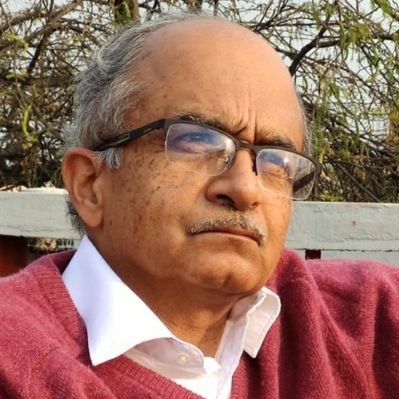
The ICJ today expressed its concern regarding the 31 August 2020 and 14 August 2020 decisions of the Indian Supreme Court to convict prominent human rights lawyer Prashant Bhushan for criminal contempt of court, on the basis of two twitter posts in which the lawyer criticized the performance of the Indian judiciary.
While the Court only imposed a symbolic fine of one rupee, rather than imprisonment, the ICJ considers that the conviction appears to be inconsistent with international standards on freedom of expression and the role of lawyers.
The ICJ stressed that the ruling risks having a chilling effect on the exercise of protected freedom of expression in India and urged a review of the laws and standards on criminal contempt as applied by the Indian courts.
The two tweets published by Prashant Bhushan referred to the Chief Justice of India riding an expensive motorbike belonging to a BJP leader “when he keeps the SC in Lockdown mode denying citizens their fundamental right to access justice” and asserted that the Supreme Court and the last four Chief Justices of India had contributed to how, in his view, “democracy has been destroyed in India even without a formal Emergency”
The Court in its 31 August judgment held that the tweets were a serious attempt to “denigrate the reputation of the institution of administration of justice” which, it said, is “capable of shaking the very edifice of the judicial administration and also shaking the faith of common man in the administration of justice.”
The Court considered that its ruling was consistent with freedom of speech and expression under Article 19 of the Indian Constitution, saying that it will have to balance its exercise of power to punish for contempt for itself (Article 129) with freedom of speech and expression.
The ICJ is concerned, however, that the conviction appears inconsistent with international law on freedom of expression as guaranteed by the International Covenant on Civil and Political Rights (Article 19, ICCPR) to which India is a party.
While some restrictions of freedom of expression are permitted by international standards, a particularly wide scope must be preserved for debate and discussion about such matters as the role of the judiciary, access to justice, and democracy, by members of the public, including through public commentary on the courts.
Any restrictions must be strictly necessary and proportionate to meet a legitimate purpose, such as protecting public order or the rights and reputations of others.
“There is a general concern that the protection of freedom of expression is rapidly eroding in India,” said Ian Seiderman, ICJ Legal and Policy Director.
“We have seen this recently around the COVID 19 crisis in relation to the imprisonment of human rights defenders, on draconian charges of sedition, rioting and unlawful assembly for protesting against the Citizenship (Amendment) Act.”
“While the Indian Supreme Court has over the years generally been an institution that has served to advance human rights in India and globally, we fear it now may be perceived as silencing criticism and freedom of expression by invoking outdated criminal contempt laws,” Seiderman added.
The ICJ joins the 1800 Indian lawyers in calling for the Supreme Court “to review the standards of criminal contempt”, emphasizing that the law is overbroad and should be aligned with international law and standards on the limited scope for restrictions on freedom of expression and criminal contempt.
“Prashant Bhushan is a lawyer and lawyers being part of the legal system have a ring-side view and understanding of the state of the court. Convicting a leading lawyer for contempt for expressing his views in this manner may have a chilling effect on lawyers, in particular considering his involvement in many public interest litigation cases,” said Mandira Sharma, ICJ South Asia Senior Legal Adviser.
Contact
Ian Seiderman – ICJ Legal and Policy Director; e: ian.seiderman(a)icj.org , t: +41 22 979 38 00
Matt Pollard – ICJ Senior Legal Adviser, Director, ICJ Centre for the Independence of Judges and Lawyers; e: matt.pollard(a)icj.org, t: +41 79 246 54 75
Download
India-Criminal-Contempt-of-Court-Press-Release-2020-ENG (PDF, with additional background information)
Aug 31, 2020 | Advocacy, News
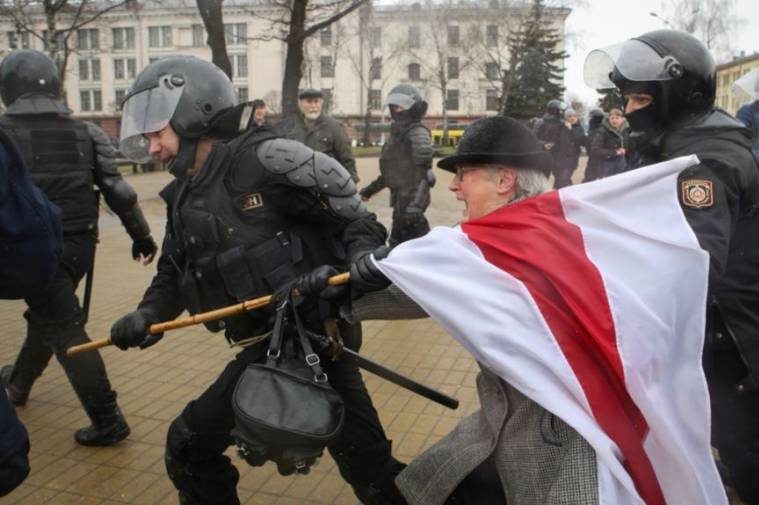
Today, the ICJ called on Belarus to comply with its international human rights law obligations in its response to the protests taking place in the aftermath of the presidential elections and in the treatment of those detained.
This includes immediately releasing persons arbitrarily detained, providing prompt access to lawyers for those still detained, accounting for the fate and whereabouts of missing protestors and promptly and effectively investigating torture and other ill-treatment.
The widespread arbitrary arrests of peaceful protesters, and credible allegations of torture and ill-treatment and enforced disappearances of detainees, are particularly alarming in light of obstacles faced by detainees in accessing lawyers, the ICJ said.
The ICJ recalls that under international human rights law, all persons have the right to peaceful assembly, and any restriction of this right must be provided in law be strictly necessary and proportionate to a specified legitimate purpose. The mass arrest of protesters does not appear to meet these requirements.
Belarus has obligations, including under treaties to which it is party, to respect the right to liberty and refrain from arbitrary arrests or other unwarranted interferences with the freedom of assembly, or freedom of expression, of protesters, protected under international law.
Law enforcement authorities must respect the right to life and the prohibition on torture or other ill-treatment at all times. Allegations of arbitrary killing, enforced disappearances and torture and other ill-treatment must be promptly, thoroughly and independently investigated, and those responsible brought to justice.
Effective remedies must be provided to victims of such serious human rights violations.
The ICJ is concerned about reports of the widespread denial of access to a lawyer and further obstacles that lawyers face while carrying out their professional duties in the current context in Belarus.
Reportedly, lawyers are not provided with access to the case file or further information necessary for the provision of effective legal assistance to their clients. This is of particular concern in light of multiple reports of torture or other ill-treatment of those detained following the election.
The ICJ stresses that the right of access to qualified legal representation is crucial for the protection of the human rights of those arrested in connection with the current political upheaval in Belarus.
The right of access to a lawyer is recognized as an essential element of the right to a fair trial and the right to liberty, protected under the International Covenant on Civil and Political Rights, to which Belarus is a party.
The UN Basic Principles on the Role of Lawyers provide that governments should ensure that lawyers are able to perform all of their professional functions without intimidation, hindrance, harassment or improper interference and should be able to consult with their clients freely and have access to appropriate information, files and documents in their possession or control in sufficient time to provide effective legal assistance to their clients.
It is essential that lawyers and other human rights defenders can carry out protection of human rights of their clients especially in times of emergency.
The ICJ also calls on the Belarus Republic Bar Association to bolster its efforts in protecting its members who provide legal representation in cases related to the ongoing protests.
Background:
The Republic of Belarus ratified the International Covenant on Civil and Political Rights in 1973
Following the presidential elections of 9 August 2020 in Belarus, widespread protests across Belarus took place following the discredited result, which were recognized as neither free nor by the European Union and other observers. Following the initial dispersal of these protests by the authorities, more than 6000 people were arrested and detained, many arbitrarily. There is credible evidence that many of those arrested or detained have been subjected to torture or other ill-treatment and that decisions regarding their arrest and detention have been made by courts temporarily established in detention centres.
While estimates of numbers differ, the whereabouts of at least tens of those who took part in the protest have not been established to date. One of the missing persons, Nikita Krivtsov, was recently found dead in a forest near Minsk.
The reports that defence lawyers were denied access to those arrested include high-profile cases, such as the case of the former presidential candidate Victor Babaryka whose lawyer was not allowed to see his client in the detention centre for more than a week.
According to the Belarusian Republican Bar Association, lawyers face problems with meeting their clients held in the detention centres and access to the case files and further information necessary to carry out their professional duties.