May 1, 2020 | News
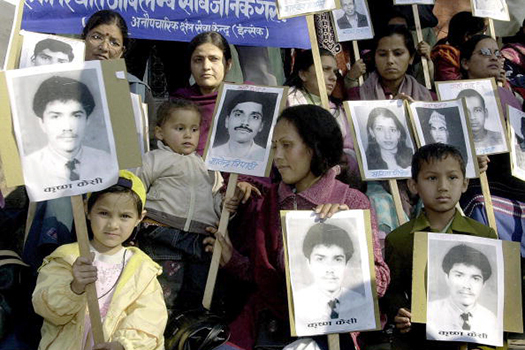
The decision by Nepal’s Supreme Court to reject a petition by the government asking that it review its 2015 ruling against amnesties for grave conflict-era crimes is an important step in securing truth, justice and reparations for the thousands of victims of the country’s decade-long conflict, the ICJ and other groups said today.
The armed conflict between Maoist and government forces ended in 2006, but victims of serious abuses by both sides are still awaiting justice, accountability and reparations.
The ICJ, Amnesty International, TRIAL International, and Human Rights Watch called upon the Government to revise the 2014 Transitional Justice Act and ensure its implementation in accordance with the Supreme Court’s judgments, so as to assure access to justice for the victims of conflict-era abuses.
Nepal’s transitional justice law, which was passed by Parliament in April 2014, established a Truth and Reconciliation Commission and a Commission of Investigation on Enforced Disappeared Persons.
However, it contained provisions that could allow for amnesties even for crimes such as torture, including rape and other sexual violence and ill-treatment and enforced disappearance.
On 26 February 2015, the Supreme Court struck down the amnesty provisions and ordered the act to be amended accordingly. However, the government immediately petitioned to overturn the ruling. That petition was rejected by the court on April 27, 2020.
“With the Supreme Court’s decision, there can be no further excuse for government backsliding on ensuring truth, justice, reparations and guarantees of non-recurrence. The government should immediately amend the Enforced Disappearances Enquiry, Truth and Reconciliation Commission Act, 2014 in line with the Supreme Court’s orders and its own international obligations,” said Biraj Patnaik, South Asia Director at Amnesty International.
With its latest ruling the Supreme Court has upheld the principle that there can be no amnesties for those suspected of criminal responsibility for crimes under international law and human rights violations. More than 13 years since the Comprehensive Peace Agreement of November 2006 promised justice to the victims, no one has been made accountable for any conflict era crimes.
“The request filed by the Nepal Government to review the decision of the Supreme Court was another attempt to evade the real issue: accountability for mass human rights violations. We are delighted that the Supreme Court held its ground and reaffirmed the importance of fair and efficient transitional justice mechanisms,” said Cristina Cariello, the Head of Nepal Program at TRIAL International.
Amnesty International, the ICJ, Human Rights Watch and TRIAL International have repeatedly expressed concerns about the faltering transitional justice process. Besides the failure to amend the law to uphold basic principles of justice, there have been long delays and repeated political interference in appointments to the two transitional justice commissions.
“Over the past decade, the Supreme Court of Nepal has produced some of the most human rights compliant jurisprudence in South Asia. This petition cynically sought to have the Court undermine its own judgement, so that the government could sidestep its responsibility to provide accountability for conflict-related human rights violations,” said Frederick Rawski, ICJ Asia Pacific Director. “The government has no excuse for not immediately amending the transitional justice legal framework so that it is consistent with the Court’s jurisprudence and Nepal’s international legal obligations.”
An effective transitional justice system requires strong legal foundations consistent with international law and standards, and the political will to address the demands of victims of the conflict, the organizations said.
“When Nepal stood for election to the United Nations Human Rights Council the government promised to uphold its human rights obligations, but 3 years later, as it seeks re-election, there has been nothing but impunity and evasion on transitional justice,” said Meenakshi Ganguly, South Asia director at Human Rights Watch. “These are crimes under international law, subject to universal jurisdiction, and if justice is denied at home victims may take their cases abroad.”
Contact
Frederick Rawski, ICJ Asia-Pacific Director, frederick.rawski(a)icj.org, +66644781121
Download
English
Nepali
Apr 30, 2020 | Advocacy, Non-legal submissions
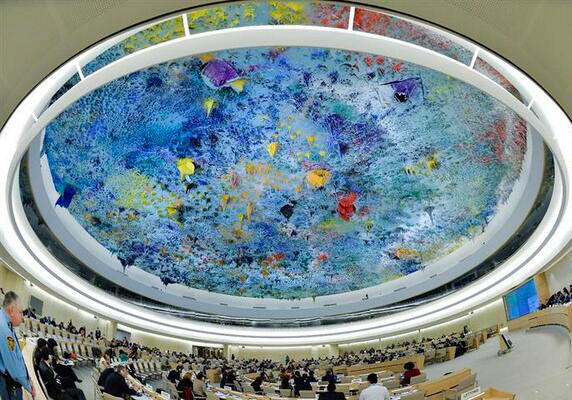
The ICJ has joined other NGOs in highlighting the contribution of independent UN human rights experts in ensuring that measures against COVID-19 are consistent with human rights.
The statement, delivered by Amnesty International on behalf of the group of NGOs in an informal online meeting of the UN Human Rights Council, read as follows:
“We thank the Coordination Committee for the update on the work undertaken by the Special Procedures to date to highlight the human rights impacts of the COVID-19 pandemic.
As States undertake extraordinary measures to curb the spread of COVID-19, we recognize the good faith efforts of many States to effectively protect the right to life, the right to health and other human rights as well as the well-being of their populations, and to curb the spread of COVID-19. States must ensure that quality health services and goods necessary for prevention and care are accessible, available and affordable for all. Health workers and other front-line workers should be provided with adequate protective equipment, information, training and psycho-social support. Key health services, including sexual and reproductive health information and services, should be confirmed as essential services and their provision guaranteed.
We also recognize that in other contexts, States have used emergency powers to enact repressive measures that do not comply with the principles of legality, proportionality and necessity and that may have the effect or intention of suppressing criticism and minimizing dissent.
In this regard, we take heart at the Special Procedures statement that “[t]he COVID-19 crisis cannot be solved with public health and emergency measures only; all other human rights must be addressed too“.[1] We particularly value the vast and interconnected responses by the Special Procedures highlighting the wide-ranging effects of the pandemic itself, as well as of measures taken by states in the name of responding to the global health crisis.
The Special Procedures have addressed the impact on economic, social and cultural rights, such as the rights to health, housing, water and sanitation, food, work, social security, education, healthy environment and adequate standard of living, and to equality and non-discrimination as cross-cutting rights.
The Special Procedures have also highlighted the increased risks of people with underlying health conditions, older people, people who are homeless or in inadequate housing, people living in poverty, persons with disabilities, LGBTI people, children, migrants, refugees and asylum-seekers, people living in refugee or IDP camps, and people deprived of liberty. They have also highlighted the effects on women and girls, calling for responses to consider factors such as their “sex, gender, age, disability, ethnic origin, and immigration or residence status among others“.[2]
We also welcome the various tools that have been developed by some mandate holders, such as the COVID-19 Freedom Tracker, the Dispatches, video messages and guidelines in addition to the vast number of press releases.[3] Making these tools readily accessible to all stakeholders is critical, as is considering ways to receive feedback and share learnings about their application. We encourage the Special Procedures to continue to deepen their analyses of state responses, including through reports to the Human Rights Council and the General Assembly, and to offer guidance, through the tools mentioned, to states on how to respond to the crisis in a human rights compliant manner.
Last but not least, we urge UN member states to cooperate fully with the Special Procedures. While country visits are suspended for the time being, this should not be used as an excuse not to co-operate. We call on states to respond in a timely manner to communications from the Special Procedures and to seek technical and expert advice from relevant mandate holders in relation to draft legislation to ensure that these are in line with states’ obligations to respect, protect and fulfil all human rights.”
The statement was joined by the following organisations:
- Amnesty International
- Asian Forum for Human Rights and Development (FORUM-ASIA)
- Centro de Estudios Legales y Sociales (CELS)
- CIVICUS: World Alliance for Citizen Participation
- Conectas Direitos Humanos
- DefendDefenders (East and Horn of Africa Human Rights Defenders Project)
- Human Rights Law Centre
- Human Rights Watch
- ILGA World – The International Lesbian, Gay, Bisexual, Trans and Intersex Association (International Lesbian and Gay Association)
- International Commission of Jurists
- International Service for Human Rights
[1] https://www.ohchr.org/EN/NewsEvents/Pages/DisplayNews.aspx?NewsID=25746&LangID=E
[2] https://www.ohchr.org/EN/HRBodies/SP/Pages/News.aspx
[3] https://www.ohchr.org/EN/HRBodies/SP/Pages/COVID-19-and-Special-Procedures.aspx
Apr 30, 2020
Today, the ICJ published a briefing paper entitled “COVID-19 and Human Rights: Upholding the Right to Health in Myanmar’s Conflict Areas.”
The briefing paper analyzes the ongoing Internet shutdown in Rakhine and Chin states through a right to health lens amid the COVID-19 pandemic, and its impact on Myanmar’s obligation to uphold the right to health under the International Covenant on Economic, Social and Cultural Rights. Myanmar became a party to the treaty in 2017.
The briefing paper also discusses the right to health and international humanitarian law implications of the attack against World Health Organization employees in Rakhine state in April 2020.
Questions answered include:
- What does the right to health guarantee?
- Who does the right to health protect?
- What are Myanmar’s obligations regarding the right to health?
- How is access to information important to upholding the right to health?
- Do these human rights obligations and protections apply in situations of armed conflict?
- How does the Internet shutdown in Rakhine and Chin states affect Myanmar’s obligation to uphold the right to health?
- What are the legal implications of attacks against medical personnel in areas of armed conflict?
Download
English
Burmese
Contact
Jenny Domino, ICJ Associate Legal Adviser, e: jenny.domino(a)icj.org
Related Work
Statement: Government must lift online restrictions in conflict-affected areas to ensure access to information during COVID-19
Report: Curtailing the Right to Freedom of Expression and Information in Myanmar
Publication: Questions and Answers on Human Rights Law in Rakhine State
Event: ICJ and Myanmar National Human Rights Commission Hold Forum on Economic, Social and Cultural Rights
Apr 29, 2020 | Advocacy, News, Op-eds
An opinion piece by Carolina Villadiego Burbano, ICJ Legal and Policy Adviser for Latin America.
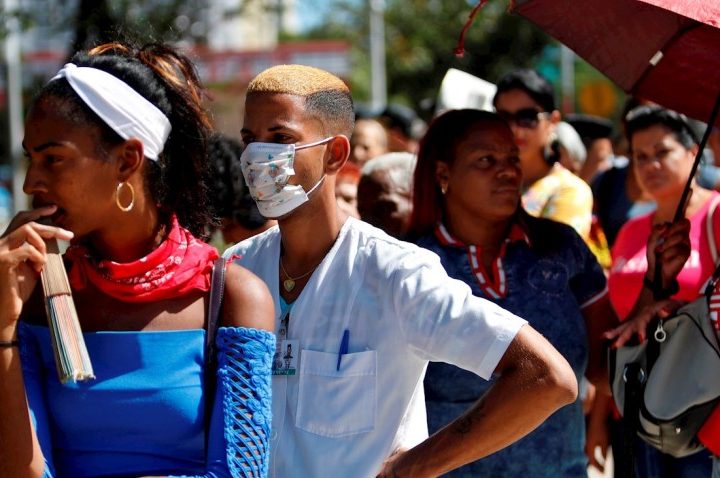
Several Latin American governments have adopted exceptional emergency measures to face the COVID-19 health crisis. The measures, motivated by policies with the objctive of urgently protecting people’s health, have been accompanied by restrictions to personal freedoms (i.e. quarantines, isolations).
Judiciaries have also adopted specific measures too to protect the right to health of persons involved in proceedings while providing services for guaranteeing access to justice during the emergency. They have reduced physical operations; adopted social distancing measures in courts; postponed proceedings; authorized remote work for judges and administrative officers; incorporated urgent mechanisms to guarantee fundamental rights and allowed the use of technology.
Judiciaries fulfil different roles under international humans rights law and, as a recent ICJ briefing note recalls, these roles remain as or even more important during the pandemic. Those roles include guaranteeing individual rights, including the right to a fair trial, freedom from arbitrary detention, freedom from torture and other ill-treatment and the right to an effective remedy. In addition, the responsibility of the judiciary is to securing the rule of law more generally by reviewing the government’s decisions during the emergency.
This blog illustrates measures adopted by South American judiciaries and some preliminary and personal reflections on some of the factors to be considered in assessing their proportionality and effectiveness.
Specific measures to protect health while guaranteeing access to justice
Brazil’s National Council of Justice has recommended to judges several measures that could reduce epidemiological risks, such as reassessing pre-trial detentions. This review could include revoking pretrial detentions when detainees were pregnant women or were under pretrial detention for more than 90 days.
Chile’s Supreme Court has established criteria for judges and other personnel to work remotely, and for holding specific hearings by videoconference with previous coordination with the parties and by ensuring due process guarantees. Also, instructions have been given to prioritize cases linked to the sanitary emergency and related to the protection of rights of persons in vulnerable conditions.
Colombia’s Judicial Council postponed proceedings except for urgent ones, such as those essential for the protection of fundamental rights (tutela), habeas corpus, constitutional and legal control of the emergency governmental decrees, decisions regarding persons deprived of liberty and protective measures related to domestic violence cases. The judiciary has published email addresses where urgent applications could be made electronically and allowed the use of videoconferencing and remote work for judges.
Ecuador’s Judicial Council has allowed remote working by judges, and videoconference hearings have been adopted for crimes committed in flagrante delicto. Judicial proceedings have been postponed, except for urgent cases, such as for crimes committed in flagrante delicto, domestic violence, juvenile justice and prisoners’ guarantees. The Supreme Court and the Constitutional Court has defined rules applicable to the procedures under their jurisdiction.
Peru’s Executive Council of the Judiciary postponed proceedings and established that some judges should work physically at courts on urgent proceedings, such as those related to rights of detainees, domestic violence and payment of parental support. Some remote work has also been allowed.
Other judiciaries have adopted similar measures. Provincial judiciaries from Argentina and judges from Bolivia have held hearings through videoconferences. Paraguay’s judiciary identified urgent matters for which it would provide services.
Judiciaries, right to an effective remedy and access to justice: what next?
More than one month after those judicial measures were adopted it is important to reflect on their proportionality and their effectiveness. It is also important to envision a middle-term plan to deal with the consequences of postponement of proceedings and the likely increase of judicial workload when restrictions end. I suggest three sets of issues that could be considered as a starting point for such reflection by Latin American judiciaries, civil society and international bodies and agencies:
- Effects on the protection of the right to health and on rights of judges and court personnel
- There should be a review of the measures adopted to guarantee in-person services, especially analyzing if adequate health standards have been guaranteed for all persons participating in proceedings. There has been some criticism that protective measures have been insufficient and sometimes they were only available for judges and courts’ administrative staff.
- There should be an assessment with judges and other personnel, whether the remote work complied with health-work standards. It is crucial to review the conditions of persons working remotely, in particular in relation to information technology, and if work schedules have been flexible when judges/personnel were caring for children or dependent adults.
- There should be a review as to whether there has been a disproportionate effect in the workload of female judges or other female personnel while working remotely, caring for children and performing domestic activities.
- General considerations with a human rights approach
The following questions might be considered:
- Review whether judicial proceedings continue to be accessible wherever necessary to guarantee the right to an effective remedy regarding human rights, and to otherwise ensure judicial review of the lawfulness of governmental decisions. The Inter-American Commission on Human Rights has established that “appropriate legal proceedings to ensure the full exercise of rights and freedoms” should not be suspended.
- Review whether judicial measures that guarantee the right to an effective remedy are accessible for all persons in a country, especially for those in a situation of vulnerability or risk.
- Establish priorities and policies for cases related to persons or groups in conditions of particular risk (e.g. detainees, migrants, refugees), and for persons without access to technology.
- Review if hearings held by videoconferences guaranteed parties’ rights, such as due process, right to defense, right to call and confront evidence, and right to consult confidentially with one’s lawyer.
- Assess whether the security protocols used by the remote work and videoconferencing technologies, ensure that sensitive, confidential or otherwise private information, is adequately protected.
- Adopt transparency policies and adopt public assessment of the measures adopted, so individuals can exercise control and oversight of these measures as they affect defendants, parties, lawyers and the general public.
- Medium-term plan for Judiciaries
- Judiciaries should develop a medium-term plan soon to guarantee the right to an effective remedy to address the adverse human rights effects that COVID-19 has brought and may continue to generate. The plan should be public and should consider the possible increase of workload due to postponement of proceedings and impacts on specific rights, such as health, work, water and sanitation and food. It could consider deploying teams of emergency judges to provide access to an effective remedy for these rights and the use of adaptive case management tools.
- Judiciaries should develop a strategy to ensure that cases of human rights violations that constitute crimes under international law, enforced disappearances, extrajudicial killings, torture and ill-treatment, are not indefinitely delayed, cancelled or otherwise compromised. Such impediments must not be allowed to result in impunity of perpetrators or pose obstacles to ensuring that victims receive complete information regarding the advance of their cases.
The COVID-19 pandemic has modified judiciaries’ methods of work. As they adopted specific measures to protect the health of persons as well as to provide judicial remedies, it is important to review their measures with a human rights approach. It is also critical that judiciaries themselves analyze their practices and adopt changes when necessary. The Inter-American Commission of Human Rights and the UN Special Rapporteur on the Independence of Judges and Lawyers should continue to specifically monitor these measures and report on them.
In PDF: Latin-America-Judiciaries-During-COVID-OpEd-2020-ENG
Apr 29, 2020 | Artículos, Noticias
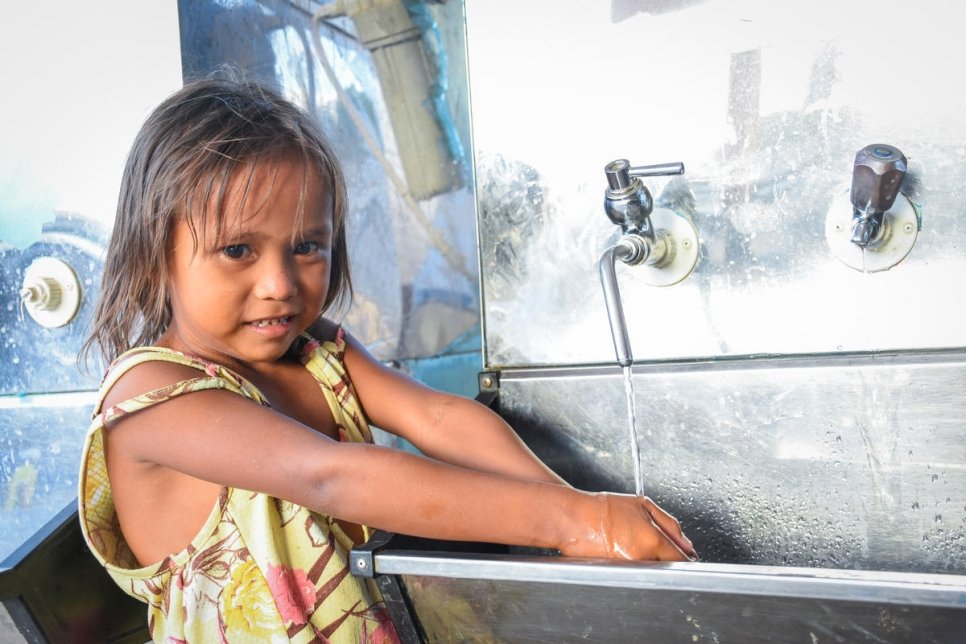
El vicepresidente de la CIJ, el profesor Carlos Ayala Corao, presenta en el artículo “Retos de la pandemia del covid-19 para el Estado de Derecho, la democracia y los derechos humanos”, un análisis sobre cómo deben ser abordados los desafíos que ha traído la pandemia del COVID-19 en los Estados democráticos. El artículo resalta la importancia de que los Estados den respuesta a la crisis generada por la pandemia sin desconocer los derechos humanos y las garantías propias del Estado de Derecho. Esto implica, que las medidas que adopten los Estados no deben restringir los derechos de “manera innecesaria o desproporcionada; y mucho menos (…) desmantelar la Constitución, y restringir el Estado de Derecho y la democracia”.
El profesor Ayala resalta varios elementos que deben considerarse para evitar la vulneración de derechos y garantías de las personas:
- Las medidas adoptadas “deben estar (…) dentro de la Constitución y el Derecho internacional.” Es esencial que se consideren los estándares internacionales, como los principios de Siracusa sobre estados de excepción.
- Las instituciones de control y protección, tanto nacionales como internacionales, y las ramas del poder público, deben funcionar durante los estados de emergencia decretados. En este tema, destaca el rol de la rama legislativa, que ejerce una función esencial durante los estados de emergencia, pues debe “controlar las actuaciones del poder ejecutivo” y “adoptar las leyes, autorizaciones y aprobaciones necesarias.” Por ello, dada las limitaciones que ha creado la pandemia para hacer reuniones presenciales, se deben “introducir métodos complementarios y alternativos” que garanticen el correcto funcionamiento de esta rama del poder.
El poder judicial también tiene un rol esencial durante el estado de emergencia. Específicamente, señala que “en tiempos de emergencias y de medidas extraordinarias, es cuando más se necesita el funcionamiento de los tribunales, independientes e imparciales, para proteger los derechos de las personas y controlar los excesos del poder. La justicia no se puede poner en cuarentena, porque entonces la Constitución, la democracia, el Estado de Derecho y los derechos humanos también entran en cuarentena.” Por lo anterior, al igual que la rama legislativa, “los tribunales deben reinventarse, para permitir, que, con respeto a las medidas de distanciamiento social y aislamiento, puedan seguir cumpliendo sus funciones de manera continuada e ininterrumpida.”
- Las medidas excepcionales que se adopten deben ser “necesarias, graduales, temporales, idóneas y proporcionales”. Adicionalmente, estas medidas “deben estar contenidas y expresadas en actos jurídicos formales, debidamente motivados, publicados oficialmente y divulgados adecuadamente.”
- Dentro de las medidas excepcionales adoptadas por los Estados, deben incluirse medidas que garanticen la seguridad jurídica de obligaciones contractuales y extracontractuales.
- Las medidas excepcionales deben tener “en cuenta la necesidad de un trato diferenciado por grupos sociales.” En particular, se debe considerar los efectos que las medidas, como las cuarentenas obligatorias, pueden tener en las mujeres, las poblaciones pobres, las poblaciones indígenas, los niños y las niñas y las personas privadas de la libertad.
Por otro lado, el artículo explora las limitaciones que han sufrido varios derechos humanos durante la pandemia. Entre estos derechos, el artículo analiza el derecho a reunirse públicamente o circular públicamente en grupos de personas, el derecho a la libertad de cultos y a la libertad religiosa, el derecho al voto, el derecho a acceder a la justicia, el derecho a la libertad personal, el derecho a la libertad de expresión y el derecho a la salud.
Por otra parte, el artículo recuerda que las medidas adoptadas por los Estados están “sometidas a regulaciones y controles internacionales”. Sobre este punto, subraya las obligaciones que adquieren los estados en virtud de tratados internacionales, como el Pacto Internacional de Derechos Civiles y Políticos, la Convención Americana sobre Derechos Humanos, el Convenio Europeo para la Protección de los Derechos Humanos y Libertades Fundamentales y la Carta Africana sobre Derechos Humanos y de los Pueblos.
Por último, el profesor Ayala reflexiona acerca de la importancia del respeto de la democracia y el Estado del Derecho para hacer frente a la pandemia. Así, menciona que, “debemos repensar el funcionamiento del Estado, porque tampoco será lo mismo después de esta pandemia. El Estado -al igual que el sector privado- ha probado ser una institución esencial para hacer frente al grave problema de salud pública que ha causado la pandemia. Pero no se trata de cualquier Estado, sino del Estado democrático; sometido al Derecho; respetuoso de los derechos; eficaz en sus acciones y respuestas; aliado, cooperador y coordinador de los esfuerzos de la sociedad; abierto al debate y a las críticas de su gestión; transparente en el manejo de los recursos; y responsable. Por ello, aun en tiempos extremadamente difíciles, ante situaciones de extraordinarias se debe asegurar el funcionamiento eficaz de los poderes públicos del Estado de Derecho, para así garantizar la democracia, el control del poder y los derechos humanos.”
Foto: © UNHCR/Allana Ferreira
En PDF: RETOS-DE-LA-PANDEMIA-COVID-News-Feature-Articles-2020-SPA