Apr 3, 2020 | Comunicados de prensa, Noticias
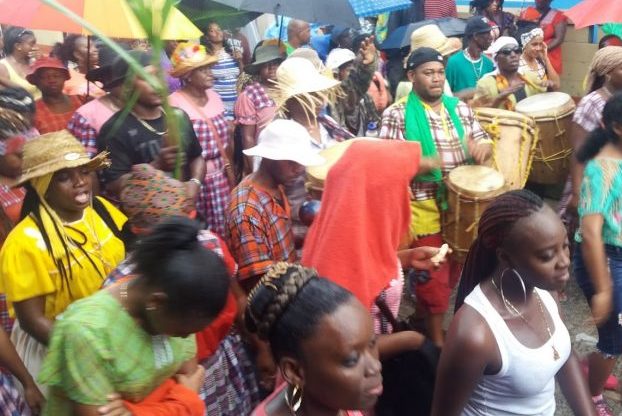
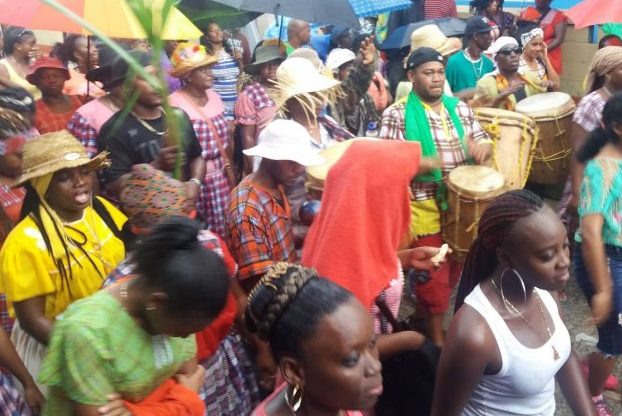
Miles de personas pertenecientes a los Pueblos Indígenas de Guatemala (Mayas, Garífunas y Xincas), corren el riesgo de ser víctimas de la pandemia COVID-19, si el Gobierno no les provee, de manera inmediata, la información necesaria y les asegura el acceso a un adecuado servicio de salud, sin discriminación, afirmó hoy la CIJ.
“Los Pueblos Indígenas de Guatemala, enfrentan el riesgo de sufrir los efectos destructivos de la pandemia COVID-19, debido a la discriminación histórica y sistemática en su contra; lamentablemente, en la actual crisis, los Pueblos Indígenas no tienen acceso a información clara y sencilla, para saber cómo protegerse de la pandemia y cómo ser protegidos durante la emergencia, por el Sistema de Salud”, afirmó Ramón Cadena, Director de la CIJ para Centroamérica.
“Las comunidades indígenas que más podrían sufrir los efectos de la pandemia, son aquellas que sufren el abandono absoluto del Estado de Guatemala y viven en extrema pobreza en la frontera con México en el norte y occidente del pais”, añadió.
La CIJ requirió a las autoridades del Gobierno de Guatemala, que garanticen que fluya información clara sobre medidas concretas de salud pública, en los idiosmas Mayas (Ixil, Quiché, Mam, Q´eqchí, Kakchiquel, Canjobal, Chuj y otros), así como en los idiomas Garífuna y Xinca.
Durante la pandemia, el Estado de Guatemala no ha tomado en cuenta las dificultades (financieras, geográficas, tecnológicas y barreras lingüisticas) que enfrentan los Pueblos Indígenas, en lo que respecta al acceso a la información. Por el otro lado, la CIJ ha observado que la información sobre las medidas gubernamentales para enfrentar la pandemia, ha sido comunicada en forma muy limitada.
Los Pueblos Indígenas han sido excluidos del Sistema Oficial de Salud, por la discriminación de que son objeto y por la falta de recursos gubernamentales que se invierten en el Sistema de Salud, luego de los procesos de privatización de los servicios sociales, que se han venido implementando a partir de la firma de los Acuerdos de Paz.
“La debilidad del Sistema de Salud Pública, la prevalencia del racismo existente desde siglos atrás y la marcada desigualdad que sufren los Pueblos Indígenas, agravan aún más el impacto potencial que el Corona virus y la pandemia podrán tener en los Pueblos Indígenas”, afirmo Cadena.
La CIJ insta al Estado de Guatemala a tomar las medidas legislativas, administrativas y judiciales necesarias para preservar los derechos humanos de los Pueblos Indígenas durante la presente emergencia y específicamente, para preservar el derecho a la salud, a la alimentación y a la vivienda; asímismo, para garantizar una vida digna a los Pueblos Indígenas, libres de cualquier amenaza a sus derechos civiles y políticos.
“Todas las medidas que el Gobierno implemente para mitigar los efectos de la pandemia, deben ser estrictamente necesarias, legítimas, proporcionadas y temporales”, afirmó Cadena.
“Hay algunas garantías como el derecho a la Reparación y el Derecho de Acceso a la Justicia, que no pueden limitarse ni suspenderse en ninguna circunstancia, ya que son vitales para que las y los ciudadanos, incluidos los Pueblos Indígenas, puedan defender sus derechos. Tomando en cuenta que la presente pandemia afecta el Sistema Legal en diferentes formas, el Gobierno de Guatemala tendrá que tomar medidas específicas para evitar la discriminación en contra de los Pueblos Indígenas y para garantizar el Derecho de Acceso a la Justicia, durante la pandemia”, finalizó Cadena.
Apr 3, 2020 | News
Millions of indigenous people in Guatemala (Mayas, Garífunas and Xincas) are at increased risk of falling victim to COVID-19 unless the government immediately provides them with necessary information and ensures they have access to adequate health care without discrimination, the ICJ said today.
“Guatemala’s indigenous people face an increased risk of suffering during this global pandemic because of the historic and systemic discrimination against them, which means that they don’t have access to proper information needed to protect themselves, nor to health care should they fall ill because of COVID-19,” said Ramón Cadena, ICJ’s Central America Director.
“The most suffering indigenous communities could be those very poor indigenous communities living at the border with México.”
The ICJ called on Guatemalan authorities to ensure that information about public health measures regarding COVID-19 be offered in the languages most used by indigenous communities (mayan languages such as ixil, quiché, mam, q´eqchí, kaqchikel; and garífuna and xinca languages).
During the pandemic the State of Guatemala has not taken into account the difficulties, such as financial, geographical, technological or linguistic barriers, that indigenous people face in accessing information.
On the other side, the ICJ has noticed that the information about the governmental measures to face the pandemic, has been disseminated in a very limited way.
Indigenous communities have been excluded from the official health system because of the discrimination against them and the lack of resources invested in the health system of Guatemala due to processes of privatization of social services, which have been implemented in Guatemala after the signature of the Peace Accords.
“The general weakness of the Guatemalan public health system, historic racism against the indigenous community and the tremendous general social inequality in the country all aggravate the potential impact of the pandemic on the indigenous community,” Cadena said.
The ICJ urges the State of Guatemala to take the necessary legislative, administrative, and judicial measures to protect Indigenous Peoples and preserve their human rights during the current emergency, specifically their right to health, food, and housing.
The ICJ also called on the Guatemalan government to avoid measures that threaten the life and dignity of people, including those from the indigenous community who are generally most subject to violations of their civil and political rights.
“Any measures taken in response to the pandemic must be limited to those that are strictly necessary, legitimate, and proportionate to the risk facing the community, and limited in time and subject to review,” Cadena said.
“There are certain guarantees, such as the right to an effective judicial remedy, that cannot be suspended or repealed and that are vital so that citizens, including indigenous people, can safeguard their rights, and even as the pandemic inevitably affects the legal system the government must do all it can to avoid discrimination against the indigenous community, which already suffers from racism and lack of access to justice.”
Apr 2, 2020 | News, Op-eds
An opinion piece by Shaazia Ebrahim, ICJ Media Officer, and Tim Fish Hodgson, ICJ Legal Adviser on Economic, Social and Cultural Rights, based in South Africa.
The inhumane conditions that most South African residents are subjected to in their daily lives will continue to deepen as the coronavirus spreads.
South Africans are encouraged to take precautionary measures to curb the spread of the pandemic by practising social distancing and intensifying hygiene control. The country will also be under a nationwide lockdown in order to “fundamentally disrupt the chain of transmission across society” from 26 March for 21 days.
The problem is that the recommended measures in South Africa, similarly to those of the World Health Organisation, assume that everyone lives in a house. A house which is at no risk of being destroyed by the state or private owners of the land upon which it is built: a house with access to water, sanitation and other basic services.
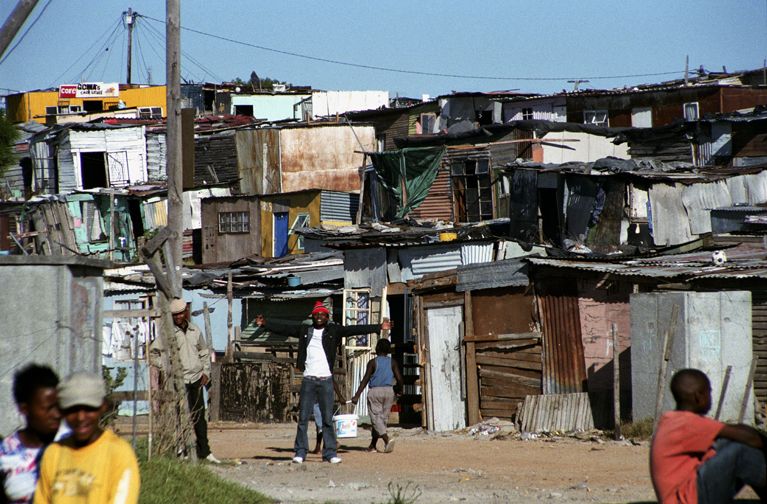
But the reality is that millions of South Africans do not live in a house, but in rudimentary structures in poor conditions. In a statement released this week, Abahlali baseMjondolo, a shack dwellers’ movement with members in various provinces across South Africa, articulated this.
Abahali’s frank assessment of the situation is that “it does not seem possible to prevent this virus from spreading when we still live in the mud like pigs”.
It is under the same conditions described by Abahlali baseMjondolo that many of the urban and rural poor in South Africa will be required to live under “lockdown”, commencing from midnight tonight.
Access to basic services: ‘if one person gets infected it’s disastrous’
Speaking before the release of the statement, Abahlali president S’bu Zikode expressed the distress that many around South Africa are currently experiencing. “Abahlali is very concerned about the outbreak of the coronavirus. The reason is, of course, that the conditions that we are subjected [give] us reason to be scared and worried,” he said.
“Social distancing” is difficult for many in South Africa. Government regulations say no more than 100 people should be “gathering” and people are more generally encouraged to keep a distance from one another. In Abahlali’s settlements, Zikode explains, there are thousands living close together under strenuous conditions.
“That on its own is automatically disrespecting the call from the president”, he said.
Abahlali, alongside various other South African movements and organisations, have for years been calling for the state to improve their living conditions and provide them with access to water, sanitation and other basic services.
In 2019 the United Nations Committee on Economic, Social and Cultural Rights noted its concern about “the large number of people living in inadequate housing, including those in informal settlements, without access to basic services; the growing number of informal settlements in urban areas due to rapid urbanisation”.
These calls have not received a sufficiently serious response from the government. Litigation to ensure access to basic services remains commonplace.
In this context, while hygiene has rightly been touted as one of the most important preventatives from spreading Covid-19, it is difficult to imagine how the majority living in South Africa will be able to ensure even basic measures such as handwashing.
Abahlali notes that in many informal settlements “hundreds of people [are] sharing one tap”. In this context, it is easy to see why leaders of Abahlali think that as it stands, preventing the spread of coronavirus is very important, but all but impossible.
“As leaders of Abahlali, we see it as once one person gets infected in the settlements, suddenly the entire settlement will be disastrous,” Zikode said.
A moratorium on evictions: halting evictions ‘will save lives’
Making matters worse, members of Abahlali, like many others in their country, lack security of tenure. As trying as their current circumstances may be, Abahlali warns of the potentially devastating effects of evictions during the pandemic. Another common way to induce evictions is to disconnect existing access to water, electricity and sanitation.
This is why Abahlali demands that “all evictions must be stopped with immediate effect” and that “all disconnections from self-organised access to water, electricity and sanitation must be stopped with immediate effect”. Indeed, it is difficult to see how any eviction during the pandemic could be “just and equitable” in “all relevant circumstances” as is required by South African law.
The call for a “moratorium” on evictions has also been made by a large group of social movements and civil society organisations in South Africa in a letter to the president. It has also received clear support from the UN Special Rapporteur on the Right to Housing, who has called for a “global ban” on evictions worldwide:
“The logical extension of a logical stay-at-home policy is a global ban on evictions. There must be no evictions of anyone, anywhere, for any reason. Simply put: a global ban on evictions will save lives”, she said. The International Commission of Jurists has echoed these calls and the calls for connection of emergency water for all before the nationwide lockdown commences.
Coronavirus, the right to housing and access to land
In February, in giving input to the parliamentary committee contemplating the need to amend the Constitution to expedite land reform, Abahali argued that land is not a commodity and that the Constitution should include a “right to land” which it does not at present.
“Land should be shared and should be viewed as a public good”, Zikode explains.
Abahlali argues that the absence of a right to land in the Constitution undermines the constitutional right to housing: without land there can be no housing. Consistently with this logic, as early as 2000, South Africa’s Constitutional Court held emphatically that:
“For a person to have access to adequate housing all of these conditions need to be met: there must be land, there must be services, there must be a dwelling.”
The current crisis brought on by the coronavirus adds weight to Abahlali’s position on land. Access to land and security of tenure are necessary for access to adequate housing. If people have access to land and secure tenure, evictions are not a constant threat to their well-being.
Without access to housing and basic services, public health is severely compromised on a daily basis. Public health emergencies such as the coronavirus pandemic put even further pressure on an already compromised living environment. They therefore highlight that for many people, the right to adequate housing can only be discharged with full access to land.
The obligations of the South African government
The government of South Africa has rightly been praised for its proactive response to the coronavirus pandemic. The regulations passed in terms of the Disaster Management Act require that measures taken to combat coronavirus are implemented “as far as possible, without affecting service delivery in relation to the realisation of the rights” including the rights to housing and basic services, healthcare, social security and education.
The president’s announcement of a countrywide lockdown included a commitment that “temporary shelters that meet the necessary hygiene standards will be identified for homeless people”. Nevertheless, Abahlali’s members, who are not strictly homeless, might take cold comfort.
Disappointingly, the president failed to announce a moratorium on evictions or make any mention of evictions at all. This not only leaves many more people under the threat of being rendered homeless but may also lead to devastating displacement that will make the further spread of coronavirus possible.
The president did indicate that “emergency water supplies” are “being provided to informal settlements and rural areas”.
However, he did not make mention of whether expedited or emergency provision of other basic services such as sanitation, electricity and waste removal services where they are not currently available would occur. Urgent calls for emergency water connection coming out of Khayelitsha suggest that in many places in major informal settlements such emergency connections have not occurred.
The government of South Africa should be applauded for taking emergency measures. However, in so doing, it is implicitly acknowledging that many — if not most — South African residents have been living on a daily basis in conditions that are insufficient for them to live healthy, dignified lives.
This highlights the government’s existing and continuous failures to respect, protect, promote and fulfil the rights to access to housing and basic services.
The coronavirus, therefore, stands a stark reminder to all in South Africa of the dire impacts of social inequality in the country and the pressing need for government to pursue the realisation of all its obligations in terms of social and economic rights protected in the South African Constitution and the International Covenant on Economic, Social and Cultural Rights. It also lends strong credence to the need for serious consideration of Abahlali’s claim for the need of a constitutionally protected right to land.
As Zikode concludes:
“Abahlali has always been about the land, decent housing, and dignity. Without land, housing is impossible. Without land, dignity is compromised. Land is close to the heart of many mainly black South Africans and it’s very close to the heart of Abahlali.”
Originally published in Daily Maverick
Apr 2, 2020 | News
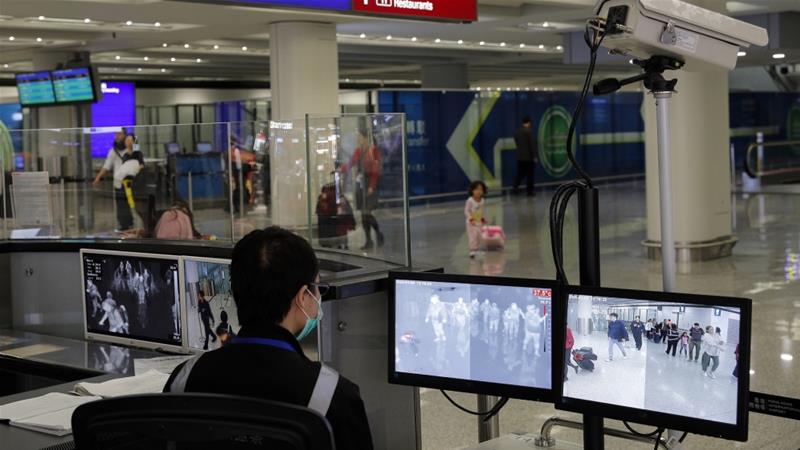
Today, the ICJ joined more than 100 other organizations to urge States to ensure that any use of digital technologies to track and monitor individuals and populations as part of measures to tackle the COVID-19 pandemic is fully human rights compliant.
The organizations warned that efforts to contain the virus must not be used as a cover to impose greatly expanded systems of invasive digital surveillance that are likely to be abused, unless adequate safeguards are put in place to protect freedom of expression, the right to privacy and other rights.
Technology can and should play an important role in the midst of the current crisis to protect the rights to health, life and security.
Deploying non-consensual State digital surveillance powers however can risk violations of the rights to privacy, freedom of expression, information and association. If implemented in an arbitrary or discriminatory way, and without adequate oversight, these measures risk damaging public trust in state authorities and undermining the effectiveness of any public health response. Non-consensual digital surveillance measures may also disproportionately exacerbate discrimination against already marginalized communities.
The organizations called on all governments to ensure that increased digital surveillance measures meet the following conditions:
- Surveillance measures adopted to address the pandemic must be lawful, necessary and proportionate. Governments must be transparent about the measures they are taking so that they can be scrutinized and, if appropriate, later modified, retracted, or overturned.
- Expansion of monitoring or surveillance measures must be time-bound, and only continue for as long as necessary to address the current pandemic.
- States must ensure that increased collection, retention, and aggregation of personal data, including health data, is only used for the purposes of responding to the COVID-19 pandemic. Data collected, retained, and aggregated to respond to the pandemic must be limited in scope, time-bound in relation to the pandemic and must not be used for commercial or any other purposes.
- Governments must take every effort to protect people’s data, including ensuring sufficient security of any personal data collected and of any devices, applications, networks, or services involved in collection, transmission, processing, and storage. Any claims that data is anonymous must be based on evidence and supported with sufficient information regarding how it has been anonymized.
- Any use of digital surveillance technologies in responding to COVID-19, including big data and artificial intelligence systems, must address the risk that these tools will facilitate discrimination and other rights abuses against racial minorities, people living in poverty, and other marginalized populations, whose needs and lived realities may be obscured or misrepresented in large datasets.
- If governments enter into data sharing agreements with other public or private sector entities, they must be based on law, and the existence of these agreements and information necessary to assess their impact on privacy and human rights must be publicly disclosed – in writing, with sunset clauses, public oversight and other safeguards by default. Businesses involved in efforts by governments to tackle COVID-19 must undertake due diligence to ensure they respect human rights, and ensure any intervention is firewalled from other business and commercial interests.
- Any response must incorporate accountability protections and safeguards against abuse. Increased surveillance efforts related to COVID-19 should not fall under the domain of security or intelligence agencies and must be subject to effective oversight by appropriate independent bodies. Individuals must be given the opportunity to know about and challenge any COVID-19 related measures to collect, aggregate, and retain, and use data.
- COVID-19 related responses that include data collection efforts should include means for free, active, and meaningful participation of relevant stakeholders, in particular experts in the public health sector and marginalized population groups.
Link to joint statement here.
See also
ICJ, ‘Southeast Asia: States must respect and protect rights in combating misinformation online relating to COVID-19’, 1 April 2020
Apr 2, 2020 | News
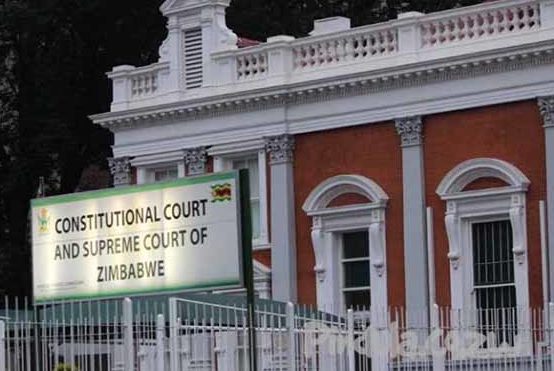
The ICJ welcomes the decision by the Constitutional Court of Zimbabwe to invalidate the enactment of Constitutional Amendment Bill (No. 1) of 2017 in Gonese and Anor v Parliament of Zimbabwe and 4 Ors. The judgment restores important Constitutional guarantees for the independence of the judiciary in Zimbabwe.
Zimbabwe adopted a new Constitution in 2013 and one of the progressive elements of this Constitution was its provisions regulating the appointment of judicial leaders such as the Chief Justice, Deputy Chief Justice and Judge President of the High Court. These judicial leaders perform important administrative functions with a huge impact on access to justice for the public.
For example, the Chief Justice is the head of the Judicial Service Commission (JSC) and therefore, presides over processes to select and recommend candidates for judicial appointment.
The Judge President is responsible for case allocation in the High Court and therefore, selects judges to sit on cases. It is important that the procedures for appointing these judicial leaders be transparent and independent of executive control in order to maintain the independence and impartiality of judges as well as promote public confidence in the judiciary.
The 2013 Constitution ensured this by prescribing procedures which accorded the executive a constrained role in the selection and appointment of these judicial leaders.
For example, the process of selecting these office bearers was to be led by an independent Judicial Service Commission (JSC) which would publicly advertise the vacancies, shortlist candidates, conduct interviews that are open to the public and recommend candidates for appointment by the President. The President was required to appoint only from the shortlist submitted by the JSC.
In 2017, the then-President of Zimbabwe Robert Mugabe signed into law a constitutional amendment bill which sought to change these provisions and give the President the authority to select and appoint these judicial leaders without conducting public interviews and without being constrained or restricted to the shortlist provided by the JSC.
The enactment of this constitutional amendment bill was challenged in the Constitutional Court on grounds that the amendment had been adopted and enacted into law without following due process.
In its judgment, the Constitutional Court concluded that, “It is declared that the passing of Constitutional Amendment Bill (No. 1) of 2017 by the Senate on 01 August 2017 was inconsistent with the provisions of s 328(5) of the Constitution, to the extent that the affirmative votes did not reach the minimum threshold of two-thirds of the membership of the House. Constitutional Amendment Bill (No. 1) of 2017 is declared invalid to the extent of the inconsistency. The declaration of invalidity shall have effect from the date of this order but is suspended for a period of one hundred and eighty days, subject to the provisions of paragraph 1(b).”
The Court directed the Senate to conduct a vote in accordance with the procedure for amending the Constitution prescribed by s 328(5) of the Constitution within one hundred and eighty days of the order given. Failure to do so will render the declaration of invalidity of Constitutional Amendment Bill (No. 1) of 2017 final, said the Court.
Commenting on this judgment, ICJ Africa Director Arnold Tsunga said: “This is a positive judgment which underscores the vital principle of legality, particularly that changes to the Constitution must be processed and enacted in strict accordance with the laid out procedures. Respect for the Constitution, and ensuring the independence of the judiciary, are fundamental elements of the rule of law; both are advanced by this judgment.”
The decision by the Constitutional Court comes at a time when the Parliament of Zimbabwe has gazetted further proposed changes to the Constitution, which amongst other things seek to give the executive a stronger role in the selection and appointment of judges to the Supreme Court and Constitutional Court.
These proposed changes would undermine judicial independence and undercut public confidence in the independence and impartiality of the judiciary. Further, these proposed changes are contrary to international and African standards. For instance, the United Nations Basic Principles on the Independence of the Judiciary enjoin member states to ensure that “Any method of judicial selection shall safeguard against judicial appointments for improper motives.”
The African Commission on Human and Peoples’ Rights’ Principles and Guidelines on the Right to a Fair Trial and Legal Assistance in Africa further provide that, “The process for appointments to judicial bodies shall be transparent and accountable and the establishment of an independent body for this purpose is encouraged.” The ICJ therefore, calls upon the government of Zimbabwe to reconsider its decision to proceed with these proposed changes to the Constitution.
Contact
Arnold Tsunga, t: +26377728 3248; e: arnold.tsunga@icj.org