Feb 19, 2020 | News
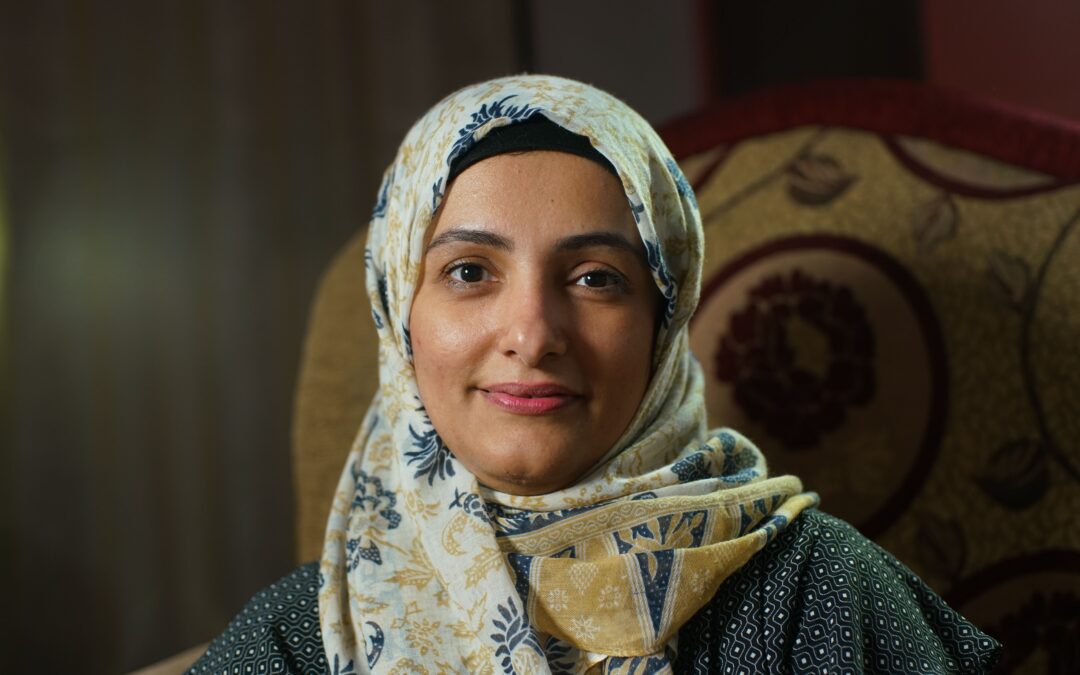
Huda Al- Sarari, Yemeni lawyer and human rights defender, is the 2020 Martin Ennals Award laureate. She was among three women selected as finalists by a jury of ten of the world’s leading human rights organizations, including the ICJ, along with Sizani Ngubane, South Africa, and Norma Librada Ledezma, Mexico.
The 2020 Martin Ennals Award ceremony, co-hosted by the Martin Ennals Foundation and the City of Geneva, was held today, and for the first time in the history of the Award, all three finalists are women.
“Women human rights defenders are subject to the same risks as every human rights defender, but as women, they also face certain forms of violence and violations due to their gender. They are often stigmatized and ostracized by community leaders, faith- based groups and even family members,” said the Mayor of the City of Geneva, Sandrine Salerno.
“The Martin Ennals Foundation is particularly proud to honour and support three resilient women human rights defenders this year, our laureate Huda Al-Sarari, as well as our two finalists Sizani Ngubane and Norma Librada Ledezma for their achievements. We hope that the award will shed a light on their achievements, and strengthen protection mechanisms around them,” said Philippe Currat, President of the Board of the Martin Ennals Foundation.
Huda Al-Sarari is a Yemeni lawyer and human rights defender who graduated in Sharia and Law from Aden University. She also holds a masters in Women’s Studies and Development from the Women’s Centre at Aden University. Over the last years, Huda investigated, exposed and challenged the enforced disappearances that occurred as a result of secret prisons run by foreign governments in Yemen where thousands of men and boys have suffered from arbitrary detention, torture and extrajudicial killings. She collected evidence on more than 250 cases of the abuse taking place within those prisons.
“Being a human rights defender in Yemen is extremely challenging, and being a woman makes this even more difficult. In a male-dominated society, I have to prove myself maybe ten times more than a man,” she said.
Despite the threats, defamation campaigns and sacrifices she and her family endured, Huda continues to stand alongside the families of those who have disappeared.
“Receiving the 2020 Martin Ennals Award for human rights defenders means the world to me. It gives me great strength and emboldens me to continue this fight for justice. I believe the Award will be incredibly important in drawing attention to the continual plight of victims of arbitrary detention, abuse and torture in Yemen,” she added.
“We commend Huda for the work that she conducted, not only against the backdrop of the ongoing Yemeni civil war, but also, in a country where women still struggle to express their political and civil rights. Huda’s legacy is crucial as her thorough investigations and search for accountability will serve to bring justice for human rights violations occurred during the conflict,” said Hans Thoolen, Chair of the Martin Ennals Award Jury.
The two finalists of the Martin Ennals Award this year are Sizani Ngubane (South Africa) and Norma Librada Ledezma (Mexico).
Sizani is a human rights defender who advocates for land rights for women in rural areas on South Africa. She also supports women to access education, and fights for the end of the traditional practice of Ukuthwala, which is the abduction and forced marriage of young girls and women.
Norma is the founder of Justicia para Nuestras Hijas. She has supported over 200 investigations into cases of feminicide, enforced disappearance and human trafficking in Chihuahua, Mexico.
Both were praised by the Martin Ennals Jury member organizations for their commitment and tremendous achievements in their respective countries.
Additional information
The City of Geneva has hosted the Award ceremony since 2008, together with the Martin Ennals Foundation, as part of its deep commitment to the defense of human rights. The support of the City, by means of its Service for International Solidarity, reflects its mission to promote human rights both internationally and
The Jury of the Martin Ennals Award is comprised of ten of the world’s leading human rights organizations: the ICJ, Amnesty International, FIDH, Human Rights First, HURIDOCS, International Service For Human Rights, Brot für die Welt (Bread for the World), Front Line Defenders, Human Rights Watch and the World Organization Against Torture.
Download
Universal-MEA2020bios-News-2019-ENG (full bios of finalists, in PDF)
Universal-MEA2020winner-News-Press releases-2019-ARA (full story in Arabic, PDF)
Universal-MEA2020bios-News-2019-ARA (full bios of finalists, in Arabic, PDF)
Contact
Olivier van Bogaert, Director Media & Communications, ICJ representative in the MEA Jury, t: +41 22 979 38 08 ; e: olivier.vanbogaert(a)icj.org
Watch the ceremony as it happened
https://www.facebook.com/MartinEnnals/videos/2552501445008021/
Feb 19, 2020 | News
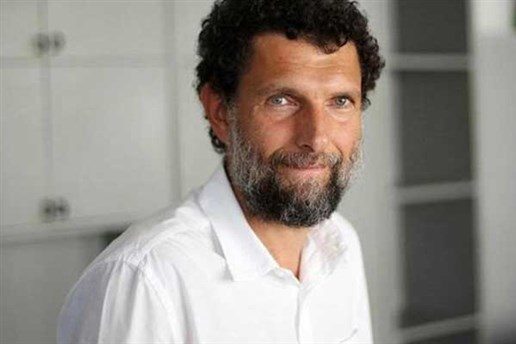
The ICJ and IBAHRI condemn yesterday’s re-arrest of Turkish human rights defender Osman Kavala, immediately following his acquittal on charges connected to the Gezi Park demonstrations that began in May 2013.
Osman Kavala was arrested on his release from prison yesterday evening, on suspicion of “attempting to disrupt the constitutional order” connected to the failed coup attempt of 2016.
“For Osman Kavala to be acquitted yesterday, on charges for which there was never credible evidence against him, only to be immediately re-arrested on another highly improbable charge, suggests a criminal justice system that is operating to suppress independent civil society rather than uphold due process and the rule of law,” said Róisín Pillay, Director of the ICJ’s Europe and Central Asia Programme.
Osman Kavala has been held in pre-trial detention since October 2017. The European Court of Human Rights recently ordered that Turkey must act to secure his immediate release, and found that his detention violated his right to liberty (Article 5.1 ECHR) and his right to speedy judicial review of detention (Article 5.4 ECHR), and pursued an improper purpose (Article 18 ECHR).
“It is disgraceful that the Turkish authorities seek to evade compliance with their obligation under the European Convention on Human Rights to end the arbitrary detention of Osman Kavala, by releasing and re-arresting him. We call for these new charges to be dropped and for Osman Kavala to be immediately released,” said Baroness Helena Kennedy QC, IBAHRI Director.
Background
Mr Kavala has been in detention since 18 October 2017 pending trial on charges connected to the Gezi Park protests. The Gezi Park protests began in May 2013 as an effort by a group of environmentalists to save a park in central Istanbul from being rezoned, but soon grew into nationwide demonstrations. Police quelled the protest in Taksim Square with the use of tear gas and water cannons.
Mr Kavala’s trial, along with 15 other defendants, took place before Istanbul 30th Assize Court. The IBAHRI and the ICJ jointly sent international observers to attend all hearings of the trial.
Contact :
Róisín Pillay, Director for Europe and Central Asia Proramme, t: +32 2 734 84 46; e: roisin.pillay(a)icj.org
Feb 18, 2020 | News
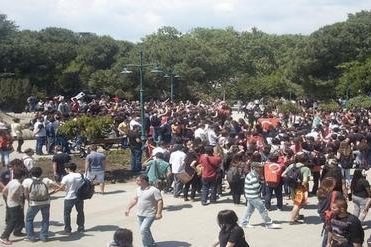
The ICJ and IBAHRI welcome today’s ruling by the Istanbul 30th Assize Court that acquitted all defendants in the Gezi Park case for lack of evidence. The ICJ and IBAHRI have been observing all hearings of the trial.
“Today’s decision is welcome,” said Massimo Frigo, Senior Legal Adviser of the ICJ. “The factual and legal circumstances surrounding the case make clear that these defendants should have never been put to trial to begin with.”
Baroness Helena Kennedy QC, IBAHRI Director, commented: “We have watched this trial closely, with senior lawyers attending the process as observers. It is a case that should never have been brought, for those who faced trial suffered untold anguish. But such injustice has become all too common in Turkey, where the rule of law and human rights have lost meaning. We live in hope this augurs a return to sanity and due process.”
These protests, commencing in May 2013, were an effort by a group of environmentalists to save a park in central Istanbul from being re-zoned, but soon grew into nationwide demonstrations.
Police quelled the protests in Taksim Square through the use of tear gas and water cannons.
The sixteen defendants in the present trial were charged under the following articles of the Turkish Criminal Code: Article 312 (an attempt to overthrow the Turkish government or an attempt to prevent it from fulfilling its duties), Article 151 (damage to property), Article 152 (qualified damage to property), Article 174 (possession or exchange of hazardous substances without permission), Article 153 (damaging places of worship and cemeteries), Article 149 (qualified robbery), Article 86 (intentional injury), crimes under the Law on Firearms, Knives and Other Tools no. 6136 and crimes under the Law on Protection of Cultural and Natural Assets no. 2863.
The ruling follows a 2019 decision of the European Court of Human Rights brought by Turkish human rights defender Osman Kavala, one of the defendants in the present case.
Contact:
Massimo Frigo, Senior Legal Adviser, ICJ’s Europe and Central Asia Programme, t: +41 22 979 3805; e: massimo.frigo(a)icj.org
Additional information
The defendants in the case are Osman Kavala, Ali Hakan Altinay, Ayse Mücella Yapici, Ayse Pinar Alabora, Can Dündar, Çigdem Mater Utku, Gökçe Yilmaz, Handan Meltem Arikan, Hanzade Hikmet Germiyanoglu, Inanç Ekmekci, Memet Ali Alabora, Mine Özerden, Serafettin Can Atalay, Tayfun Kahraman, Yigit Aksakoglu and Yigit Ali Ekmekçi.
Feb 17, 2020 | Advocacy, Non-legal submissions
The ICJ has urged expert members of the UN Human Rights Council Advisory Committee to focus on the most direct and acute human rights issues, including a human-rights based approach to victims of terrorism, as the Committee prepares a report on “effects of terrorism on all human rights”.
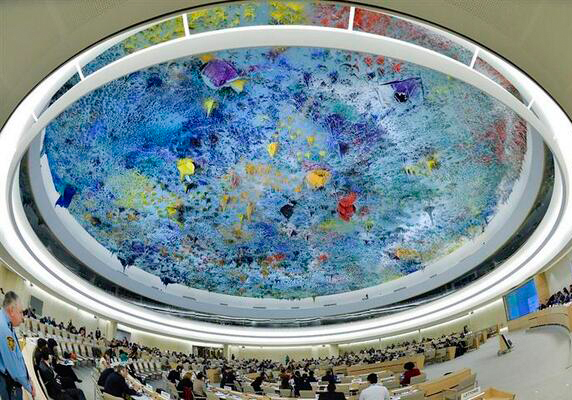
In an oral statement to the Advisory Committee’s ongoing 24th session in Geneva, the ICJ expressed grave concern about the content of the latest draft of the report, and the potential negative consequences for human rights protection of the report in its current form, and urged the Advisory Committee:
- To substantially revise and refocus the report to include a clear recommendation to the Council that the exclusive focus of the Council’s work should remain on the most acute issues from a human rights perspective: violations in countering terrorism and a human-rights based approach to victims of terrorism, along the lines already established by successive holders of the Special Rapporteur mandate.
- To recommend against the Council entering into more diffuse macroeconomic issues such as diverting foreign direct investment, reducing capital inflows, destroying infrastructure, limiting foreign trade, disturbing financial markets, and negatively affecting certain economic sectors and impeding economic growth.
- To avoid making recommendations that simply repeat already-existing obligations or commitments to counter terrorism under various UN or other instruments.
- To affirm that the existing and longstanding normative and institutional framework on counter-terrorism and human rights is already sufficient to address relevant impacts of terrorism from a human rights perspective.
Prior to the session, the ICJ together with other NGOs had filed a written statement alerting the Advisory Committee to the highly sensitive context into which its report would be delivered at the Council, and urging the Committee to guard against its work being instrumentalized by Egypt and other States who seek to distort, distract and divert the limited resources and attention of the Council and its Special Rapporteur, away from the longstanding focus, achieved by years of Mexican leadership with consensus support of the Council, on human rights in countering terrorism, and the human rights of victims of terrorism.
The Advisory Committee’s report was requested by a 2017 resolution led by Egypt, which was not a matter of consensus, and is being drafted by a former Ambassador of Egypt who is now a member of the Committee.
Earlier at the session, several States including the EU, Switzerland, and Mexico had expressed concern or otherwise questioned particular aspects of the current draft of the report, and urged the Committee to substantially review and revise the draft. Egypt, China, Russia and several other States expressed satisfaction with the draft and urged the Committee to quickly finalize the report and send it to the Council.
The Advisory Committee report is due to be presented to and considered at the September 2020 session of the Human Rights Council, although some Committee members expressed the wish to finalize the report at the current Committee session.
Feb 17, 2020 | Feature articles, News
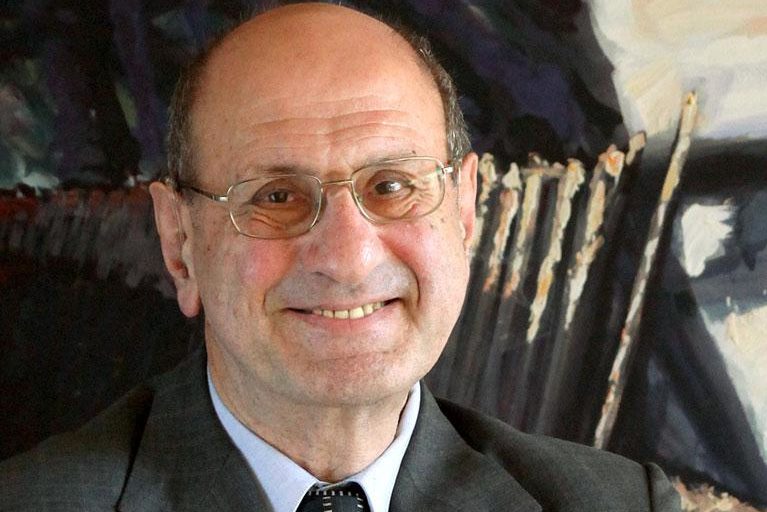
A tribute to former ICJ Commissioner José Zalaquett by current ICJ Commisioner Alejandro Salinas Rivera (Chile).
After a prolonged and agonizing illness, our beloved José (Pepe) Zalaquett has passed away. Pepe, as his friends used to call him and as he was widely known, was a leading lawyer and professor of international human rights law.
However, he was much more than that. At heart, he was a gentle man, a curious and pleasant human being, very sensitive to the expressions of art.
As a lawyer and later as a law professor, he was characterized by his deep commitment to justice and respect for human rights.
This commitment also brought adverse consequences in his life, as he suffered persecution, jail and exile, during the Chilean dictatorship.
While in exile and away from his homeland, he joined Amnesty International, and soon after became the president of its board of directors.
Upon returning to Chile after 10 years of exile, he headed the Chilean section of Amnesty International, in what were strenuous times for the country.
Once democracy was re-established in Chile, he became part of the National Truth and Reconciliation Commission, known as the “Rettig” Commission. However, it should have been called the “Zalaquett” Commission instead, since he was the architect of the initiative which was later emulated in South Africa, El Salvador and other countries, which initiated similar processes.
Pepe, because of his strict commitment to justice and his veritable concern for the protection and promotion of human rights, was not confined in dogmas or prejudices; he was so generous, open and free minded that he would not settle for anything less than the best. This at times made him a quixote, facing solo against windmills.
Pepe was a lover of life, a sensitive soul and an art aficionado. He had an opinion over almost all artistic disciplines. He regularly wrote art columns and his reviews were very reputed.
Pepe was one of those humans who are scarce and yet essential for our society. He was a complex and wholesome personage, who left his mark after his demise.
He left behind a generation of spirited students and disciples trained at the Centre for Human Rights of the University of Chile, of which he was a co-Director, who will undoubtedly continue his legacy in human rights.
But even more, he left an impression, a way of doing things, an impalpable legacy that is quintessential for the times to come. Intellectual honesty, sensitivity and empathy towards the victims along with ethical austerity and geniality, are part of the legacy that Pepe leaves behind after passing through this life.
The ICJ feels privileged as an institution to count Pepe Zalaquett among its commissioners. His departure indisputably, is an irredeemable loss, but at the same time we are proud and grateful to have shared a common cause with him.
José, Pepe, thank you very much …