Sep 21, 2023
For decades within its own borders, Russian authorities have undermined and attacked independent civil society, persecuted human rights defenders, activists, lawyers, and opposition and dissenting voices, banned independent media, silenced journalists, and have effectively outlawed any form of peaceful protest.
It has never been more dangerous to be a human rights defender in contemporary Russia. This environment, at least in part, enabled the Russian authorities to launch a renewed invasion of Ukraine on 24 February 2022. At the same time as the danger has increased, protections have decreased. The judiciary is not independent and cannot provide effective protection for human rights. Victims of Russian human rights violations no longer have the ability to bring their cases before the European Court of Human Rights, and Russia has even failed to turn up to United Nations Treaty Body reviews, specifically those of the Human Rights Committee, in 2022.
Ahead of the first Interactive Dialogue by the new UN Special Rapporteur on the situation of human rights in the Russian Federation at the Human Rights Council, this in-person side event at the 54th session allows for an opportunity to discuss critical updates on the human rights situation in Russia, as well as further action to respond to Russia’s human rights crisis and to the legitimate calls for support from domestic civil society.
The panel will focus on the following key questions:
¨ What are the most pressing human rights issues in Russia today?
¨ Why should the Human Rights Council look to renew the mandate of the Special Rapporteur during the 54th session?
Speakers
Mariana Katzarova
UN Special Rapporteur on the situation of
human rights in the Russian Federation
Violetta Fitsner
OVD-Info
Zhargal Budaev
Memorial Human Rights Defence Centre
Dmitry Gurin
European Prison Litigation Network
Closing statements
Oleg Kozlovsky
Amnesty International
Damelya Aitkhozhina
Human Rights Watch
Moderator
Dave Elseroad
Human Rights House Foundation

Sep 21, 2023
Joint Oral Statement
The International Bar Association’s Human Rights Institute (IBAHRI) and the International Commission of Jurists (ICJ) condemn the widespread and escalating attacks on independent lawyers, including legal harassment, disciplinary actions, disbarments, and arbitrary criminal charges.
We deplore the abusive Foreign Agents Law, with its overbroad definition that covers any persons under “foreign influence”. The Law has been instrumentalized to violate the rights to freedom of expression, association, assembly, and public participation. Lawyers are repeatedly labelled as “foreign agents”, for exercising their human rights and performing their legitimate duties, and many had their licenses suspended.
The Ministry of Justice has listed lawyers as “foreign agents” for lawfully representing human rights defenders, including lawyers Pavlov and Vetoshkina.
Russia’s Constitutional Court has abdicated its responsibility to protect rights by summarily dismissing challenges to legislative provisions criminalizing “public actions aimed at discrediting” the Russian Armed Forces.
We are concerned that the Bar Association intends to set up an Integrated Information System of the Bar of Russia, with the legal obligation for every lawyer to be part of this system, increasing risks of digital surveillance, breach of lawyer-client confidentiality and further harassment.
The repressive legislation in Russia leaves few domestic options to seek justice. It is imperative to maintain rigorous monitoring. We therefore urge this Council to renew the mandate of the Special Rapporteur and ensure additional resources necessary to fulfil its role.
This statement was delivered by:
Francesca Restifo, Senior Human Rights Lawyer and UN Representative
International Bar Association’s Human Rights Institute (IBAHRI)
For further information please contact:
Francesca Restifo, IBAHRI, francesca.restifo@int-bar.org
Sandra Epal Ratjen, ICJ, sandra.epal@icj.org
Sep 21, 2023 | Incidencia, Noticias
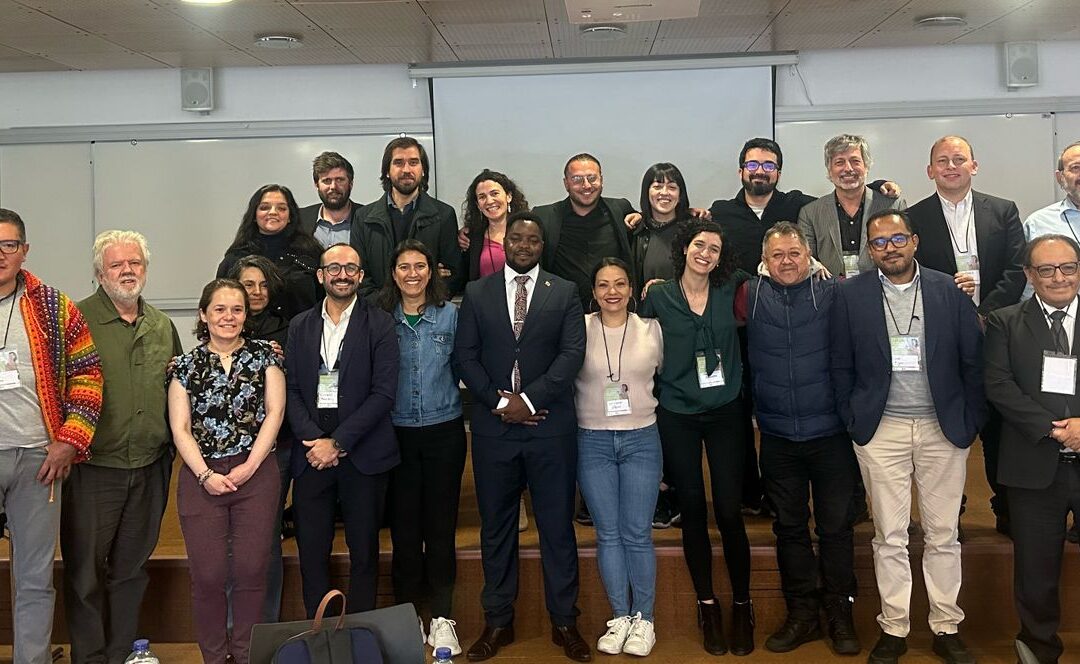
Entre el 18 y el 20 de septiembre de 2023, la Comisión Internacional de Juristas (CIJ), la Red de Aprendizaje sobre Acceso a la Justicia (Access to Justice Knowledge Hub) y el Programa de Acción por la Igualdad y la Inclusión Social (PAIIS) de la Universidad de los Andes celebraron conjuntamente un taller regional en Bogotá, Colombia, sobre el uso discriminatorio, desproporcionado y a menudo arbitrario de los sistemas de justicia penal contra personas y grupos marginados en América Latina. El evento reunió a unas 30 personas de organizaciones de la sociedad civil, actores judiciales, juezas, jueces y representantes de instituciones gubernamentales. Las y los participantes procedían de diversos países latinoamericanos, como Argentina, Chile, Colombia, Ecuador, México, Paraguay y Perú.
El evento giró en torno a “Los Principios del 8 de marzo para un Enfoque de Derechos Humanos en el Derecho Penal que Proscribe Conductas Asociadas con la Vida Sexual, la Reproducción, el Consumo de Drogas, la Falta de Hogar y la Pobreza” (Principios del 8 de marzo) de la CIJ y los “Principios y Directrices Internacionales sobre el Acceso a la Justicia para las Personas con Discapacidad”” del Relator Especial de la ONU sobre los Derechos de las Personas con Discapacidad. Las y los participantes coincidieron en que la alarmante tendencia mundial a la sobrecriminalización es también evidente en América Latina. Esta tendencia obstaculiza el avance de los derechos humanos, especialmente los derechos de las personas y grupos marginados, como las personas LGBTI+, las personas que viven con el VIH, las mujeres con discapacidad y las mujeres que viven en la pobreza.
En su presentación, el Comisionado de la CIJ Rodrigo Uprimny habló de “la inevitabilidad del derecho penal”, describiéndolo como “una amarga necesidad de la convivencia social”. Ciertas conductas, argumentó, como los actos que constituyen violaciones de los derechos humanos, deben ser inevitablemente criminalizadas por los Estados. En este contexto, Uprimny también señaló que en América Latina existe una tendencia al “populismo punitivo”, que a menudo se traduce en un uso desproporcionado y discriminatorio del derecho penal en diversos contextos, como la protesta social, el consumo de drogas y el aborto. En ese sentido, comentó la importancia de los Principios del 8 de marzo en América Latina:
“La realidad demuestra que en comportamientos que [los] Principios desarrollan son precisamente los comportamientos en donde usualmente es muy fuerte el impacto discriminatorio del derecho penal. (…) Con todos los criterios de discriminación, género, raza, discapacidad, pobreza, etc. (…) Los Principios lo llaman a uno a la cautela de la tendencia a la sobrecriminalización (…) El tema de la sobrecriminalización no es solo hoy un asunto de las derechas más autoritarias de América Latina. Hay también en el mundo de los derechos humanos una fuga hacia el punitivismo. (…) [El uso del derecho penal puede estar] justificado, pero a veces puede tener efectos perversos”.
Las y los participantes reflexionaron sobre los problemas comunes y las barreras que los sistemas de justicia penal imponen a los grupos e individuos marginados en América Latina, incluyendo el impacto desproporcionado del derecho penal sobre las mujeres, las personas sin hogar, las personas que viven con el VIH, las personas que consumen drogas y las personas con discapacidad.
Un elemento central del debate fue que las violaciones de derechos humanos, como resultado de procesos penales, implican el fracaso de una serie de actores –incluidos juezas y jueces, fiscales, agentes de policía y otros actores de la justicia, así como psiquiatras y servicios sociales– a la hora de comprender y aplicar las normas internacionales de derechos humanos. En este sentido, las y los participantes destacaron, entre otras cosas, la falta de conocimiento y aplicación de la Convención sobre los Derechos de las Personas con Discapacidad y de la jurisprudencia del Comité de la ONU sobre los Derechos de las Personas con Discapacidad, en relación con el acceso a la justicia de las personas con discapacidad. Como resultado, las personas con discapacidad en América Latina, y en particular aquellas con discapacidad psicosocial, se enfrentan a serios obstáculos para ejercer su derecho a la capacidad jurídica en procesos penales.
Las y los participantes se comprometieron a establecer una agenda común para la incidencia conjunta, incluyendo mediante la organización de talleres dirigidos a los actores de la justicia, como juezas y jueces, en América Latina. En particular, se necesita un conocimiento más profundo de la normas y estándares internacionales de derechos humanos en el contexto de la justicia penal, así como de los derechos de las personas con discapacidad.
Contactos
Rocío Quintero Martínez, Asesora Legal de la CIJ para el Programa de América Latina, e: rocio.quintero@icj.org
Timothy Fish Hodgson, Asesor Sénior de la CIJ en Derechos Económicos, Sociales y Culturales, e: timothy.hodgson@icj.org
Sep 21, 2023 | Advocacy, News
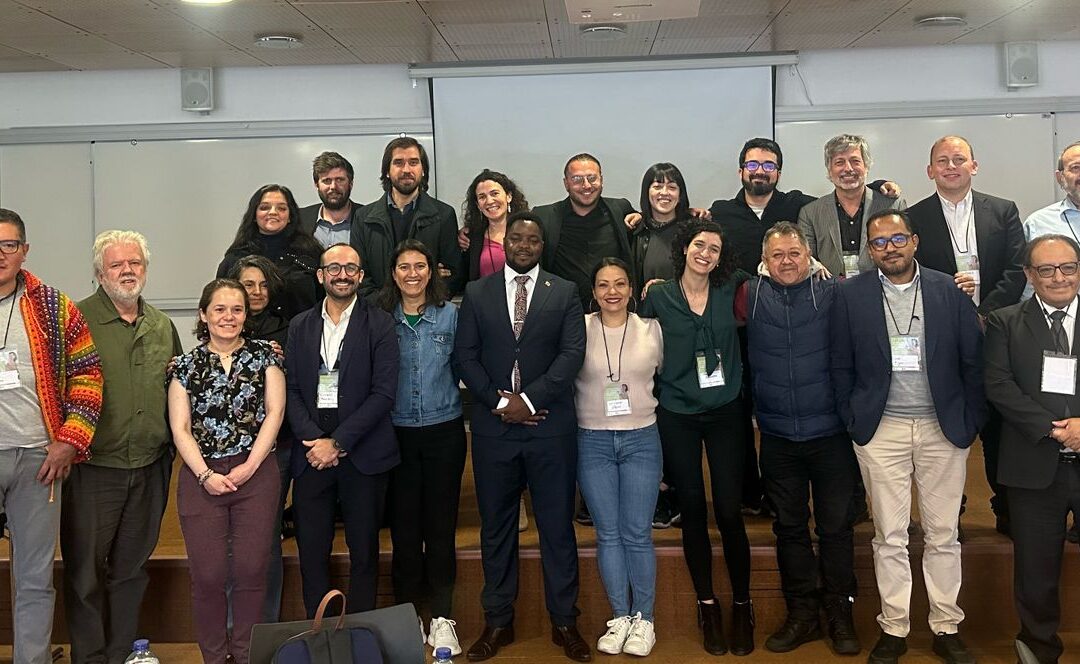
Between 18 and 20 September 2023, the International Commission of Jurists (ICJ), the Access to Justice Knowledge Hub and the Andes University’s Programme of Action for Equality and Social Inclusion (Programa de Acción por la Igualdad y la Inclusión Social -PAIIS) jointly held a regional workshop in Bogotá, Colombia, on the discriminatory, disproportionate and often arbitrary use of criminal justice systems against marginalized individuals and groups in Latin America. The event brought together approximately 30 members of civil society organizations, justice actors, judges and representatives of government institutions. Participants came from a range of Latin American countries, including Argentina, Chile, Colombia, Ecuador, Mexico, Paraguay, and Peru.
The workshop centred around the ICJ’s “8 March Principles for a Human Rights-Based Approach to Criminal Law Proscribing Conduct Associated with Sex, Reproduction, Drug Use, HIV, Homelessness and Poverty” (8 March Principles) as well as the UN Special Rapporteur on the rights of persons with disabilities’ “International Principles and Guidelines on Access to Justice for Persons with Disabilities”. Participants agreed that the alarming worldwide trend of over-criminalization was evident in Latin America too. This trend hinders the advancement of human rights, especially the rights of marginalized individuals and groups, such as LGBTI+ persons, people living with HIV, women with disabilities and women living in poverty.
In his keynote presentation, ICJ Commissioner Rodrigo Uprimny discussed “the inevitability of criminal law”, describing it as “a bitter necessity for social coexistence”. Certain conduct, he argued, such as acts constituting human rights abuses, must inevitably be criminalized by States. Against this background, Uprimny also noted that there is tendency towards “penal populism” in Latin America, often resulting in the disproportionate and discriminatory use of criminal law in various contexts, such as social protest, drug use and abortion. Commenting on the importance of the 8 March Principles in Latin America, he therefore said:
“Reality shows that the conduct addressed by the Principles is precisely the conduct where the discriminatory impact of criminal law tends to be very strong (…) on all grounds of discrimination: gender, race, disability, poverty, etc. (…). The Principles call for caution against the tendency toward over-criminalization. (…). overcriminalization is not only a matter of authoritarian right-wing governments in Latin America. In the human rights world, there is a movement towards retributivism. (…) [The use of criminal law] may sometimes be justified, but sometimes it can have perverse effects.”
The participants reflected on common predicaments and barriers that criminal justice systems impose against marginalized groups and individuals in Latin America, including in relation to the disproportionate impact of criminal law on women, homeless persons, persons living with HIV, people who use drugs and persons with disabilities.
A central element of the discussion was that human rights violations as a result of criminal proceedings involve the failure of a range of actors — including judges, prosecutors, police officers and other justice actors, but also of psychiatrists and social services — to understand and apply international human rights standards. In this regard, participants highlighted, inter alia, the lack of knowledge and application of the Convention on the Rights of Persons with Disabilities and of the jurisprudence of the UN Committee on the Rights of Persons with Disabilities in relation to access to justice for persons with disabilities. As a result, persons with disabilities in Latin America, and particularly those with psychosocial disabilities, face serious obstacles in exercising their right to legal capacity in the context of criminal proceedings.
Participants committed to a common agenda for joint advocacy, including through the provision of workshops to justice actors, such as judges, in Latin America. In particular, more in-depth knowledge of international human rights law and standards in the criminal justice context, as well as disability rights, is needed.
Contacts:
Rocío Quintero M, ICJ Legal Adviser for the Latin America Programme, e: rocio.quintero@icj.org
Timothy Fish Hodgson, ICJ Senior Legal Adviser, Economic, Social and Cultural Rights, e: timothy.hodgson@icj.org
Sep 21, 2023
An opinion piece by Daron Tan, ICJ Associate International Legal Adviser, Asia and the Pacific Programme, published on Tech Policy Press on 20 September 2023.
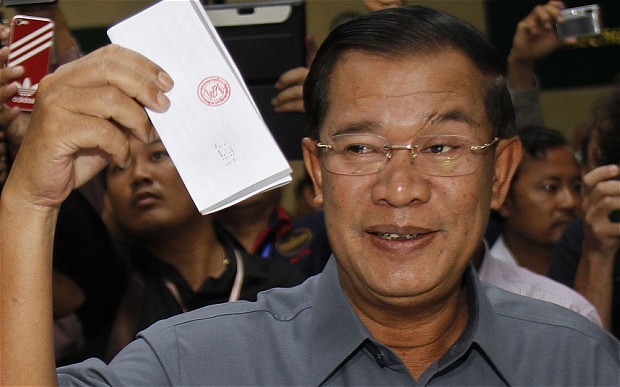
On January 9, 2023, former Cambodian Prime Minister Hun Sen posted a video on Facebook where he threatened his political opponents with violence, which was escalated to Meta’s Oversight Board for its consideration. My organization, the International Commission of Jurists (ICJ), submitted a public comment to the Board on the case, highlighting the ongoing violence and crackdown by the authorities against perceived political opponents in Cambodia and the real risk of further human rights abuses and other harms if Meta did not take action.
The Oversight Board agreed and issued several recommendations, including that Meta suspend Hun Sen’s Facebook page and Instagram account for six months. However, Meta rejected several of the Board’s recommendations, including the recommendation to suspend the accounts, explaining that “suspending those accounts outside our regular enforcement framework would not be consistent with our policies, including our protocol on restricting accounts of public figures during civil unrest.”
Confused after reading Meta’s response? Me too. Meta’s explanations are perplexing and peppered with jargonistic references to its different policies. In essence, what Meta is saying (or at least, from what I understand) is:
- Meta does not think that Cambodia was/is in a situation of crisis under its so-called Crisis Policy Protocol. Thus, the company’s policy on restricting accounts of public figures during civil unrest will not apply.
- Using Meta’s ordinary rules, there is no basis to suspend Hun Sen’s account.
- Meta also refused to update the policy on public figures and civil unrest such that it may apply to Cambodia, where there is a long history of state violence and human rights violations. According to Meta, applying the policy to these situations could lead to indefinite suspensions for public figures.
Meta’s decision has drawn sharp rebuke from human rights groups. For instance, colleagues at Access Now underscored that Meta’s decision “sends a dangerous signal that [Hun Sen’s] rights-abusing speech will be tolerated on its platforms.”
I share these sentiments. Meta’s decision creates the expectation that there will be no accountability for Hun Sen’s longstanding abuse of Meta’s platforms to threaten and incite violence against his real or perceived opponents. Meta has indicated that continued violations of its policies will result in restrictions, but what about the abuse that has already occurred?
Meta’s decision ultimately points to a fundamental issue of how its rules are, in the first place, constructed with overly expansive language, granting Meta significant latitude to do as they please on an ad hoc basis, unencumbered by consistent application of normative constraints. Furthermore, this decision illustrates how the enforcement of Meta’s Community Standards is, like in many other instances, shrouded in secrecy.
De facto impunity for sustained human rights violations
Meta’s decision now creates two separate enforcement regimes for when a public figure incites or threatens violence online. If this happens during what Meta considers to be a situation of sudden civil unrest and violence, Meta may restrict accounts for longer periods of time. However, if this has been going on for an “indeterminate period of time” – which, arguably, makes the situation far more serious than a one-off instance of violence – then Meta’s ordinary rules apply, with a far laxer restriction framework (e.g., ten or more strikes will result in a 30-day restriction). Is Meta effectively encouraging authoritarian regimes to engage in a “history of state violence or human rights restrictions” for an “indeterminate period of time” by allowing them to escape suspension?
In applying Meta’s ordinary penalty framework, it is not apparent why Hun Sen’s repeated violations have not attracted stricter sanctions beyond just removing the January 9 video, irrespective of whether suspension might be deemed a disproportionate and unnecessary measure. Hun Sen’s January 9 video that threatens and incites violence clearly should qualify as violating Meta’s “more severe policies” and attract stricter penalties. The violation should be seen as one of particular egregiousness given that it was not an isolated incident: the Oversight Board’s decision noted at least four instances of content being posted on Meta’s platforms containing threats, including threats of violence. It was also reported that Hun Sen reposted the January 9 video, which Meta removed but without “any visible repercussions.” Evidence suggests these violations resulted in offline physical violence.
Meta claimed that it applied “appropriate account-level penalties associated with that action.” Still, we have no idea what these penalties are and how they may be proportionate sanctions for Hun Sen’s actions. Optics matter, and this failure to explain the penalties, assuming there were any, has contributed to the impression that prominent figures using Meta’s platforms to threaten and incite violence will enjoy impunity and face no consequences for their conduct. Critically, without public knowledge of the penalties, what should be a main function of Meta’s regulatory regime, i.e., deterrence of such misconduct on its platforms, is effectively nullified.
Opaque enforcement and design of Meta’s rules
Meta’s decision also demonstrates a broader pattern of a lack of transparency in enforcing its rules. We do not know what “appropriate account-level penalties,” if any, have been imposed on Hun Sen and the reasoning behind them. We do not know why there is “currently not any basis to suspend Hun Sen’s account under [Meta’s] policies.” We do not know why and how Meta determined that Cambodia did not meet the “entry criteria threshold for crisis designation,” despite the multitude of submissions pointing in the opposite direction, including in the Board’s decision and the ICJ’s public comment to the Board.
The arbitrariness in Meta’s enforcement of its rules is directly linked with how the design of the rules themselves are overbroad and ambiguous, thus granting significant discretion when making decisions. These concerns extend to the ordinary enforcement framework, its newer policies on public figures and civil unrest, and its Crisis Policy Protocol. Ironically, the latter were updated in response to the case on former President Trump’s suspension from Facebook and were presumably aimed at introducing further transparency and consistency.
It is a general principle of law, known as the principle of legality, that rules must be formulated with sufficient precision in order to not grant unfettered discretion to those charged with their implementation – a principle that Meta’s rules patently fail to conform with. For instance, what are considered Meta’s “more severe policies” under its ordinary penalty regime? How is the risk of “imminent harm” under its Crisis Policy Protocol assessed, and what other factors determine what constitutes a crisis?
It is hard not to conclude that the jargon contained in these policies is being used as ex post facto justifications and conceptual smokescreens for inconsistent and opaque decisions.
The newsworthiness allowance
However, not all hope is lost, as Meta is still mulling over the feasibility of the Board’s recommendation to clearly state that “content that directly incites violence is not eligible for a newsworthiness allowance, subject to existing policy exceptions.” The ICJ had made an identical call in our public comment, in line with article 20(2) of the International Covenant on Civil and Political Rights, which requires the prohibition of incitement to violence, hostility, or discrimination.
At present, Meta’s newsworthiness allowance currently allows Meta to keep offensive content that violates its rules if it decides that the public interest value of keeping the content outweighs the risk of harm. This allowance was also a central tenet of the Board’s case, as Meta had been unsure whether Hun Sen’s violent speech should qualify as “newsworthy” and thus be left up.
It bears repeating that one of the very few limitations that is mandatory under international human rights law is the prohibition of incitement to violence. Meta’s current newsworthiness allowance allows for a loophole in this prohibition, which is, as above, exacerbated by the ambiguity and opacity in which the policy is currently constructed and enforced. If not applied with additional protections, this allowance would eviscerate the protection provided by human rights law against expression inciting violence. Meta’s decision to reject the Board’s recommendations to clarify its policy on public figures sets a dangerous precedent going forward.
However, there is still an opportunity for it to at least take some positive steps towards abiding by its human rights responsibility to respect human rights, in line with the UN Guiding Principles on Business and Human Rights, by revising its newsworthiness allowance in line with human rights law and standards. Having an unequivocal carve-out to its newsworthiness allowance for incitement to violence would at least allow Meta to be consistent when adjudicating similar violent content in the future, even if the rest of its rules and standards leave much to be desired.
First published on Tech Policy Press here.