Oct 25, 2023
On 5 October, in response to a call for input from the UN Special Rapporteur on the right to adequate housing and the UN Special Rapporteur on extreme poverty, the International Commission of Jurists (ICJ) filed a submission on the decriminalization of homelessness and extreme poverty.
The ICJ’s submission is based, in part, on “The 8 March Principles”, a new set of legal principles elaborated by jurists for a human rights-based approach to criminal laws, including criminal offences proscribing conduct associated with sex, reproduction, drug use, HIV, homelessness and poverty, which the organization published earlier this year.
In this regard, the ICJ submission focuses, in particular, on Principle 21 on the criminalization of “life-sustaining activities in public places and conduct associated with homelessness and poverty”. In addition, the submission draws on the ICJ’s analysis of legal frameworks, including criminal laws, and practices that are at odds with general principles of criminal law, and that continue to violate the human rights of marginalized and disadvantaged persons, including in India, Malawi, Nepal, Pakistan, Sri Lanka, South Africa, Uganda and Zimbabwe.
The submission outlines various examples of laws criminalizing poverty or homelessness either explicitly or as result of their enforcement. Among those, the ICJ has recommended the repeal of:
- Laws criminalizing begging, public nuisance, soliciting and “living on the earnings of prostitution” in India.
- Laws criminalizing begging, vagrancy and public nuisance generally and laws criminalizing similar conduct by transgender persons, in particular, in Pakistan.
- Laws criminalizing vagrancy, “living on the earnings of prostitution” and soliciting in public in Sri Lanka.
- Laws criminalizing poverty by extensively prohibiting broad swathes of conduct described as public nuisance and laws criminalizing homelessness by prohibiting a wide range of conduct associated with unlawful occupations of land in South Africa.
- Laws criminalizing vagrancy and informal traders’ efforts to making a living in Uganda.
In its submission, the ICJ has also expressed concern about laws implemented in a manner that criminalizes informal traders’ efforts to make a living in Malawi and Nepal.
The ICJ’s submission recalls how international human rights law and standards require States to address the root causes of homelessness and poverty and to provide support to those experiencing them. States’ failure to do so often amounts to violations of their international human rights law obligations to realize a range of human rights, including the rights to adequate housing, work and social security, for example, under the International Covenant on Economic Social and Cultural Rights.
Under international human rights law, States are legally obliged to address the plight of those experiencing homelessness and those living in poverty. Very often, however, States not only fail to comply with these obligations but, making matters worse, subject people experiencing homelessness and poverty to harsh criminal law sanctions solely for conduct that is critical to their survival. In this context, the ICJ is particularly concerned that in many national jurisdictions people commonly continue to be imprisoned if they are unable to pay fines for minor “criminal infractions”.
Overall, decriminalizing homelessness and extreme poverty is not only consistent with general principles of criminal law and States’ legal obligations under international human right law, but it also a necessary step to begin addressing the root causes of the violations of economic and social rights of particularly marginalized persons. The ICJ submission underscores that, instead of enacting and enforcing criminal laws with a disproportionate impact on such persons, under international human rights law, States are required to provide all people with the opportunity to rebuild their lives and fully integrate into society while respecting their dignity and human rights.
Download:
[Submission] ICJ’s submission to the UN Special Rapporteurs
Background
The ICJ is a member of the Campaign to Decriminalize Poverty and Status, which is a coalition of organizations from across the world advocating for the repeal of laws that target people based on poverty, status or for their activism and campaigning against the overuse and abuse of criminal law across the world in keeping with international law and standards.
The 8 March Principles for a Human Rights-Based Approach to Criminal Law Proscribing Conduct Associated with Sex, Reproduction, Drug Use, HIV, Homelessness and Poverty, recently published by the ICJ, offer a clear, accessible, and operational legal framework and practical legal guidance for a variety of stakeholders, including judges and legislators, on the application of criminal law to conduct associated with consensual sexual activities, such as consensual same-sex sexual relations and sex work (Principles 16 and 17); the criminalization of sexual orientation, gender identity and gender expression (Principle 18); drug use (Principle 20); as well as homelessness and poverty (Principle 21). Principle 21, in particular, states that “no one may be held criminally liable for engaging in life-sustaining economic activities in public places[…] or on the basis of their employment or means of subsistence or their economic or social status…”
Additional resources:
- International Commission of Jurists, “Unnatural Offences”: Obstacles to Justice in India Based on Sexual Orientation and Gender Identity, February 2017, accessed at: https://www.icj.org/wp-content/uploads/2017/02/India-SOGI-report-Publications-Reports-Thematic-report-2017-ENG.pdf
- International Commission of Jurists, Sri Lanka’s Vagrants Ordinance No. 4 Of 1841: A Colonial Relic Long Overdue for Repeal, 2021, available at https://www.icj.org/wp-content/uploads/2022/01/Sri-Lanka-Briefing-Paper-A-Colonial-Relic-Long-Overdue-for-Repeal-2021-ENG.pdf
- International Commission of Jurists “The 8 March Principles for a Human Rights-Based Approach to Criminal Law Proscribing Conduct Associated with Sex, Reproduction, Drug Use, HIV, Homelessness and Poverty” (8 March 2023), available: https://icj2.wpenginepowered.com/wp-content/uploads/2023/03/8-March-Principles-Report_final_print-version.pdf
- International Commission of Jurists, Pakistan: Transgender Persons (Protection of Rights) Act, 2018 : A briefing paper (March 2020), available : https://icj2.wpenginepowered.com/wp-content/uploads/2020/03/Pakistan-Transgender-Advocacy-Analysis-brief-2020-ENG.pdf
- International Commission of Jurists, Sri Lanka’s Vagrants Ordinance No. 4 of 1841: A Colonial Relic Long Overdue for Repeal : A briefing paper (December 2021), available: https://www.icj.org/wp-content/uploads/2022/01/Sri-Lanka-Briefing-Paper-A-Colonial-Relic-Long-Overdue-for-Repeal-2021-ENG.pdf
Oct 24, 2023 | Advocacy, News, Statements, Work with the UN
A week of negotiations started at the United Nations in Geneva yesterday to enhance the international legal framework to regulate business enterprises, especially transnational corporations, and increase accountability for human rights abuses and violations linked to their activities. The ICJ has been actively participating in the previous sessions of these negotiations in the last nine years and is committed to pursue its constructive contribution to the debate. Read our statement below.
“Thank you, Mr. Chair.
The International Commission of Jurists (ICJ) congratulates you on your election as the Chairperson-Rapporteur.
The ICJ acknowledges the efforts made by the Chairmanship to propose a revised and streamlined text on the basis of the various inputs received and consultations organized since the 8th session of this working group. We appreciate that this work has resulted in a more concise and clearer text in several places, which, in some respects, may better facilitate the negotiations ahead of us this week. It brings more internal coherence to the text and avoid repetitions that were affecting previous iterations. We also acknowledge that there are varying and divergent positions among States on the more difficult issues under discussion in this process and that you have proposed some compromise formulations to bridge the gaps.
We, however, regret that some critical provisions have disappeared from the revised draft in front of us at this session. The ICJ is particularly concerned that articles concerning prevention, liability and jurisdiction have been stripped of key elements that served to clarify international human rights law with regard to accountability for human rights abuses and violations in the context of business activities; and to ensure access to justice for the victims of such abuses and violations including through access to effective judicial remedies.
The ICJ will thus intervene in the negotiations during this 9th session in a constructive spirit with the aim to make proposals and comments addressing these gaps in the protection of human rights in the context of the activities of transnational companies and other business enterprises.
We are convinced that this process, after 9 years, needs to deliver an ambitious enough text so as to meet the needs of present and future victims and make a real contribution to the necessary development of international law in that area. For these reasons, we urge all States from all regional groupings to participate actively and constructively in the negotiations.
Thank you very much, Mr. Chairperson-Rapporteur.”
Statement delivered by:
Sandra Epal Ratjen, ICJ UN Representative and Senior Legal Adviser, e: sandra.epal@icj.org
Oct 23, 2023 | News
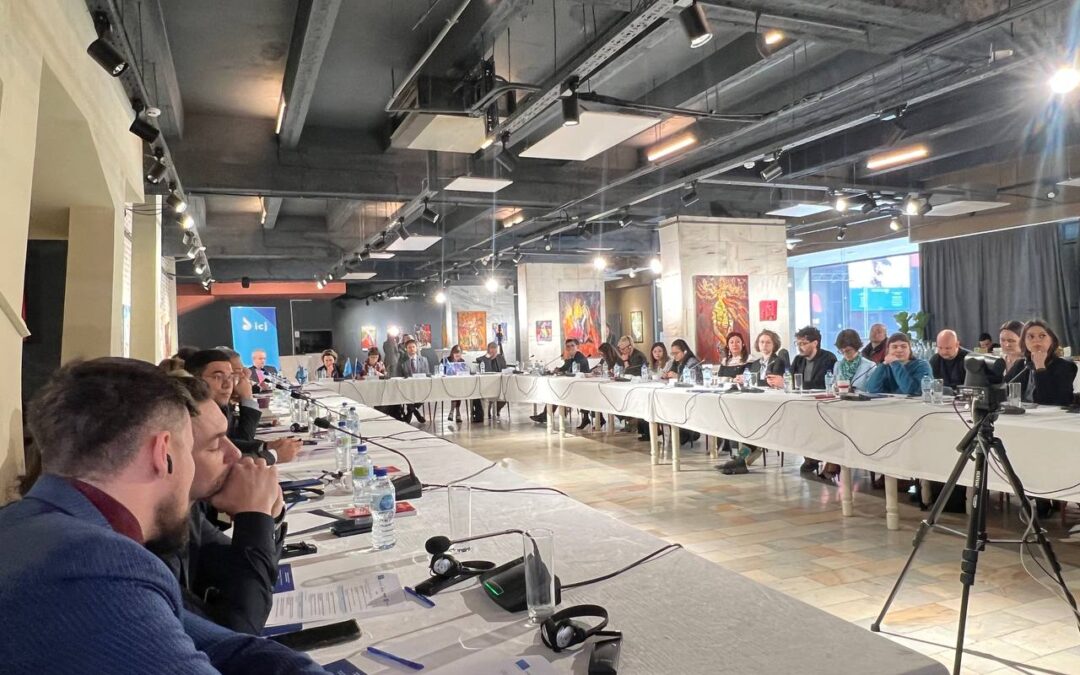
On 11 and 12 October 2023, the International Commission of Jurists (ICJ), People’s Matrix Association and Seinoli Legal Centre (SLC) jointly held a workshop for magistrates and judges in Maseru, Lesotho’s capital. Drawing on ICJ’s 8 March Principles for a Human Rights-Based Approach to Criminal Law Proscribing Conduct Associated with Sex, Reproduction, Drug Use, HIV, Homelessness and Poverty, the workshop was aimed at enhancing the Lesotho judiciary’s ability to apply a human rights-based approach in the application and enforcement of domestic criminal law.
The central theme explored by participants throughout the workshop was the profoundly negative human rights impact of unjustified criminalization, especially for marginalized individuals and communities. At the workshop, the Acting Chief Justice of Lesotho, Tšeliso Monapathi, emphasized the importance of the judiciary as the last line of defence for ensuring the protection of human rights.
Participants at the workshop noted some positive legal developments in Lesotho that are consistent with international human rights law, including the repeal of vagrancy laws through the introduction of the 2010 Penal Code. Most recently, in October 2022, the High Court of Lesotho, sitting as a Constitutional Court, declared section 32(a)(vii) of the 2003 Sexual Offences Act unconstitutional. The Court ruled that the provision, which imposes the death penalty on HIV-infected persons who commit sexual offences, was unconstitutional to the extent that it violated the rights to equality before the law and equal protection of the law, freedom from discrimination, and freedom from inhuman treatment as guaranteed by the Lesotho Constitution. However, in June this year, in their joint submission to the UN Human Rights Committee, the ICJ, People’s Matrix and Seinoli Legal Centre noted with concern that the Sexual Offences Act left the common law offence of “sodomy” intact.
“Despite some progressive milestones in the protection and promotion of fundamental human rights and freedoms of all persons, it is deeply concerning that there remain a number of criminal laws that disproportionately impact sex workers, LGBTQI+ persons, those seeking sexual and reproductive health care services, such as abortion care, and other marginalized groups,” said Mosa Lestie, Programme Lawyer at Seinoli Legal Centre.
The participants, the majority of whom were magistrates, discussed measures the courts have employed to promote and protect the human rights of marginalized groups. This includes sensitization on the human rights of persons with disabilities, LGBTQI+ persons and other marginalized groups, particularly their right to access to justice and the implementation and continual development of court rules to ensure that all persons can participate in court proceedings on an equal basis as complainants, witnesses, accused persons or experts. For instance, in July 2023, the Lesotho National Federation hosted a training workshop with some magistrates and prosecutors on access to justice for persons with disabilities and the 2023 Disability Equity (Procedure) Rules.
Despite these efforts, participants expressed concern that limitations continue to exist in relation to: the provision of accommodations for accused and witnesses at court; worrying trends of discrimination within the wider criminal justice system, especially among the police. They also identified the need for ongoing human rights training for magistrates and other actors in the criminal justice system.
“The unjustified or arbitrary over-criminalization of conduct associated with LGBTQI+ individuals in Lesotho continues to result in discrimination and stigmatization. In turn, this has significantly impeded access to justice for the communities the People’s Matrix supports,” said Giselle Ratalane, Programme Manager at the People’s Matrix Association.
“As the ICJ’s 8 March Principles underscore, these criminal laws have discriminatory effects on marginalized groups and violate Lesotho’s obligations under international human rights law, including with respect to the rights to equality, non-discrimination, dignity, privacy, freedom of expression and more,” concluded Mulesa Lumina, ICJ Africa’s Legal and Communications Associate Officer.
Contact
Mulesa Lumina, Legal and Communications Associate Officer (Africa Regional Programme), e: mulesa.lumina@icj.org
Kaajal Ramjathan-Keogh, Director (Africa Regional Programme), e: kaajal.keogh@icj.org
Background
While Lesotho has made some strides in recognizing and safeguarding the human rights of all persons, including through the introduction of various laws and policies, certain conduct continues to be targeted by criminal laws notwithstanding the fact that under general principles of criminal law and international human rights law and standards, such conduct should not be criminalized in the first place.
As a State Party to a number of international human rights instruments, including the International Covenant on Civil and Political Rights (ICCPR), the African Charter on Human and Peoples’ Rights and the Protocol to the African Charter on Human and Peoples’ Rights on the Rights of Women in Africa, Lesotho must ensure that its criminal laws do not directly or indirectly discriminate against anyone on grounds prohibited by international human rights law.
The 8 March Principles for a Human Rights-Based Approach to Criminal Law Proscribing Conduct Associated with Sex, Reproduction, Drug Use, HIV, Homelessness and Poverty, recently published by the ICJ, offer a clear, accessible, and operational legal framework and practical legal guidance for a variety of stakeholders, including judges and magistrates, on the application of criminal law to conduct associated with consensual sexual activities, such as consensual same-sex sexual relations and sex work (Principles 16 and 17); the criminalization of sexual orientation, gender identity and gender expression (Principle 18); drug use (Principle 20); as well as homelessness and poverty (Principle 21). As stated in Principles 7 and 8, criminal law “must be interpreted consistently with international human rights law” and “…may not, on its face or as applied, in substance or in form, directly or indirectly discriminate on any, including multiple and intersecting, grounds prohibited by international human rights law”.
Oct 23, 2023 | News
At a workshop convened on 11 and 12 October, the International Commission of Jurists (ICJ), Validity Foundation, and the United Disabled Persons of Kenya (UDPK) stepped up efforts to promote the greater use of strategic litigation to secure the rights of persons with disabilities. The workshop was aimed particularly at building the capacity of organizations of persons with disabilities (OPDs) to undertake strategic litigation.
“As a party to the Convention on the Rights of Persons With Disabilities, the African Disability Protocol and other regional and UN human rights treaties, Kenya is obliged to ensure that all persons with disabilities enjoy all human rights on an equal basis. Kenya’s obligations include a duty to ensure that effective remedies – including throughout courts – are available where persons with disabilities allege the denial of their rights,” said Wilson Macharia, ICJ Africa’s Associate Legal Advisor.
Strategic litigation is currently underutilized by persons with disabilities and their representative organizations in Kenya. At the workshop, persons with disabilities indicated that they faced barriers to instituting or participating effectively in litigation due to:
- a general lack of knowledge of their rights and the existing mechanisms to enforce these rights;
- a lack of knowledge on the operations of the available mechanisms, including complex court procedures.
- a lack of knowledge on existing legal aid programs and services.
- a failure by courts and other justice mechanisms to provide appropriate reasonable and procedural accommodations.
CSOs and lawyers who attended the workshop stressed that key stakeholders, including those who provide litigation support to indigent persons, typically do not have adequate capacity and training to advocate for the rights of persons with disabilities.
“The Law Society of Kenya should work towards establishing a committee with a specific mandate of advocating for the rights of persons with disabilities, in addition to mainstreaming disability rights in the existing committees”, said Were Bonface, an advocate from the Public Interest and Advocacy Directorate of the Law Society of Kenya.
During the workshop, the participants also discussed the need for continuous meaningful engagement between OPDs and other key stakeholders which undertake legal advocacy on human rights, including the Kenya National Commission on Human Rights, Katiba Institute, the Law Society of Kenya, and the Federation of Women Lawyers in Kenya.
Contact:
Wilson Macharia, ICJ Africa Associate Legal Adviser, e: wilson.macharia@icj.org
Background
The workshop brought together OPDs, CSOs, the Law Society of Kenya, the Kenya National Commission on Human Rights, the Judiciary, the national Legal Aid Service and other stakeholders. The workshop served as a platform to discuss potential areas of strategic litigation on the rights of persons with disabilities in Kenya, including legal reform, inclusive education, legal capacity, denial of reasonable accommodation, and accessibility. The workshop follows on from ICJ and African Union of the Blind’s partners’ previous engagement on access to justice for persons with disabilities at a half-day workshop held in Nairobi on 8 September 2022. The ICJ has also engaged with Criminal Justice Actors from Milimani Law Courts in Nairobi, and has supported Kenyan OPDs in preparing submissions to the Committee on the Rights of Persons with Disabilities.
The Constitution of Kenya 2010 incorporates widespread human rights protections for all persons, including persons with disabilities. In particular, article 54 elaborates the rights of persons with disabilities to be treated with dignity; to have equal access to all places, spaces and facilities; and to access equipment to overcome constraints arising from disability. Article 22 of the Constitution gives every person the right to institute court proceedings claiming that a right or fundamental freedom in the Bill of Rights has been denied, violated or infringed, or is threatened. In addition, the obligations under international human rights law, including the Convention on the Rights of Persons with Disabilities and the Protocol to the African Charter on Human and Peoples’ Rights on the Rights of Persons with Disabilities form part of Kenyan law by virtue of article 2(6) of the Constitution.
Resources
The Constitution of Kenya 2010
Kenya Persons with Disabilities Act 2003
Convention on the Rights of Persons with Disabilities
Protocol to the African Charter on Human and Peoples’ Rights on the Rights of Persons with Disabilities
International Principles and Guidelines on Access to Justice for Persons with Disabilities
Oct 23, 2023
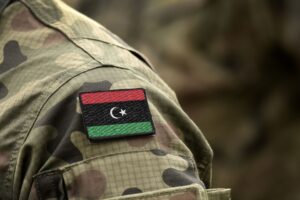
A new question-and-answer briefing by the International Commission of Jurists (ICJ) examines recent developments that have detrimentally affected the right to freedom of association in Libya against the backdrop of an increasing crackdown on Civil Society Organizations (CSOs). Among such negative developments, the authorities have even begun enforcing repressive Gadhafi-era legislation, namely, Law No. 19 of 2001, which had not been enforced since the 2011 uprising.
.هذا البيان الصحفي متوفر باللغة العربية أيضاً
Said Benarbia, ICJ Middle East and North Africa Programme Director, said:
“Instead of subjecting them to the ongoing, relentless crackdown, Libyan authorities must ensure that independent CSOs be able to discharge their functions in defence of the rule of law and human rights independently, without political interference, undue restrictions, harassment, fear of intimidation or reprisal.”
The briefing analyzes the country’s legal framework and its compliance with domestic and international human rights law and standards. It answers the following questions:
- How has the legal framework regulating the right to freedom of association in Libya become more restrictive recently?
- Does the legal framework currently enforced by the Libyan authorities meet domestic and international human rights law and standards on the right to freedom of association?
- What are the impacts of the increasing restrictions on freedom of association on the rule of law and human rights?
Based on the analysis featured in the Q&A and with a view to ensuring full compliance with Libya’s obligations under international human rights law and relevant standards, the ICJ calls on the Libyan authorities to ensure that:
- All existing laws and decrees on CSOs be abolished, and new ones be adopted in accordance with Libya’s obligations under international human rights law and standards. Until then, the authorities shall ensure that any frameworks by the Government of National Unity or the Government of National Stability on the registration, functioning and funding of CSOs be fully in line with articles 14 and 15 of the 2011 Constitutional Declaration;
- CSOs be able to effectively play their watchdog role and act in defence of the rule of law and human rights, without political interference, intimidation, harassment or undue restrictions;
- All ongoing prosecutions and other arbitrary proceedings against civil society actors in relation to their legitimate work be terminated, and all those arbitrarily detained solely for their civil society work be immediately and unconditionally released;
- Accountability for human rights abuses to which civil society actors have been subjected; and
- CSOs be meaningfully consulted on and able to provide inputs in ongoing political processes, including those related to constitutional, electoral and transitional justice reforms.
Contact
Said Benarbia, Director, ICJ Middle East and North Africa Programme; t: +41 22 979 3817, e: said.benarbia(a)icj.org.
Mohamed Hanafy, Legal Researcher, ICJ Middle East and North Africa Programme; e: mh(a)icj.org.
Juliette Rémond Tiedrez, Legal Researcher, ICJ Middle East and North Africa Programme; e: juliette.remond-tiedrez(a)icj.org.
Download
Q&A on the current attacks on the right to freedom of association in English and Arabic.
Press Release in English and Arabic.