Oct 19, 2023 | News
The International Commission of Jurists (ICJ) condemns the strike on al-Ahli hospital in the Gaza Strip on 17 October 2023, which according to the Palestinian Health Ministry killed more than 500 Palestinian civilians, mainly women and children, and injured hundreds more.
“Civilians and hospitals must be protected at all times”, said Said Benarbia, Director of the ICJ’s MENA Programme. “Intentional attacks on hospitals may amount to war crimes under international humanitarian law and must cease immediately”, added Benarbia.
Palestinian sources have said that the massacre was caused by an Israeli air strike. The Israeli Defence Forces have denied any responsibility, claiming that it was caused by a failed rocket launch by Palestinian armed groups.
Under the Geneva Conventions and customary international humanitarian law, States have an obligation to investigate war crimes with a view to bringing alleged perpetrators to justice.
The ICJ calls on the Office of the Prosecutor of the International Criminal Court (ICC) to allocate the necessary resources to respond to the escalating situation in Israel and Gaza with a view to investigating and establishing criminal responsibility for alleged war crimes and other violations of international humanitarian law committed by both parties.
According to the ICC Prosecutor Karim Khan, the ICC has jurisdiction over potential war crimes committed by Palestinian armed groups in Israel and Israelis in the Gaza Strip, even though Israel is not a State party. In 2015, Palestine acceded to the ICC Statute. In 2021, the Court ruled that its jurisdiction “in the Situation in Palestine extends to the territories occupied by Israel since 1967, namely Gaza and the West Bank, including East Jerusalem.”
On 12 October the Israel Defence Forces (IDF) ordered the entire population of northern Gaza, that is, more than 1 million people, to evacuate to southern Gaza within 24 hours in advance of a likely military ground offensive.
On 14 October, the World Health Organization (WHO) strongly condemned Israel’s repeated orders for the evacuation of 22 hospitals in the Gaza strip, and called on Israeli authorities to protect health facilities, health workers, patients and civilians.
“The Israeli evacuation order was issued in the absence of safe passage or a safe destination. It may amount to a transfer of parts of the population of the occupied territory, a war crime under the ICC Statute and a serious violation of international humanitarian law”, said Benarbia.
Under international humanitarian law, hospitals and other medical facilities are considered to be protected civilian objects. Unless they are used for military purposes, they shall be protected at all times and may not be the object of attack.
Under international humanitarian law, all parties to an armed conflict have an obligation to distinguish between military and civilian targets and to take all feasible precautions to protect civilians from attacks and from the effects of military operations. Indiscriminate attacks on civilians and civilian objects, including those perpetrated using weapons that are indiscriminate by nature, amount to breaches of international humanitarian law. Intentionally directing attacks against civilians amounts to war crimes under the under the Statute of the ICC and customary international law.
Furthermore, the ICJ is deeply concerned by reports of the use of white phosphorus by Israel in other military operations in Gaza and Lebanon.
“Israel must refrain from using white phosphorus, and any other means and methods of warfare that are inherently indiscriminate or that cause superfluous injury or unnecessary suffering”, added Benarbia.
White phosphorus has the potential to cause civilian harm due to the severe burns it causes and its lingering long-term effects on survivors. While it is not per se a prohibited weapon under international humanitarian law, its use in densely populated areas, such as the Gaza Strip, is prohibited as it violates the international humanitarian law requirement that parties to the conflict take all feasible precautions to avoid civilian injury and loss of life.
The ICJ also condemns the continued detention by Palestinian armed groups of approximately 200 hostages.
“Hostage-taking is prohibited under international humanitarian law, and those detained must be released immediately”, said Benarbia.
The ICJ also reiterates calls by the United Nations Secretary General, WHO and others for the establishment of a humanitarian corridor to enable humanitarian aid to enter the Gaza Strip.
Contact:
Said Benarbia, Director of the ICJ’s Middle East and North Africa Programme, email: said.benarbia(at)icj(dot)org
Oct 16, 2023 | News
The International Commission of Jurists (ICJ) condemns the arbitrary detention and criminal prosecution of three lawyers who had been defending the prominent opposition figure, Alexei Navalny.
“These criminal proceedings, constituting persecution of lawyers, severely compromise the administration of justice in Russia and undermine the ability of all lawyers to defend their clients’ human rights and uphold the rule of law”, said Temur Shakirov, interim Director of ICJ Europe and Central Asia Programme.
On 13 October 2023, Vadim Kobzev, Alexey Liptser and Igor Sergunin – who had been acting as Navalny’s defence lawyers — were arrested and detained at Basmanny District Court in Moscow on charges of purportedly participating in an “extremist community”, with a potential sentence of up to six years’ imprisonment if convicted. As such, the criminal proceedings against Vadim Kobzev, Alexey Liptser and Igor Sergunin amount to persecution.
The charges are reportedly based on accusations that the three lawyers facilitated Navalny’s communication with the outside world while in detention.
Moreover, another lawyer representing Navalny, Alexander Fedulov, apparently fearing being arrested, was forced to flee the country following the arrest of his three colleagues.
The arrest and detention of the three lawyers and Fedulov’s flight significantly disrupt Navalny’s ability to defend himself through the assistance of qualified, independent legal counsel of choice, and his ability to challenge the criminal convictions and sentences, which led to his detention since 2022 as a result of a series of criminal cases against him widely believed to be politically motivated.
“The detention of Navalny’s lawyers is likely to constitute part of a wider strategy to isolate him even further. Moreover, it sends a chilling message to anyone wishing to defend human rights and political activism”, said Shakirov. “This is contrary to the right of lawyers to practise their profession freely, and it denies Navalny his right to legal representation, a fair trial guarantee protected under international human rights law binding on the Russian Federation”.
The ICJ stresses that the harassment and arbitrary detention of lawyers contravene the Russian Federation’s obligations under international law, including under the International Covenant on Civil and Political Rights and the UN Basic Principles on the Role of Lawyers. They affirm the crucial role of lawyers in upholding the rule of law and protecting human rights. It is crucial to ensure that lawyers can perform their legitimate professional functions without intimidation, hindrance, harassment, or improper interference, as guaranteed under the Basic Principle on the Role of Lawyers.
“The ICJ calls on the Russian Federation: to immediately stop this flagrant violation of the guarantees afforded to lawyers under international human rights law; for an end to these persecutory criminal proceedings; for all charges against Vadim Kobzev, Alexey Liptser and Igor Sergunin to be dropped; and for them to be immediately released”, added Shakirov.
Furthermore, the ICJ urges the Russian authorities to cease the persecution and harassment of lawyers and to take steps to ensure a safe environment where lawyers can operate without fear of reprisal for their work.
Background:
According to the UN Basic Principles on the Role of Lawyers, governments must ensure that lawyers are able to perform all of their professional functions without intimidation, hindrance, harassment or improper interference and must not face sanctions for discharging their duties in accordance with professional standards and ethics (Principle 16). Furthermore, lawyers must not be identified with their clients or their clients’ causes as a result of discharging their functions. (Principle 18).
The UN Basic Principles also specify that lawyers like others have a right to freedom of expression and in particular the right to take part in public discussion of matters concerning the law, the administration of justice and the promotion and protection of human rights” (Principle 23)
The arrest of the three lawyers has prompted a call for a strike within the Russian legal community to demonstrate against the hostile environment within which lawyers in the Russian Federation operate, particularly those defending human rights and representing political activists.
Oct 16, 2023 | News
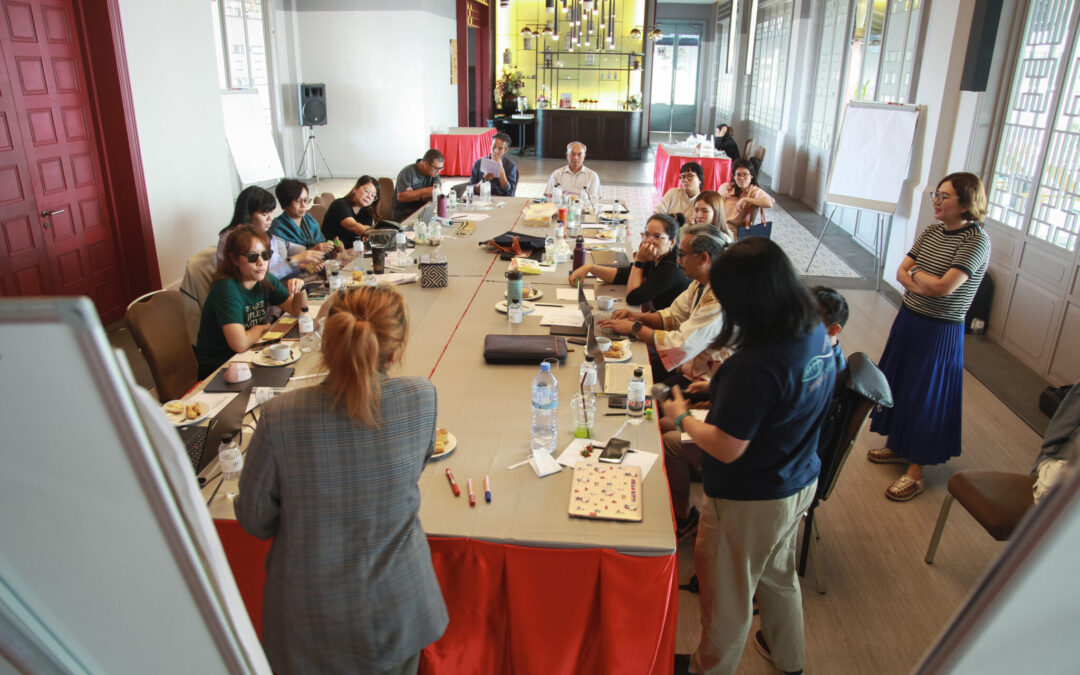
Judges and Prosecutors in Nepal have taken up the challenge to step up their efforts to ensure that victims and survivors of human rights violations are able effectively to access justice.
At a Judicial Dialogue convened by the International Commission of Jurists (ICJ) and Advocacy Forum Nepal (AFN) in collaboration with Judges Society Nepal (JSN) on 15 – 16 September 2023, judges and prosecutors from district and high courts in Gandaki Province in Nepal attended and assessed the challenges faced by victims and survivors in the context of the stalled transitional justice process which followed from the end of Nepal’s internal armed conflict in 2006.
The Government of Nepal has made repeated commitments to ensure access to justice and the Supreme Court of Nepal has affirmed that the authorities have firm legal obligations to act in the transitional justice process. Participants considered that there had been serious undue delay in the Nepalese TJ process over years, which have included ineffective commissions, non-implementation of court rulings and a failure to take into account the voices of victims of human rights violations. There was therefore a pressing need for judges and public prosecutors to play a more proactive role in order to address conflict-era gross violations delivering justice for the victims of the violations.
ICJ Commissioner and former Chief Justice of the Supreme Court of Nepal Kalyan Shrestha, emphasized that it was indispensable to adhere to international and domestic human rights law, including the jurisprudence of the Supreme Court. He expressed concern that adjudication of conflict-related cases had been significantly delayed, resulting in a prolonged wait for justice for the victims of human rights violations. Justice Shrestha also underscored the need for Nepal’s judiciary and public prosecutors to effectively fulfill their responsibilities and ensure justice for victims of human rights violations, in accordance with a well-developed body of jurisprudence on justice in the transitional context.
Justice Ishwor Khatiwada of the Supreme Court of Nepal reviewed the status of human rights guaranteed under the Constitution of Nepal. More than a thousand cases related to conflict-era human rights violations have been pending at different courts, and there was no law that restricts courts/judges from deciding the cases of human rights violations from conflict. The Government of Nepal had been refusing victims of conflict access to regular justice system arguing that they will be provided justice by transitional justice mechanisms. However, these promised TJ mechanisms had not been established even more than a decade and a half after signing the Comprehensive Peace Agreement (CPA), making commitments to create these mechanisms.
Justice Ananda Mohan Bhattarai, Justice of the Supreme Court of Nepal highlighted that jurisprudence established by the Supreme Court mandated a robust role of the judiciary in assessing the implementation of its jurisprudence.
Mandira Sharma, ICJ Senior Legal Advisor, provided insights into the global context of transitional justice and discussed the challenges, lessons learned, and good practices.
High Court Judge Tek Prasad Dhungana, General Secretary of Judges Society Nepal presented the objectives of the dialogue, which was chaired by Mr. Baburam Regmi, Acting President of Judges Society Nepal and former High Court Judge and facilitated by Kathmandu District Court judge Raju Kumar Khatiwada.
Contact:
Dr Mandira Sharma, ICJ Senior International Legal Adviser, t: +9779851048475, e: mandira.sharma@icj.org
Kashiram Dhungana, ICJ Legal Adviser, Nepal, t: +9779851226964, e: kashiram.dhungana@icj.org
Oct 13, 2023 | Human Rights Council, News, Statements, Work with the UN
Geneva, 13 October 2023
In this statement, the International Commission of Jurists (ICJ) looks back at five weeks of consideration of a wide range of country situations and human rights thematic concerns, and at intense negotiations during the 54th session of the United Nations Human Rights Council (HRC) that ended today in Geneva.
This session resulted in some positive actions for the protection and promotion of human rights and for accountability for grave human rights violations. However, States also failed to address the dire human rights situation in a number of countries. They also failed to support unanimously a number of important initiatives towards the greater enjoyment of human rights for all without discrimination.
Welcoming the renewal of a number of Special Procedures’ mandates
The ICJ welcomes the renewal of a number of Special Procedures’ mandates on both country situations and themes. In particular, the mandates on the situation of human rights in Afghanistan, Cambodia and Russia have been extended. With regard to thematic mandates, the ICJ particularly salutes the adoption of resolutions enabling the continuation of the work of the UN Special Rapporteur on Truth, Justice, Reparation and Guarantees of Non-Recurrence, as well as of the Working Group on Enforced or Involuntary Disappearances. With respect to this, the ICJ considers it very positive that the resolution on Enforced or Involuntary Disappearances explicitly encourages States to participate in the upcoming world congress to promote the ratification of the International Convention for the Protection of All Persons from Enforced Disappearance in 2024.
Continued intergovernmental negotiations on the issue of private security companies
The ICJ is actively engaged in supporting the elaboration of new standards to enhance human rights protection in respect of the activities of private military and security companies. In this context, the ICJ has followed the HRC’s thematic debates on both the use of mercenaries and the work of the intergovernmental working group tasked with the elaboration of a new regulatory framework on private military and security companies. In light of this, the organization welcomes the renewal of the mandate of the intergovernmental working group to negotiate such standards.
Celebrating the creation of a new investigative mechanism on the situation in the Sudan
The ICJ applauds the creation of a robust independent international fact-finding mission on the human rights and humanitarian crises resulting from the ongoing armed conflict in the Sudan. The ICJ had joined a group of 120 civil society organizations that sent a letter to States, on 1 September 2023, in advance of the HRC session, urging the creation of such an independent investigative mechanism.
Adoption of important thematic resolutions
The ICJ also considers that the adoption of a new resolution providing more capacity for the Office of the UN High Commissioner for Human Rights (OHCHR) to support States in the realization of economic, social and cultural rights (ESCR) is a positive step.
However, the ICJ urges States to ensure:
• respect for the independence of the OHCHR in carrying out additional work in this area;
• that ESCR be treated on an equal footing with other human rights; and
• that any new work builds upon the existing work carried out by the HRC and by the OHCHR for several decades in this area.
After intense negotiations, the HRC eventually adopted the resolution on preventable maternal mortality and morbidity and the one on the question of the death penalty. Fortunately, all amendments aimed at weakening human rights protections in both texts were defeated.
However, the ICJ deplores the persistence of ploys intentionally engineered during the negotiations of these two resolutions, which, if successful, would have been detrimental to the enjoyment of women and girls’ human rights, including to sexual and reproductive health and comprehensive sexuality education. In addition, purported concern over States’ sovereignty negatively impacted a number of debates and threatened to impair progress in the protection of universal human rights.
Regretting the inability of the HRC to address key situations
These controversies took place at a very polarized HRC session and reflect the broader geopolitical realities and ideological tensions worldwide.
In this regard, the ICJ regrets that the HRC failed to continue the mandate of the International Commission of Human Rights Experts on Ethiopia. This commission was established to respond to the dramatic human rights situation after the conflict between the Federal Government and the Tigray People’s Liberation Front (TPLF) broke out in 2020. Since then, widespread violations of human rights and serious violations of international humanitarian law have been committed in Tigray, Amhara and Afar in northern Ethiopia. As the situation is deteriorating even further, the failure of the HRC to renew the mandate of the Commission terminates the international independent investigation of atrocity crimes committed in the context of this conflict and is an abject dereliction of duty on the part of Member States of the HRC.
With regard to Afghanistan, while the extension of the mandate of the Special Rapporteur on the human rights in the country, with additional resources to carry out his work, is an important measure towards monitoring the dire human rights and humanitarian situation, the ICJ deeply regrets that the HRC was not able to give a response commensurate with the gravity of the situation and failed to create a robust independent accountability mechanism to investigate, collect and preserve evidence of the widespread and systematic human rights violations and atrocities crimes committed in the country.
Last but not least, the ICJ regrets that the Council could not take action on the violations of international human rights law and international humanitarian law committed by all parties in Israel and the OPT since the attacks in Israel by Palestinian armed groups started on 7 October 2023.
https://www.icj.org/israel-occupied-palestinian-territory-immediately-end-attacks-on-civilians/
Oct 12, 2023
On 11 October 2023, the International Commission of Jurists (ICJ) made two submissions to the UN Human Rights Council’s Working Group on the Universal Periodic Review (UPR) in advance of its review of Cambodia’s human rights record in April – May next year.
In its first submission, the ICJ draws the attention of the Human Rights Council’s Working Group on the UPR to a number of serious human rights concerns in Cambodia in connection with:
- Freedom of expression; and
- The independence of the judiciary and the right to a fair trial.
In addition, in its first submission, the ICJ calls upon the Working Group and the Human Rights Council to make the following recommendations to the Cambodian authorities:
On freedom of expression
- The legislature should repeal or substantially amend legal provisions that unduly restrict the right to freedom of expression – including article 443, 453, 494 and 495 of the Penal Code and the NIG Sub-Decree – to bring them in line with international human rights law and general principles of criminal law; the proposed draft Cybercrime Law and Cybersecurity Law should be withdrawn;
- The prosecuting authorities and the judiciary should immediately cease ongoing criminal investigations, drop all existing charges and revoke or otherwise reverse criminal penalties imposed against individuals for “offences” under domestic provisions that are inconsistent with Cambodia’s obligations under international human rights law guaranteeing the rights to freedom of expression and information and under general principles of criminal law; and
- Rescind the revocation of licences and access-blocking of independent media outlets that have been carried out arbitrarily without a thorough and transparent process, and refrain from imposing any further restrictions unless the revocation or blocking decision has been undertaken following a full analysis that applies international standards concerning legality, legitimate purpose, necessity, proportionality and non-discrimination, and has been authorized pursuant to an order by an independent and impartial judicial authority, in accordance with due process, and ensuring that there is a right to appeal against it.
On the independence of the judiciary and fair trial
- Safeguard, in law and in practice, the full independence and impartiality of judges and prosecutors from any form of political pressure and undue influence, including by amending the Law on the Organization of the Courts, the Law on the Statute of Judges and Prosecutors, and the Law on the Organization and Functioning of the Supreme Council of the Magistracy, with the aim to eliminating executive influence on the administration and functioning of the judiciary; and
- Ensure that fair trial rights are fully respected at both the investigation and trial stages in compliance with international law and standards, including the right to a public hearing, the right to defend themselves, the right to equality of arms, the presumption of innocence and the right to a public and reasoned judgment, all of which are rights guaranteed, inter alia, under the ICCPR.
The first submission on freedom of expression, independence of the judiciary and fair trial can be downloaded here.
In its second submission, made jointly with Land Watch Thai, the ICJ draws the attention of the Human Rights Council’s Working Group on the UPR to human rights violations and abuses in the context of and resulting from the establishment and development of Special Economic Zones (SEZs) in Cambodia.
In its second submission, the ICJ and Land Watch Thai call upon the Working Group and the Human Rights Council to make the following recommendations to the Cambodian authorities:
- Adopt a human rights-based approach to development projects, such as SEZs, grounded in processes and safeguards to ensure that decisions about those projects are made with adequate and meaningful consultations and genuine participation of the individuals and communities concerned, including the free, prior and informed consent of indigenous peoples, in compliance with the requirements of international law and standards;
- Ensure that business entities operating in or domiciled in Cambodia systematically conduct consultations and carry out human rights due diligence, including independent environmental impact assessments, to prevent and/or mitigate the risks of negative impacts of their operations on the exercise of human rights;
- Adopt a national action plan on business and human rights while ensuring that both the formulation and implementation processes involve all interested parties, including representatives of businesses, CSOs, indigenous peoples and the most affected communities;
- Ensure transparency by making information and documents related to large development projects, such as the SEZs, publicly available;
- Ensure that legislation protecting labour rights is effectively applied to all sectors and all workers, including by addressing the practice of engaging in short-term employment contracts as a means of bypassing various social protection laws or restricting union activities by employers;
- Ensure that workers, including in the context of SEZs, enjoy the right to just and favourable conditions of work as guaranteed by international law, and urgently investigate, prosecute, and address reports of human trafficking and forced labour in SEZs;
- Ensure that the minimum wage is applied to all sectors of the labour market and that all workers receive a minimum wage that enables them to enjoy a decent standard of living for themselves and their families;
- Ensure that all workers are able to exercise their right to freedom of association and collective bargaining without undue restrictions, intimidation, violence, harassment, or risk to their personal security or lives, as well as address barriers to registering and joining unions. To this end, revise the 2016 Trade Union Law to ensure compliance with international labour law and standards;
- Ensure that evictions are only carried out as a last resort after all other feasible alternatives have been explored, including in the context of SEZs. Procedural protections required under international human rights law should be in place before any evictions are carried out, in particular, requirements on genuine consultation, due process safeguards, provision of legal remedies, compensation and adequate alternative housing. Such protections should also be explicitly guaranteed in the Land Law and the Anukret (Sub-Degree) No. 148, as well as other domestic legal and institutional frameworks to prevent forced evictions; and
- Ensure that effective, prompt and accessible judicial and non-judicial remedies are provided to those who are affected by the implementation of large development projects, including SEZs.
The second submission on SEZs can be downloaded here.