Feb 1, 2024
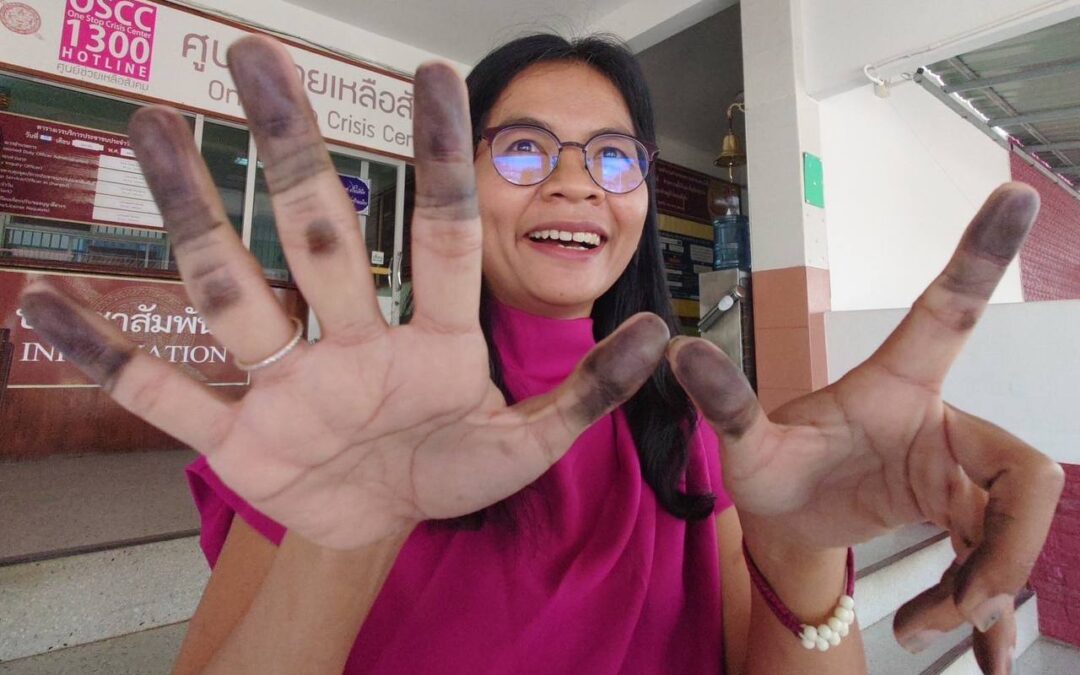
The International Commission of Jurists (ICJ) and Lawyers’ Rights Watch Canada (LRWC) intervene in the criminal defamation proceeding against Thai human rights defender Chutima Sidasathian.
Today, the ICJ and LRWC jointly submitted a legal brief (amicus curiae) to the Nakhon Ratchasima Provincial Court in the criminal defamation proceeding against Thai human rights defender Chutima Sidasathian. The brief argues that the use of criminal law is never appropriate for defamation and will constitute a violation of the right to freedom of expression when used to restrict speech for a purpose or in a manner not permissible under international human rights law. This is often the case in Strategic Lawsuits against Public Participation (SLAPP).
The proceeding in this particular case arises from three social media posts in which Chutima Sidasathian raised issues and questions about a community banking scandal in which villagers were allegedly forced to repay loans they had never received. She also highlighted legitimate and important public interest concerns about the management of the community financial institution and the relevant actions of its chair.
Furthermore, Chutima Sidasathian faces criminal defamation charges in four additional cases related to six more social media posts concerning the same community banking scandal.
The ICJ and LRWC legal brief aims to assist the Provincial Court in considering Thailand’s international legal obligations to ensure the right to freedom of expression, particularly under Article 19 of the International Covenant on Civil and Political Rights, acceded to by Thailand in 1996. This duty extends to all branches of government. The legal brief emphasizes that imposing criminal liability, such as imprisonment or heavy fines, has a “chilling effect” on the exercise of freedom of expression and undermines the work of human rights defenders seeking to bring human rights concerns to light.
Criminal defamation, under section 326 of the Thai Criminal Code, carries a maximum sentence of one year of imprisonment, a fine of up to 20,000 Baht (approx. USD 560), or both. Section 328 criminalizes defamation “by means of publication” with up to two years’ imprisonment and a fine of up to 200,000 Baht (approx. USD 5,600).
The trial in this case will be held between 6 and 8 February 2024 at Nakhon Ratchasima Provincial Court.
The submission in English can be downloaded here
The submission in Thai can be downloaded here
Background
Chutima Sidasathian is a former journalist from the online news outlet Phuketwan. In 2013, she was accused of criminally defaming the Royal Thai Navy after publishing an article that contained a paragraph reproduced from a Pulitzer award-winning Reuters article that alleged that “Thai naval forces” were complicit in the smuggling of Rohingya, a persecuted ethnic minority from Myanmar. In 2015, she was found not guilty on all counts.
For more on Thailand’s current protective framework against SLAPPs, refer to advocacy papers in English and Thai published by the ICJ and its partners in 2022.
Contact
Sanhawan Srisod, Associate International Legal Adviser, ICJ Asia Pacific Programme; e: sanhawan.srisod@icj.org
Feb 1, 2024 | Advocacy, News
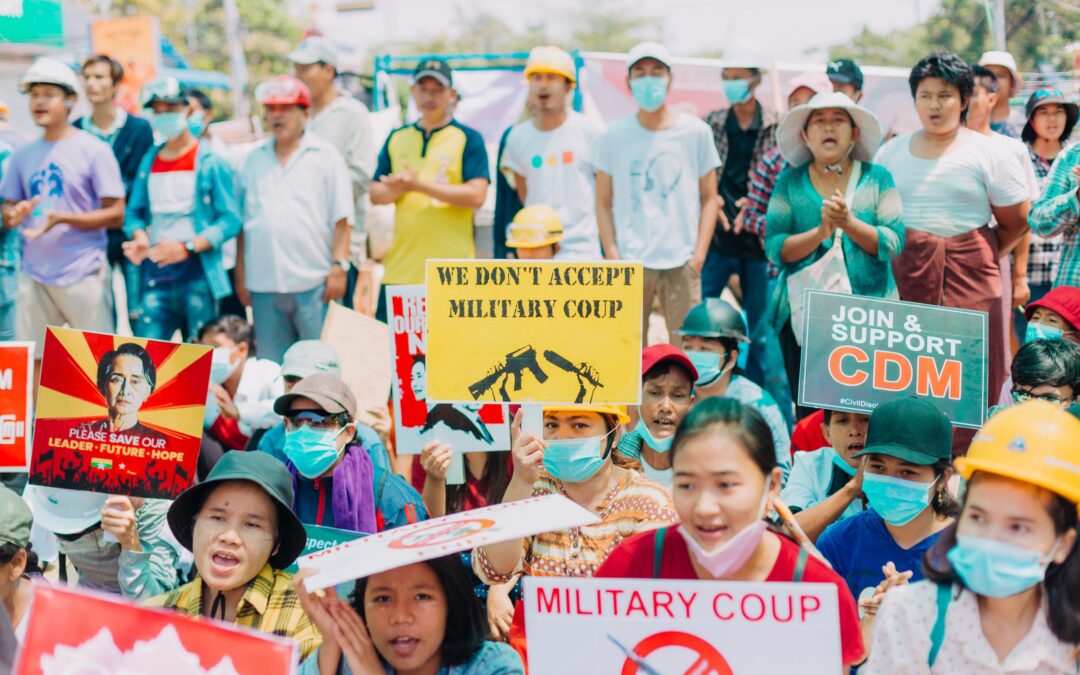
As the absolute military rule enters its fourth year with an extension of the state of emergency, widespread and systematic human rights violations continue to be perpetrated daily against large number of peoples in communities throughout Myanmar with impunity, the International Commission of Jurists (ICJ) said today.
Arbitrary arrests and detentions and unsound convictions
Widespread gross human rights violations, many of which amount to crimes under international law, have taken place in a climate of near absolute impunity, with rampant arbitrary arrests, torture, detention and convictions for political reasons.
“Respect for human rights and the rule of law has disappeared three years after the coup d’état,” said Melissa Upreti, ICJ Regional Director for Asia and the Pacific. “The military junta has continued committing gross human rights violations, including by arbitrarily arresting, detaining, torturing and summarily executing those who have dared to oppose their illegitimate regime.”
The military junta has effectively weaponized its all-encompassing control over the legal and administrative system, with main targets including real or perceived political opponents, such as former government officials, human rights defenders, lawyers, journalists and ethnic and religious minorities.
Credible information indicates that at least 25,000 individuals have been arbitrarily arrested and detained since the start of the coup, often solely in relation to their exercise of their right to freedom of expression, peaceful assembly and association. Around 8,000 have been convicted based on spurious charges, and at least 119 political prisoners remain on death row.
These figures are a grim reminder of the extent to which the rule of law has completely collapsed in Myanmar. The convictions of people for political reasons have taken place in proceedings that flagrantly violate the essential fair trial and due process guarantees established under international law:
- Many have been summarily tried and convicted in closed-door proceedings either in civilian courts located in prisons, or in military courts;
- Lawyers have been obstructed from meeting and representing detainees, and have themselves been subject to arbitrary arrests and detention in relation to their work;
- Convictions are typically based on spurious and unsubstantiated charges, and “confessions” that were reportedly obtained through torture and cruel, inhuman or degrading treatment have been unlawfully relied on in these convictions; and
- Other violations include the suspension of habeas corpus; and particularly for closed-door military tribunal proceedings, violations of the right to be present at one’s trial, the right to be represented by counsel and the right to appeal.
Prison conditions and treatment of detainees
“Detainees are being held in prisons and detention facilities in horrific conditions that run afoul of international law and standards governing the treatment of prisoners. Violence, much of which amounts to torture, is a daily reality for detainees, with women and LGBT detainees being subjected to targeted forms of cruelty and abuse, as a form of punishment and to instill fear. Unlawful deaths in custody are a common occurrence and remain unaccounted for,” added Upreti.
There is credible evidence that detainees are being subjected to severe beatings with sticks, wire ropes and guns, electrocution, mock execution, and burying alive. Women and LGBT detainees have reported cases of rape, invasive strip searches, sexual harassment and mutilation of genitalia.
Furthermore, reports have emerged of the severe overcrowding, poor hygiene and sanitation, lack of access to healthcare and insufficient food in detention facilities. There are also credible reports of religious minorities being prohibited from practicing their religion while in detention.
Continued failure to restore democratic institutions and violence against civilians
These widespread systematic human rights violations are taking place against the backdrop of the military extending its unlawful declaration of a state of emergency on 31 January 2024 and prolonging its unlawful, arbitrary and abusive exercise of authority. This reneges on its promise to hold national elections in August 2023, which, even if they had been carried out, would likely have been shambolic amidst the ongoing crackdown on perceived political opponents.
Numerous separate armed conflicts continue to rage within the country, involving the Tatmadaw (Myanmar’s army) and anti-military armed groups. In carrying out its military operations, the military has unlawfully attacked civilians taking no part in hostilities, including direct, indiscriminate or disproportionate attacks on civilians and civilian objects from aerial bombings; mass extrajudicial executions of civilians and detained combatants and large-scale and intentional burning of civilian homes and buildings, including religious infrastructure. As noted by the Independent Investigative Mechanism for Myanmar (IIMM), these constitute “strong evidence indicating that serious international crimes are being inflicted against the people in Myanmar”.
Recommendations
“For Myanmar to return to the path of establishing itself as society based on rule of law, human rights and democracy, the first step is to end the state of emergency and all of the unlawful actions of the military regime that flow from it, including the prevailing impunity,” stressed Upreti. “The military regime and its members must be held accountable, the complicity that enables them must end and the human rights of all people in Myanmar must be fully restored.”
The ICJ reiterates its calls on the military to:
- Return the country to a civilian government and restore democracy;
- Immediately cease systematically violating the rights of persons for political reasons, including by releasing all people arbitrarily arrested and detained, and allowing the country’s institutions to function independently and impartially; and
- Immediately cease all practices of torture, extrajudicial killings, arbitrary detention, and flagrant fair trial violations.
The ICJ urges all UN Member States to:
- Keep up its pressure for the peaceful transfer of power to a democratically elected government;
- Increase support for coordinated documentation and accountability efforts by ensuring that the IIMM, Special Rapporteur on the situation of human rights in Myanmar and Office of the United Nations High Commissioner for Human Rights are given adequate resources to continue their important functions as effectively as possible; and
- Hold perpetrators of serious crimes under international law accountable, including by exercising universal jurisdiction over these crimes in domestic courts.
Contact
Melissa Upreti, ICJ Regional Director for Asia and the Pacific, e: melissa.upreti@icj.org
Daron Tan, ICJ Associate International Legal Adviser, e: daron.tan@icj.org
Further Reading
ICJ, “Myanmar: Two years after the coup, country further than ever from democracy and the rule of law”, 2 February 2023
ICJ, “Myanmar: A year after military takeover, no rule of law or judicial independence”, 10 February 2022
Jan 26, 2024 | News
The ICJ welcomes today’s near-unanimous Order of the International Court of Justice (the Court) in the case of South Africa v. Israel, indicating provisional measures under the 1948 Genocide Convention (the Convention).
“Through this Order, the world’s highest judicial authority has acknowledged that there is a risk of genocide being committed in Gaza,” said Said Benarbia, MENA Programme Director of the International Commission of Jurists. “It is now incumbent on Israel to implement the provisional measures – as well as its obligations under the United Nations Charter – as a matter of urgency.”
In its Order delivered orally in The Hague following oral submissions by South Africa and Israel on 11 and 12 January 2024 respectively, the Court found it had prima facie jurisdiction over the case and indicated six (6) provisional measures.
The Court ordered that Israel: (1) take all measures within its power to prevent the commission of all acts within the scope of Article II(a)-(d) of the Convention; (2) ensure with immediate effect that its military does not commit any acts described in the first order; (3) take effective measures to prevent the destruction and ensure the preservation of evidence related to allegations of acts within the scope of Article II and Article III of the Convention; and (4) report to the Court on all measures taken to give effect to the Order within one month of the Order.
The Court also ordered that Israel take all measures within its power to prevent and punish the direct and public incitement to commit genocide against people in Gaza, and enable the provision of urgently needed basic services and humanitarian assistance. The Court also reminded all parties of their obligations under international humanitarian law, and called for the release of hostages.
The ICJ notes that at the provisional measures stage, the Court does not determine the merits of the case. It therefore has yet to make a determination whether Israel has committed, sanctioned, or incited genocide in violation of the Genocide Convention. A hearing on the merits will be held at a later stage. Furthermore, the role of the Court is to establish the legal responsibility of States, not individuals, in accordance with international law. The determination of the responsibility of any individuals that might be responsible for genocide would fall to the International Criminal Court (ICC), which is presently investigating allegations of international crimes committed by both parties.
This unequivocal call by the Court – a principal organ of the United Nations – for Israel to take all effective measures to prevent the commission of genocide highlights the crucial importance of swift and decisive action by the international community to: i) as previously urged by the International Commission of Jurists, ensure an immediate ceasefire and ensure the release of hostages, and ii) cease aid or assistance to Israel that may facilitate the commission of acts that may amount to genocide or undermine all States’ obligations under the Convention to prevent genocide.
“As the number of Palestinians killed in Gaza since 7 October surpasses 25,000 and continues to mount, the need for international cooperation to enforce these legally binding provisional measures cannot be overstated”, added Banarbia. “Respect for international law, including the Genocide Convention and its preventive function, demands no less”.
Notwithstanding the Order, the ICJ reiterates that individuals from all parties to the conflict, including Israel and Hamas, must be held criminally accountable for any violations of international criminal law committed since 7 October and all States should refrain from providing assistance to any party to the conflict that may amount to complicity in such criminal acts, including by imposing an arms embargo. The ICJ also urges States to support the work of the ICC and the Independent Commission of Inquiry, and, where possible, exercise universal jurisdiction over crimes under international law.
Contact:
Said Benarbia, Director, ICJ Middle East and North Africa Programme, email: said.benarbia@icj.org
Katherine Iliopoulos, Legal Adviser, ICJ Middle East and North Africa Programme, email: katherine.iliopoulos@icj.org

Jan 25, 2024 | Advocacy, Joint Statement
The ICJ has joined more than a hundred organizations and experts in a call on the state delegations that will participate in the concluding session of the United Nations Ad Hoc Committee elaborating a proposed Cybercrime Convention (the Convention) to ensure the Convention is narrowly focused on tackling cybercrime, and not used as a tool to undermine human rights.
It is the ICJ’s view that the fight against cybercrime should not come at the expense of human rights, gender equality, and the dignity of the people whose lives will be affected by this Convention. It should not result in impeding security research and making us all less secure.
Robust and meaningful safeguards and limitations are essential to avoid the possibility of abuse of relevant provisions of the Convention that could arise under the guise of combating cybercrime. Absent meaningful changes to address these shortcomings, the Convention should be rejected.
Read the full Statement:
Joint Advocacy Statement on UN Cybercrime Convention
Jan 19, 2024 | News
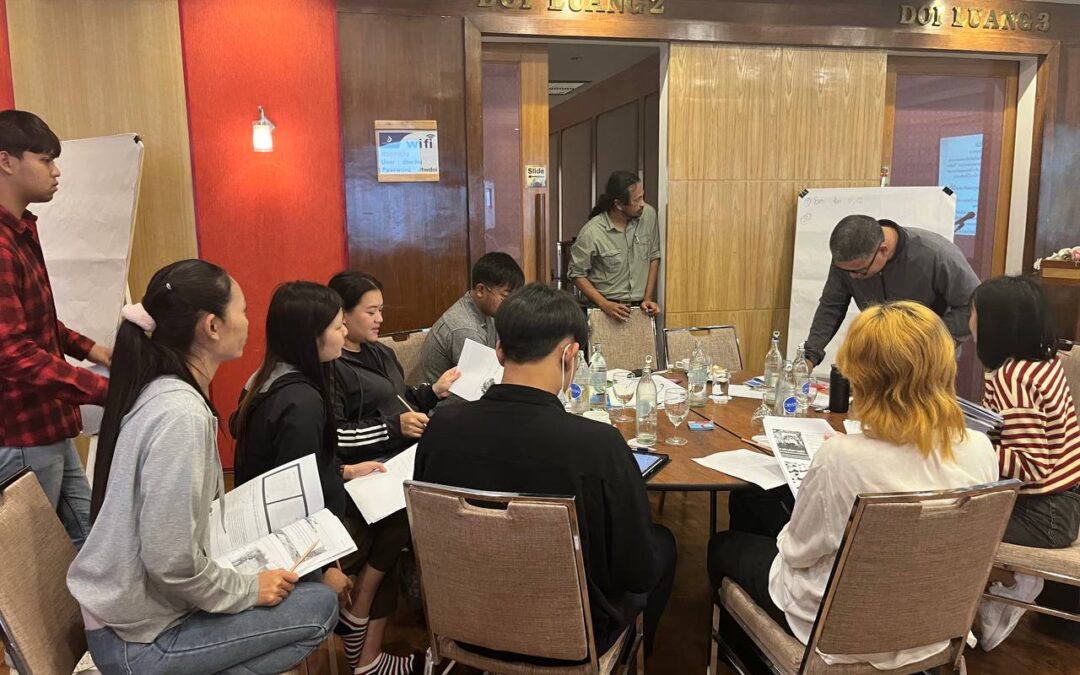
On 15-16 January 2024, the International Commission of Jurists (ICJ), in cooperation with ARTICLE 19, organized a workshop in the province of Chiang Mai where over two dozen civil society actors and human rights defenders considered how to invoke and apply international law and standards related to land. The goal was to advocate for better protection of the human rights of affected individuals and communities across Thailand.
“Access to, use of, and control over land can have direct and indirect implications for the enjoyment of a range of human rights, particularly those under the International Covenant on the Economic, Social and Cultural Rights (ICESCR) to which Thailand is a party,” said Seree Nonthasoot, Member of the United Nations Committee on Economic, Social, and Cultural Rights (CESCR).
Thailand has a long-standing track record of failing to meet its human rights obligations related to land, especially concerning Indigenous Peoples, peasants, and other traditional communities, many of which have a material and spiritual relationship with their ancestral lands. Violations include the failure to ensure the security of tenure and meaningful and effective participation of communities in land-related decision-making processes.
Large-scale forced evictions conducted in violation of international law, inadequate and inconsistent compensation provided to affected communities and individuals due to land-related policies, and displacement of entire communities that are consequently struggling to access livelihoods without adequate support from the State have also been reported.
“When the social, cultural, spiritual, economic, environmental, and political value of land for communities is systematically disregarded by domestic law, international law and standards become important tools for victims and civil society to use in their advocacy for the protection of human rights. International mechanisms also offer crucial avenues for exposing serious human rights violations and seeking accountability,” added Sanhawan Srisod, ICJ’s Legal Adviser.
The workshop aimed to build participants’ documentation skills, strengthen their advocacy and promote networking. Further, the training explored different approaches and the benefits of engaging with UN human rights mechanisms for the protection of human rights in relation to land. The workshop provided a space for participants to discuss how civil society actors can utilize the outputs of these mechanisms in their activities, as well as how to effectively communicate with such mechanisms to ensure that their engagement is strategic and productive.
Background
Speakers included:
- Pairoj Ponpesh, Adviser, National Human Rights Commission of Thailand
- Pratubjit Neelapaijit, National Human Rights Officer, OHCHR’s Regional Office for Southeast Asia
- Sanhawan Srisod, Legal Adviser, ICJ
- Seree Nonthasoot, Member of the United Nations Committee on Economic, Social, and Cultural Rights
Unofficial translations of key CESCR’s jurisprudences into Thai were also provided and shared with the participants. These included:
For more information regarding the legal framework, policies, and practices related to land in the context of the establishment and development of special economic zones (SEZs) against international law and standards, available in English and Thai.
Contact:
Sanhawan Srisod, Associate International Legal Adviser, ICJ Asia Pacific Programme; e: sanhawan.srisod@icj.org