Dec 14, 2023
On 14 December 2023, the International Commission of Jurists (ICJ) filed a submission for the preparation by the UN Human Rights Committee of a List of Issues (LOI) for the examination of Viet Nam’s fourth periodic report under the International Covenant on Civil and Political Rights (ICCPR).
During its 140th session, from 4 to 28 March 2024, the Human Rights Committee will prepare and adopt a LOI featuring a number of questions addressed to the State party.
Once adopted, the LOI will be transmitted to the State party. Replies to the LOIs are to be provided in writing before the dialogue between the Committee and Viet Nam’s delegation that will take place during the Committee’s review of the State party’s implementation of and compliance with the provisions of the ICCPR at a forthcoming session of the Committee.
The ICJ’s submission to the Committee highlights a number of ongoing human rights concerns with respect to the country’s implementation of and compliance with the provisions of the ICCPR, which are not adequately addressed in State’s report.
In addition, the submission formulates certain questions and recommends that the Committee should include them in its LOI and address them to the Government of Viet Nam, including on the following pressing human rights concerns:
- The right to freedom of expression and information and to privacy (articles 19 and 17);
- The death penalty (articles 6 and 7);
- The independence of the judiciary and the right to a fair trial (article 14); and
- The right to an effective remedy (article 2(3)).
The submission is available in PDF here.
Dec 11, 2023 | Advocacy, News
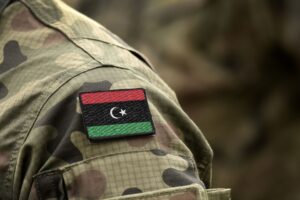
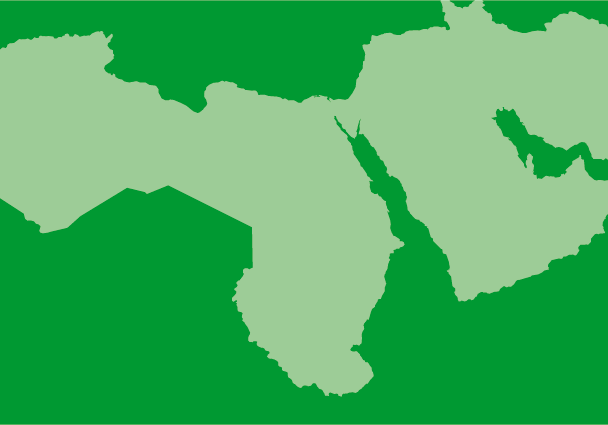
On the occasion of the 16 Days of Activism against Gender-Based Violence, from 25 November to 10 December, the 25th anniversary of the Declaration on Human Rights Defenders on 9 December, and the 75th anniversary of the Universal Declaration of Human Rights, on 10 December, the International Commission of Jurists (ICJ) condemns gender-based violence against women human rights defenders (HRDs) in Libya and calls for an immediate end to such violence. In recent years, the authorities in the West and the East of Libya have consistently attacked prominent women HRDs and let non-State actors threaten, assault and kill them with impunity.
.هذا البيان الصحفي متوفر باللغة العربية أيضاً
The situation of women human rights defenders in Libya
In the years that have followed the 2011 uprising and the ouster of Muammar Gadhafi, women HRDs in Libya have been killed and subjected to enforced disappearances. For example, in June 2014 five armed men killed Salwa Bugaighis, a woman HRD and lawyer advocating for women’s human rights, in her home in Benghazi, eastern Libya. In July 2019, Siham Sergiwa, a woman HRD and member of the House of Representatives (HoR) – the 2014 elected legislative body based in the East of the country – was abducted and there is reasonable grounds to believe that she was subjected to an enforced disappearance by men believed to be affiliated with the Libyan National Army (LNA), a group of militias led by Khalifa Haftar, a top military officer under Gadhafi who was officially appointed Field Marshall of the LNA by the HoR in 2015. Her abduction occurred after she criticized the April 2019 offensive by the LNA on Tripoli and called for a ceasefire. Her fate and whereabouts remain unknown to this day. In November 2020, Hanan Al Barassi, a lawyer, political activist and woman HRD critical of the LNA, was shot dead by a group of armed men in Benghazi’s city centre, in broad daylight. No one has yet been held accountable for these violations or for the killing of other women HRDs, including Fariha El Berkawi and Intissar Al Hasairi, in 2014.
In April 2021, the Committee on the Elimination of All Forms of Discrimination against Women (CEDAW) issued its decision relating to the first communication against Libya under the Optional Protocol to the Convention on the Elimination of All Forms of Discrimination against Women. The case concerned Magdulein Abaida, a woman human rights defender who, in 2012, was abducted three times by members of the Martyrs of 17 February Brigade, a militia affiliated with the Ministry of Interior, beaten, called a “whore” and a “bitch”, and threatened with death. A man identified as a Ministry of Defence official questioned her. After her release, she received death threats online.
The CEDAW found that Libya had breached the Convention on the Elimination of All Forms of Discrimination against Women, finding that the gender-specific abuse inflicted on Magdulein Abaida had occurred with the consent or acquiescence of public officials and, therefore, amounted to torture. In addition, the Committed highlighted that Magdulein Abaida had been abducted during a women’s rights workshop, and that, immediately after being tortured, she had been interrogated about her women’s rights organization, and that the Deputy Interior Minister had criticized her organization’s “chanting for women’s freedom”.
The Committee recommended to the Libyan authorities to carry out a prompt, thorough and independent investigation into Magdulein Abaida’s discrimination, arrest, detention and torture and to provide her with appropriate reparation. It also made the following general recommendations: (1) to “adopt comprehensive anti-discrimination legislation”, (2) to “put in place measures to ensure a safe and favorable environment for women’s human rights defenders”, and (3) to “recognize publicly the specific place and role of women HRDs and their legitimacy in the public debate”. The Libyan authorities have not responded to or implemented CEDAW’s recommendations.
In its June 2022 report, the UN Independent Fact-Finding Mission on Libya (FFM) – which investigated violations and abuses of international human rights law and international humanitarian law since the beginning of 2016 until March 2023 – documented the case of an unnamed woman HRD who was summoned by the eastern Internal Security Agency (ISA) in 2020. The ISA interrogated her about the human rights organization she established, its activities, including on women’s rights, and funding. During her questioning, she was insulted, called “damaged”, beaten, was forced to remove her shirt, burnt with a metal rod and sexually harassed. In 2023, the UN Support Mission in Libya documented further intimidation and assaults against women HRDs.
In the same June 2022 report, the FFM also found that “tactics used to terrify and silence activists” included online threats of sexual violence, in particular against women HRDs. It noted that, in December 2021, Meta, Facebook’s parent company, said it removed pages “purporting to be run by female public figures to make inflammatory statements on their behalf”. The FFM considered that, in the polarized context of Libya, the publication of provocative political statement could “endanger the lives” of the impersonated woman HRDs, as they could become the target of further online and offline violence. In 2021, the NGO Lawyers for Justice in Libya found that online violence against women “is overwhelmingly directed against […] women human rights defenders […] with the aim of silencing their voices and, increasingly, spreading misinformation”.
The failure of the Libyan authorities to effectively investigate crimes of gender-based violence against women HRDs has occurred in a context in which complete impunity for human rights violations and abuses prevails. Such a climate, in turn, has enabled even further violence against women HRDs, and women and girls more generally, forcing them out of public life. According to a study referred to by the UN Special Rapporteur on violence against women and girls, its causes and consequences in her report following her official visit to Libya, 60 per cent of consulted women declared that they had been deterred from participating in the public sphere because of the attacks against women.
Ill-equipped legal framework
As noted by the UN Special Rapporteur on the situation of HRDs in her 2023 report on women HRDs in conflict, post-conflict and crisis-affected settings, to ensure that women HRDs can safely do their work, concrete measures need to be put in place to prevent attacks against them. However, the Libyan legal framework is ill-equipped to address gender-based violence against women and girls. The Benghazi and Tripoli specialized courts – which were established in 2020 to hear criminal cases arising from violence against women and children – have so far only been dealing with civil cases relating to family law, rather than trying crimes of gender-based violence committed against women.
The General National Congress, the first post-revolution legislative body, and its successor, the HoR, discussed in 2013 and 2016-2017 two draft laws on combating violence against women, but they were never adopted into law. In 2020, a committee of experts supported by the western Government of National Unity’s Minister for Women’s Affairs started preparing a third draft. The draft has recently been submitted for consideration to the HoR by 20 members of parliament.
Recommendations
Considering the plight of women HRDs, the ICJ calls on the Libyan authorities to:
- Adopt and implement the draft law on combatting violence against women, and amend the Libyan Penal Code, in accordance with international human rights law and standards with respect to violence against women;
- Protect women HRDs from harassment, intimidation and acts of violence, both online and offline;
- Investigate and prosecute the crimes, including online violence, committed against women and women HRDs, including with respect to the cases of Fariha El Berkawi, Hanan Al Barassi, Intissar Al Hasairi, Salwa Bugaighis and Siham Sergiwa, and hold perpetrators to account;
- Equip the specialized courts on violence against women and children with resources and funding to ensure the fulfillment of their mandate to prosecute criminal offences of gender-based violence committed against women and children;
- Protect and promote the human rights of women and women HRDs, and promote as legitimate and encourage their participation in political and public life, including elections; and
- Publicly condemn any acts of gender-based violence against women HRDs.
Contact
Said Benarbia, Director, ICJ Middle East and North Africa Programme, said.benarbia(a)icj.org
Katherine Iliopoulos, Legal Adviser, ICJ Middle East and North Africa Programme, katherine.iliopoulos@icj.org
Mohamed Hanafy, Legal Researcher, ICJ Middle East and North Africa Programme; mh(a)icj.org
Juliette Rémond Tiedrez, Legal Researcher, ICJ Middle East and North Africa Programme, juliette.remond-tiedrez(a)icj.org
Dec 7, 2023 | Events, News
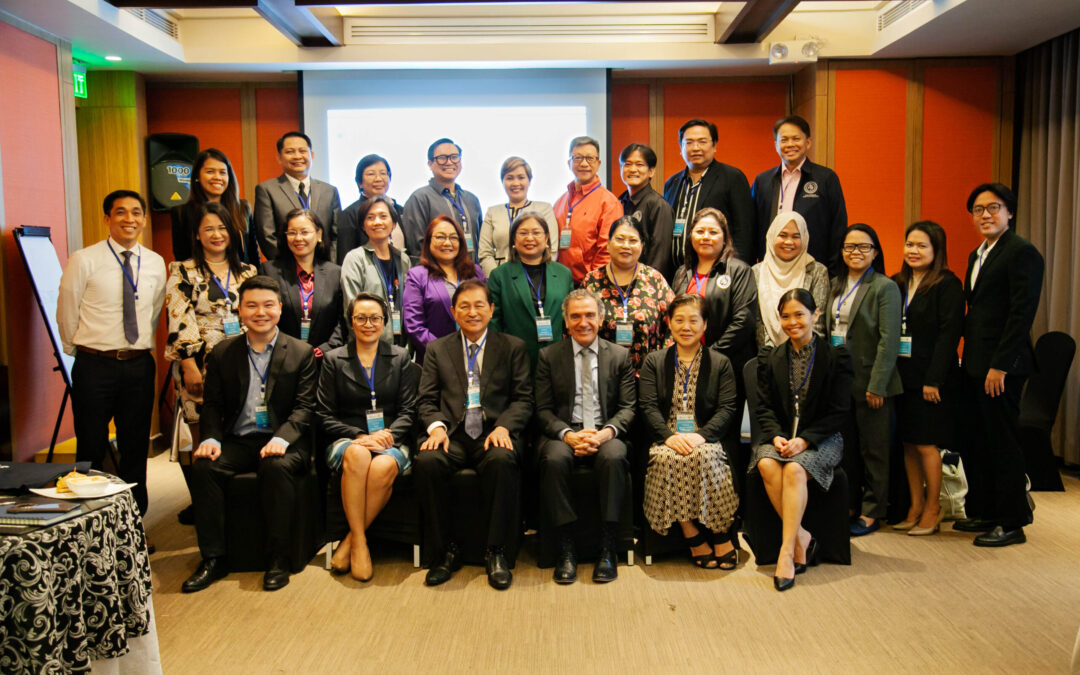
On 5 – 6 December 2023, the International Commission of Jurists (ICJ) co-organized a workshop, with the Department of Justice (DOJ) of the Philippines, on ensuring the protection of human rights in the online sphere under international human rights law.
The workshop was aimed at enhancing the capabilities of public prosecutors to integrate into their work the relevant international human rights law and standards pertaining to human rights in the online space.
“More than forty percent of our time each day is now spent connected to the internet. This has changed our lives. New technologies have also engendered new challenges for the fulfilment of human rights,” stressed Santiago Canton, ICJ Secretary General, during his opening remarks. “International human rights law provides the framework for us to better understand and respond to these new developments.”
Expert international and Filipino participants reaffirmed the pivotal role that public prosecutors play in protecting and promoting human rights in the digital sphere.
“This workshop was scheduled to coincide with the National Human Rights Consciousness Week in the Philippines, and the inauguration of the DOJ’s Human Rights Office, as part of our efforts to integrate human rights-based approaches into our prosecutorial work,” said Prosecutor Hazel C. Decena-Valdez, OIC Senior Deputy State Prosecutor, Department of Justice, noting the particular timeliness of the workshop in her opening remarks.
Participants raised concerns about human rights violations and abuses perpetrated in digital spaces, including the particular risks experienced by individuals from certain groups, such as children and women.
“The risks of violations or abuses of children’s rights in the digital environment include exposure to unlawful or harmful contents, and online bullying, threats, attacks, punishment, censorship and digital surveillance,” highlighted ICJ Commissioner Mikiko Otani, Former Chair of the UN Committee on the Rights of the Child. “The role of prosecutors in securing the rights of the child in digital environments is very important, by holding perpetrators of violations accountable, and protecting child victims from secondary victimization.”
The participants discussed the numerous challenges they face when prosecuting cases impacting human rights in the digital space, and mapped out how to better integrate international human rights law and standards into their investigatory and prosecutorial work in order to ensure access to justice and effective remedies.
Some of these challenges include how to: handle criminal cases based on domestic laws that conflict with international human rights law; ensure that there is accountability for violations and abuses of human rights online; and prevent biases and stereotyping, such as those based on gender, when investigating and prosecuting cases.
“Prosecutors should ensure that they develop protocols to help eradicate structural gender bias, and ensure gender-responsive approaches to their work. This includes preventing revictimization and ensuring confidentiality when handling cases,” underscored Melissa Upreti, ICJ Regional Director for Asia and the Pacific. “Online violence should not be distinguished as a lesser crime, and the human rights implications of online gender-based violence must be fully recognized.”
Contact
Melissa Upreti, ICJ Regional Director, Asia and the Pacific, e: melissa.upreti@icj.org
Daron Tan, ICJ Associate International Legal Adviser, e: daron.tan@icj.org
Caleen Obias, ICJ National Legal Consultant, e: caleen.obias@icj.org
Background
The workshop was attended by 22 public prosecutors from the Department of Justice.
The key thematic issues discussed during the workshop were:
- The right to online freedom of expression and information;
- Domesticating international human rights law;
- Protecting children’s rights online;
- Protecting women’s rights online; and
- Court technologies, access to justice and impacts on the right to a fair trial.
The speakers at the workshop were:
- Santiago Canton, Secretary General, ICJ;
- Prosecutor Hazel C. Decena-Valdez, OIC Senior Deputy State Prosecutor, Department of Justice;
- Justice Adolfo Azcuna, ICJ Commissioner; Justice, Supreme Court (Ret.); Chancellor Emeritus, Philippine Judicial Academy;
- Mikiko Otani, ICJ Commissioner; Member and Former Chair, UN Committee on the Rights of the Child;
- Melissa Upreti, Regional Director for Asia and the Pacific, ICJ; and
- Atty. Oliver Xavier Reyes, Senior Lecturer, University of the Philippines College of Law.

Dec 6, 2023 | Noticias
Perú violó sus obligaciones bajo el derecho internacional al liberar al expresidente Alberto Fujimori, en flagrante desafío a las órdenes emitidas por la Corte Interamericana de Derechos Humanos (Corte IDH), dijo hoy la Comisión Internacional de Juristas (CIJ).
La CIJ ha hecho un llamamiento para que Perú cumpla con sus obligaciones legales y para que los órganos de la Organización de Estados Americanos (OEA) adopten medidas efectivas para garantizar dicho cumplimiento.
La excarcelación anticipada de Fujimori, por supuestos motivos humanitarios, a pesar de no haber reconocido ninguna responsabilidad ni arrepentimiento por las atrocidades por las que fue condenado, es una afrenta a las numerosas víctimas y sus familias que sufrieron graves abusos bajo su gobierno.
Aunque la acción no equivale formalmente a una revocación de la declaración de culpabilidad o a un perdón de los delitos, Perú no siguió procedimientos que tuvieran en cuenta las preocupaciones de las víctimas o que justificaran la necesidad humanitaria de su liberación.
En 2009, Fujimori fue condenado a 25 años de prisión por su participación en la comisión de ejecuciones extrajudiciales, desapariciones forzadas y otros actos que, en su conjunto, constituían crímenes de lesa humanidad. El 6 de diciembre de 2023, fue puesto en libertad por orden del Tribunal Constitucional peruano tras un indulto humanitario emitido el 24 de diciembre de 2017 por el entonces presidente Pedro Pablo Kuczynski Godard.
El Tribunal y el Presidente no tuvieron en cuenta los derechos de las víctimas a la verdad, la justicia y la reparación”, dijo Carolina Villadiego, Líder del equipo de América Latina de la CIJ.
El flagrante desconocimiento por parte del Tribunal Constitucional del requerimiento explícito de la Corte Interamericana de hacer esta evaluación es una afrenta a las víctimas de los crímenes de Fujimori”, agregó Villadiego.
Aunque los derechos humanos de los condenados exigen que las autoridades judiciales tengan en cuenta el impacto de la detención en su salud, cualquier consideración sobre la salud debe estar fundamentada, y las víctimas deben ser escuchadas y sus derechos tenidos en cuenta a la hora de determinar si debe concederse la libertad por motivos humanitarios.
Tras la emisión del indulto en 2017, el 30 de mayo de 2018, la Corte IDH adoptó una resolución solicitando a las autoridades peruanas evaluar la posibilidad de una revisión judicial del indulto humanitario. Según la Corte IDH, dicha evaluación debería tener en cuenta, entre otras consideraciones, el derecho de las víctimas de Fujimori a acceder a la justicia; la proporcionalidad de la pena impuesta y su ejecución; los derechos de Fujimori, en particular su derecho a la vida, a la integridad personal y a la salud.
La Corte Interamericana identificó inconsistencias en la evaluación de la salud de Fujimori, lo que debería haber impulsado a los tribunales nacionales a investigar a fondo las circunstancias que condujeron al indulto y garantizar que se tuvieran en cuenta los derechos de todas las partes implicadas”, afirmó Villadiego. “Los derechos de las víctimas parecen haber sido dejados de lado tanto por el presidente Kuczynski como por el Tribunal Constitucional, dando al traste con años de avances en la lucha contra la impunidad en el país”, añadió Villadiego.
La Corte IDH ejerce supervisión sobre las decisiones relacionadas con el caso Fujimori, casos Barrios Altos y La Cantuta, en las que determinó que Perú había violado sus obligaciones en virtud de la Convención Americana sobre Derechos Humanos (CADH) al no exigir responsabilidades a los autores de graves violaciones de los derechos humanos cometidas en Perú. Las autoridades peruanas están obligadas a cumplir las decisiones de la Corte IDH en este caso, en consonancia con los principios fundamentales del Estado de derecho.
La CIJ resalta de manera inequívoca que las autoridades peruanas deben cumplir con las órdenes de la Corte IDH. El Tribunal Constitucional peruano no está facultado para desconocer la potestad de la Corte IDH de emitir órdenes en el marco de su función jurisdiccional de supervisión de la ejecución de sus decisiones y dejar sin efecto dichas órdenes.
La CIJ pide a las autoridades peruanas que cumplan las órdenes de la Corte IDH y revisen el indulto humanitario ejecutivo de Fujimori. Esto requiere una evaluación actualizada, exhaustiva e imparcial de la salud de Fujimori y la consideración de los derechos de las víctimas de Fujimori.
La CIJ también hace un llamamiento a la comunidad internacional, en particular a los miembros de la OEA, para que exijan a Perú que acate las órdenes de la Corte IDH y cumpla con sus obligaciones internacionales en materia de derechos humanos en relación con las víctimas de graves violaciones de derechos humanos y crímenes de derecho internacional.
Antecedentes
En 2009, la Corte Suprema de Perú condenó a Alberto Fujimori por el asesinato de 25 personas, las lesiones graves a cuatro personas y el secuestro de dos personas y que consideró que dichos crímenes constituían crímenes de lesa humanidad. Como principio general, las normas y estándares internacionales prohíben la concesión de amnistías e indultos a los condenados por violaciones graves de derechos humanos que constituyan crímenes de derecho internacional. El derecho internacional también exige la protección del derecho a la salud de todas las personas, incluidos los presos, lo que, en algunos casos, podría permitir el encarcelamiento institucional.
Las decisiones del Tribunal Constitucional del Perú
El 4 de diciembre de 2023, el Tribunal Constitucional dictó una sentencia en la que ordenaba al Instituto Nacional Penitenciario la inmediata puesta en libertad del expresidente Fujimori, que cumple una condena de 25 años de prisión, la cual concluye en febrero de 2032. El fallo fue la última decisión judicial iniciada por el indulto humanitario, por problemas de salud, otorgado a Fujimori el 24 de diciembre de 2017 por el entonces presidente Pedro Pablo Kuczynski Godard. Previamente, el 17 de marzo de 2022, el Tribunal Constitucional había resuelto que el indulto humanitario a Fujimori debía ejecutarse.
En la sentencia de 2023, el Tribunal también declaró que la Corte IDH no tenía competencia para pronunciarse sobre la no ejecución de una sentencia nacional como parte de la función judicial de la Corte IDH de supervisar la ejecución de sus decisiones. Esta afirmación fue en reacción de la resolución adoptada el 7 de abril de 2022, en la que la Corte IDH había ordenado al Estado peruano no ejecutar la sentencia del Tribunal Constitucional de 2022.
La posición del Tribunal es contraria a las facultades de la Corte IDH establecidas en los artículos 33, 62.1, 62.3 y 65 de la Convención Americana sobre Derechos Humanos (CADH) y en el artículo 69 del Reglamento de la Corte IDH. Además, la posición del Tribunal podría implicar que algunas actuaciones de las autoridades judiciales pueden estar fuera del ámbito del control de convencionalidad, y por lo tanto, fuera de la obligación establecida en la CADH
Las decisiones de la Corte Interamericana de Derechos Humanos
Antes de la sentencia condenatoria de 2009 contra Fujimori, por los mismos hechos, en 2001 y 2006, en los casos de Barrios Altos y La Cantuta, la Corte IDH había determinado que el Estado peruano había incumplido sus obligaciones en virtud de la CADH. La Corte IDH determinó que Perú había violado el derecho a la personalidad jurídica (artículo 3), el derecho a la vida (artículo 4), el derecho a la integridad personal (artículo 5), el derecho a la libertad personal (artículo 7) y el derecho a las garantías judiciales y a la protección judicial (artículos 8 y 25). En ambos casos, entre otras medidas de reparación, la Corte IDH ordenó a Perú que identificara, investigara, procesara y sancionara a los responsables de las violaciones de derechos humanos.
Como parte de la función judicial de supervisar la implementación de sus decisiones, la Corte IDH ha emitido varias resoluciones ordenando medidas para la plena implementación de las órdenes en los casos de Barrios Altos y La Cantuta. Tras la emisión del indulto humanitario en diciembre de 2017, la Corte IDH emitió una resolución el 30 de mayo de 2018 solicitando a las autoridades peruanas evaluar la posibilidad de una revisión judicial del indulto humanitario.
Para la Corte IDH, esta revisión judicial debería considerar: (i) el derecho de las víctimas de Fujimori a acceder a la justicia; (ii) la proporcionalidad de la pena impuesta y de su ejecución; (iii) los derechos de Fujimori, en particular su derecho a la vida, a la integridad personal y a la salud; y (iv) el hecho de que las penas de prisión no pueden convertirse en penas de muerte. Además, la Corte IDH consideró que existían serias dudas sobre si se habían cumplido los requisitos legales establecidos en la legislación peruana para la concesión del indulto humanitario. La CIDH destacó las inconsistencias en la evaluación de la salud de Fujimori y las alegaciones de que el indulto se concedió para dar al entonces presidente Kuczynski los votos en el Congreso para impedir la vacancia presidencial.
Adicionalmente, la Corte IDH también mencionó que, en casos de graves violaciones a los derechos humanos y crímenes de derecho internacional, los indultos por razones de salud, como en el caso Fujimori, es necesario tener en cuenta la salud del condenado, pero también se debe considerar:
(…) que se haya cumplido una parte considerable de la pena privativa de libertad y se haya pagado la reparación civil impuesta en la condena; la conducta del condenado respecto al esclarecimiento de la verdad; el reconocimiento de la gravedad de los delitos perpetrados y su rehabilitación; y los efectos que su liberación anticipada tendría a nivel social y sobre las víctimas y sus familiares”.
La revisión judicial llevada a cabo por el Tribunal Constitucional peruano no tuvo en cuenta ninguno de los requisitos establecidos por la Corte IDH en su resolución de 30 de mayo de 2018. En consecuencia, el 7 de abril de 2022 y el 5 de diciembre de 2023, la Corte IDH ordenó al Estado peruano no implementar la decisión del Tribunal Constitucional en relación con el indulto humanitario a Fujimori. Ello, a fin de garantizar el derecho de acceso a la justicia de las víctimas de los casos Barrios Altos y La Cantuta.
Contactos:
Carolina Villadiego Burbano, Líder del equipo de América Latina de la CIJ, correo electrónico: carolina.villadiego@icj.org
Rocío Quintero Martínez, Asesora Legal de la CIJ para el programa de América Latina, correo electrónico: rocio.quintero@icj.org

Dec 6, 2023 | News
Peru violated its obligations under international law by releasing former President, Alberto Fujimori, in blatant defiance of orders issued by the Inter-American Court on Human Rights (IACtHR) said the International Commission of Jurists (ICJ) today.
The ICJ has called for Peru to abide by its legal obligations and for effective measures by the bodies of the OAS to ensure such compliance.
The early release of Fujimori on purported humanitarian grounds, despite his failure to acknowledge any responsibility or contrition for the atrocities for which he was convicted, is an affront to the many victims and families who suffered severe abuse under his Presidential rule.
Even though the action does not formally amount to a reversal of finding of culpability or a forgiveness of crimes, Peru failed to follow procedures which would take into account the concerns of victims or to substantiate the humanitarian necessity of his release.
In 2009, Fujimori was sentenced to 25 years in prison for his role in the commission of extrajudicial executions, enforced disappearances and other acts, which cumulatively amounted crimes against humanity. On 6 December 2023, he was released by order of the Peruvian Constitutional Tribunal following an executive humanitarian pardon on 24 December 2017 issue by then-president Pedro Pablo Kuczynski Godard.
The Tribunal and President failed to take into account the victims’ rights to truth, justice, and reparations”, said Carolina Villadiego, ICJ Latin America Team Leader.
The Constitutional Tribunal’s flagrant disregard for the Inter-American Court’s explicit requirement to make this assessment is an affront to the victims of Fujimori’s crimes”, added Villadiego.
Although the human rights of convicted persons require judicial authorities to consider the impact of detention on their health, any imperative health considerations must be substantiated, and the victims must be heard, and their rights taken into account when determining whether humanitarian release should be granted.
Following issuance of the executive pardon in 2017, on 30 May 2018, the IACtHR adopted a resolution requesting the Peruvian authorities to evaluate the possibility of a judicial review of the humanitarian pardon. According to the IACtHR, that assessment should have into account, among other considerations, the right of Fujimori’s victims to have access to justice; the proportionality of the sentence imposed and its execution; the rights of Fujimori, in particular his right to life, personal integrity, and health.
The Inter-American Court already identified inconsistencies in Fujimori’s health assessment, which should have prompted domestic courts to fully inquire into the circumstances leading to the pardon and ensure the rights of all parties involved were considered”, affirmed Villadiego. The rights of victims seem to have been sidelined by both President Kuczynski and the Constitutional Tribunal, unravelling years of progress towards combating impunity in the country”, added Villadiego
The IACtHR exercises a supervisory duty over decisions related to Fujimori’s case, Barrios Altos and La Cantuta cases, in which it found Peru had violated is obligations under the American Convention on Human Rights (ACHR) by failing to hold perpetrators of gross human rights violations committed in Peru to account. Peruvian authorities are obligated to comply with the IACtHR’s decisions in this case, consistent with fundamental rule of law principles.
The ICJ underscores unequivocally that the Peruvian authorities must comply with the orders of the IACtHR. The Peruvian Constitutional Tribunal does not have the authority to disregard the IACtHR’s power to issue orders as part of its judicial function of supervising the execution of its decisions and to override those orders.
The ICJ calls on the Peruvian authorities to comply with the orders of the IACtHR and to review Fujimori’s executive humanitarian pardon. This requires an updated, thorough and impartial assessment of Fujimori’s health and consideration of the rights of Fujimori’s victims.
The ICJ also calls upon the international community, in particular members of the Organization of American States, to demand that Peru comply with the orders of the IACtHR and fulfil its international human rights obligations towards victims of serious human rights violations and crimes under international law.
Background
In 2009, the Peruvian Supreme Court convicted Alberto Fujimori for the murder of 25 people, the serious injury of four people and the kidnapping of two people, which it held amounted to crimes against humanity. As a general principle, international law and standards prohibits the issuance of amnesties and pardons for those convicted of gross human rights violations amounting to crimes under international law. International law also requires protection of the right to health of all persons, including prisoners, which in some instances could preclude institutional incarceration.
Peruvian Constitutional Tribunal’s rulings
On 4 December 2023, the Peruvian Constitutional Tribunal handed down a ruling ordering the National Penitentiary Institute to immediately release former President Fujimori, who is serving a 25-year prison sentence that is due to be completed in February 2032. The ruling was the last judicial decision triggered by a humanitarian pardon for health issues granted to Fujimori on 24 December 2017 by then-president Pedro Pablo Kuczynski Godard. Previously, on 17 March 2022, the Constitutional Tribunal had ruled that Fujimori’s humanitarian pardon should be implemented.
In the 2023 ruling, the Tribunal also stated that the IACtHR did not have the competency to rule on the non-enforcement of a national ruling as part of the IACtHR’s judicial function of supervising the execution of its decisions. This pronouncement was in reaction to the action taken on 7 April 2022, in which the IACtHR had ordered the Peruvian State not to implement the 2022 Constitutional Tribunal’s ruling.
The Tribunal’s position is contrary to the IACtHR’s faculties established in Articles 33, 62.1, 62.3 and 65 of the ACHR and Article 69 of the Rules of Procedure of the IACtHR’s. Moreover, the Tribunal’s position might imply that some actions of judicial authorities may be outside the scope of the control of conventionality, and therefore, outside the obligation established under the ACHR.
Inter-American Court of Human rights’ decisions
Before the 2009 conviction sentence against Fujimori, for the same facts, in 2001 and 2006, in the cases of Barrios Altos and La Cantuta, the IACtHR’s had found that the Peruvian state had breached its obligations under the ACHR. The IACtHR determined that Peru had violated the right to juridical personality (Article 3), the right to life (Article 4), the right the right to humane treatment (Article 5), the right to personal liberty (Article 7), and the right to a fair trial and judicial protection (Articles 8 and 25). In both cases, among other reparation measures, the IACtHR ordered Peru to identify, investigate, prosecute, and punish those responsible for human rights violations.
As part of the judicial function of supervising the implementation of its decisions, the IACtHR’s has issued several resolutions ordering measures for the full implementation of the orders in the cases of Barrios Altos and La Cantuta. Following the issuance of the humanitarian pardon in December 2017, the IACtHR’s issued a resolution on 30 May 2018 requesting the Peruvian authorities to evaluate the possibility of a judicial review of the humanitarian pardon.
For the IACtHR, this judicial review would consider: (i) the right of Fujimori’s victims to have access to justice; (ii) the proportionality of the sentence imposed and its execution; (iii) the rights of Fujimori, in particular his right to life, personal integrity and health; and (iv) the fact that prison sentences cannot be converted into death sentences. In addition, the IACtHR considered that there were serious doubts as to whether the legal requirements laid down in Peruvian law for the granting of the humanitarian pardon had been met. The IACtHR highlighted inconsistencies in Fujimori’s health assessment and allegations that the pardon was granted to give then-President Kuczynski the votes in Congress to avoid impeachment.
In addition, the IACtHR also mentioned that in cases of serious human rights violations and crimes under international law, pardons for health reasons, such as in the Fujimori case, it is necessary to take into account the health of the convicted person, but it should also be considered:
(…) [whether] a substantial part of the sentence has been served and the civil compensation imposed in the sentence has been paid; the behaviour of the convicted person with regard to the clarification of the truth; the recognition of the seriousness of the crimes committed and their rehabilitation; and the effects that early release would have on society and on the victims and their families.”
The judicial review carried out by the Peruvian Constitutional Tribunal failed to take into account any of the requirements established by the IACtHR in its resolution of 30 May 2018. As a result, on 7 April 2022 and on 5 December 2023, the IACtHR ordered the Peruvian State not to implement the decision of the Constitutional Tribunal in relation to Fujimori’s humanitarian pardon. This was done in order to guarantee the right to access to justice of the victims of the cases of Barrios Altos and La Cantuta.
Contact:
Carolina Villadiego Burbano, ICJ Latin America Team Leader, email: carolina.villadiego@icj.org
Rocío Quintero Martínez, ICJ Legal Adviser for the Latin America Programme, email: rocio.quintero@icj.org