Dec 20, 2023 | Advocacy, News
Today, the ICJ condemned aspects of the agreement reached by the EU Member States and the European Parliament on the last five instruments from the EU Pact on Migration and Asylum, stressing that it will effectively strip away core human rights and refugee protections for persons from vulnerable populations.
The ICJ calls on the EU and its Member States to adhere strictly to their international legal obligations, particularly under human rights law and refugee law, in implementing any new legislative measures.
The Pact, a major set of legislative proposals on the EU’s migration policy initially proposed by the European Commission in September 2020, aims to update the existing rules of the Common European Asylum System (CEAS), which was renegotiated just a few years prior to this proposal.
« The agreement reached today between the co-legislators, the Council of the EU and the European Parliament sends a worrying signal on the state of EU’s commitment to human rights protection, » said Karolína Babická, Senior Legal Adviser of the ICJ Europe and Central Asia Programme. « Although a final text of the legislative instruments is yet to be seen, the agreement waters down protection and safeguards for the rights of migrants and refugees, that oblige the EU Member States under international law. »
Based on the agreement reached today on the Asylum Procedures Regulation, applicants will not have access to free legal assistance, including in border procedures, as it will only be available for certain persons at the appeals stage, where for many it will be too late. Other points agreed include more fast-track procedures with fewer individual safeguards for the migrants and refugees in question. The Council and the European Parliament also agreed with the proposal of a fiction of “non-entry” to the territory, which is intended have the effect of removing migrants and refugees from the protective of spheres of the state on the grounds that they are not really in the country.
« These are in breach of international human rights standards and rules on jurisdiction and will lead to more administrative detention, which effectively punishes those in most need of protection, » said Babická, « It appears that the instruments are intended to allow for border procedures with nearly no procedural safeguards, resulting in quick deportations. However, even in border zones or transit zones, the State’s human rights law obligations remain fully applicable. »
The asylum border procedure as agreed would apply to asylum seekers who are either “unlikely to be granted asylum”, whose claim is fraudulent or abusive, or who are considered a security risk. This provision undermines the key principle of refugee protection, ensuring an individual assessment of one’s asylum claim. Regardless of the general recognition rate, many individuals are still refugees in need of protection status due to circumstances of their individual case. Equally in assessing whether the application is fraudulent, abusive or potentially a security risk, an individualised assessment must be in place.
Indeed, it is difficult to assess any of the purported criteria without fair hearing based on equal protection and the rule of law.
A further problematic aspect includes the disparate treatment and safeguards for available for children below the age of twelve and those twelve and older. Under the Convention on the Rights of the Child, a child is considered a person under the age of 18 must be afforded the protections due to them. Under these rules, older children would for instance not be exempted from border procedures.
The ICJ has previously warned about harmful provisions in the proposals regarding detention in the Screening and Asylum Procedures Regulation.
The Regulation on Asylum and Migration Management, replacing the current Dublin Regulation, will now exclude the possibility for applicants to be transferred to the Member State where they have a sibling or other family member with a legal residence. This provision seriously worsens the situation of asylum applicants in the EU CEAS so far, in breach of international legal standards, especially the right to family life.
Dec 20, 2023 | Cases, News
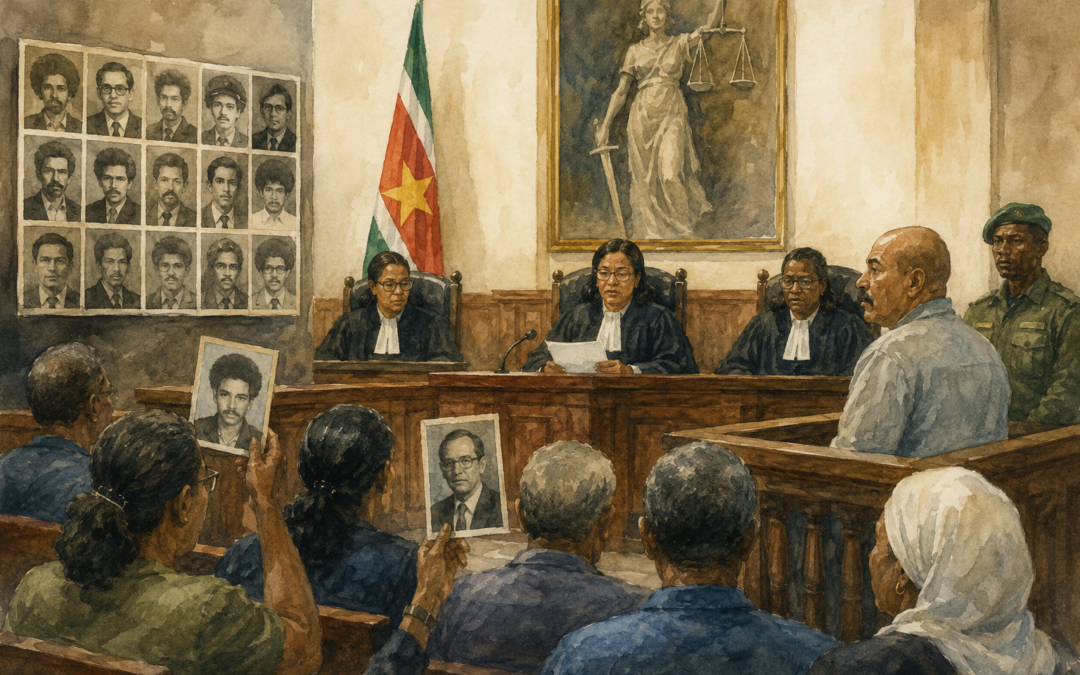
Desi Bouterse sentenced to 20 years in prison
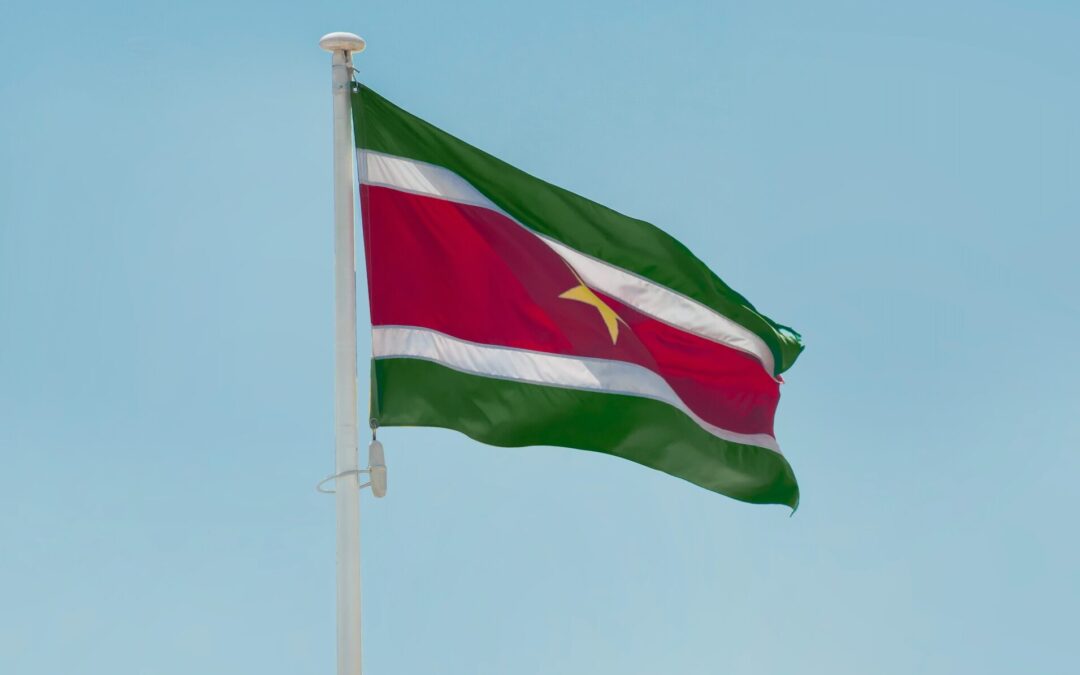
Paramaribo, Suriname; 20 December 2023 – The International Commission of Jurists (ICJ) welcomed the 20 December decision by the Hof van Justitie, the highest court in Suriname, confirming the conviction of former president Desi Bouterse for the 1982 murders of 15 political prisoners.
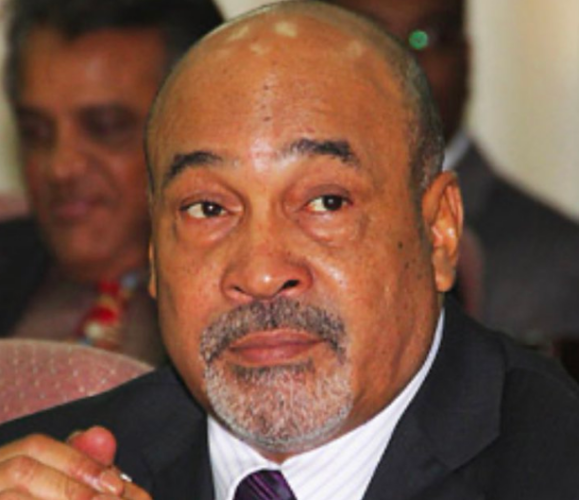
The three-judge chamber also confirmed Bouterse’s sentence of 20 years in prison. It was not immediately clear when Bouterse, who was not in court, would begin serving his term. The court also sentenced his four co-accused to 15 years each.
It took 41 years, but the long arm of the law has finally caught up to Desi Bouterse,” said Reed Brody, an American lawyer who attended the verdict for the ICJ. “Suriname has chosen the rule of law. The judges who rendered today’s decision and those who issued the original conviction while Bouterse was still president should be praised for their fortitude and their independence.”
Bouterse’s lawyer had indicated that in the event of a conviction, he would file a challenge with the Inter-American Commission on Human Rights, though it is not clear on what ground, and such a filing does not stay the operation of the sentence. The only domestic channel available for Bouterse is to seek a pardon from president Chan Santokhi.
The ICJ underscored that extrajudicial executions are crimes under international law, that Heads of State enjoy no special immunity from prosecution for such crimes irrespective of when they were committed, and that pardons may not be applied to shield those responsible from criminal accountability.
Today’s decision is a victory for the families of Bouterse’s victims, who never gave up, and for all those around the world seeking to bring powerful abusers to justice,” said Brody. “It should serve as another reminder that accountability for the most serious crimes has no expiration date.”
Background
On 8 December 1982, 15 leading opponents of Suriname’s then military regime led by Desi Bouterse, who had been taken from their homes and arbitrarily detained the night before, were executed at the military barracks of Fort Zeelandia in the capital Paramaribo, after apparently being subjected to torture. The victims included the country’s chief labor leader, four lawyers, two reporters, a radio commentator, the owner of a news service, an industrialist, a former congressman, and a professor of biophysics.
No investigation of the killings was undertaken, even following the restoration of democracy in 1987. On the eve of the expiration of the 18-year statute of limitations for murder in 2000, the families of the victims obtained a court order mandating an investigation. In November 2007 the Krijgsraad (a military court comprised in the case of Bouterse of civilian judges) was established to hear charges against Bouterse and 24 other suspects. The process was plagued with prolonged suspensions and delays, especially following the election of Bouterse as president of Suriname in July 2010. First, the trial was suspended for four years following an amendment passed by Bouterse’s party to the Amnesty Law of 1989 (now repealed) granting him and the other accused immunity from prosecution. Then Bouterse ordered the attorney general (procureur-generaal) to block resumption of the trial on “national security” grounds, but the courts refused the request. He also sought unsuccessfully to fire the attorney general,an independent judicial officer with lifetime tenure, for failing to stop the prosecution. Finally, on 29 November 2019, while Bouterse was still president, the Krijgsraad sentenced him to 20 years in prison for planning and ordering the “December murders”. Because Bouterse chose not to be present at that trial, he was able to obtain a review of the conviction. On 30 August 2021, the Krijgsraad affirmed the conviction. Eyewitness and video evidence adduced at the trials placed Bouterse at Fort Zeelandia where he personally confronted victims before they were shot.
Bouterse, who lost power in 2020, appealed to the Hof van Justitie.
The ICJ has been monitoring the Bouterse trial since 2012. Details of some earlier ICJ’s missions reports and statements can be found here.
Contact:
In Paramaribo, Reed Brody (English, Spanish, French, Portuguese): +1-917-388-6745 or reedbrody@gmail.com. Twitter: @reedbrody
Watch his post-verdict interview with ITV here: https://www.youtube.com/watch?v=1A3DBVVsAmY&t=132s
Dec 18, 2023 | Attacks on Justice, Publications
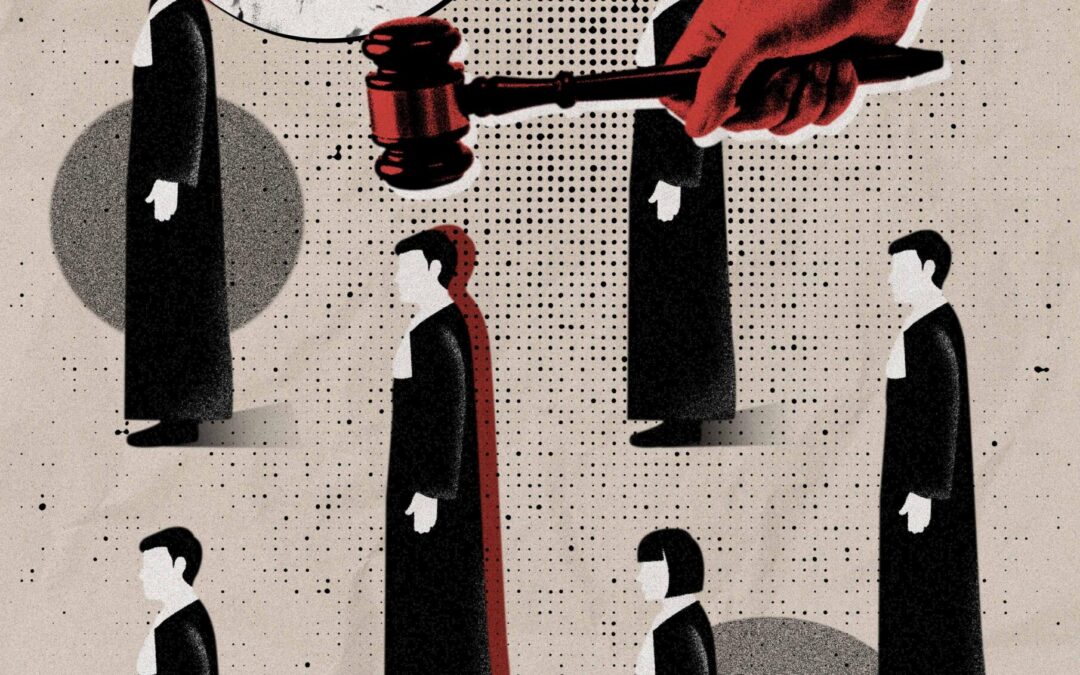
In a briefing paper published today, the ICJ called on the Tunisian authorities to immediately end their attacks on independent judges and prosecutors, drop any criminal charges against them, and reinstate all those arbitrarily dismissed.
التقرير بالغة العربية
On 1 June 2022, President Kais Saied granted himself, via decree, absolute power to fire judges and prosecutors summarily, and [on the same day] promptly dismissed 57 of them. The President had earlier pledged to “cleanse” the judiciary on spurious accusations of widespread political bias and corruption.
The ICJ analysis of the cases of 18 dismissed judges and prosecutors, as well of another judge subjected to disciplinary and criminal proceedings, establishes a pattern of arbitrary disciplinary and criminal processes effectively aimed at purging the judiciary of those who asserted their independence and challenged the dismantling of the institutional independence of the judiciary.
“The ongoing arbitrary criminal prosecutions against independent judges and prosecutors for the legitimate exercise of their professional functions or of their right to freedom of expression is an affront to the rule of law and judicial independence in Tunisia,” said Said Benarbia, ICJ MENA director. “The authorities must immediately end such prosecutions and reinstate all judges and prosecutors who have been dismissed without legitimate grounds or due process”
In the aftermath of his speech on 25 July 2021 announcing exceptional measures, the President promised to “cleanse” and “purify” the judiciary, which he accused of complicity with political parties in power before July 2021, as well as of inefficiency, corruption and political bias. He also targeted the High Judicial Council and its members, limiting certain of their financial benefits. Since then, the President has followed up on his rhetoric with successive decisions and measures aimed directly at dismantling the judiciary’s institutional independence.
The ICJ’s analysis examines the process of arbitrarily dismissing and prosecuting judges and prosecutors in Tunisia since the adoption of these measures in light of the country’s obligations under international human rights law.
The ICJ’s analysis is primarily based on: (i) a review of 20 criminal cases opened by the authorities against 18 dismissed magistrates and of the case of Anas Hmedi, the President of the Association of Tunisian Magistrates (AMT), which is directly linked to his support of the dismissed judges and proseuctors; (ii) 15 interviews with judges, prosecutors and their lawyers; (iii) an analysis of the First President of the Administrative Court’s decisions to suspend the dismissal of 49 magistrates and to dismiss the request for suspension of seven others; and (iv) an analysis of decisions and reports by the General Inspection Service, the High Judicial Council and the Temporary High Judicial Council.
The ICJ considers that the conduct of the dismissed judges and prosecutors, on the basis of which they have apparently been subject to criminal proceedings, did not amount to recognizably criminal offences under general principles of criminal law and international human rights law and standards.
On the contrary, the ICJ’s analysis of these cases establishes that these judges and prosecutors were arbitrarily dismissed and then subject to criminal proceedings in relation to serious offences solely for three types of conduct, none of which is a legitimate basis for criminal prosecution:
- for the exercise of their prosecutorial and judicial functions in compliance with the law and ethical standards, and
- for the exercise of human rights protected by international human rights law, including the rights to freedom of expression and freedom of association
- for private conduct, unrelated to their performance of their duties, which, in any event, was not criminal in nature.
Contact
Said Benarbia, Director, ICJ Middle East and North Africa Programme, t: +41-22-979-3800; e: said.benarbia(a)icj.org
Download:
Download ICJ briefing on Attacks on Judges and Prosecutors in Tunisia in English: Here
Download ICJ briefing on Attacks on Judges and Prosecutors in Tunisia in Arabic: Here
Dec 17, 2023 | Cases, News
ICJ will monitor Desi Bouterse appeal
Paramaribo, Suriname; 17 December 2023 – On 20 December 2023, the Hof van Justitie, the highest court in Suriname, is expected to issue its final decision in the appeal by former president Desi Bouterse against his conviction for the 1982 murders of 15 political prisoners.
The International Commission of Jurists, which has monitored the trial since 2012, will be present in court in Paramaribo.
“This is the most important criminal trial in Suriname’s history,” said Reed Brody who will attend the verdict for the ICJ. “That a final decision will be delivered, after so many delays and detours, is a tribute to the courage and independence of Surinamese judges, the perseverance of the victims’ families and the resilience of the rule of law.”
Background
On 8 December 1982, 15 opponents of Suriname’s then military regime led by Desi Bouterse, including lawyers, union leaders and journalists, who had been arbitrarily detained the day before, were executed at the military barracks of Fort Zeelandia, Paramaribo, Suriname, after apparently being subjected to torture. Following a complaint by the families of the victims in 2000, in November 2007 the Krijgsraad (a military court comprised in the case of Bouterse of civilian judges) was established to hear charges against Bouterse and 24 other suspects. The process was plagued with serious suspensions and delays, especially following the election of Bouterse as president of Suriname in July 2010 and an amendment of the Amnesty Law of 1989 (now repealed) granting him and the other accused immunity from prosecution. On 29 November 2019, following a decade-long court martial, the Krijgsraad sentenced Bouterse- while he was still president – to 20 years in prison for planning and ordering the “December murders”. On 30 August 2021, the Krijgsraad affirmed the conviction and Bouterse- who lost power in 2020 – appealed. A final decision of the Hof van Justitie is due on 20 December in the cases of Bouterse and four others who have appealed their convictions.
ICJ Monitors
The ICJ trial monitors have been: from 2012 until 2020 – Jeff Handmaker, a former UK barrister and associate professor at Erasmus University in The Netherlands and the University of the Witwatersrand in South Africa; from 2020 – Godfrey Smith SC, former Attorney General of Belize, former acting Justice of Appeal of the Eastern Caribbean Supreme Court; and from 2023 – ICJ Commission member and veteran war crimes prosecutor Reed Brody who has participated in cases involving Augusto Pinochet, Hissène Habré and Jean-Claude Duvalier among others.
Reed Brody will be present in court on 20 December.
Details of some earlier ICJ’s missions reports and statements can be found here.
Contact:
In Paramaribo, Reed Brody (English, Spanish, French, Portuguese): +1-917-388-6745 or reedbrody@gmail.com. Twitter: @reedbrody
Dec 15, 2023 | Advocacy, News
On the 11-year anniversary of the enforced disappearance of Lao civil society leader Sombath Somphone, we, the undersigned civil society organizations and individuals, strongly condemn the Lao government’s continued failure to provide necessary information as to his fate and whereabouts and reiterate our calls to the authorities to deliver truth, justice and reparations to his family.
International concerns over Sombath’s case, expressed by international civil society, United Nations (UN) human rights experts, and UN member states on last year’s anniversary of Sombath’s enforced disappearance, have been ignored by the Lao government.
On 25 September 2023, in a submission to the UN Human Rights Committee as part of its follow-up review of Laos under the International Covenant on Civil and Political Rights, the Lao government repeated previous misleading statements and miserably failed to provide any additional information on the steps it said it had taken to find Sombath. The government claimed it “never stopped trying to find the truth” about Sombath’s fate “in order to bring the offender(s) to justice.” In reality, the Lao authorities have continued to disregard Sombath’s wife, Shui Meng Ng, and have not provided her with any updates on her husband’s case since 2017. The government then made the extraordinary assertion that its Task Force’s investigation had been “carried out on the basis of transparency, impartiality and accountability, including the use of modern investigative techniques consistent with international standards by the capable inquiry officials.” It concluded that the case of Sombath needed “more time for investigation” and added that the Task Force was “still active in the investigation” and had “not yet closed the case.”
These government statements are unequivocally false in suggesting any degree of transparency. Existing evidence is clear that the Lao government has been engaged in a continuous cover-up of the facts of Sombath’s case since he was forcibly disappeared in 2012, including providing misleading information about its actions to his family, the Lao public, and the international community, as stated above.
We deplore the unmistakable pattern of inaction, negligence, and obfuscation that various Lao authorities have repeatedly engaged in for more than a decade and we continue to resolutely stand in solidarity with Sombath’s family and all other victims of enforced disappearances in Laos.
We reiterate our calls on the Lao authorities to take real and effective measures to establish the fate or whereabouts of Sombath and all other victims of enforced disappearances in the country, identify the perpetrators of such serious crimes, and provide victims with an effective remedy and full reparations. We also urge the government to immediately ratify without reservations the International Convention for the Protection of all Persons from Enforced Disappearance, which it signed in 2008, and to fully implement it into national law, policies, and practices.
As upcoming chair for the Association of Southeast Asian Nations (ASEAN), Laos will be placed in a strategic position to lead the regional efforts to strengthen, promote, and protect human rights. However, its continued failure to act on Sombath’s enforced disappearance sends a message of inadequacy to head the regional bloc and to fulfill ASEAN’s purpose under Article 1(7) of the ASEAN Charter, which is to strengthen democracy, enhance good governance, and the rule of law and to promote and protect human rights and fundamental freedoms.
We will continue to seek justice and accountability for Sombath. Until the truth is found and justice is delivered to his family, we will not stop demanding answers from the Lao government to the same question we have been asking for the past 11 years: “Where is Sombath?”
Background
Sombath Somphone, a pioneer in community-based development and youth empowerment, was last seen at a police checkpoint on a busy street of Vientiane on the evening of 15 December 2012. Footage from a traffic CCTV camera showed that police stopped Sombath’s vehicle at the checkpoint and that, within minutes, unknown individuals forced him into another vehicle and drove him away in the presence of police officers. CCTV footage also showed an unknown individual arriving and driving Sombath’s vehicle away from the city center. In December 2015, Sombath’s family obtained new CCTV footage from the same area and made it public. The video shows Sombath’s car being driven back towards the city by an unknown individual.
For further information, please visit: https://www.sombath.org/en/
List of Signatories
Organizations:
- Alternative ASEAN Network on Burma (ALTSEAN-Burma)
- Amnesty International
- Armanshahr Foundation | OPEN ASIA
- ARTICLE 19
- Asia Democracy Network (ADN)
- Asia Europe People’s Forum
- Asian Cultural Forum on Development (ACFOD)
- Asian Forum for Human Rights and Development (FORUM-ASIA)
- AWAM Pakistan
- Banglar Manabadhikar Suraksha Mancha (MASUM)
- Boat People SOS
- Cambodian Human Rights and Development Association (ADHOC)
- Cambodian League for the Promotion and Defense of Human Rights (LICADHO)
- Campaign Committee for Human Rights (CCHR)
- Campaign for Popular Democracy (CPD)
- Center for Prisoners’ Rights (CPR)
- Centre for Civil and Political Rights
- CIVICUS: World Alliance for Citizen Participation
- Commission for the Disappeared and Victims of Violence (KontraS)
- Committee of the Relatives of the May 1992 Heroes
- Community Resource Centre (CRC)
- Cross Cultural Foundation (CrCF)
- Dignity-Kadyr-kassiyet
- FIDH – International Federation for Human Rights
- Focus on the Global South
- Fortify Rights
- Fresh Eyes
- Front Line Defenders
- Hawai’i Institute for Human Rights
- Human Rights Alert
- Human Rights and Development Foundation (HRDF)
- Human Rights Commission of Pakistan (HRCP)
- Human Rights in China
- Human Rights Lawyers Association (HRLA)
- Human Rights Watch
- Indonesia Legal Aid Foundation (YLBHI)
- INFORM Human Rights Documentation Centre Sri Lanka
- Informal Sector Service Center (INSEC)
- International Campaign for Tibet (ICT)
- International Coalition Against Enforced Disappearances (ICAED)
- International Commission of Jurists (ICJ)
- International Rivers
- Internet Law Reform Dialogue (iLaw)
- Judicial System Monitoring Program (JSMP)
- Karapatan Alliance Philippines
- Kazakhstan International Bureau for Human Rights and Rule of Law (KIBHR)
- Korean House for International Solidarity (KHIS)
- Lao Movement for Human Rights
- Law and Society Trust Sri Lanka
- League for the Defence of Human Rights in Iran (LDDHI)
- Madaripur Legal Aid Association (MLAA)
- Malaysians Against Death Penalty and Torture (MADPET)
- Maldivian Democracy Network
- Manushya Foundation
- MARUAH
- National Commission for Justice and Peace (NCJP)
- Odhikar
- Pakistan Kissan Rabita Committee
- People’s Solidarity for Participatory Democracy (PSPD)
- People’s Watch
- Perhimpunan Bantuan Hukum Indonesia (PBHI)
- Philippine Alliance of Human Rights Advocates (PAHRA)
- Progressive Voice
- Pusat Komas
- Refugee and Migratory Movements Research Unit (RRMRU)
- Solidarity for People’s Education and Lifelong Learning (SPELL)
- Stiftung Asienhaus
- Suara Rakyat Malaysia (SUARAM)
- Task Force Detainees of the Philippines (TFDP)
- Thai Lawyers for Human Rights (TLHR)
- Think Centre
- Transnational Institute
- Vietnam Committee on Human Rights (VCHR)
- WOREC Nepal
- World Organisation Against Torture (OMCT)
Individuals:
- Anne-Sophie Gindroz
- David JH Blake
- Nico Bakker
- Randall Arnst
- Shui Meng and Sombath’s family, Vientiane