Jul 19, 2011 | News
 The ICJ today expressed its concern at the move by the Italian Government to extend the maximum length of administrative detention for undocumented migrants to up to 18 months.
The measure is contained in certain provisions of the draft legislation ratifying Law Decree no. 89 of 2011, approved on 14 July by the House of Representatives and now under consideration by the Senate, which aims at implementing EU Directive 2008/115/EC (“the Return Directive”).
Italy-migrant rights-press release-2011-eng (full text in English, PDF)
Italy-migrant rights-press release-2011-ita (full text in Italian, PDF)
Sep 18, 2009 | Advocacy, Analysis briefs
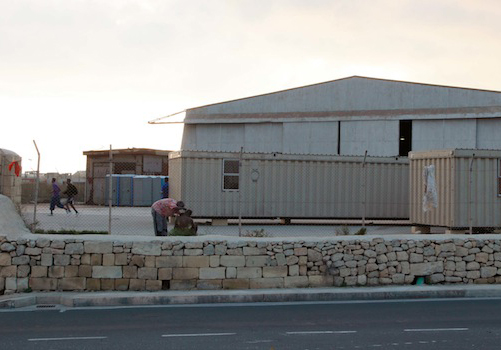
The ICJ wants that alternative to detention become the cornerstone of every migration policy.
In a statement at the UN Human Rights Council Panel on Human Rights of Migrants in detention centres, the ICJ drew attention to the fact that States increasingly treat migrants, refugees and asylum seekers, as a potential threat to state security, and automatically subject them to measures such as administrative detention.

Jul 2, 2007 | News
The Eminent Jurists Panel on Terrorism, Counter-terrorism and Human Rights, an independent group of experts appointed by the ICJ in October 2005, is in Brussels this week.

Jun 8, 2007 | News
The ICJ today called for criminal and other investigations in Poland and Romania, following a report which confirms that the highest authorities of both countries authorised CIA secret detentions on their territories.

Feb 16, 2007 | Advocacy, Non-legal submissions
 The ICJ sets out its views on the human rights compatibility of offences of incitement to acts of terrorism, and on the appropriate limits of such offences in European Union law and in the national laws of European states.
In its Response to the European Commission Consultation on Inciting, Aiding or Abetting Terrorist Offences, submitted on 15 February 2007, the ICJ concludes that incitement to acts of terrorism should be a criminal offence only where there is a subjective intention to incite acts of terrorism, and where the speech concerned causes the commission of an act of terrorism or an imminent risk of such an act. There is a risk that broadly-worded offences of apologie, encouragement, justification or glorification of terrorism will lead to violations of the right to freedom of expression and of the principle of legality, and will have a chilling effect in inhibiting constructive debate, in particular in minority communities. The full submission is attached below.
Europe-EC Consultation Terrorist Offences-non-judicial-submission-2007 (full text, PDF)