Oct 13, 2020 | Advocacy, News, Non-legal submissions
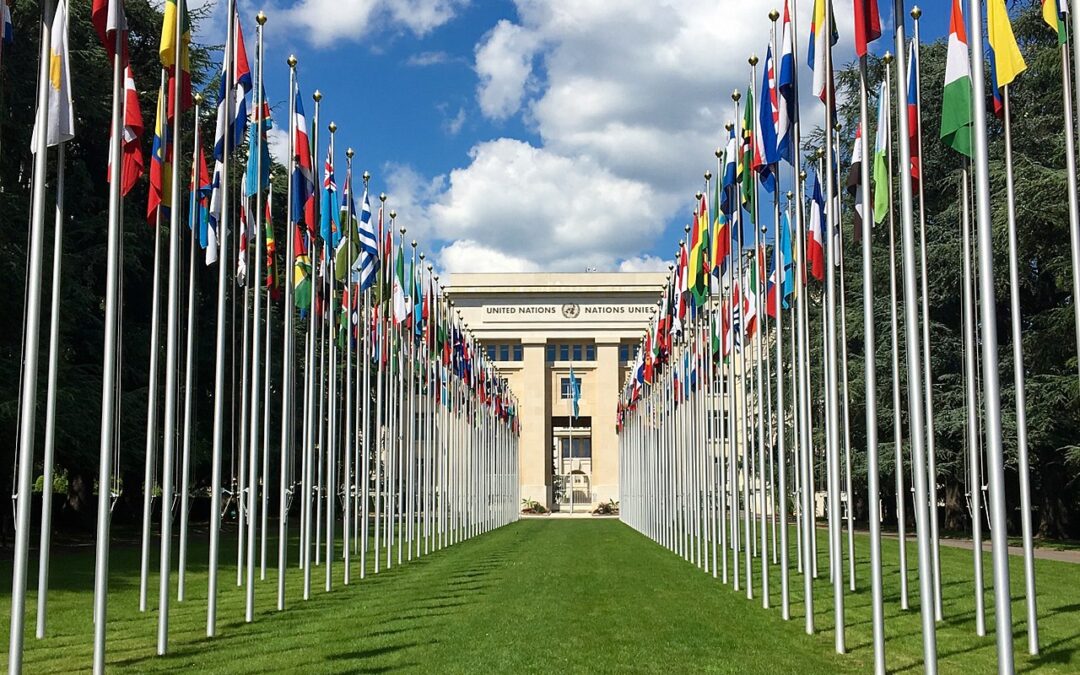
On 12 October 2020, the ICJ made a submission to the Human Rights Council’s Working Group on the Universal Periodic Review in advance of the Human Rights Council’s review of Singapore in May 2021.
In its submission, the ICJ expressed concern about the following issues:
(i) Freedom of expression online;
(ii) The death penalty;
(iii) Corporal punishment; and
(iv) International human rights instruments.
The ICJ further called upon the Human Rights Council and the Working Group on the Universal Periodic Review to recommend that Singapore ensure, in law and in practice, the right to freedom of expression online, the right to life and the absolute prohibition against cruel, inhuman or degrading treatment or punishment; and become a party to core international human rights instruments, including the International Covenant on Economic, Social and Cultural Rights, the International Covenant on Civil and Political Rights, the Convention Against Torture and Other Cruel, Inhuman or Degrading Treatment or Punishment, the International Convention on the Protection of the Rights of All Migrant Workers and Members of Their Families and the International Convention for the Protection of All Persons from Enforced Disappearance, as well as the existing Optional Protocols to some of these treaties.
The submission is available in PDF here.
Oct 12, 2020 | Incidencia
En marzo de 2020, la CIJ junto con un grupo de organizaciones de la sociedad civil y varias personas defensoras de derechos humanos de América Latina, iniciaron un proceso de seguimiento al funcionamiento de los sistemas de justicia durante la pandemia en la región.
En el marco de esta iniciativa se analizaron las medidas adoptadas por los sistemas judiciales para continuar la prestación del servicio de justicia y proteger los derechos a la salud y a la vida de las personas que intervienen en los procesos judiciales, así como los impactos que dichas medidas tuvieron en el acceso a la justicia y en la independencia judicial.
Así, entre abril y julio de 2020 se organizaron 11 webinars de alcance regional para analizar los desafíos enfrentados en materia de justicia virtual y de litigio estratégico, así como, respecto de la protección de los derechos de las personas migrantes, de las mujeres en prisión y de la búsqueda de las personas dadas por desaparecidas, entre otras cuestiones.
Igualmente, en mayo de 2020 se presentó una comunicación y un informe ante la Comisión Interamericana de Derechos Humanos (CIDH), con el propósito de analizar las medidas adoptadas por los órganos del sistema de justicia, y presentar las principales preocupaciones en torno al acceso a la justicia, al respeto al debido proceso y a la protección de la independencia judicial durante la pandemia. Adicionalmente, se realizó una infografía que resumía las medidas adoptadas y las preocupaciones comunes.
Las organizaciones que participaron en estas actividades fueron además de la CIJ, la Fundación para el Debido Proceso Legal (DPLF), la Asociación Civil por la Igualdad y la Justicia (Argentina), la Fundación Construir (Bolivia), la Fundación Tribuna Constitucional (Bolivia), el Observatorio de Derechos y Justicia (Ecuador), la Fundación Salvadoreña para el Desarrollo Económico y Social (El Salvador), la Fundación para la Justicia y el Estado Democrático del Derecho (México) y el Instituto de Defensa Legal (Perú).
Posteriormente, dichas organizaciones solicitaron una audiencia pública ante la CIDH, con el objetivo de aportar información actualizada acerca de los desafíos y obstáculos para el funcionamiento de los sistemas de justicia y la reactivación de sus servicios. A esta petición se sumó la Asociación Nacional de Magistradas y Magistrados del Poder Judicial de Chile.
La audiencia pública se llevó a cabo de manera virtual el 09 de octubre de 2020 en el marco del 177 Período de Sesiones de la CIDH. En esta, se presentaron los obstáculos comunes identificados a partir de la experiencia de 9 países de la región (Argentina, Bolivia, Colombia, Chile, Ecuador, El Salvador, Guatemala, México y Perú), y se resaltó la obligación internacional de los Estados de reorganizar su institucionalidad y de remover de manera activa, los obstáculos de cualquier naturaleza que impidan o dificulten el acceso a la justicia, especialmente de aquellas personas y grupos en situación de vulnerabilidad.
El informe presentado en la audiencia pública puede ser consultado aquí: Colombia-Informe de audiencia CIDH-Advocacy-2020-SPA
Contacto
Carolina Villadiego Burbano, Asesora Legal para América Latina de la CIJ: carolina.villadiego@icj.org
Oct 5, 2020 | Advocacy, Non-legal submissions
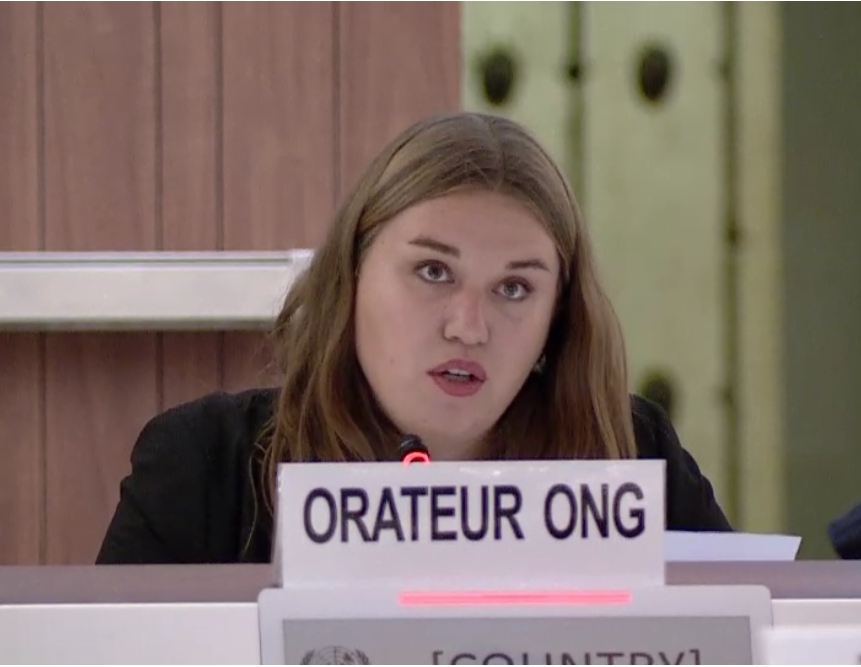
The ICJ today highlighted the need for accountability for crimes under international law in Libya, and concerns for the independence of lawyers in Ukraine, at the UN Human Rights Council in Geneva.
The oral statement, delivered in the general debate on technical cooperation and capacity building, read as follows:
“Madame President,
The International Commission of Jurists (ICJ) welcomes the oral updates on Ukraine and Libya.
Technical assistance and capacity building objectives in Libya can only be achieved if the protection of human rights, entrenchment of the rule of law and pursuit of accountability are prioritized.
States should support the Fact-Finding Mission by extending its reporting mandate, increasing contributions to the UN budget necessary to establish the Mission’s secretariat, and fully cooperating with it.
States should also support the Berlin Process working groups, ensuring that the political and accountability pillars work in unison and making meaningful commitments to implement their recommendations.
Across all of Ukraine, lawyers continue to be associated with their clients and may face consequences for representing them by private individuals and also through abuse of legal proceedings. High-profile cases bear risks for independent lawyers who choose to diligently represent their clients.
The decline in security of lawyers in and outside of courts, and the problem of threats, harassment, and attacks against lawyers, should be addressed as a matter of priority, including through technical cooperation. Measures should be taken to build the capacity of law enforcement agencies and court security personnel to ensure that lawyers and others involved in court proceedings can work in an atmosphere free from intimidation, harassment, and improper interference.
Thank you.”
Oct 5, 2020 | Advocacy, Non-legal submissions
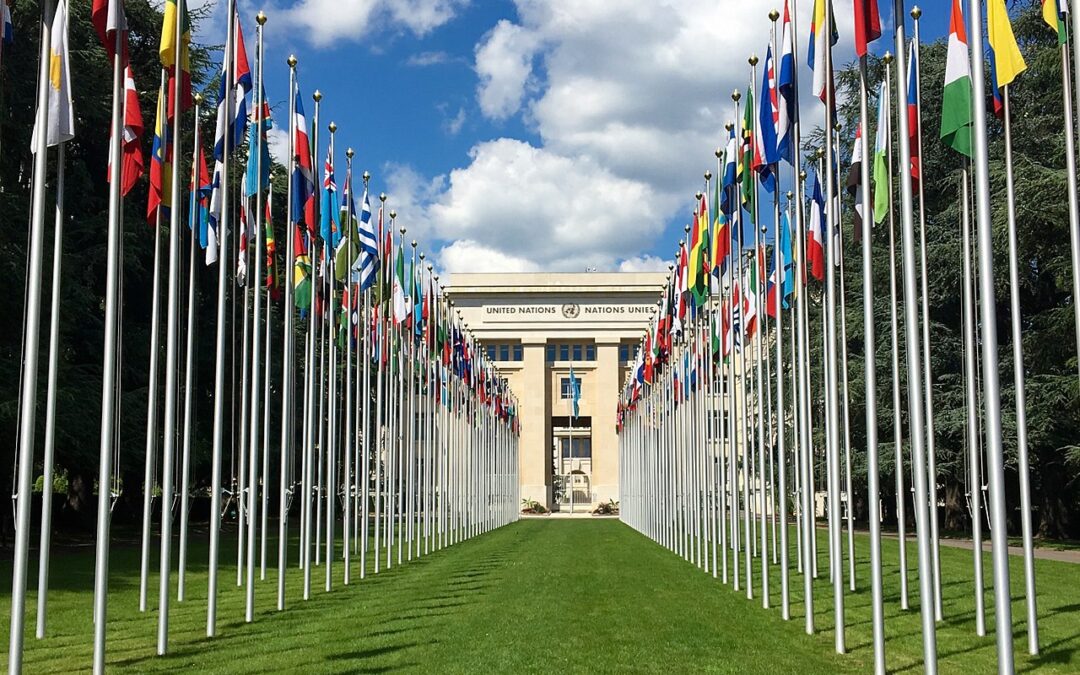
The ICJ today joined other NGOs in expressing concern that the Human Rights Council is poised to fail to adequately respond to the human rights crisis in the Philippines, and urging stronger action.
The statement, which was delivered by the World Organization against Torture (OMCT) on behalf of the group of NGOs in a general debate on item 10, read as follows:
“On behalf of 15 organisations, including colleagues in the Philippines, we are deeply disappointed that the draft Item 10 resolution on the Philippines fails to reflect the gravity of the situation, including as documented in the OHCHR report.
Colleagues from the Philippines have tirelessly advocated for an international investigation, at great personal risk. The thousands of victims of killings and other violations and their families continue to be deprived of justice.
This is a collective failure by the States at this Council. We are shocked by the lack of support for a more robust response.
We acknowledge the rationale presented for constructive engagement with the Government of the Philippines. However, an approach based purely on technical cooperation and capacity-building has no realistic prospect of meaningful impact with a government that denies the true scale and severity of the human rights violations, has publicly endorsed the policy of killings, avoids independent investigations, and continues to crack down on civil society.
Despite the shortcomings of the resolution, it at least keeps the situation on the agenda for the next two years and allows for robust reporting by the OHCHR on the situation – including the implementation, or lack thereof, of OHCHR report recommendations. The Council must follow developments closely and be ready to launch an independent investigation if the killings and the crackdown on civil society do not immediately end and prosecution of perpetrators is not pursued.
I thank you.”
- Alyansa Tigil Mina (ATM)
- Amnesty International
- Asian Forum for Human Rights and Development (FORUM-ASIA)
- CIVICUS
- Ecumenical Voice for Human Rights and Peace in the Philippines (EcuVoice)
- Franciscans International
- Harm Reduction International
- Human Rights Watch
- iDefend
- International Commission of Jurists (ICJ)
- International Federation for Human Rights (FIDH)
- International Service for Human Rights (ISHR)
- KARAPATAN
- Philippine Alliance of Human Rights Advocate (PAHRA)
- World Organisation Against Torture (OMCT)
Sep 29, 2020 | Advocacy, News
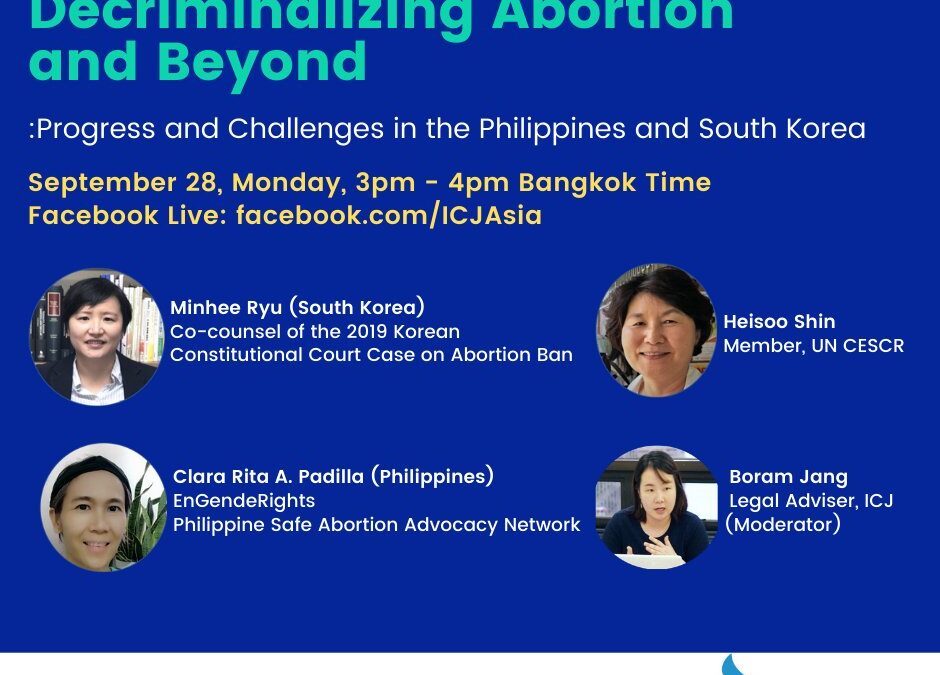
On the International Safe Abortion Day, the ICJ held a webinar on the decriminalization of abortion in the Philippines and the Republic of Korea.
The webinar focused on the legal provisions criminalizing abortion and on women human rights defenders’ struggle to decriminalize abortion in the Philippines and in the Republic of Korea. In addition, the participants highlighted States’ legal obligation to guarantee access to legal, safe and affordable abortion and post abortion care for all persons under international human rights law and standards.
Ms. Clara Rita A. Padilla from the Philippines’ Safe Abortion Advocacy Network; Ms. Minhee Ryu, Co-counsel in the 2019 Korean Constitutional Court case on the country’s criminal ban on abortion; and Dr. Heisoo Shin, member of the UN Committee on Economic, Social and Cultural Rights (CESCR) participated as speakers.
“The law imposing penalties on women who have an abortion and those assisting them only endangered the lives of women forced to seek unsafe abortion,” said Ms. Padilla. “Today, the Philippine Safe Abortion Advocacy Network introduced a draft bill, An Act Decriminalizing Induced Abortion to Save the Lives of Women, Girls, and Persons of Diverse Gender Identities, and we will continue advocating the repeal of the current discriminatory law against women and eliminate harmful stigma against women due to the restrictive abortion law and imposition of judgmental religious beliefs.”
Ms. Minhee Ryu talked about the women human rights defender’s movement in the Republic of Korea, including the work of the Joint Action for Reproductive Justice. She also highlighted the legal strategy to draw the Constitutional Court’s attention to the experience of girls, migrant women and women with disabilities in the context of the case that resulted in the Court holding that the criminalization of abortion was unconstitutional in April 2019.
“It is the core obligations of States to ensure the repeal of laws, policies and practices that criminalize, obstruct or undermine access by individuals or a particular group to sexual and reproductive health facilities and services,” said Dr. Heisoo Shin. “Denial of abortion often leads to maternal mortality and morbidity, which, in turn, constitute violations of the rights to life, dignity, autonomy, security, equality and non-discrimination, equality before the law and equal protection of the law without discrimination, privacy, physical and mental health, and the right to freedom from ill-treatment.”
The participants agreed that international human rights law and standards, such as the Human Rights Committee’s General Comment 36 on the right to life, and the CESCR’s General Comment 22 on the right to sexual and reproductive health, are instrumental in worldwide efforts to ensure access to legal, safe and affordable abortion and in advocating for its complete decriminalization.
Contact
Boram Jang, International Legal Adviser, e: boram.jang(a)icj.org