Dec 5, 2019 | Advocacy, Analysis briefs
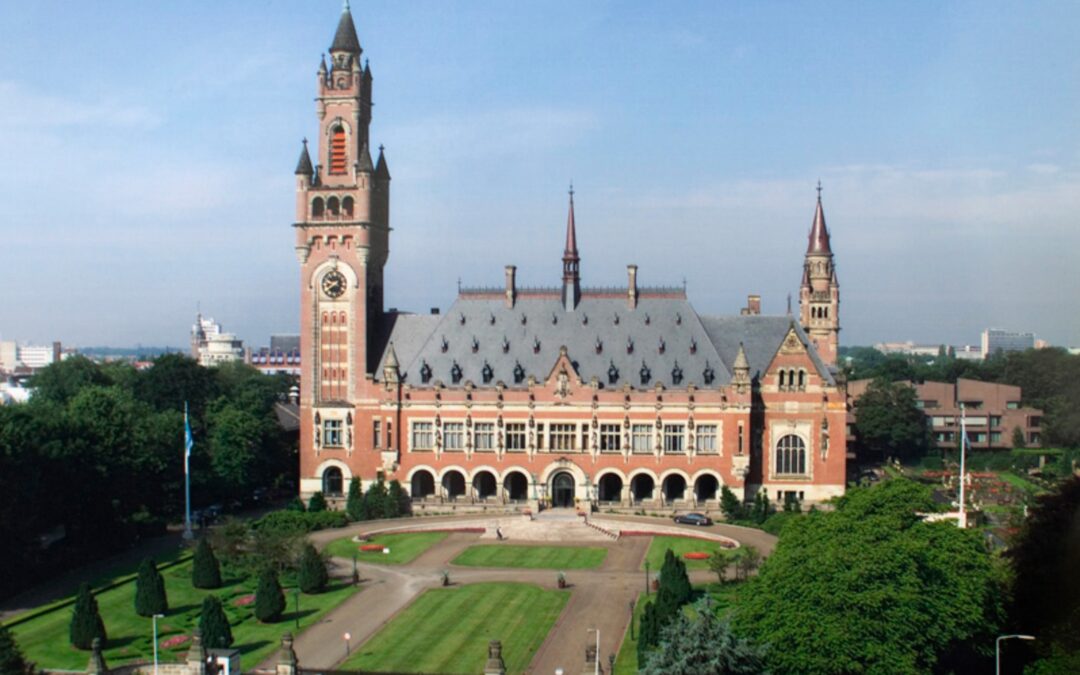
Today, the International Commission of Jurists published a legal briefing on the hearing on provisional measures to be held at the International Court of Justice between 10-12 December 2019 in the case of The Gambia v Myanmar.
Questions answered include:
- What allegations does The Gambia make against Myanmar?
- What provisional measures has The Gambia requested?
- What are provisional measures?
- What is the process for requesting provisional measures?
- What factors are taken into account on a request for provisional measures?
- If the Court indicates provisional measures, are they binding on the parties?
- What is Daw Aung San Suu Kyi’s role in the proceedings?
Download:
Myanmar-Provisional Measures Briefing-Advocacy-Analysis Brief-2019-ENG (English)
Myanmar-Provisional Measures Briefing-Advocacy-Analysis Brief-2019-BUR (Burmese)
Contact:
Kingsley Abbott, Senior Legal Adviser and Coordinator of the ICJ’s Global Accountability Initiative, kingsley.abbott(a)icj.org
Dec 2, 2019 | Advocacy, News
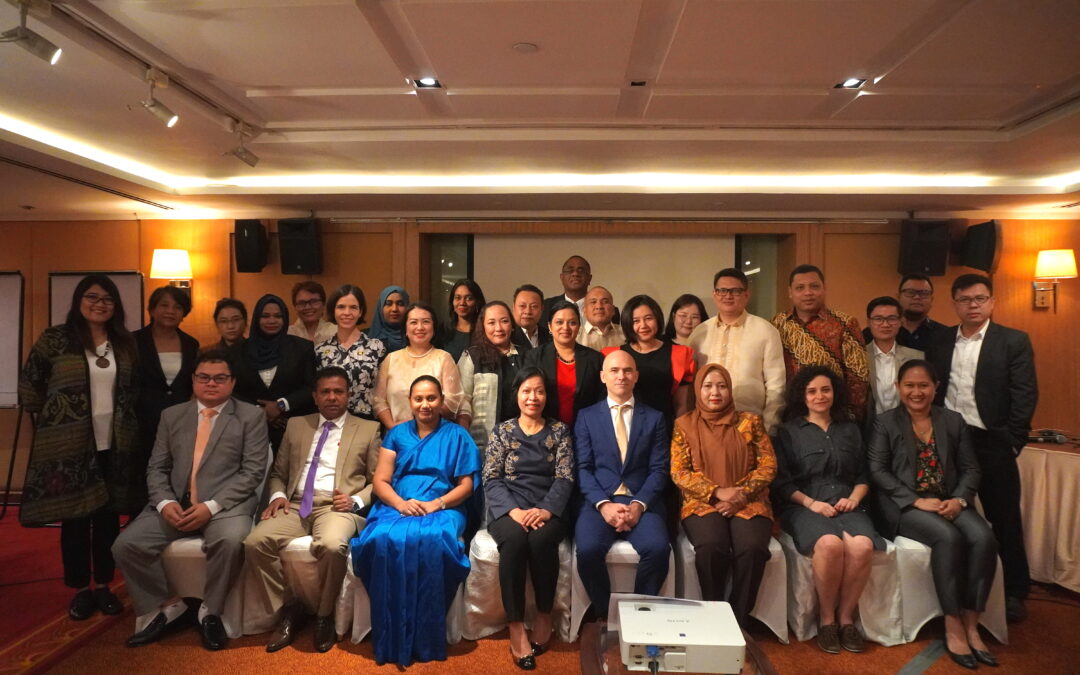
From 30 November to 1 December 2019, the ICJ and the Raoul Wallenberg Institute of Human Rights and Humanitarian Law (RWI) held the Judges’ Workshop on Adjudicating Environmental Cases with a Gender Perspective, in Bangkok, Thailand.
Judges from Fiji, Maldives, Indonesia, Philippines, Sri Lanka and Cambodia participated in the workshop. The discussions aimed at strengthening judges’ understanding of the relationship between women’s human rights and the right to a healthy environment. Throughout the two-day event, judges exchanged views on and considered cases showing how environmental degradation and climate change have a disproportionately detrimental impact on women, and how these phenomena affect them in a significantly different way as compared to men.
“It is through these gatherings that we learn from each other’s experiences and strengthen each other’s knowledge on this area,” said Frederick Rawski, ICJ’s Regional Director for Asia and the Pacific.
He continued, “We hope that this is the beginning of a greater body of work from judges in this region with a view to ensuring equality before the law and non-discrimination in environmental cases.”
During the workshop, the judges referred to the reference manual, Women’s Human Rights and the Right to a Clean, Safe, Healthy, and Sustainable Environment, which was developed by RWI with ICJ’s expert input. At the end of the workshop, judges agreed they would use this manual as a guide when faced with cases involving women and the right to a clean, safe, healthy and sustainable environment.
Contact:
Boram Jang, International Legal Advisor, International Commission of Jurists, t: +66 63 665 5315, e: boram.jang(a)icj.org
Resources:
To access pictures from the event, click here.
Nov 27, 2019 | Advocacy, News
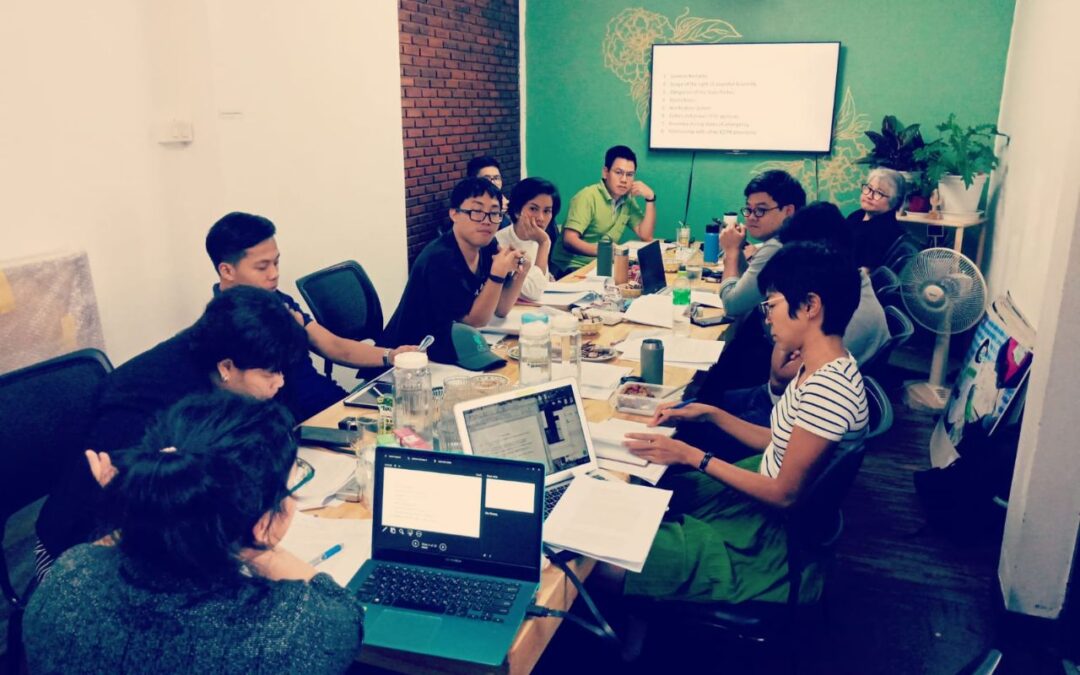
On 26 November 2019, the ICJ, jointly with the Centre for Civil and Political Rights (CCPR Centre), hosted a round-table discussion on the right to peaceful assembly in Thailand. The discussion was held at the office of Thai Lawyers for Human Rights (TLHR).
Fifteen lawyers, members of civil society organizations and academics attended the discussion.
The discussion began with an introduction to the UN Human Rights Committee’s draft General Comment No. 37, which when revised and adopted will constitute an authoritative interpretation of the right to freedom of peaceful assembly, as guaranteed under article 21 of the International Covenant on Civil and Political Rights (ICCPR). Thailand is a State party to the ICCPR.
The UN Human Rights Committee – the body mandated to interpret and supervise the implementation of the ICCPR – made the draft General Comment available for all stakeholders to review between November 2019 and 14 February 2020. The Committee in its draft considers the obligations of States parties in respect of such right to peaceful assembly, including permissible limitations and duties and powers of law enforcement agencies.
During the meeting, participants discussed about Thailand’s existing law governing the exercise of the right to peaceful assembly – including the 2017 Constitution of the Kingdom of Thailand and the 2015 Public Assembly Act. The discussion also focused on comments on the draft General Comment that the participants may submit to the UN Human Rights Committee, and advocacy strategies to strengthen Thailand’s legal frameworks once the draft General Comment is adopted by the UN Human Rights Committee.
Participants identified challenges posed by in the implementation of certain domestic laws, particularly the Public Assembly Act, which may result in unnecessary and disproportionate restrictions on the right to freedom of peaceful assembly in Thailand. These included the lack of a clear definition of “an assembly”; identification of “no-go” zones for protestors; problems arising from the use of notification systems where a failure to notify the authorities of an assembly was used as basis to render participation in the assembly unlawful and for dispersing the assembly; and overbroad powers delegated to authorities to impose conditions for assemblies regulating the time, place and manner of assemblies.
At the meeting’s conclusion, participants considered ways of provided input on the draft General Comment to the UN Human Rights Committee. They also strategies to work to bring existing Thai laws in compliance with international laws and standards that regulating the right to freedom of peaceful assembly.
Nov 25, 2019 | Advocacy, News
The ICJ held a two-day workshop on 23-24 November 2019 in Mandalay on the application in Myanmar of international law and standards on freedom of religion and belief. Some 40 participants from across the country, including human rights defenders, religious leaders and lawyers who work on issues of freedom of religion or belief, attended the event.
The two-day workshop was conducted in order to provide a safe platform for participants to discuss pressing issues concerning the right to freedom of religion or belief (FoRB) in Myanmar, with a particular focus on protecting places of worship. It allowed participants to share challenges encountered in their spheres of activity and explore ways to address state regulations that disproportionately impact minority religions.
ICJ Associate Legal Adviser Jenny Domino introduced the international standards on FoRB applicable to Myanmar, including how FoRB affects other human rights such as the right to freedom of expression. She discussed the different constitutional approaches to protecting FoRB in Myanmar and the Philippines, and presented the applicable international standards relevant to the protection of places of worship in conflict settings. ICJ Legal Researcher Dr Ja Seng Ing shared the legal and practical challenges to protecting places of worship in Myanmar.
Based on their own independent research, the participants discussed restrictions placed on the practice of religion or belief, particularly with respect to places of worship. The participants shared challenges they encountered while working on FoRB issues, such as the shrinking civic space for inter-religious dialogue. They also discussed possible strategies to push for legislative and administrative reform to protect FoRB in Myanmar.
The workshop is part of the ICJ’s ongoing effort to convene civil society actors and lawyers in Myanmar with a view to advancing FoRB in the country, and builds on the ICJ’s regional work on this theme.
Contact
Ja Seng Ing, ICJ Legal Researcher, e: jaseng.ing(a)icj.org
Related material
Challenges to freedom of religion or belief in Myanmar, A Briefing Paper, October 2019
Primer on international human rights law and standards on the right to freedom of thought, conscience, religion or belief, January 2019

Nov 22, 2019 | Advocacy, Cases, Legal submissions
Today, the ICJ intervened before the European Court of Human Rights in the case challenging the blocking of the website Wikipedia by the Turkish Government throughout the country.
In its intervention the ICJ addressed issues related to the compliance of Turkey’s Internet law and its application in practice, with rights under Article 10 ECHR to freedom of expression and to receive information.
In particular it addresses:
- international standards relating to freedom of expression on the Internet;
- evaluation of the Turkish Internet Law by international authorities, including bodies of the Council of Europe and United Nations;
- blocking of websites and other internet under Article 8/A of Law no. 5651 on Regulation of Publications on the Internet and Suppression of Crimes Committed by Means of Such Publications, and the judicial safeguards applying to such measures; and
- whether remedies including the individual application to the Constitutional Court can redress the deficiencies of the law.
Europe-Wikimedia v Turkey_TPI-Advocacy-Legal submissions-2020-ENG (download the intervention)