Aug 31, 2020 | Advocacy, News
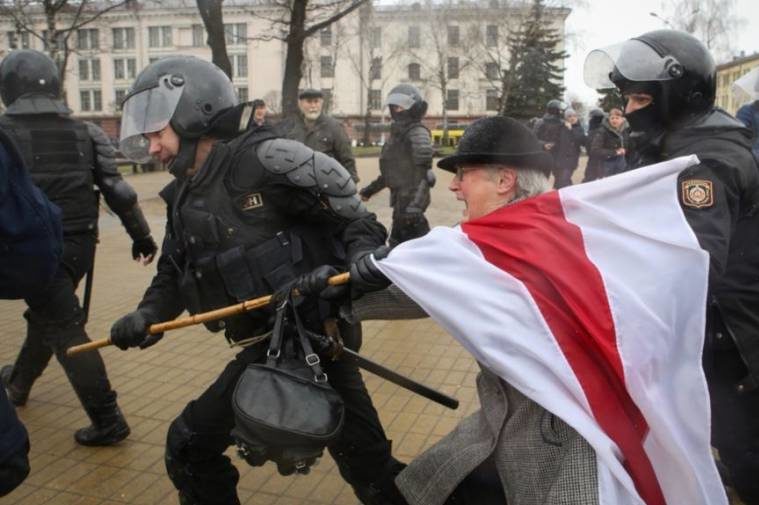
Today, the ICJ called on Belarus to comply with its international human rights law obligations in its response to the protests taking place in the aftermath of the presidential elections and in the treatment of those detained.
This includes immediately releasing persons arbitrarily detained, providing prompt access to lawyers for those still detained, accounting for the fate and whereabouts of missing protestors and promptly and effectively investigating torture and other ill-treatment.
The widespread arbitrary arrests of peaceful protesters, and credible allegations of torture and ill-treatment and enforced disappearances of detainees, are particularly alarming in light of obstacles faced by detainees in accessing lawyers, the ICJ said.
The ICJ recalls that under international human rights law, all persons have the right to peaceful assembly, and any restriction of this right must be provided in law be strictly necessary and proportionate to a specified legitimate purpose. The mass arrest of protesters does not appear to meet these requirements.
Belarus has obligations, including under treaties to which it is party, to respect the right to liberty and refrain from arbitrary arrests or other unwarranted interferences with the freedom of assembly, or freedom of expression, of protesters, protected under international law.
Law enforcement authorities must respect the right to life and the prohibition on torture or other ill-treatment at all times. Allegations of arbitrary killing, enforced disappearances and torture and other ill-treatment must be promptly, thoroughly and independently investigated, and those responsible brought to justice.
Effective remedies must be provided to victims of such serious human rights violations.
The ICJ is concerned about reports of the widespread denial of access to a lawyer and further obstacles that lawyers face while carrying out their professional duties in the current context in Belarus.
Reportedly, lawyers are not provided with access to the case file or further information necessary for the provision of effective legal assistance to their clients. This is of particular concern in light of multiple reports of torture or other ill-treatment of those detained following the election.
The ICJ stresses that the right of access to qualified legal representation is crucial for the protection of the human rights of those arrested in connection with the current political upheaval in Belarus.
The right of access to a lawyer is recognized as an essential element of the right to a fair trial and the right to liberty, protected under the International Covenant on Civil and Political Rights, to which Belarus is a party.
The UN Basic Principles on the Role of Lawyers provide that governments should ensure that lawyers are able to perform all of their professional functions without intimidation, hindrance, harassment or improper interference and should be able to consult with their clients freely and have access to appropriate information, files and documents in their possession or control in sufficient time to provide effective legal assistance to their clients.
It is essential that lawyers and other human rights defenders can carry out protection of human rights of their clients especially in times of emergency.
The ICJ also calls on the Belarus Republic Bar Association to bolster its efforts in protecting its members who provide legal representation in cases related to the ongoing protests.
Background:
The Republic of Belarus ratified the International Covenant on Civil and Political Rights in 1973
Following the presidential elections of 9 August 2020 in Belarus, widespread protests across Belarus took place following the discredited result, which were recognized as neither free nor by the European Union and other observers. Following the initial dispersal of these protests by the authorities, more than 6000 people were arrested and detained, many arbitrarily. There is credible evidence that many of those arrested or detained have been subjected to torture or other ill-treatment and that decisions regarding their arrest and detention have been made by courts temporarily established in detention centres.
While estimates of numbers differ, the whereabouts of at least tens of those who took part in the protest have not been established to date. One of the missing persons, Nikita Krivtsov, was recently found dead in a forest near Minsk.
The reports that defence lawyers were denied access to those arrested include high-profile cases, such as the case of the former presidential candidate Victor Babaryka whose lawyer was not allowed to see his client in the detention centre for more than a week.
According to the Belarusian Republican Bar Association, lawyers face problems with meeting their clients held in the detention centres and access to the case files and further information necessary to carry out their professional duties.
Aug 30, 2020 | Advocacy, News
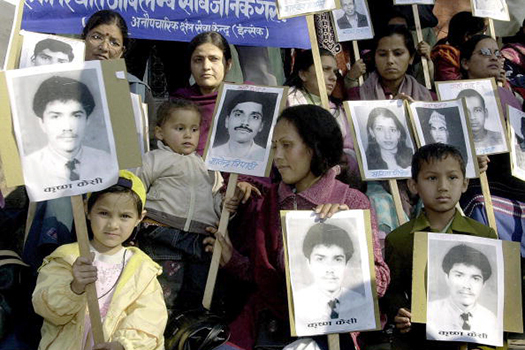
While commemorating the International Day of the Disappeared 2020, the ICJ and 47 other national and international organizations and groups of victims, in Nepal, call on the responsible authorities to undertake immediate steps towards reinvigoration of the transitional justice (TJ) process, adopting a transparent and consultative process.
On this occasion, the victims’ groups and human rights organizations in Nepal commend the patience and resilience shown by the family members of those subjected to enforced disappearance during the 10-year-long internal armed conflict from 1996-2006. They have worked tirelessly advanced the TJ process (Truth, Justice, Reparation and Institutional Reform) in Nepal for more than a decade through their peaceful struggle, despite many difficult hurdles.
In 2015 the Supreme Court found several sections of the Truth and Reconciliation Commission (TRC) Act, including the one empowering the commissions to offer amnesty and facilitate mediation/reconciliation between victims and perpetrators, including those involved in gross human rights violations, to be unconstitutional and non compliant with Nepal’s international obligations. More recently, on 26 April 2020 the Court rejected the petitions of the Government to review and revise the 2015 decision.
To date, the Government has not initiated any effort to amend the law as per these decisions. Rather, it has been misusing these Commissions in a manner that has prevented victims from accessing remedies through the regular criminal justice system and has made no efforts to strengthen these Commissions to delivery their mandates effectively. Two years back, Nepal recognized enforced disappearance as a distinct crime for the first time when enacting a new Penal Code. While this step is commendable, these legal provisions have not ensured justice for victims, the police typically refuse to investigate cases from the conflict period,arguing that they come under the jurisdiction of the TJ mechanisms.
Despite civil society’s repeated calls to appoint the Commissioners after amending the TRC Act following wider consultations with victims and civil society, the Government recently appointed Commissioners under the same Act that the SC had deemed flawed five years ago. Moreover, the Government has not addressed the repeated calls and concerns regarding the political interference and lack of transparency in the appointment of the Commissioners and the overall TJ process.
Human rights organizations and many victims groups have lost confidence in and stopped supporting to these Commissions.
The undersigned organizations call upon the Government of Nepal:
- To ensure the Commissions provide for, rather than delay and deny, truth and justice to
victims;
- Start fresh consultations to amend its law in compliance international human rights law
and Supreme Court directives, including by removing of amnesty for the perpetrators
provisions;
- Appoint a new set of commissioners under the revised Act that respects victims basic right
to truth and justice;
- Immediately ensure the social, cultural, economic, psychological and legal support
suffered by the victims and families of enforced disappearance as part of victims’ rights
to reparation;
- Revise the Penal Code to bring it in line with international standards. As a minimum, this
should include:
- amending the definition of enforced disappearances to bring it in line with Nepal’s international obligations and the Convention on the Protection of All Persons from Enforced Disappearance
- revising the penalty for enforced disappearance in the Penal Code to make it proportionate to the gravity of the crime
- removal of the statute of limitations for enforced disappearance cases
- Ratify International Convention for the Protection of All Persons from Enforced Disappearances Punishment.
Download
Full joint-statement with detailed information in English and Nepali. (PDF)
Contact
Ian Seiderman: ICJ Legal and Policy Director, e: ian.seiderman(a)icj.org
Mandira Sharma: ICJ Senior Legal Adviser, e: mandira.sharma(a)icj.org

Aug 27, 2020 | Advocacy, News
The ICJ, in collaboration with the Zimbabwe Anti-Corruption Commission (ZACC), convened a virtual Asset Recovery Training Workshop from 18-26 August. The training was part of the ICJ efforts to advance the rule of law in Zimbabwe.
The training was held with investigators from ZACC. It was led by Dr Prosper Maguchu, a legal expert on human rights and financial crimes.
The objective of the training was to enhance the capacity of ZACC investigators to conduct financial investigations and apply asset tracing techniques in relation to corruption and money laundering cases.
Over the past 50 years, it is estimated that Africa has lost in excess of one trillion US dollars in illicit financial flows (IFFs) with claims that this is roughly equivalent to all of the official development assistance received by the continent during the same timeframe.
Zimbabwe is not immune to this challenge of IFFs.
ZACC chairperson Justice Loice Matanda-Moyo remarked that financial crimes and illicit financial flows had become a serious threat the Zimbabwe economy and beyond our borders. She pointed to the prevalence of tax evasion, smuggling, corruption, fraud, drug trafficking and money laundering and noted that ill-gotten proceeds involving money were moving across borders. In such instances it is a daunting task for investigators and asset recovery officers to follow the money trails and recover proceeds of crime. She noted that the virtual asset recovery workshop was an opportune moment time to enhance the capacity of investigators and asset recovery officers.
“This training was very timely and critical. It enhanced the capacity of ZACC in its pursuit to recover assets accumulated though corruption. The investigators were equipped with the requisite skills and techniques involved in asset recovery that include collecting evidence, issuing restraint and freezing orders and making mutual legal assistance requests. Recovering stolen assets is an important process in the fight against corruption as it deters corruption by turning it into a high-risk, low-reward activity. Additionally, asset recovery is a means to obtain resources for the development of the country, which resources can also be channelled towards strengthening the fight against corruption in Zimbabwe, thus contributing to the greater respect for the rule of law,” said ICJ Senior Legal Adviser Blessing Gorejena.
The training workshop provided a comprehensive overview on what asset recovery means, exploring approaches and tools in asset recovery and enhance the technical capacity of the investigators to trace, seize and confiscate and repatriate illicitly acquired assets.
Participants in this workshop included 18 investigative officers and two Commissioners. Overall there were 11 female and 9 male participants in attendance.
This workshop was supported by the European Union Delegation in Zimbabwe.
Contact:
Shaazia Ebrahim (ICJ media officer), c: +277 167 067 19 e: shaazia.ebrahim(a)icj.org
Vimbai Mutandwa (ICJ legal advisor), c: +263 77 351 7733 e: vimbai.mutandwa(a)icj.org
Aug 17, 2020 | Incidencia
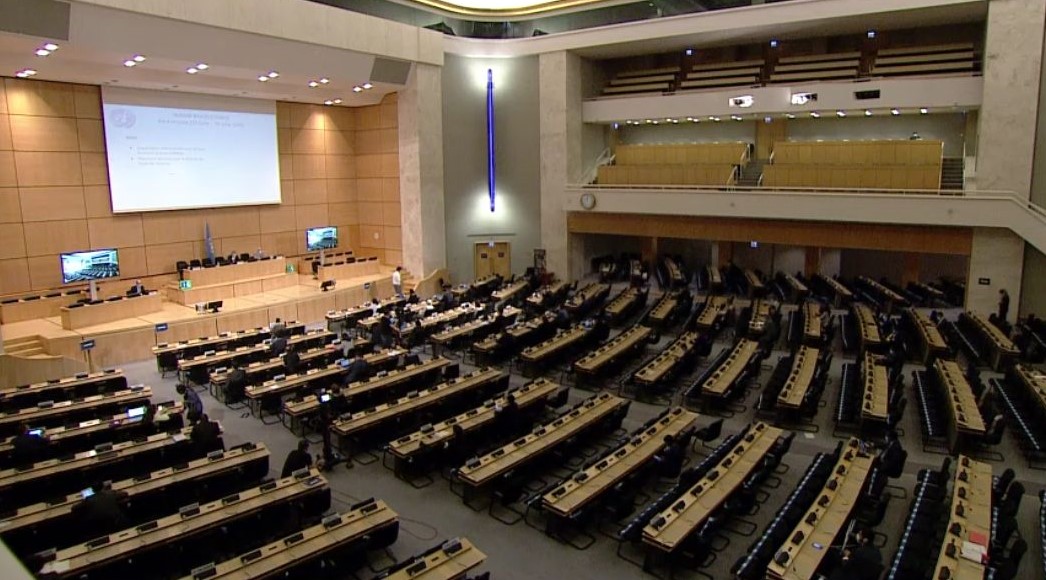
La CIJ y 83 organizaciones de derechos humanos le piden al Consejo de Derechos Humanos de las Naciones Unidas renovar y fortalecer el mandato de la Misión Internacional Independiente de Investigación de los Hechos sobre Venezuela en el próximo periodo de sesiones. También, le piden asegurar recursos adecuados para que la Misión continué su importante trabajo.
La falta de independencia judicial en el país, recientemente analizada por la Alta Comisionada de Derechos Humanos y documentada por la CIJ durante varios años, representa un obstáculo para que las víctimas de graves violaciones de derechos humanos accedan a recursos y reparaciones efectivas. Además, ha habido casi total impunidad para los responsables de dichas violaciones. Así, la falta de una efectiva rendición de cuentas hace que el trabajo de la Misión Internacional sea indispensable.
El año pasado, en su periodo de sesiones No. 42, el Consejo de Derechos Humanos de las Naciones Unidas estableció la Misión Internacional Independiente de Investigación de los Hechos para Venezuela, con el mandato de investigar ejecuciones extrajudiciales, desapariciones forzadas, detenciones arbitrarias y torturas u otras formas de trato cruel inhumano o degradante desde 2014.
El Consejo expresó “gran preocupación por la alarmante situación de los derechos humanos en la República Bolivariana de Venezuela, en la que se repiten sistemáticamente violaciones que afectan de forma directa e indirecta a todos los derechos humanos (…) en el contexto de la actual crisis política, económica, social y humanitaria.”
El Primer informe de la Misión Internacional se presentará en la próxima sesión del Consejo, programada para el 14 de septiembre al 6 de octubre de 2020.
El comunicado conjunto suscrito por 85 organizaciones dice que el informe “marcará un importante primer paso en la senda de la rendición de cuentas en Venezuela mediante la documentación de la participación de aquellas personas de las que se sospecha que son penalmente responsables. Es fundamental que el Consejo de Derechos Humanos responda de manera significativa a las conclusiones y recomendaciones del informe”.
Por otro lado, la CIJ observa que la pandemia de la COVID-19 ha generado mayor tensión sobre la situación de derechos humanos en Venezuela. Así, la Oficina de Naciones Unidas para Coordinación de Asuntos Humanitarios (OCHA por sus siglas en inglés) informó en Julio de 2020 que “[u]na evaluación de las condiciones de agua, saneamiento e higiene en 17 hospitales realizada por la OPS/OMS en 2019 reporta que el 88,3% de los hospitales evaluados tienen un riesgo alto que las condiciones higiénico-sanitarias contribuyan al agravamiento del estado de salud de sus usuarios; el resto tienen un riesgo medio.”
El comunicado conjunto se encuentra disponible en español aquí.
Aug 17, 2020 | Advocacy, News
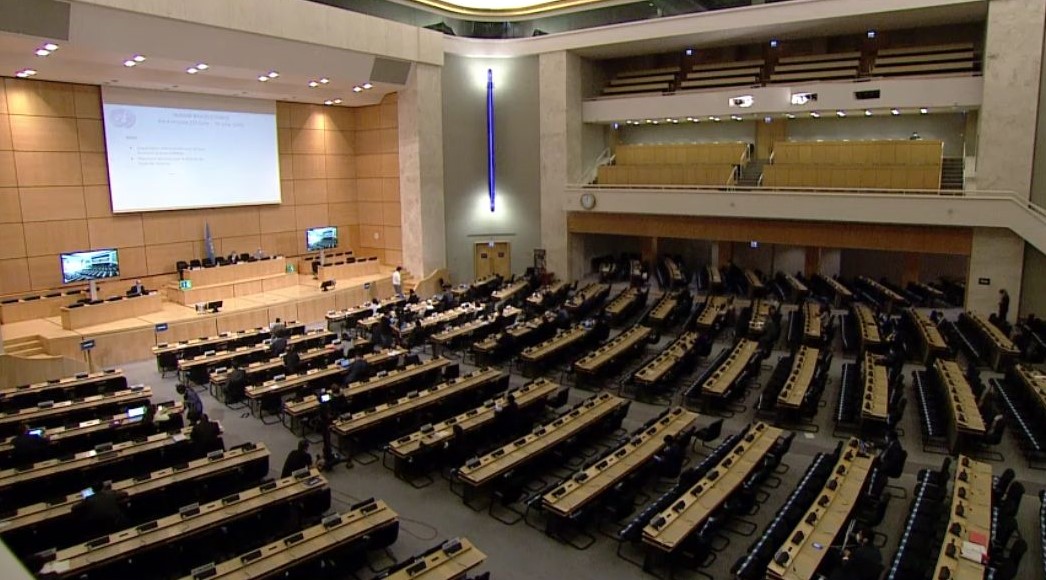
Today, the ICJ joined 83 other human rights organizations to call the United Nations Human Rights Council to renew and strengthen the mandate of the Independent International Fact-Finding Mission (FFM) on Venezuela in its upcoming session in September, and to ensure it has adequate resources to continue its critical work.
The ICJ considers that the lack of judicial independence in the country, recently addressed by the High Commissioner and documented by ICJ during several years, presents a major obstacle to victims seeking to access effective remedies and reparation for gross human rights violations in the country. There has also been near complete impunity for those responsible for such violations. The lack of effective accountability makes the work of the FFM indispensable
Last year at its 42nd session, UN Human Rights Council established the Independent International Fact-Finding Mission with a mandate to investigate extrajudicial executions, enforced disappearances, arbitrary detentions and torture and other cruel, inhuman or degrading treatment since 2014.
The Council expressed “grave concern at the alarming situation of human rights in the Bolivarian Republic of Venezuela, which includes patterns of violations directly and indirectly affecting all human rights (…) in the context of the ongoing political, economic, social and humanitarian crisis.”
The FFM’s first report is expected to be presented at the Council’s next session scheduled for 14 September to 6 October.
The NGO joint statement stressed that the report “will mark an important first step on the path to accountability in Venezuela through the documentation of the participation of those suspected of criminal responsibility. It is critical that the Human Rights Council respond meaningfully to the findings and recommendations in the report”.
The ICJ notes that the COVID-19 pandemic has engendered further stresses on the human rights situation. The United Nations Office for the Coordination of Humanitarian Affairs (OCHA) reported in July 2020 that an “assessment of water, hygiene and sanitation (WASH) conditions in 17 hospitals conducted by PAHO/WHO in 2019 found that 88.3 per cent of the assessed hospitals present a high risk that hygiene and sanitary conditions pose a health risk to patients and staff; the rest face a medium risk.”
The joint statement is available here.