Apr 16, 2018 | Advocacy, News, Non-legal submissions
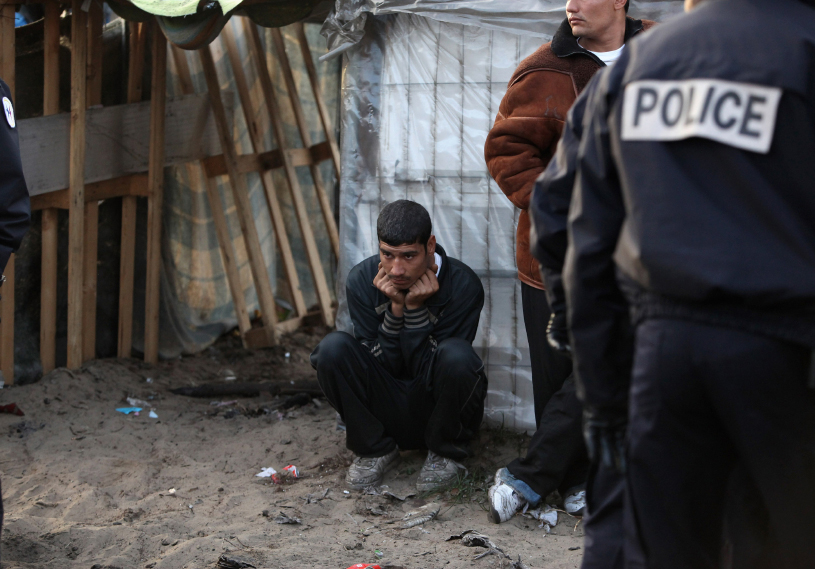
The ICJ and ECRE have presented today to the United Nations Special Rapporteur on the human rights of migrants a submission on access to justice for migrants in Europe.
The submission is an input for the forthcoming report of the UN Special Rapporteur on access to justice for migrants to the UN General Assembly.
The International Commission of Jurists (ICJ) and the European Council on Refugees and Exiles (ECRE) have provided a brief overview of aspects of access to justice for migrants, with a particular focus on asylum seekers and migrant children, in European countries.
The issues dealt with include:
- obstructions to access to justice in relation to access to the territory;
- the undue use of national security exceptions to weaken access to justice in immigration procedures;
- concerns with access to justice in expulsion and detention procedures;
- specific obstacles to access to justice for asylum seekers, including when appealing the rejection of their claims by first instance asylum authorities before a judicial or administrative appeal body;
- specific obstacles to access to justice for undocumented minors.
ICJECRE-NonLegalSubmission-SRMigrants-Access2JusticeEurope4Migrants-2018-ENG (download the submission)

Mar 28, 2018 | Advocacy, Non-legal submissions
The ICJ today submitted a report to the UN Committee against Torture, calling for recommendations to be made on prevention of and accountability for continued recourse to torture and ill-treatment in Tajikistan.
The ICJ’s submission is made ahead of consideration by the Committee against Torture in April to May 2018 of Tajikistan’s third periodic report on the implementation of its obligations under the Convention against Torture and Other Forms of Cruel, Inhuman or Degrading Treatment or Punishment.
The ICJ’s report draws from an earlier study on Achieving Justice for Gross Human Rights Violations in Tajikistan and calls on the Committee against Torture to make recommendations concerning:
- The obligation to adequately sanction torture;
- The obligation to prevent torture and other forms of ill-treatment, including in places of detention;
- The obligation to investigate allegations of torture and ill-treatment;
- The use of amnesties and pardons for torture;
- The prohibition against the use of evidence obtained by torture;
- The right to complain about torture and ill-treatment; and
- The right of victims to effective remedies and reparation.
Tajikistan-CAT-Advocacy-AlternativeReport-2018ENG (download the ICJ’s submission, in PDF)
Mar 27, 2018 | Advocacy, Non-legal submissions
On 27 March 2018, the ICJ, Thai Lawyers for Human Rights (TLHR) and Cross Cultural Foundation (CrCF) made a joint follow-up submission to the UN Human Rights Committee on Thailand’s implementation of the Committee’s prioritized recommendations.
On 23 March 2017, during its 119th Session, the Human Rights Committee adopted its concluding observations on the second periodic report of Thailand under article 40 of the International Covenant of Civil and Political Rights (ICCPR).
Pursuant to its rules of procedure, the Committee requested Thailand to provide a follow up report on its implementation of the Committee’s recommendations made in paragraphs 8 (constitution and legal framework) 22 (extrajudicial killings, enforced disappearances and torture) and 34 (conditions of detention) of its concluding observations by 23 March 2018. To date, the Thai authorities are yet to file their follow-up report with the Committee.
In their joint submission to the Human Rights Committee, the ICJ, TLHR and CrCF detailed their concerns in relation to Thailand’s failure to implement the Committee’s recommendations in paragraphs 8 and 22 of its concluding observations. The three organizations’ submission focuses on their concerns arising from the following:
Constitution and legal framework
- Orders by the Head of the National Council for Peace and Order (‘HNCPO’); and
- Escalation in use of HNCPO Order No. 3/2558 to restrict fundamental freedoms.
Extrajudicial killings, enforced disappearances and torture
- Allegations of widespread use of torture and other ill-treatment;
- Incommunicado detention;
- Southern Border Provinces; and
- Threats and reprisals against persons working to bring to light cases of alleged torture, ill–treatment and enforced disappearance.
Read also
ICJ and Thai Lawyers for Human Rights, Joint submission to the UN Human Rights Committee, 13 February 2017
Contact
Kingsley Abbott, ICJ Senior International Legal Adviser for Southeast Asia, e: kingsley.abbott(a)icj.org
Thailand_Joint-Follow-up-Human-Rights-Committee-Submission-march-2018 (Full submission in ENG, PDF)
Thailand-Follow up HRC-Advocacy-Non legal submission-2018-THA (Thai version, in PDF)
Mar 27, 2018 | Advocacy, News
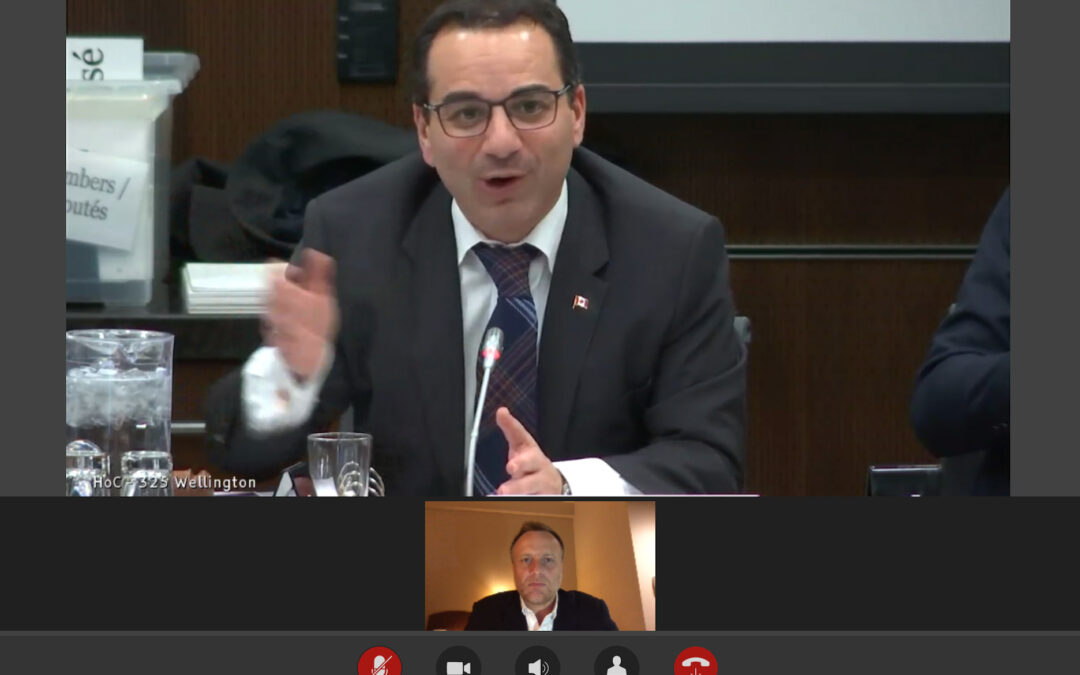
Today, the ICJ testified before the Canadian House of Commons Subcommittee on International Human Rights on the human rights and rule of law crisis in Cambodia.
Kingsley Abbott, ICJ Senior International Legal Adviser, addressed the Subcommittee on two key issues:
- The misuse of the law in Cambodia under the pretext of the “Rule of Law”; and
- The lack of an independent and impartial judiciary.
Other witnesses were former members of the Cambodian Parliament for the main opposition party, the CNRP, before its dissolution in November 2017, Mu Sochua and Kong Sophea.
Kingsley Abbott also requested that the ICJ’s October 2017 Baseline Study on the state of the rule of law and human rights in Cambodia be added to the record.
Contact:
Kingsley Abbott, ICJ Senior International Legal Adviser for Southeast Asia, e: kingsley.abbott(a)icj.org
Thailand-SDIR-Statement-ABBOTT-Advocacy-2018-ENG (Full opening statement ENG, PDF)
Mar 23, 2018 | Advocacy, Non-legal submissions
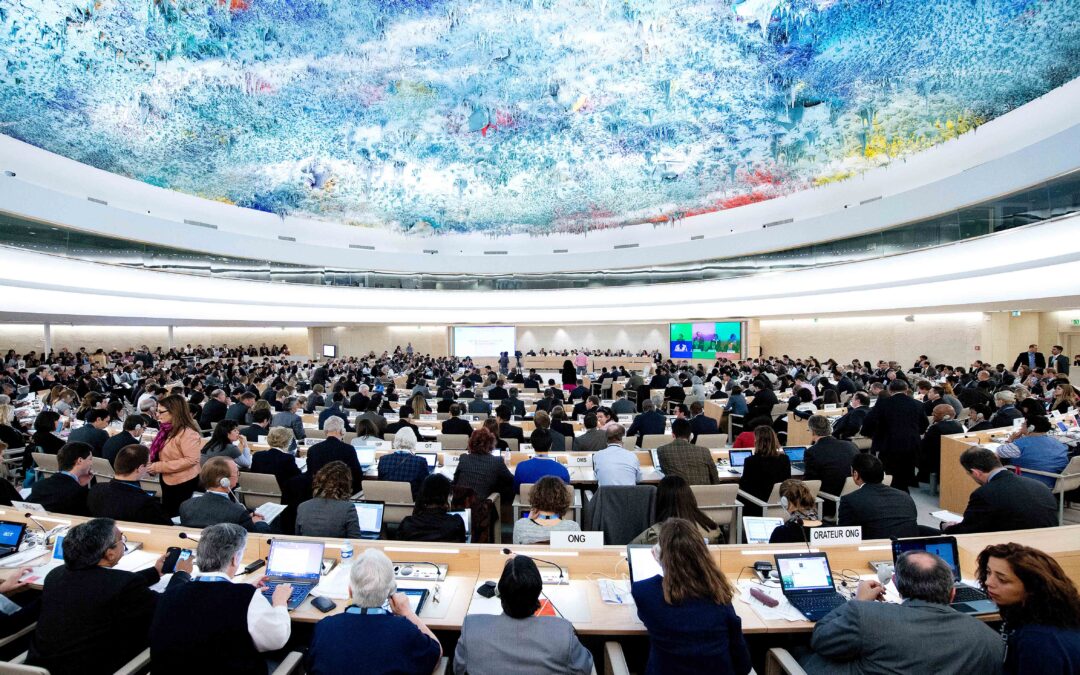
The ICJ today joined other NGOs in an end-of-session statement, reflecting on the 37th ordinary session of the UN Human Rights Council.
The statement was delivered by the International Service for Human Rights (ISHR) on behalf of:
- The East and Horn of Africa Human Rights Defenders Project (DefendDefenders)
- The Global Initiative for Economic, Social & Cultural Rights
- CIVICUS
- International Commission of Jurists
- International Federation for Human Rights Leagues
- Conectas Direitos Humanos
- Human Rights House Foundation
- Amnesty International
- International Lesbian and Gay Association
- Human Rights Watch
- Asian Forum for Human Rights and Development (FORUM-ASIA).
The statement read as follows (text in italics was not read aloud for lack of time):
“Our organisations welcome the adoption of the resolution on the promotion and protection of human rights and the implementation of the 2030 Agenda for Sustainable Development, particularly in reaffirming that all approaches to development must comply with the State’s international human rights obligations.
We agree that “cooperation and dialogue” are important for the promotion and protection of human rights, and that States should fully cooperate with the Council and its mechanisms, and ensure that all stakeholders are able to cooperate and engage with them without fear of reprisals.
However, we must now be vigilant to ensure that the resolution on Mutually Beneficial Cooperation, lacking in balance, does not undermine other important parts of the Council’s mandate: to address human rights violations and respond promptly to human rights emergencies in specific countries.
The Council has failed to take meaningful action to address the alarming situation on the ground in Cambodia. We welcome and echo the joint statement on Cambodia by over 40 states calling for further action if the situation does not improve in the lead up to the elections and for a briefing by the High Commissioner before the next Council session. We are concerned by Cambodia’s attempt to shut down criticism under item 10 debate on the worsening human rights situation in the country, as they are doing domestically.
We are disappointed by the weak outcome on Libya. Given the gravity of the human rights situation on the ground and the lack of accountability for crimes under international law, the Council cannot justify the lack of a dedicated monitoring and reporting mechanism.
We welcome the co-sponsorship of the Myanmar resolution by groups of States from all regions, making a joint commitment to address the continuing human rights violations and crimes against humanity in the country and support for the Special Rapporteur and Fact-Finding Mission to fulfil its mandate to establish truth and ensure accountability for perpetrators.
We also welcome the renewal of the mandate of the Commission on Human Rights in South Sudan allowing it to continue its vital investigations and identification of perpetrators. These developments acknowledge the importance of accountability for serious human rights violations and crimes under international law, which cannot be understated.
We welcome the adoption of the resolution on drugs and human rights as the OHCHR report will provide human rights indicators related to the drug issue that would help in future policies.
We welcome the resolution on Eastern Ghouta adopted after an urgent debate, demonstrating how this Council can respond in an agile manner to crises.
Having long supported the resolution on “protection of human rights while countering terrorism”, we appreciate the efforts that led to the end of the separate and deeply flawed initiative on “effects of terrorism on the enjoyment of human rights“. Future versions of the resolution must address the relevant issues exclusively and comprehensively from the perspective of the effective protection of human rights.
We welcome the Dutch-led joint statement on strengthening the Council, emphasising the importance of substantive civil society participation in any initiative or process and that the Council must be accessible, effective and protective for human rights defenders and rights holders on the ground.
Finally, we call on the Bureau co-facilitators on improving the efficiency and strengthening the Council to closely engage with all Members and Observers of the Council, human rights defenders and civil society organisations not based in Geneva.”