Mar 1, 2018 | Advocacy, Non-legal submissions
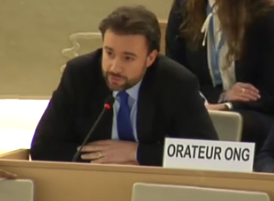
The ICJ today delivered an oral statement to the UN Human Rights Council, on attacks on lawyers and the legal profession in Turkey, Azerbaijan, Kazakhstan and China.
The statement, which was made during an interactive dialogue with the UN Special Rapporteur on human rights defenders and the UN Special Rapporteur on Torture, read as follows:
Our organizations welcome that the main report (A/HRC/37/51, para 13) and communications report (A/HRC/37/51/Add.1, e.g. paras 278-297, 431, 508-510) of the Special Rapporteur on Human Rights Defenders recognizes the role of lawyers as human rights defenders. In this regard, we would highlight the global problem of continued attacks on lawyers and threats to the independence of their profession, including for example as is well known in China (A/HRC/37/51/Add.1, paras 278-297), but also in Azerbaijan, Kazakhstan and Turkey.
In Azerbaijan, lawyers face criminal prosecution, suspension or disbarment for statements clearly constituting protected freedom of expression. The lack of independence of the Bar Association is a serious concern, even more so now that new legislation prohibits lawyers from representing clients before courts unless they become a member.
In Kazakhstan, a proposed new law threatens the independence of lawyers by providing for representatives of the executive to be included on disciplinary bodies of the legal profession, contrary to international standards.
Finally, the situation of lawyers in Turkey under the current state of emergency is of particular concern. In particular, echoing the recent statement of five UN special procedures mandate holders for his release, we expresses concern at the current detention of Taner Kılıç, lawyer and president of Amnesty International Turkey.
These arrests, trial and disbarments as well problematic legislative changes have a chilling effect on the work of lawyers. They undermine access to effective and independent legal assistance to protect human rights, in contravention of the rights of both the lawyers and their clients, including as mentioned in the report of the visit to Turkey by the Special Rapporteur on Torture (A/HRC/37/50/Add.1, paras 24, 26, 41, 63-66, 71, 101(d)(e)(h), 106(c)).
Our organizations urge the Council to address these worrying developments threatening the rule of law.
The following organizations joined the statement, in addition to the ICJ:
- International Bar Association’s Human Rights Institute (IBAHRI)
- Union Internationale des Avocats (UIA)
- Lawyers for Lawyers (L4L)
- the Law Society of England and Wales
- Lawyer’s Rights Watch Canada (LRWC), and
- the Bar Human Rights Committee of England and Wales (BHRC).
The statement can be downloaded in PDF format here: UN-HRC37-JointOralStatement-LawyersHRDsTorture-2018

Feb 14, 2018 | Advocacy, Non-legal submissions
The ICJ has set out key principles and sources on judicial councils and other national mechanisms for selecting, appointing, promoting, transferring, suspending or removing judges, in a submission to the UN Special Rapporteur on the independence of judges and lawyers.The submission was made in response to a call by the Special Rapporteur for input to a report he will present at the June 2018 session of the Human Rights Council.
The ICJ submission highlights that judicial councils are a proven means of safeguarding judicial independence and ensuring judicial accountability. It recommends that, even in countries where judicial independence and accountability have traditionally been secured by other means, consideration should be given to the establishment of a judicial council.
The submission stresses that judicial councils must be fully independent of the executive and legislative branches of government, and notes several key safeguards to help secure such independence.
The ICJ recommends that such judicial councils should in principle be responsible for all decisions relating to the selection, appointment, promotion, transfer, discipline, suspension and removal of judges.
The submission also highlights the need for diversity of membership of such councils to ensure its representativeness of the society the judiciary is to serve, that it reflects a cross-section of the judiciary as a whole, and that it has the experience and expertise needed to be effective.
The full submission can be downloaded in PDF format here: Global-UN-SRIJL-JudicialCouncils-2018
Most of the sources cited in the submission are available here.
Related and more detailed guidance is available in the ICJ’s 2016 Practitioners’ Guide no. 13 on Judicial Accountability, as well as the 2007 Practitioners’ Guide no. 1 on Independence and Accountability of Judges, Lawyers and Prosecutors.
More information about the Special Rapporteur is available here.
For more information about the ICJ and judicial councils and similar mechanisms, contact Matt Pollard (matt.pollard(at)icj.org)

Feb 13, 2018 | Advocacy
The ICJ, together with other NGOs, has expressed serious concerns about the current wording of the draft Copenhagen Declaration on the future of the European Convention on Human Rights (ECHR) system, which has been proposed by the Danish government.
In a joint response to the first draft of the Copenhagen Declaration, the group of NGOs welcomed the willingness of the Danish government to engage with civil society in developing the Declaration, which is to be finalised at an intergovernmental conference in Copenhagen in April 2018.
However the NGOs expressed concerns that some of the language of the Declaration appears to diminish the role of the European Court of Human Rights, and risks fragmenting the European human rights protection system as well as undermining the independence of the Court. The NGOs emphasised that:
- The Declaration should affirm the need to respect and preserve the independence of the European Court of Human Rights, and should omit any language or proposals that put the independence of the Court at risk;
- Effective human rights protection at the national level must be subject to the supervision of the European Court of Human Rights;
- Greater emphasis should be given to the role of civil society in implementing the ECHR at the national level, and this should be taken into account in developing proposals for more effective implementation;
- The universality of human rights protection should be respected, and the text should be worded to highlight the importance of all human rights in all situations across all of the Council of Europe states;
- The Declaration must not call into question the Court’s authority to review human rights cases concerning asylum and immigration, or those arising from international conflicts;
- Governments should not be given further opportunities to influence the Court, nor should the Declaration provide a pretext for states to exert political pressure on the Court;
- Council of Europe States should not only implement the European Convention on Human Rights, but also act promptly to execute judgments of the European Court;
- National processes for the selection and election of European Court judges should be further strengthened.
Europe-JointNGO-Response-Copenhagen-Declaration-Advocacy-2018-ENG (Full document in PDF)
Jan 31, 2018 | Advocacy, Non-legal submissions
The ICJ submitted a written statement on impunity and transitional justice, ahead of the March 2018 session of the UN Human Rights Council.
The written statement can be downloaded in PDF format below:
In English: UN-HRC37-WrittenStatement-NepalPeruImpunity-EN
In Spanish: UN-HRC37-WrittenStatement-NepalPeruImpunity-ESP
Jan 29, 2018 | Advocacy, Non-legal submissions
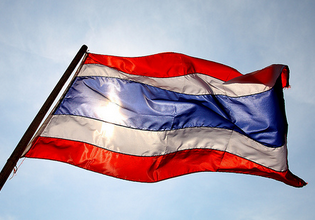
Today, the ICJ and Thai Lawyers for Human Rights (TLHR) filed their joint submission to the UN Committee against Torture (Committee).
The Committee will consider it during the adoption of a list of issues prior to reporting (LOIPR) for the examination of the Second Periodic Report of Thailand under Article 19 of the Convention against Torture and Other Cruel, Inhuman or Degrading Treatment or Punishment (CAT).
During its 63rd session, from 23 April to 18 May 2018, the Committee will prepare and adopt a LOIPR on Thailand.
Once adopted, the LOIPR will be transmitted to the State party. Thailand’s formal response to the LOIPR will then constitute its Second Periodic Report under article 19 of the Convention.
Thailand ratified the CAT in 2007. Following its review of Thailand’s initial report under CAT, the Committee adopted its Concluding Observations at its 52nd Session in May 2014.
The ICJ and TLHR’s joint submission to the Committee highlights a number of ongoing concerns with respect to the country’s implementation of and compliance with the provisions of the CAT.
In addition, the joint submissions formulates certain questions and recommends that the Committee should include them in its LOIPR and address them to the Government of Thailand, including on the following pressing issues:
- The fact that, since the coup d’ état of 22 May 2014, the constitutional and legal framework in force in Thailand has increased opportunities for legally-sanctioned impunity;
- The failure to criminalize through the adoption of bespoke domestic legislation the crimes of torture, cruel, inhuman or degrading treatment or punishment and enforced disappearance, consistent with the CAT and other relevant international law;
- The failure to conduct investigations of credible allegations of enforced disappearances, as well as into credible reports of the widespread use of torture and other ill-treatment in a prompt, effective, independent and impartial manner in numerous cases; and
- Threats and reprisals against persons working to bring to light cases of alleged torture, other ill-treatment and enforced disappearance.
Contact
Kingsley Abbott, Senior International Legal Adviser, ICJ Asia Pacific Programme, t: +66 94 470 1345, e: kingley.abbott@icj.org
Thailand-CAT Submission-Advocacy-non-legal submission-2017-ENG (Full submission in PDF)
THAILAND-CAT additional info-Advocacy-2018-ENG (additional information, updated in April 2018)