May 3, 2017 | Advocacy
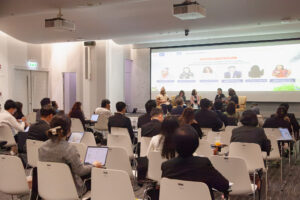
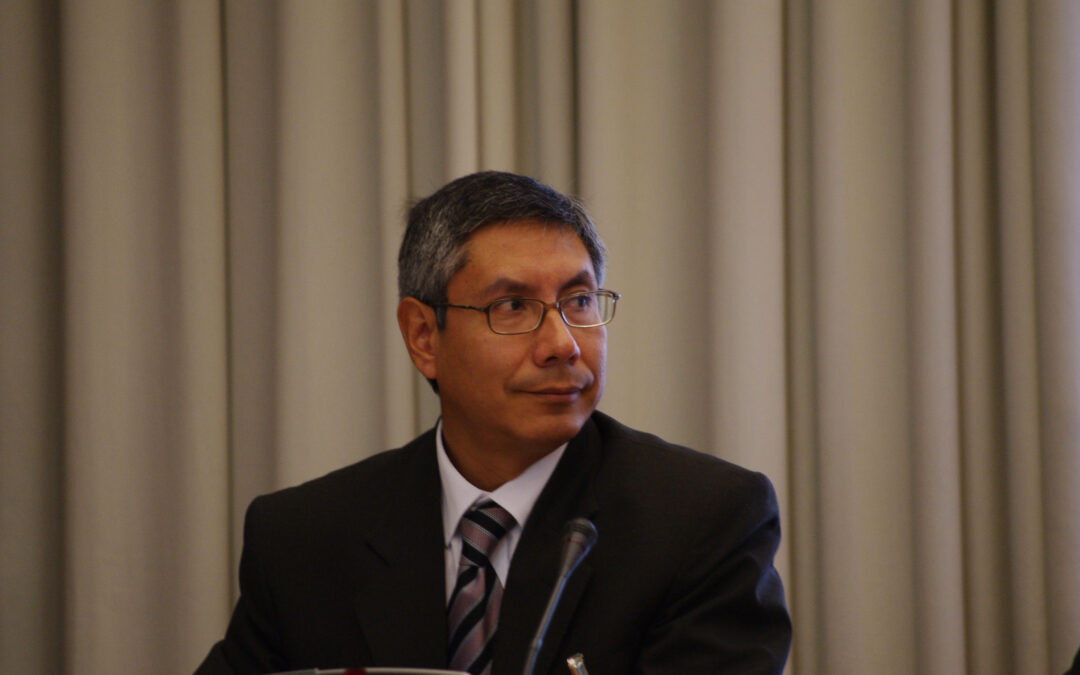
ICJ’s Senior Legal Adviser Carlos Lopez made an important speech today at a Joint Hearing of the European Parliament’s Committee on International Trade and Subcommittee on Human Rights.
The declaration was about the United Nations intergovernmental process towards a treaty in the field of business & human rights.
This treaty could be a crucial instrument for the EU, European countries and European businesses to promote common global rules of respect for human rights that are stronger and enforceable vis a vis companies from all regions.
This will help level the playing field for the companies that have a genuine interest in human rights protection by creating a common standard.
For Governments, it is an important instrument to advance the objective of a level playing field for businesses in the global marketplace.
This is not only important and a condition of success for European businesses who currently have to compete with businesses that do not have to observe the same rules in other parts of the world, but is also a condition for the sustainability of economic globalization and its potential to deliver for the human rights for all.
Download Carlos Lopez’s speech below:
Europe-ICJ speech at the european parliament-ADVOCACY-2017-ENG (in PDF)

Mar 30, 2017 | Advocacy, Non-legal submissions
Today, the ICJ made a submission to the Universal Periodic Review of Pakistan.
The submission brings to the attention of the members of the Human Rights Council’s Working Group on the UPR issues concerning:
- Trials of civilians by military tribunals;
- Enforced disappearances;
- Torture and other ill-treatment;
- Blasphemy laws; and
- International human rights instruments.
With respect to each of the above-mentioned concerns, the ICJ calls upon the Working Group on the UPR and the Human Rights Council to make a number of recommendations to the Pakistani authorities.
Pakistan-ICJ UPR-Advocacy-non-legal submissions-2017-ENG (full text in PDF)
Mar 30, 2017 | Advocacy
The ICJ submitted information to the UN Human Rights Council Working Group on the Universal Periodic Review (UPR) in advance of its review of Sri Lanka under the third cycle of the UPR mechanism during its 28th session in November 2017.
The ICJ submission focuses on concerns about Sri Lanka’s respect for its human rights obligations relating to ongoing issues of:
- Transitional justice;
- Enforced disappearance;
- Torture and other ill-treatment;
- Detention;
- Counter-terrorism; and
- Impunity.
SriLanka-UPR Submission March17-Advocacy-non legal submissions-2017-ENG (full text in PDF)
Mar 15, 2017 | Advocacy, Non-legal submissions
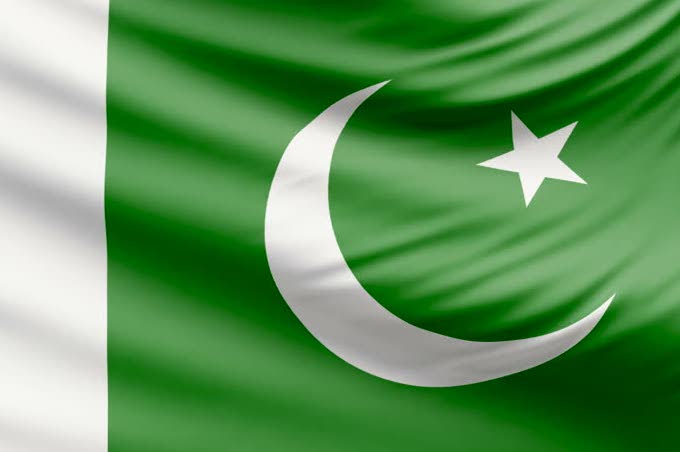
The ICJ and Human Rights Commission of Pakistan (HRCP) made a statement to the UN Human Rights Council highlighting the alarming human rights situation developing in Pakistan.
The statement addressed the situation for human rights defenders, abuse of blasphemy laws, and violations in the context of countering terrorism.
“Pakistan has increased its clamp down on human rights defenders, even attempting to shut down NGOs for reasons such as the NGO “presenting a very bleak picture of human rights” to the UN.
State agents have subjected human rights defenders exercising their right to freedom of expression and peaceful assembly to excessive force and even prosecution under Pakistan’s anti-terrorism laws. Others have been assaulted, killed or forcibly disappeared. Not a single perpetrator has been successfully brought to justice.
Misuse and persecution are inherent in the logic, structure and formulation of blasphemy laws in Pakistan: vague and over-broad language leaves them open to abuse; they blatantly discriminate against minority religions and sects; they are incompatible with the rights to freedom of expression and religion; and their implementation raises serious fair trial concerns.
Finally, Pakistan’s counter-terrorism laws and policies disregard human rights protections, including in the practice of enforced disappearances of terrorism suspects and others, and in the exposure of civilians accused of terrorism-related offences to unfair, secret and opaque trials in military courts. Laws such as the Actions (in Aid of Civil Powers) Regulations allow indefinite detention without judicial supervision.
The statement can be downloaded in PDF format here: HRC34-Pakistan-OralStatement-2017
Mar 13, 2017 | Advocacy, Non-legal submissions
The ICJ today delivered a joint NGO oral statement to the UN Human Rights Council on the need in Myanmar for an international Commission of Inquiry and for an independent and self-governing legal profession.
In the statement, the International Commission of Jurists, joined by the International Bar Association’s Human Rights Institute and Lawyers’ Rights Watch Canada, welcomed the report of the Special Rapporteur on the situation for human rights in Myanmar, and her recommendation for a Commission of Inquiry to investigate persecution of Rohingya and other minorities in Rakhine State.
Since 9 October 2016, Myanmar’s security forces have reportedly targeted Rohingya during “clearance operations” which have no basis in law. Attacks against women, men, and children allegedly have involved extrajudicial killings; enforced disappearances; torture and other ill-treatment including rape and other sexual violence; hundreds of arbitrary arrests and detentions; forced displacement; and looting and destruction of homes, food and other property.
To date, authorities in Myanmar appear to have been unwilling or unable to investigate abuses or hold perpetrators accountable. Several national investigation commissions have lacked impartiality and independence. National judicial and law enforcement authorities lack capacity and independence to address this situation. Accordingly, we urge Council to adopt a resolution at this session establishing an international, independent Commission of Inquiry to assess facts, identify causes and perpetrators, and issue recommendations including remedies for victims.
The recent killing of lawyer U Ko Ni, who strongly advocated against religious discrimination and for inter-communal peace, must be subject to a prompt, impartial and effective investigation capable of identifying all those responsible and holding them accountable in a fair trial. It also underscores the urgent need for an independent and self-governing legal profession in Myanmar, enabled to uphold human rights and the rule of law without fear.
The statement may be downloaded in PDF format here: HRC34-OralStatement-Myanmar-2017