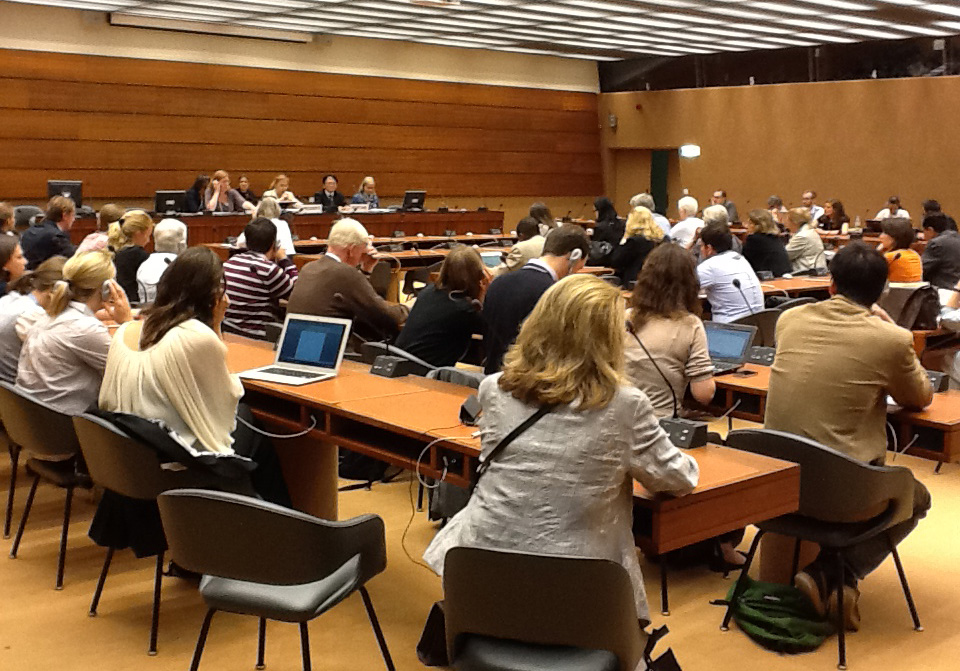
Human Rights Council: oral intervention of the ICJ on Internally Displaced Persons
The ICJ welcomes the report of the Special Representative of the Secretary-General on Internally Displaced Persons (IDPs) in Sri Lanka.

The ICJ welcomes the report of the Special Representative of the Secretary-General on Internally Displaced Persons (IDPs) in Sri Lanka.

On 15 March 2007, the ICJ made an oral intervention during the interactive dialogue with the High Commissioner for Human Rights at the fourth session of the Human Rights Council.

La CIJ sometió un amicus curiae ante la Sala Penal Transitoria de la Corte Suprema de Justicia del Perú en el caso relativo a la desaparición forzada del estudiante Ernesto Castillo Páez.
En el documento, la CIJ analiza distintos aspectos relacionados con el tratamiento que ha tenido la desaparición forzada en el derecho internacional de los derechos humanos y el derecho penal internacional. En particular, se presenta un análisis pormenorizado de la doctrina y jurisprudencia relativa a la desaparición forzada de personas: su condición de delito bajo el derecho internacional, su carácter pluriofensivo, la pluralidad de sujetos pasivos y víctimas que afecta, sus elementos constitutivos, su carácter de delito permanente y las condiciones bajo las cuales puede configurar un delito de lesa humanidad.
Peru-amicus curiae disappearance-legal submission-2007 (full text, PDF)

La CIJ sometió ante la Corte Suprema de la República de Chile un Memorial en Derecho en el marco del proceso de extradición abierto contra Alberto Fujimori Fujimori, por delitos entre los cuales se encuentran crímenes contra la humanidad y graves violaciones a los derechos humanos.
En su Memorial, la CIJ analiza los diferentes temas jurídicos relevantes del caso a la luz del derecho internacional, en particular:
Peru-Chile-extradiction Fujimori-legal submission-2006-spa (full text in Spanish, PDF)

 The ICJ sets out its views on the human rights compatibility of offences of incitement to acts of terrorism, and on the appropriate limits of such offences in European Union law and in the national laws of European states.
In its Response to the European Commission Consultation on Inciting, Aiding or Abetting Terrorist Offences, submitted on 15 February 2007, the ICJ concludes that incitement to acts of terrorism should be a criminal offence only where there is a subjective intention to incite acts of terrorism, and where the speech concerned causes the commission of an act of terrorism or an imminent risk of such an act. There is a risk that broadly-worded offences of apologie, encouragement, justification or glorification of terrorism will lead to violations of the right to freedom of expression and of the principle of legality, and will have a chilling effect in inhibiting constructive debate, in particular in minority communities. The full submission is attached below.
Europe-EC Consultation Terrorist Offences-non-judicial-submission-2007 (full text, PDF)
 Thailand: Three draft anti-SLAPP laws must deliver comprehensive protection
 Egypt’s Matsda2sh case: end the crackdown on media workers with fake “terrorism” charges
 Joint Letter: Addressing Human Rights Abuses During Vietnam’s To Lam’s Visit
 Joint Letter: Urgent diplomatic action to halt further executions in eastern Libya