Dec 6, 2023 | Advocacy, News
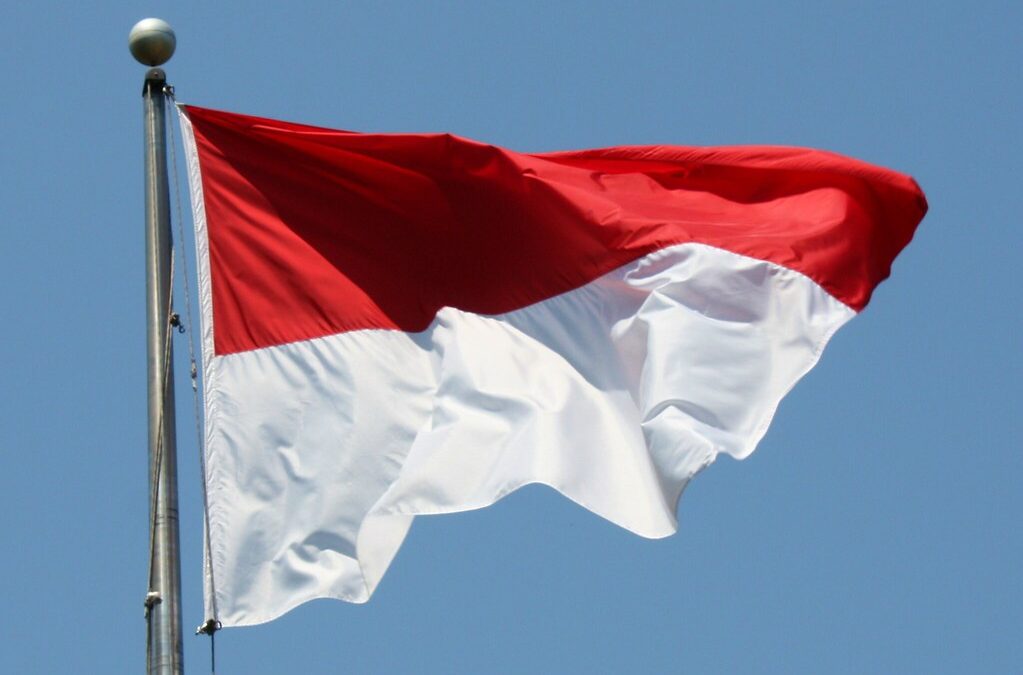
The second revision of Law No. 11 of 2008 on Electronic Information and Transactions (ITE Law), which was passed on 5 December 2023, does not comply with international human rights law and standards on freedom of expression and information, said the International Commission of Jurists (ICJ) today.
On 5 December 2023, the Indonesian House of Representatives passed the bill for the second revision of the ITE Law into law.
The ICJ is gravely concerned that the revised ITE Law fails to rectify the main flaws of its previous iteration, which has been used to wrongly criminalize and restrict free expression in online spaces. The criminal provisions contained in the revised law are inconsistent with international human rights law and standards, with added provisions having the potential to exacerbate repression of online expression.
“The retention of overbroad criminal provisions in the revised ITE Law signals the continuing failure of Indonesia to comply with its international human rights obligations to respect and protect the right to freedom of expression,” said Melissa Upreti, ICJ Regional Director for Asia and the Pacific. “The revision process lacked transparency, and important recommendations made by civil society to remove the ITE Law’s fatally flawed provisions have been disregarded.”
The ICJ is also concerned that the drafting process for the second revision was opaque, with public feedback on the draft having been ignored. The lack of transparency in the drafting process contravenes Indonesia’s obligation to ensure the effective exercise of the right to participate in public affairs, as guaranteed under article 25 of the International Covenant on Civil and Political Rights (ICCPR).
“The second revision of the ITE Law failed to capitalize on the opportunity for the Indonesian authorities to strengthen the protection of online freedom of expression and to reaffirm its commitment to respecting and protecting human rights in the online space. It is imperative that the revised law repeals or substantially amends the overbroad criminal provisions that have been used with concerning frequency to arbitrarily suppress online freedom of expression and create a climate of fear,” said Upreti.
In light of these concerns, the ICJ calls for the repeal or substantial amendment of the revised ITE Law to bring it in line with Indonesia’s human rights obligations to respect and protect the right to freedom of expression and information, through a transparent process that involves the effective participation of civil society.
Criminalization of free expression online
The revised ITE Law retains the overbroad and vague provisions criminalizing “contents that violate propriety” (article 27(1)); criminal defamation (article 27A); and “content that incites, persuades or influences” others that “causes feelings of hatred or hostility” based on protected characteristics (article 28(2)). A violation of these offences may result in imprisonment and criminal fines if found convicted (articles 45 and 45A).
Additionally, the revised law incorporates a new provision that imposes criminal liability for intentionally disseminating content that a person “knew contained false statements that cause public unrest” (article 28(3)), which may result in imprisonment if found convicted (article 45A(3)).
Any restriction on the right to freedom of expression and information must comply with the elements of legality, legitimate purpose, necessity and proportionality required under article 19(3) of the ICCPR. This means that any restriction on the right to freedom of expression must be based on law that is precisely worded, and be necessary for and the least restrictive measure to respond to a legitimate aim. The only aims identified as legitimate in article 19(3) are ensuring respect of the rights or reputations of others; or for the protection of national security, public order, public health or morals.
The criminal provisions in the revised law are unnecessary for any legitimate government purpose and risk making criminals of large numbers of ordinary internet users, and chilling many others from speaking online. They are clearly inconsistent with Indonesia’s obligations under article 19 of the ICCPR to guarantee the right to freedom of expression and information. They threaten unwarranted criminal sanctions for acts that are based on vague and overbroad language, which could be applied to unduly interfere with the rights of individuals and disproportionately impact those from disadvantaged and marginalized groups.
For instance, article 27(1) of the revised ITE Law threatens criminal sanctions for disseminating content that violates “propriety”, defined as “displaying nudity, genitalia, and sexual activity that contravenes with the values existing in society […]”. While the law now includes an exemption for public interest and self-defence (article 45(2)), this definition for “propriety” is vague and overbroad, having the potential to be weaponized to unjustly sanction any form of expression by individuals from marginalized groups, such as LGBTI-related content. Further, it could enable legal reprisals against victims/survivors of gender-based violence and lead to revictimization.
Defamation should never be subject to criminal, as opposed to civil, sanctions. The UN Human Rights Committee, which authoritatively interprets the ICCPR, has called on States to end the use of the criminal law for such purposes and affirmed that “imprisonment is never an appropriate penalty [for defamation]”. While the revised ITE law now incorporates a public interest exemption, the retention of criminal defamation will continue to have a chilling effect on online freedom of expression and information. Indeed, the previous criminal defamation provision in article 27(3) of the ITE Law, has already been applied to target expression critical of the government.
The criminalization of disseminating content that incites “feelings of hatred or hostility” in article 28(2) cannot be used to justify the application of criminal law. While States must act under the ICCPR article 20 to protect against actual incitement to violence and discrimination, provoking mere “feelings” of ill-defined conceptions of “hatred or hostility” stands well below the threshold of actual acts of violence or discrimination. In any event, the use of the criminal law is a plainly disproportionate measure to address any legitimate objective. The ICJ notes that the previous criminal hate speech provision in the ITE Law has been applied in an arbitrary manner to charge journalists and convict forms of expression that do not give rise to substantial harm.
The addition of article 28(3) in the revised ITE Law to criminalize disseminating “false statements” that causes “public unrest” is vague, overbroad and imprecise, which is inconsistent with the legality principle. Authorities may not rely on the prevention of “public unrest”, vaguely defined as “conditions that disturb public order […]”, to justify the disproportionate threat of criminal sanctions, especially imprisonment. The ICJ notes how other criminal provisions sanctioning disinformation, based on colonial-era regulations, have been used to arbitrarily sanction legitimate expression protected under international human rights law, including public interest reporting or critical opinions concerning public officials.
This press release can be downloaded in Bahasa Indonesian here.
Contact
Melissa Upreti, ICJ Regional Director for Asia and the Pacific, e: melissa.upreti@icj.org
Daron Tan, ICJ Associate International Legal Adviser, e: daron.tan@icj.org
Yogi Bratajaya, ICJ Legal Consultant, e: yogi.bratajaya@icj.org
Further reading
Dictating the Internet: Curtailing Free Expression, Opinion and Information Online in Southeast Asia
Indonesia: ICJ asks court to ensure that defamation and “false information” laws not be used to silence and criminalize human rights defenders
Indonesia: Law No. 12 of 2022 on Sexual Violence Crimes and Online Gender-Based Violence Against Women
Silenced But Not Silent: Lesbian, Gay, Bisexual and Transgender Persons’ Freedom of Expression and Information Online in Southeast Asia
Nov 30, 2023 | Advocacy, Analysis briefs, News
The International Commission of Jurists (ICJ), in an amicus curiae brief submitted today, has requested the East Jakarta District Court to give effect to Indonesia’s international legal obligations concerning freedom of expression and information in their adjudication of a case concerning criminal charges against two human rights defenders, Haris Azhar and Fatia Maulidiyanti.
Nov 22, 2023 | Advocacy, Joint Statement
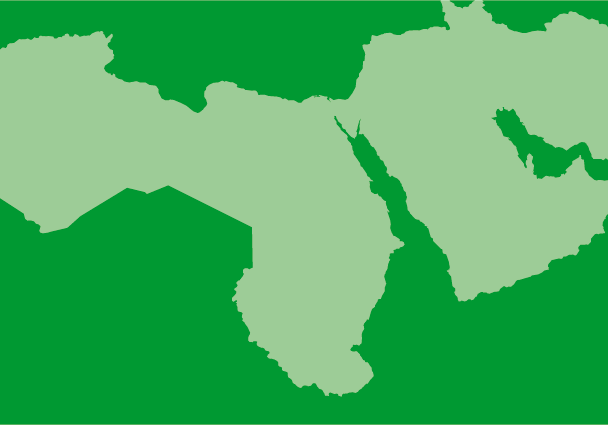
In light of credible allegations of ongoing violations of international humanitarian law arising from the protracted armed conflict in Israel and the Occupied Palestinian Territory, in particular in the Gaza Strip, the International Commission of Jurists (ICJ), Amnesty International (AI), and Human Rights Watch (HRW) support the call by a number of High Contracting Parties to the 1949 Geneva Conventions addressed to Switzerland, in its capacity as the depository of the four Geneva Conventions, to convene an urgent Conference of High Contracting Parties to the Geneva Convention Relative to the Protection of Civilian Persons in Time of War of 12 August 1949 (“the Fourth Geneva Convention”).
This call is based on Common Article 1 to the four Geneva Conventions, which states that “The High Contracting Parties undertake to respect and to ensure respect for the present Convention in all circumstances”. Underscoring the continued relevance of this body of law, the ICJ, AI, and HRW recall operative paragraph 1 of the UN Security Council Resolution 2712 on the situation in the Middle East, including the Palestinian question, of 15 November 2023 demanding “that all parties comply with their obligations under international law, including international humanitarian law, notably with regard to the protection of civilians, especially children.” In the same vein, our organisations recall operative paragraph 2 of the UN General Assembly, entitled Protection of civilians and upholding legal and humanitarian obligations, of 26 October 2023 demanding “that all parties immediately and fully comply with their obligations under international law, including international humanitarian law and international human rights law, particularly in regard to the protection of civilians and civilian objects, as well as the protection of humanitarian personnel, persons hors de combat, and humanitarian facilities and assets”.
The ICJ, AI, and HRW call on all High Contracting Parties to uphold the fundamental principle of international law that treaties must be executed in good faith, and fulfil their obligations under Common Article 1 “to ensure respect” for the Fourth Geneva Convention by participating in the Conference and acting collectively to prevent further violations of international humanitarian law in the Occupied Palestinian Territory and Israel.
The ICJ, AI, and HRW consider that in the circumstances currently prevailing in Israel and the Occupied Palestinian Territory, including, in particular, the Gaza Strip, ensuring respect for international humanitarian law requires, at a minimum, a suspension of arms transfers to the parties to the conflict; ensuring accountability for serious violations of international humanitarian law; supporting and cooperating with the Independent International Commission of Inquiry on the Occupied Palestinian Territory, including East Jerusalem, and Israel, and with the International Criminal Court’s ongoing Palestine investigation; and supporting other pathways to accountability including through the principle of universal jurisdiction.
Contact:
Said Benarbia, Director, ICJ Middle East and North Africa Programme, email: said.benarbia@icj.org
Katherine Iliopoulos, Legal Adviser, ICJ Middle East and North Africa Programme, email: katherine.iliopoulos@icj.org

Nov 16, 2023 | Advocacy, News
The International Commission of Jurists (ICJ) strongly condemns the Government of Pakistan’s decision to expel over 1.4 million Afghan nationals, including unregistered refugees, forcibly removing them to a country where many, especially women and girls, have a well-founded fear of persecution. The organization is deeply concerned for the safety and well-being of people who have been left with no choice but to flee under threats of arrest or deportation, as cases of arbitrary arrests and detention, and instances of ill-treatment, are reported.
“The forcible removal of Afghans is particularly egregious considering the ongoing humanitarian crises in Afghanistan and the current political climate following the Taliban takeover. Returning anyone there, especially women and girls, is fraught with risks. The expulsion of refugees and asylum seekers violates the principle of non-refoulement under international law, which prohibits the forcible removal of anyone to a country or place where they would have a well-founded fear of persecution, such as a real risk of being tortured or otherwise ill-treated or other serious human rights violations”, said Melissa Upreti, ICJ Asia Director.
Estimates indicate that there are over 1.4 million undocumented Afghans in Pakistan, in addition to some 1.3 million registered Afghan refugees. On 3 October 2023, the Government of Pakistan announced its plans to repatriate “illegal foreigners.” This was followed by a circular stating that Afghan Citizen Cardholders and those with Proof of Registration would be exempted. The deadline for Afghan nationals to leave Pakistan was 1 November, and has recently been extended to 31 December 2023, following significant international pressure. However, there have been reports of these exemptions not being applied and Afghans facing increasing harassment and pressure from local authorities.
UN agencies have called attention to the possibility of a serious escalation in human rights violations resulting from the separation of families and deportation of minors as the Pakistani authorities implement their plans. Since August 2021, the UN High Commissioner for Refugees has urged States not to return Afghan nationals to Afghanistan given that the country continues to be affected by recurrent conflict, instability and climate-induced disasters.
The ICJ and its partners have documented detailed evidence of gender-based persecution of women and girls in Afghanistan, as a direct result of the mounting draconian restrictions on their human rights and freedoms since the Taliban takeover in August 2021, in a joint report released earlier this year with Amnesty International. In light of the gravity and systematic nature of the restrictions and prohibitions that women and girls face in Afghanistan, the two human rights organizations recommended that all Afghan women and girls outside Afghanistan should be considered prima facie refugees and granted international protection.
“There is no evidence of a change in the de facto authority’s mode of governance, which centres on the oppression of women and girls and severe deprivation of their fundamental rights. If anything, there is evidence that the situation for women and girls in Afghanistan has become worse. Expelling Afghan nationals from Pakistan, especially women and girls, along with their families and forcing them back to Afghanistan puts them at a real risk of persecution or other forms of serious harm for which no legal recourse is available in Afghanistan,” added Upreti.
Citing concerns about a breach of international law obligations by Pakistan, a number of UN Special Rapporteurs have said in a joint letter that, “the lack of domestic asylum laws and procedures does not absolve States of their obligations to uphold the principles of non-refoulement under international human rights and customary law.”
Pakistan’s National Commission for Human Rights (NCHR) has urged the Government to refrain from conducting the deportations and called for adherence to relevant provisions in national and international law pertaining to refugees.
Thousands of Afghans have already crossed the border and with the recent postponement of the deadline to leave the county, the fate of over a million Afghans hangs in the balance. The ICJ calls on the Government of Pakistan to immediately:
- Rescind the expulsion order, cease further deportations and harassment of Afghans and comply instead with its international law obligations,
- Create pathways for women, girls and their families who have been forced to leave under the order to safely return.
- Consult with civil society, members of the Afghan community living in Pakistan, the NCHR, and relevant international organizations in the development of appropriate policies.
Contact:
Raquel Saavedra, ICJ Legal Adviser, e: raquel.saavedra@icj.org
Oct 24, 2023 | Advocacy, News, Statements, Work with the UN
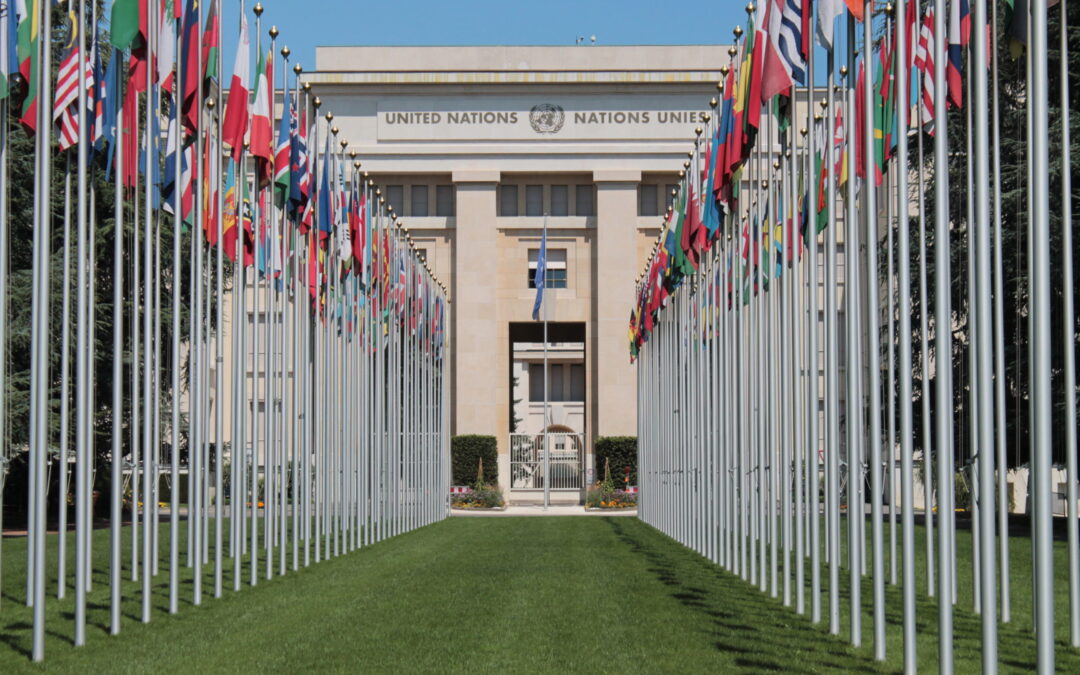
A week of negotiations started at the United Nations in Geneva yesterday to enhance the international legal framework to regulate business enterprises, especially transnational corporations, and increase accountability for human rights abuses and violations linked to their activities. The ICJ has been actively participating in the previous sessions of these negotiations in the last nine years and is committed to pursue its constructive contribution to the debate. Read our statement below.
“Thank you, Mr. Chair.
The International Commission of Jurists (ICJ) congratulates you on your election as the Chairperson-Rapporteur.
The ICJ acknowledges the efforts made by the Chairmanship to propose a revised and streamlined text on the basis of the various inputs received and consultations organized since the 8th session of this working group. We appreciate that this work has resulted in a more concise and clearer text in several places, which, in some respects, may better facilitate the negotiations ahead of us this week. It brings more internal coherence to the text and avoid repetitions that were affecting previous iterations. We also acknowledge that there are varying and divergent positions among States on the more difficult issues under discussion in this process and that you have proposed some compromise formulations to bridge the gaps.
We, however, regret that some critical provisions have disappeared from the revised draft in front of us at this session. The ICJ is particularly concerned that articles concerning prevention, liability and jurisdiction have been stripped of key elements that served to clarify international human rights law with regard to accountability for human rights abuses and violations in the context of business activities; and to ensure access to justice for the victims of such abuses and violations including through access to effective judicial remedies.
The ICJ will thus intervene in the negotiations during this 9th session in a constructive spirit with the aim to make proposals and comments addressing these gaps in the protection of human rights in the context of the activities of transnational companies and other business enterprises.
We are convinced that this process, after 9 years, needs to deliver an ambitious enough text so as to meet the needs of present and future victims and make a real contribution to the necessary development of international law in that area. For these reasons, we urge all States from all regional groupings to participate actively and constructively in the negotiations.
Thank you very much, Mr. Chairperson-Rapporteur.”
Statement delivered by:
Sandra Epal Ratjen, ICJ UN Representative and Senior Legal Adviser, e: sandra.epal@icj.org