Nov 26, 2015
Myanmar’s Parliament must abolish or extensively amend its criminal defamation laws to ensure the protection of the right to freedom of opinion and expression, said the ICJ today.
Criminal defamation laws in Myanmar impose harsh sanctions, such as imprisonment, to punish free expression.
The prospect of arrests, detentions, criminal trials and prison time could chill the exercise of free expression of opinions and exchange of information.
The ICJ, the United Nations Human Rights Committee (which monitors and supervises States’ compliance with their international human rights obligations), the UN Special Rapporteur on freedom of opinion and expression and other international human rights authorities and an increasing number of governments consider that criminal defamation laws should be abolished, as they are incompatible with the right to freedom of expression and opinion.
Myanmar’s 2008 Constitution provides for the protection of freedom of expression but sets out broad and ambiguous restrictions that limit the enjoyment of these rights.
In addition, the judiciary of Myanmar currently struggles to adjudicate such criminal defamation cases with impartiality and competence.
The result is that enforcement of the defamation laws can result in violations of a number of international laws and standards protecting human rights, and also could have an overall chilling effect on the freedom of opinion and expression in the country.
Just last month, three people faced criminal defamation charges and were detained pending trial for posting material on Facebook that allegedly defame either the Myanmar army or a political leader.
- Kachin activist Patrick Kum Jaa Lee was arrested in Yangon for allegedly posting a Facebook post showing someone stepping on a photo of an army Commander-in-Chief Senior General;
- Chaw Sandi Tun was arrested for a Facebook post pointing out that an army official was wearing clothes of a similar colour to those of then opposition leader Aung San Suu Kyi; and
- Maung Saungkha was arrested for allegedly posting a poem on Facebook he had written about having a tattoo of the President on his penis. His next hearing at Shwepyithar Township has been scheduled for tomorrow.
The ICJ is monitoring some of these trials to assess their compliance with international laws and standards. In one such trial, involving Patrick Kum Jaa Lee, the accused has been denied bail for the fifth time this week despite his ailing health.
The laws used to charge and detain the accused are the Electronic Transaction Law, specifically under provision 34(d), the Myanmar Telecommunications Law, specifically under provision 66(d), and Article 500 of the Penal Code.
Download the full paper here:
Myanmar-Criminal Defamation Laws-Advocacy-Position paper-2015-ENG (in PDF)
Myanmar-Criminal Defamation Laws-Advocacy-Position paper-2015-BUR (Burmese version, in PDF)
Nov 3, 2015
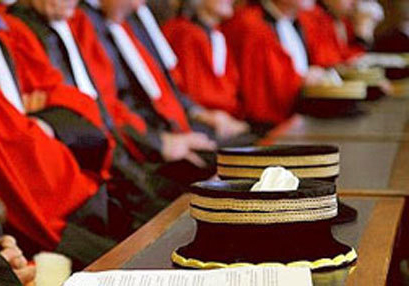
In a memorandum published today, the ICJ is calling on the Tunisian Parliament to revise the draft law on the Constitutional Court with a view to ensuring its full compliance with international standards, in particular those on judicial independence.
The establishment of a truly independent Constitutional Court in Tunisia holds out the promise of strengthening the rule of law by enhancing protection of the rights guaranteed under the new Constitution, the ICJ notes.
But to achieve these aims, key aspects of the draft law must be changed, the Geneva-based organization stresses.
“Tunisian law makers must amend the draft law to provide the Court with the necessary guarantees of independence, broader functions and to ensure individuals easier access to the Court, whose function is to protect their rights under Tunisia’s new Constitution,” said Said Benarbia, Director of the ICJ Middle East and North Africa Programme.
The draft law must also be revised to ensure that all members of the Court are appointed because of their legal expertise and integrity, and that its composition includes women and reflects the diversity of the population of Tunisia, the ICJ says.
Ensuring that a body composed of at least a majority of judges will select the individuals to be appointed to the Court will bolster the Court’s independence.
“The judges of the Court should be selected in a clear and open process, led by judges, that ensures that the individuals appointed to sit on the Court are chosen for their skills and not on the basis of their political affiliations or loyalties,” Benarbia added.
Additional safeguards against the possibility of removal for unjustified reasons and which ensure fair disciplinary procedures are needed to ensure the guardians of the Constitution may rule without fear or favour, the ICJ adds.
The draft law should be amended so as to more clearly provide the Court with a role as a check on measures taken by the executive branch of government.
It is also crucial that provisions of the draft law be added to broaden the Court’s mandate and increase individuals’ access to it, the ICJ underlines.
For example, unnecessary restrictions, such as any specific accreditation for lawyers should be removed, and provisions authorizing the Court to accept third parties as interveners and amicus curiae to increase the basis of information on which the Court decides a case should be added.
Contact:
Theo Boutruche, Legal Adviser of the ICJ Middle East and North Africa Programme, t: +96 170 888 961, e: theo.boutruche(a)icj.org
Tunisia-Draft Law Const Court-Advocacy-Analysis Brief-2015-ENG (full memo in PDF, English)
Tunisia-Draft Law Const Ct-News-Press releases-2015-ARA (full press release in PDF, Arabic)
Tunisia-Draft Law Const Court-Advocacy-Analysis Brief-2015-ARA (full memo in PDF, Arabic)
Sep 21, 2015
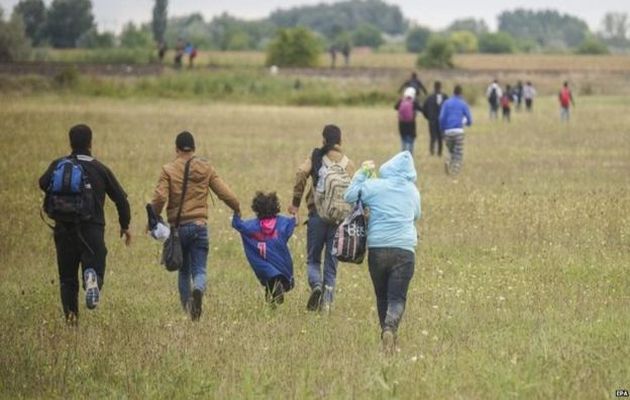
The ICJ today urged the European Council to mandate the EU institutions and Member States to take urgent co-ordinated action to protect the human rights of migrants and refugees who are now arriving in Europe on a large scale, to avoid exacerbating an already grave human rights crisis.
European Council President, Donald Tusk, has called for an extraordinary, informal meeting of heads of State and government for Wednesday 23 September, to discuss a common coordinated approach to address the situation.
The ICJ is following with extreme concern the latest developments in the refugee and migration emergency, with thousands of persons trying to reach the EU every day, including those fleeing war or persecution in Syria, Eritrea, Afghanistan and Ethiopia.
“The current situation represents an acid test for the EU’s identity as a legal order based on human rights and the rule of law,” said Róisín Pillay, Director of the ICJ Europe programme.
“In this rapidly developing human rights crisis, the EU institutions and Member States must respond in accordance with their international human rights and refugee law obligations, which are also founding principles of the EU,” she added.
The unprecedented number of refugees and other migrants – 9,000 persons crossed the Hungarian-Serbian border only on 14 September – has already seen numerous tragedies, including deaths by drowning in the Mediterranean Sea, the ICJ deplores.
It has also seen incidents raising serious human rights concerns, the Geneva-based organization says.
These include the numbering on their skin of refugees and migrants to the Czech Republic; ill-treatment of persons trying to cross the Greek-Macedonian border; and, most lately, deployment of the Hungarian army at the border with Serbia and allegations of ill-treatment, seizure and push-backs by the Hungarian authorities.
“The EU must urgently take co-ordinated action to provide adequate reception conditions and effective access to international protection for people fleeing war, persecution and other serious violations of human rights,” said Massimo Frigo, Legal Adviser of the ICJ Europe Programme.
The ICJ stresses that all refugees and other migrants, regardless of their status, are entitled to full protection of their human rights under international law.
The EU institutions and all EU Member State authorities have a duty to safeguard these rights at all times, including under the EU Treaties and the EU Charter of Fundamental Rights, the ICJ adds.
Contact:
Massimo Frigo, Legal Adviser, ICJ Europe Programme, t: +41 22 979 3805 ; e: massimo.frigo(a)icj.org
Europe-Migration statement-Advocacy-analysis brief-2015-ENG (full text in pdf)
Photo: EPA
Sep 14, 2015
The UN Working Group on Arbitrary Detention will today present to the Human Rights Council its “Basic Principles and Guidelines on remedies and procedures on the right of anyone deprived of their liberty to bring proceedings before a court” (UN Doc A/HRC/30/37 (2015)).
“The Basic Principles and Guidelines act to reflect important elements necessary to preserve and protect the right to liberty,” said Wilder Tayler, Secretary-General of the ICJ.
“The document assists States, international organization and civil society to enhance, in law and in practice, respect for the right to challenge the lawfulness of detention by habeas corpus or equivalent procedures,” he added.
As concluded by the ICJ’s Eminent Jurists Panel on Terrorism, Counter-terrorism and Human Rights, there has been a progressive erosion of international law principles since the so-called ‘war on terror’.
Along with many other aspects of the Basic Principles and Guidelines, the ICJ has therefore welcomed the attention given to the application human rights standards alongside international humanitarian law and the related provisions of the document pertaining to detention in armed conflict.
“In light of some recent State practices, including in the context of unlawful rendition and secret detention programmes, there is an especially important value in this aspect of the Basic Principles and Guidelines, including for the combating of incommunicado and secret detention, enforced disappearance and torture and other cruel, inhuman or degrading treatment,” Tayler said.
“It is for this reason that the ICJ has produced a Legal Commentary on elements of the Basic Principles and Guidelines pertaining to detention in armed conflict,” he added.
The ICJ’s Legal Commentary supports the general approach adopted by the Working Group in its formulation of the Basic Principles and Guidelines as they pertain to detention in armed conflict.
It provides further explanation and justification for the Working Group’s approach, with particular reference to international law and standards, showing why the Basic Principles and Guidelines – as they apply to detention in armed conflict – should be scrupulously followed.
Background
Under its resolution 20/16 (2012), the UN Human Rights Council requested the Working Group on Arbitrary Detention to prepare draft basic principles and guidelines on remedies and procedures on the right of anyone deprived of his or her liberty.
The Basic Principles and Guidelines were adopted by the Working Group in April 2015, following a two-year process of deliberations and open consultations.
The Working Group set out a first draft set of principles and guidelines ahead of its global consultation on the subject in September 2014.
From 2 to 5 February 2015, the Working Group met to continue its elaboration of the Basic Principles and Guidelines, resulting in the adoption of a second draft.
The Working Group adopted its final iteration of the document at the conclusion of its session on 29 April 2015.
The ICJ engaged in all stages of the Working Group’s elaboration and consultations.
It made written submissions in November 2013, April 2014 and March 2015.
Its staff, Matt Pollard and Alex Conte, gave panel presentations at the September 2014 global consultation.
Contact:
Alex Conte, Senior Legal Adviser at ICJ, t: +41 22 979 3838 ; e: alex.conte(a)icj.org
Universal-Commentary-WGAD-PrincGuideArmedConflict-Advocacy-2015-ENG (full text in PDF)

Jul 17, 2015
In a briefing paper released today, and an accompanying letter to Nepal’s Constituent Assembly, the ICJ raises a number of concerns about Nepal’s Draft Constitution.
The Constituent Assembly’s endorsement of a Draft Constitution on 7 July 2015, and the subsequent opening of a 15-day public consultation on this draft, represents a unique and crucial moment in Nepal’s constitutional history, the ICJ said.
But to fulfill the promises of the Comprehensive Peace Accord that ended the decade-long armed conflict and the guarantees of the Interim Constitution it will replace, changes to the drafting process must ensure adequate opportunity for meaningful and inclusive public participation, and amendments to the Draft Constitution are required to protect human rights in accordance with Nepal’s international obligations.
“This 15-day timeframe must be expanded, and provisions of the draft Constitution must be amended, to ensure that the Nepali people have the opportunity to frame a Constitution which guarantees the rule of law, human dignity and enhanced human rights protection,” said Wilder Tayler, Secretary General of the International Commission of Jurists.
In a letter to the Chairperson of the Constituent Assembly on 17 July 2015, accompanied by a detailed briefing paper, the ICJ has made recommendations for changes to both the constitution-making process and text of the Draft Constitution in light of Nepal’s obligations under international human rights law.
The ICJ has underscored that, while the renewed momentum within the Nepali government in the aftermath of the earthquake to finalize and adopt the long-awaited Constitution is welcome, the speed and manner in which the consultation on the first Draft Constitution is being conducted is undermining people’s right to participate.
“Such ‘fast-tracking’ risks delegitimizing the constitution-making process by undermining people’s right to participate in it”, Secretary-General Tayler said. “The government must urgently revise the timetable to ensure that all individuals, including minorities, historically marginalized groups and people in remote areas whose accessibility is further compromised by the rainy season, have the necessary time and resources to meaningfully review and comment on the draft”.
The ICJ has also noted several provisions of the Draft Constitution that must be amended to fully comply with international human rights standards and to protect the rule of law.
The ICJ’s analysis of the provisions of the Draft Constitution on citizenship, fundamental rights and judicial independence, in light of Nepal’s international human rights obligations, found that:
- The citizenship provisions are vague and discriminatory, and risk making people stateless;
- Non-citizens are excluded from key rights entitlement and protections;
- Several rights, including women’s rights and key economic, social and cultural rights, are not adequately protected;
- Restrictions on the rights to free speech, expression, information and press freedom, as well as the rights to freedom of association and assembly are broad and vague and do not conform with international human rights standards;
- Provisions on remedy for human rights violations are lacking;
- Protections of the independence of the judiciary are weak and inadequate;
- Provisions on emergencies and consequent restriction of rights are overbroad.
“Amendments to the Draft Constitution to address these concerns, among others are needed if Nepal is to adopt a strong and progressive Constitution which safeguards the rule of law, human rights and the independence of the judiciary, consistent with the country’s obligations under international human rights law,” Tayler said.
Download the ICJ’s letter to the Constituent Assembly here:
NEPAL-DRAFT CONST-ADVOCACY-OPEN LETTER-2015-ENG
Download the ICJ’s full briefing here:
NEPAL-CONSTITUTION-ADVOCACY-ANALYSIS BRIEFS-2015-ENG
Contact:
Nikhil Narayan, Nepal Head of Office and ICJ Senior Legal Adviser, m: +977-(0)9813187821, e-mail: nikhil.narayan(a)icj.org