Jan 30, 2018
Today, the ICJ filed its submission to the UN Committee against Torture on the compliance by Azerbaijan with its obligations under the UN Convention against Torture.
The Committee will consider it during the adoption of a list of issues prior to reporting (LOIPR) for the examination of the Fifth Periodic Report of Azerbaijan under Article 19 of the Convention against Torture and Other Cruel, Inhuman or Degrading Treatment or Punishment (CAT).
During its 63rd session, from 23 April to 18 May 2018, the Committee will prepare and adopt a LOIPR on Azerbaijan.
Once adopted, the LOIPR will be transmitted to the State party. Azerbaijan’s formal response to the LOIPR will then constitute its Fifth Periodic Report under article 19 of the Convention.
Azerbaijan ratified the CAT in 1996. The last Concluding Observations on the compliance by Azerbaijan with its obligations under the Convention were adopted in 2015.
The ICJ submission to the Committee highlights a number of ongoing concerns with respect to the country’s implementation of and compliance with the provisions of the CAT:
- Azerbaijan’s legislation governing the legal profession;
- the situation of lawyers in practice;
- the lack independence of the legal profession;
- the role of the Bar Association with regard to attacks on lawyers.
The observations made in this submissions are based on the ICJ’s report “Defenceless defenders: Systemic problems in the legal profession of Azerbaijan”, published in September 2016 following a research mission to the country. The report analyses Azerbaijan’s legislation governing the legal profession; the situation of lawyers in practice, in particular, in relation to the lack independence of the legal profession; as well as the role that the Bar Association plays in attacks on lawyers.
ICJ-AzerbaijanCAT-ListofIssues-Jan18-final (download the submission)
Dec 1, 2017
In a new briefing paper, the ICJ expressed today concerns at the adverse impact of new legislation on the right to access to a lawyer and to a fair trial in Azerbaijan.
On 31 October 2017, the Azerbaijan Parliament adopted amendments to the Civil and Administrative Codes of Azerbaijan and the law “On lawyers and lawyers’ activity” that restrict representation in court to lawyers who are members of the Bar Association.
The amendments were signed into law on 7 November by President Ilham Aliyev and are due to enter into force on 1 January 2018.
The new legislation bans representation in courts by non-members of the Bar Association in Azerbaijan.
If implemented without a necessary and sufficient transition period, it will terminate the legal practice of many practicing lawyers without a realistic possibility to join the Bar Association and thereby continue their work.
The International Commission of Jurists (ICJ) is concerned that this will leave many people in Azerbaijan without access to legal assistance and representation in violation of their human rights, including the right to a fair hearing.
Azerbaijan-legalsubmission-accesstoalawyer-2017-eng (download the briefing paper)
Oct 31, 2017
The ICJ presented a submission on the systems of extradition, expulsion and abductions of the Russian Federation to the Committee of Ministers of the Council of Europe.
The submission was presented for the consideration by the Committee of Ministers of the Council of Europe on the implementation by the Russian Federation of a series of judgments of the European Court of Human Rights in the group of cases Garabayev v. Russia and others.
In particular, the ICJ presented its recent findings in the report Transnational Injustices – National Security Transfers and International Law that provides the most recent assessment of the systems of extradition, expulsion and abduction/rendition of the Russian Federation and States in Central Asia compared with the laws and practices in this field of EU Member States and the US rendition system.
The ICJ submission refers to the lack of compliance by the Russian Federation with the judgments of the European Court of Human Rights with regard to the respect of the principle of non-refoulement (articles 3 ECHR), the lack of effective remedy against violations of this principle (article 3 and 13 ECHR), as well as the lack of compliance with the Court’s interim measures (article 34 ECHR).
Russian Federation-Garabaev-Transfer-Shortcomings-Advocacy-Legal submissions-2017-ENG (Download the submission)
Aug 31, 2017
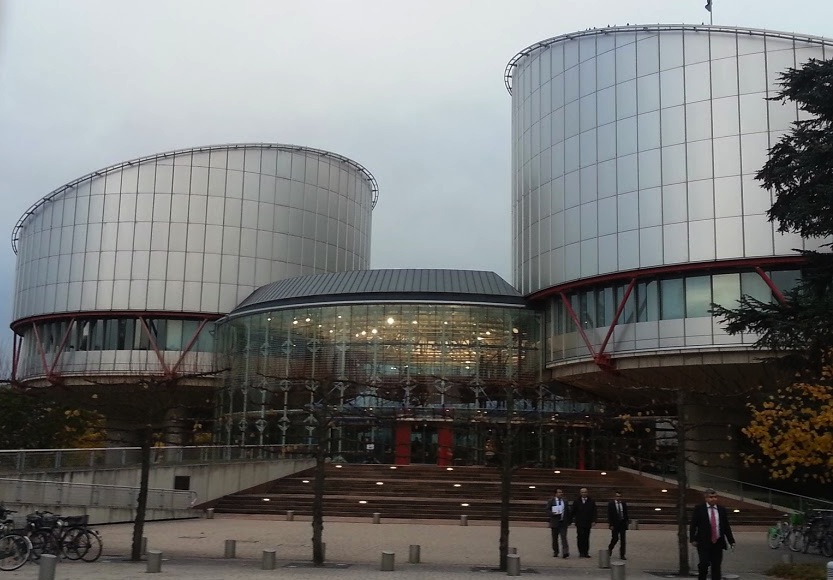
Today, the ICJ intervened in the case Anatoliy Oleksiyovych Denisov v Ukraine, Application no. 76639/11.
In its submission, the ICJ provided the Court with an analysis in relation to:
(a) The role of court presidents in the self-governance of the courts and in maintaining judicial independence;
(b) International standards in relation to security of tenure of judges and court presidents;
(c) The importance of procedural safeguards, including under Article 6.1 ECHR, in decisions affecting the career and tenure of court presidents; and
(d) In light of international standards and principles, the extent to which a disciplinary measure such as removal from the position of president of a court may interfere with the right to respect for private life as protected by Article 8 ECHR.
The ICJ argued that court presidents, in many European jurisdictions, play an important role in the self-governance and impartiality of the judiciary.
Upholding the independence of the judiciary requires, inter alia, that court presidents should, in the discharge of these functions, enjoy independence from the executive, as well as from other powerful interests.
The intervener will argue that the nature of court presidents’ role has consequences for the application of Convention rights to measures affecting their judicial career, including removal from the role of court president, even in cases where they retain judicial office.
Ukraine-Denisov v Ukraine -Advocacy-legal submission-2017-ENG (full text in PDF)

Jul 14, 2017
The ICJ submitted observations in a case brought with Forum for Human Rights, against the Czech Republic, in defense of children in the juvenile justice system.
The submission is a reply to the Government’s observations in this collective complaint before the European Committee of Social Rights.
In this case, the ICJ and Forum for Human Rights argue that the Czech Republic fails to ensure equal legal protection and participation of children below the age of criminal responsibility in the pre-trial stage of juvenile justice procedures.
The ICJ and FORUM submit that serious systemic flaws in the Czech juvenile justice system deprive a specific group of particularly vulnerable individuals – children below the age of criminal responsibility – of an adequate level of social protection and leave them at risk of inappropriate or unfair procedures leading to arbitrary punitive measures, in violation of Article 17 of the European Social Charter, both alone and read in conjunction with the principle of equality in the preamble to the Charter.
This situation concerns more than one thousand children every year and as a matter of urgency, it requires a structured response.
CzechRepublic-ECSR-juvenilejustice-legalsubmission2-ENG-2017 (download the submission)