Mar 31, 2017
On 31 March, the ICJ and eight NGOs submitted a set of joint observations to the UN Committee Against Torture on its draft revised General Comment No. 1 on the implementation of Article 3 of the UN Convention against Torture and Other Cruel, Inhuman or Degrading Treatment or Punishment.
Universal-NGO submission UN Cmt Torture-Advocacy-Legal submissions-2017-ENG (full text, in PDF)
Mar 30, 2017
The ICJ and Human Rights Commission of Pakistan (HRCP) have made a submission to the Committee against Torture in advance of its examination of Pakistan’s initial report under the Convention against Torture and other Cruel, Inhuman or Degrading Treatment or Punishment.
ICJ and HRCP’s submission draws the Committee’s attention to concerns related to:
- Legal framework relevant to torture and other ill-treatment in Pakistan;
- Compatibility with the Convention, as well as other relevant international standards, of draft legislation purporting to incorporate the Convention against Torture into Pakistan’s domestic law;
- Allegations of torture and other ill-treatment of individuals facing trials before military courts in connection with terrorism-related offences;
- Prevalence of torture and other ill-treatment documented by HRCP; and
- Enforced disappearances as torture and other ill-treatment.
The Committee will examine Pakistan’s initial report during its 60th session, which will be held from 18 April to 12 May 2017.
Following the review, the Committee will adopt Concluding Observations setting out recommendations to the Pakistani Government.
Pakistan-CAT ICJ HRCP-Advocacy-legal submissions-2017-ENG (full text in PDF)

Mar 20, 2017
Today, the European Committee of Social Rights registered a collective complaint prepared by the ICJ in cooperation with Forum for Human Rights, against the Czech Republic.
The complaint argues that the Czech Republic fails to ensure equal legal protection and participation of children below the age of criminal responsibility in the pre-trial stage of juvenile justice procedures.
The ICJ and FORUM submit that serious systemic flaws in the Czech juvenile justice system deprive a specific group of particularly vulnerable individuals – children below the age of criminal responsibility – of an adequate level of social protection and leave them at risk of inappropriate or unfair procedures leading to arbitrary punitive measures, in violation of Article 17 of the European Social Charter, both alone and read in conjunction with the principle of equality in the preamble to the Charter.
This situation concerns more than one thousand children every year and as a matter of urgency, it requires a structured response.
Jan 23, 2017
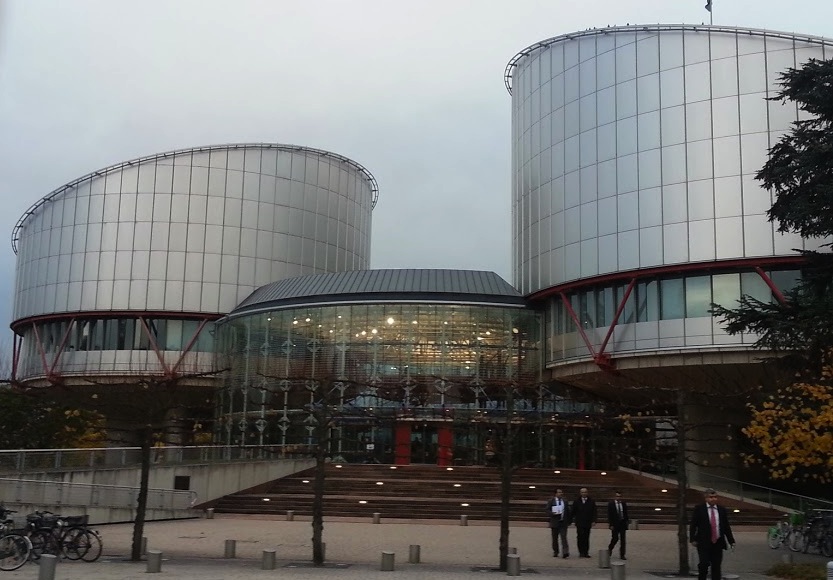
On 16 January 2017, the ICJ with other civil society organizations submitted a third-party intervention in the case of E.S. v. Spain before the European Court of Human Rights.
The case (application no. 13273/16) arose from the attempted removal of a gay asylum applicant to Senegal. The third-party submissions focus on the relevance of the Refugee Convention — as interpreted by a number of domestic courts — and of the EU asylum acquis and the EU Charter of Fundamental Rights to the determination of the scope and content of non-refoulement obligations under Article 3 of the European Convention on Human Rights (ECHR) of those Contracting Parties that are also EU Member States.
The submissions, in particular, address the following:
- Enforced concealment of one’s same-sex sexual orientation constitutes persecution under refugee law and is incompatible with the ECHR, in particular, Article 3;
- The criminalization of consensual same-sex sexual conduct gives rise to a real risk of Article 3 prohibited treatment, thus triggering non-refoulement obligations under that provision of the Convention; and
- The risk of persecution based on sexual orientation in Senegal.
The comments drew upon the European Court’s case-law; authoritative interpretation of other applicable sources of international law and comparative international law.
The ICJ made the submissions jointly with the Human Dignity Trust, the European Council on Refugees and Exiles, the European Region of the International Lesbian, Gay, Bisexual Trans and Intersex Association (ILGA-Europe) and the AIRE Centre (Advice on Individual Rights in Europe).
SPAIN-ECtHR joint amicus in ES v SPAIN-Advocacy-LegalSubmission-2017-ENG

Nov 24, 2016
In April and July this year, the ICJ and four other NGOs filed two sets of written submissions with the Constitutional Court of Romania in the case of Coman Relu Adrian, Hamilton Robert Clabourn and Association Accept v. General Inspectorate for Immigration and Ministry of Home Affairs.
The case concerns the Romanian authorities’ refusal to recognize either de facto or de jure the same-sex marriages of migrant EU citizens with third-country nationals.
In their original original third-party intervention of April 2016, the ICJ, the AIRE Centre, ECSOL, FIDH and ILGA-EUROPE argued that such refusal violates relevant EU law and the European Convention on Human Rights.
In their supplementary intervention, filed in July 2016, the five NGOs made additional written submissions to the Constitutional Court of Romanian in light of the judgment by the European Court of Human Rights in the case of Taddeucci and McCall v. Italy of 30 June 2016.
romania-cc-joint-amicus-re-third-country-national-spouse-legal-submissions-april-2016-eng
romania-cc-joint-amicus-re-third-country-national-spouse-legal-submissions-july-2016-eng

![Smoke rises after an Israeli air strike on the village of Taybeh in southern Lebanon [Source: Al Jazeera]](https://www.icj.org/wp-content/uploads/2026/03/Screenshot-2026-03-20-at-15.56.24-300x200.png)