Dec 10, 2015
Esta información fue enviada para la sesión 71 del Comité, en enero 2016.
El informe de la CIJ busca brindar al Comité información complementaria sobre el cumplimiento por parte del Perú de sus obligaciones en virtud del artículo 3, párrafo 4, del Protocolo Facultativo sobre la Venta de Niños, la Prostitución infantil y el uso de niños en la pornografía, en relación a la responsabilidad legal de la persona jurídica o moral en el ordenamiento legal peruano.
El informe se centra únicamente en la falta de cumplimiento por el Estado parte de sus obligaciones en virtud del artículo 3, párrafo 4, del PFVN relativo a la responsabilidad penal, civil o administrativa de las personas jurídicas o morales en la legislación peruana.
El informe incluye posibles recomendaciones acerca de las medidas que el Perú debería tomar con el fin de cumplir plena y eficazmente sus obligaciones en virtud del PFVN.
Peru-CRC OPSC Submission-Advocacy-Legal submission-2015-SPA (full text in PDF)
Nov 23, 2015
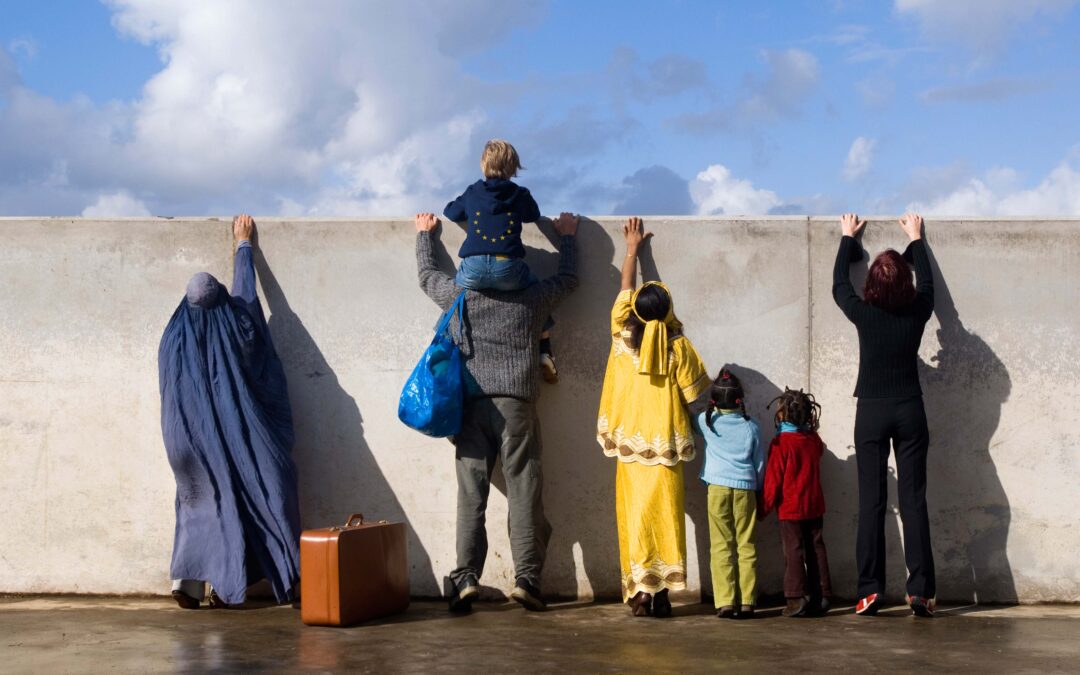
Today, the ICJ, the AIRE Centre, Amnesty International and the European Council on Refugees and Exiles jointly intervened before the European Court of Human Rights in a case against Spain on the denial of entry of asylum seekers in the enclave of Melilla.
The four human rights organisations argued that the European Convention on Human Rights prohibits refusal of entry, and/or return of a person to face serious violations of human rights, including of the right to life, the prohibition of torture or inhuman or degrading treatment or punishment, or flagrant denial of justice and of the right to liberty. They submitted that these refusals of entry are also contrary to the rights set out in the EU Charter of Fundamental Rights (CFR) and the prohibition on non-refoulement found in the 1951 Geneva Convention on the Status of Refugees (Refugee Convention).
The joint interventions presents the argument that, for these prohibitions to be practical and effective and not theoretical and illusory, Contracting Parties must have in place effective systems for identifying people within their jurisdiction who are entitled to benefit from the prohibition on refusing entry.
Spain-ICJ&others-AmicusBrief-ND&NT-ECtHR-legalsubmission-2015 (download the third party intervention)

Nov 9, 2015
The ICJ, together with JUSTICE, Amnesty International and REDRESS, filed a third party intervention with the Supreme Court in the case Abdul-Hakim Belhaj and Other v. Jack Straw and Others.
The case involves the appeal of an action brought by a Libyan national and his spouse against the UK authorities for their alleged role of complicity in the rendition and torture of the complainants. The appeal is from a decision of the High Court, which had determined that the case could not go ahead because the courts could not adjudicate the complaint since it was an “act of States” not subject to judicial review.
The four organizations argued that application of the act of state and of the sovereign immunity doctrines, in the manner accepted by the High Court and rejected by the Court of Appeal, was not consistent with national and international human rights law.
In their brief, the human rights organisations addressed the following topics:
- The scope of the doctrine of State immunity in English law, in particular the circumstances in which a foreign State is directly or indirectly “impleaded”;
- Whether the act of State doctrine in English law reflects international law, and the scope of the principle that the act of State doctrine cannot be invoked in cases where serious breaches of international law (including international human rights law) are alleged;
- The nature of the prohibition of torture and the right to a remedy for serious human rights violations in international law.
UK-ICJ&others-AmicusBrief-Belhadj_v_Straw-SC-legalsubmission-2015 (download the amicus brief)
Background information
On 20 December, the High Court of Justice dismissed the claim for civil damages of Abdul-Hakim Belhaj, a Libyan opposition member during the rule of Muammar Gaddafi, and of his wife Fatima Boudchar. They sought civil compensation from the UK government for complicity of the UK secret services in their US-led rendition to Libya in 2004, including their unlawful detention and torture in China, Malaysia, Thailand and Libya. Fatima Boudchar was pregnant at the time of the rendition. Abdul-Hakim Belhaj was released from detention in Libya only in 2010. The Court, although it rejected Government claims of immunity, held that the action was barred on the basis of the doctrine of “act of state” according to which “domestic court exercises judicial restraint in order to avoid adjudicating upon the actions of foreign sovereign states, ‘in the area of transactions between states’”. The Court held that it could not assess the lawfulness of actions committed by officials of China, Malaysia, Thailand and Libya in those countries according to their laws. It also declined “to decide that the conduct of US officials acting outside the United States was unlawful, in circumstances where there are no clear and incontrovertible standards for doing so and where there is incontestable evidence that such an enquiry would be damaging to the national interest”.
Nov 6, 2015
The ICJ submitted a third-party intervention in the case of Bagirov v Azerbaijan before the European Court of Human Rights.
In this intervention the ICJ argues that the special role of lawyers in the administration of justice, pursuant to the rule of law, necessitates their ability to carry out their important professional functions without undue restrictions, which requires close scrutiny of any limitations imposed, including concerning those statements made by lawyers outside of courts.
The ICJ further submits that the role and responsibility of lawyers in imparting information to the public on issues of public concern related to the justice system, is not confined to comments on individual cases in which the lawyer represents a client.
In addition, such remarks warrant particularly strong protection under Article 10 of the European Convention.
The ICJ argues that comments by a lawyer that are critical of State authorities responsible for the detention of a person who has been injured or has died in their custody should be interpreted and be presumed to constitute protected forms of expression, unless they can be shown to have been made in bad faith, and that disciplinary action against lawyers should be subject to strong safeguards against arbitrariness or disproportionate penalties.
Azerbaijan-Bagirov v Azerbaijan-Advocacy-legal submission-2015-ENG (full text in PDF)
Azerbaijan-Bagirov v Azerbaijan-Advocacy-legal submission-2015-RUS (full text in Russian)
Oct 21, 2015
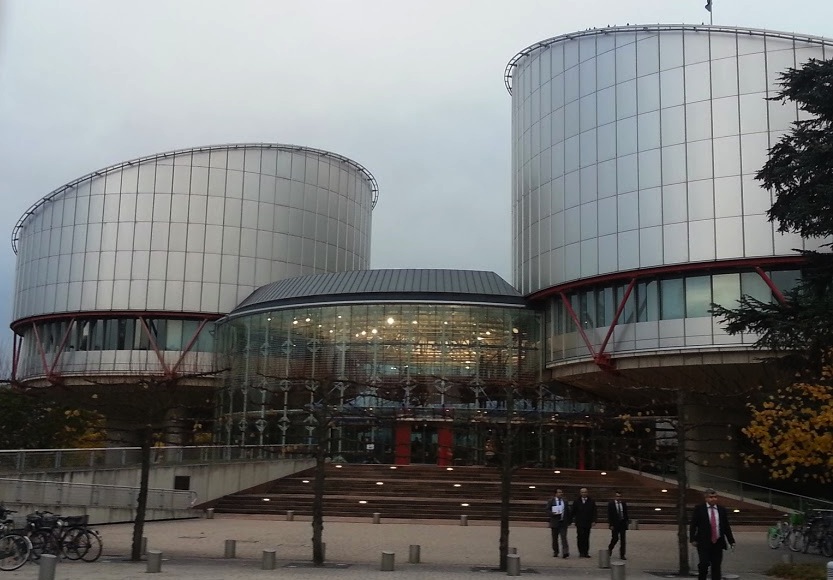
Today, the ICJ jointly with the AIRE Centre, ECRE and ILGA-Europe submitted a third-party intervention in the case of O.M. v. Hungary before the European Court of Human Rights.
The case arose from the immigration detention in Hungary of an asylum-seeker who had fled from his country of origin, Iran, because of his homosexuality. He was detained for nearly two months before eventually being recognized as a refugee.
In their written submissions to the European Court of Human Rights, the interveners focussed on:
- the relevance of the EU asylum acquis, the EU Charter of Fundamental Rights and the 1951 UN Convention relating to the Status of Refugees, as amended by its 1967 Protocol, to the determination of the scope and content of Contracting Parties’ obligations under Art 5(1) of the European Convention on Human Rights; and
- the Contracting Parties’ obligation under the European Convention on Human Rights to take account of the particular risks that the detention of asylum-seekers entails, including, in particular, when deciding to detain those asylum-seekers who might have been exposed to abuse and/or may risk violence and discrimination on account of their sexual orientation while in detention.
Hungary- ECtHR OM v Hungary – advocacy – legal-submissions-2015-ENG

![Smoke rises after an Israeli air strike on the village of Taybeh in southern Lebanon [Source: Al Jazeera]](https://www.icj.org/wp-content/uploads/2026/03/Screenshot-2026-03-20-at-15.56.24-300x200.png)