Jul 17, 2020 | Multimedia, Noticias
La CIJ continuó apoyando la realización de una serie de conversatorios online acerca de los desafíos que enfrentan los sistemas de justicia latinoamericanos en el marco de la emergencia generada por la COVID -19.
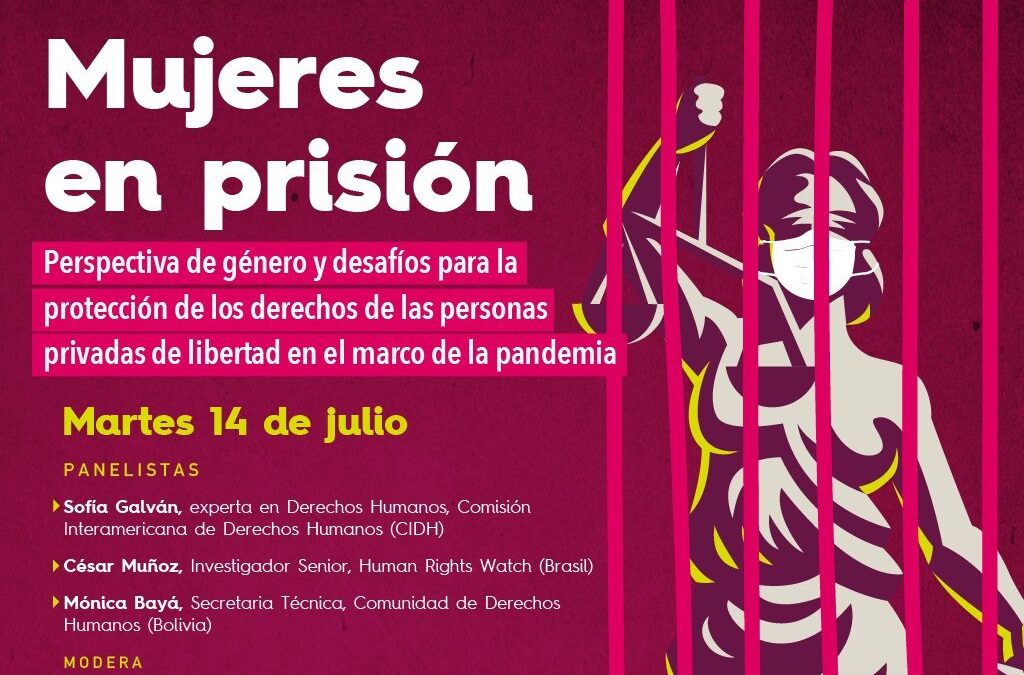
Recientemente se realizaron cuatro nuevos conversatorios que abordaron temas relacionados con los planes de apertura de los sistemas judiciales, los procesos de reforma a la justicia que estaban en marcha antes de la emergencia, los desafíos de la justicia virtual, y los impactos de la pandemia en los derechos de las mujeres en prisión.
Esta iniciativa fue organizada por un grupo de mujeres de América Latina que trabaja en temas de justicia en la región, y también fue apoyada por la Fundación para el Debido Proceso Legal, la Fundación Construir (Bolivia), la Fundación Salvadoreña para el Desarrollo Económico y Social (El Salvador), la Fundación Tribuna Constitucional (Bolivia), el Instituto de Defensa Legal (Perú), el Observatorio de Derechos y Justicia (Ecuador), y la Fundación para la Justicia y el Estado Democrático del Derecho (México).
Los videos de las sesiones están disponibles en español en los siguientes enlaces:
Conversatorio 1: Planes de apertura de los sistemas judiciales durante la pandemia
Conversatorio 2: Procesos de reforma a la justicia y pandemia
Conversatorio 3: Desafíos de la justicia virtual
Conversatorio 4: Mujeres en prisión
Jul 11, 2020 | News
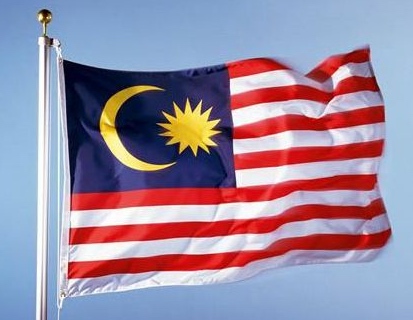
The Malaysian authorities must immediately put an end to their increasing attacks on freedom of expression, especially the media, international non-governmental organisations the ICJ, Amnesty International, CIVICUS: World Alliance for Citizen Participation said today.
Laws incompatible with international human rights law and standards, including the Sedition Act 1948 and Section 233 of the Communications and Multimedia Act (CMA) 1998, are being used to limit free speech and press freedom and should be repealed by the legislature.
In the latest move in the ongoing clampdown on criticism and other expression, authorities have targeted those involved in making the documentary “Locked Up in Malaysia’s Lockdown,” by news broadcaster Al Jazeera and its 101 East series – which reported on the authorities’ arrests of migrant workers during the COVID-19 pandemic. Al-Jazeera is being investigated for sedition and defamation, and has also been accused of breaching the Communications and Multimedia Act by the Malaysian authorities.
On 3 July 2020, Al Jazeera on its 101 East Stream published a documentary that investigated the arrests, detention, and ill-treatment of refugees and undocumented migrant workers during the outbreak of COVID-19 in Malaysia. The documentary highlighted raids conducted by authorities; the inhumane conditions of detention; and the situation of migrant workers who fear arrest. Those detained were found to be held in cramped facilities, while migrant workers at risk of detention suffered from a severe lack of adequate food. The documentary also highlighted the chilling effect the government crackdown has had on the migrant worker community, who fear for their lives and safety.
Rather than addressing the concerns raised in the documentary, the government has instead sought to question the reporters involved, and pursue migrant workers who spoke with Al Jazeera. By initiating a public campaign against migrants and refugees and publishing personal details of the migrant workers who were featured in the report, the authorities have also placed the lives and safety of those interviewed in jeopardy.
The government’s subsequent threats to revoke the visas of foreign workers appears intended to intimidate other migrant workers from speaking up about human rights violations, including mistreatment. These actions have contributed to a worrying rise in intolerance towards freedom of expression, including critical views.
Amnesty International, CIVICUS World Alliance for Citizen Participation, and the ICJ consider these actions as forms of harassment and intimidation of the media, migrant workers, and others exercising their right to freedom of expression, including criticism or dissent.
The use of the Sedition Act 1948, Section 233 of the Communications and Multimedia Act, and criminal investigations against the media set a dangerous precedent and are incompatible with international law and standards. These laws place restrictions on the exercise of freedom of expression that are overly broad, unnecessary and disproportionate, and inconsistent with rule of law and human rights principles.
We reiterate their our previous calls on the Government of Malaysia to abolish both laws, which have historically been used to silence voices of those challenging government policy.
Background
Since the COVID-19 pandemic emerged earlier this year, the Malaysian government has launched a crackdown on refugees, asylum-seekers and migrant workers, carrying out a series of raids on settlements in Kuala Lumpur and Selangor. Most notably, raids were carried out as Labour Day operations on 1 May 2020, but also continued afterwards.
In response to these raids, the Office of the UN High Commissioner on Human Rights (OHCHR) denounced the crackdowns on migrant workers and journalists on 21 May. Migrant workers fear for their safety and there have been reports of suicide amongst them.
Amid growing concerns about the crackdown, the government has increasingly sought to silence criticism.
On 7 July, refugee aid worker Heidy Quah was questioned by police for posting a statement on the raids and the treatment of migrant and refugee children on social media. Her lawyer confirmed that she is being investigated under the Penal Code for criminal defamation and the Communications and Multimedia Act for the ‘improper use of network facilities or network service’.
Since the Perikatan Nasional government assumed power, numerous investigations have been launched against individuals who have criticized government actions. Since February 2020, a journalist has been investigated by police for reporting on immigration raids; a member of parliament was investigated for criticising the May parliamentary session for not permitting debates; and a large number of ordinary Malaysians have been convicted for a variety of social media postings, including for criticising the enforcement of quarantine orders under the Movement Control Order (MCO).
In another recent attack on media freedom, on 2 July 2020, contempt of court charges were filed against Steven Gan, editor-in-chief of online news outlet Malaysiakini, over comments that were posted by readers that were allegedly critical of the judiciary. The Federal Court will next hear the case on 13 July. If convicted, Gan faces an unlimited prison sentence or fine.
Jul 10, 2020 | Events, News
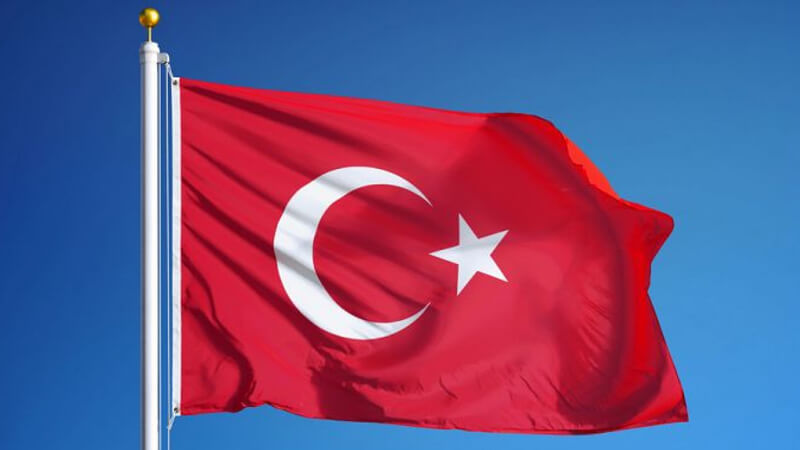
Today, the ICJ and the Human Rights Joint Platform (IHOP) are hosting an online conference to take stock of the current situation of access to justice and the rule of law in Turkey and discuss compliance with international standards and the Turkish Constitution.
The online conference features international and European experts and will address the shortcomings in accessing justice in the country both in terms of the capacity of the justice system to ensure the respect and protection of human rights and of the independence and effectiveness of the justice system itself.
The conference will take stock of the state of access to justice in Turkey after four years of extraordinary and worrisome events for the Rule of Law and human rights in the country. During this period, Turkey has experienced a severe deterioration in the rule of law. The state of emergency, in force between 2016 and 2018, has led to the cleansing of the judiciary and restricted the capacity of lawyers and civil society to act, and increasingly dramatically the arrests and trials of some of their members under spurious charges of terrorism, offences against the State, insult to the nation or its President, and hate speech crimes.
Many of the measures undertaken under the state of emergency included mass dismissal of public servants, judges and prosecutors without ensuring due process guarantees and the degradation of the justice system, depriving the judiciary of essential guarantees to ensure its independence from the political authorities.
The conference will address how these developments impacted the capacity of people in Turkey, and in particular those belonging to marginalised groups, to access justice for their human rights, and what should be done to ensure that such access exists and is effective.
As a result of the conference, a draft statement on the state of access to justice in Turkey will be issued to provide Turkish authorities with recommendations on how to ensure effective and independent access to justice for human rights protection.
Jul 9, 2020 | Agendas, Events, News
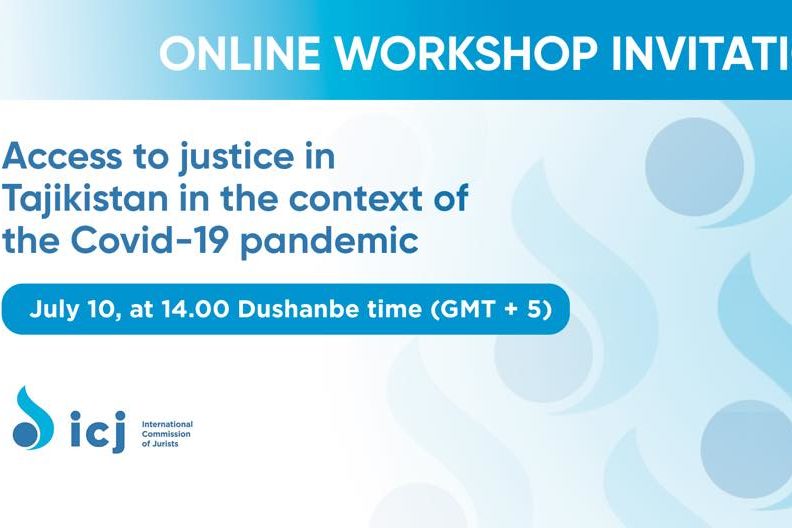
The ICJ is holding an online discussion for lawyers and other representatives of civil society in Tajikistan on access to justice in the context of the Covid-19 pandemic. The discussion is held on 10 July 2020 from 14.00 to 17.00 Dushanbe Time (GMT + 5) on the GoToMeeting platform
The discussion aims to raise some of the main issues that lawyers face in providing legal representation both in and outside of courts.
The event will present an opportunity for practicing lawyers, NGOs and IGOs to discuss the recent challenges that the legal profession faced in Tajikistan as well as seek some of the solutions based on international law and best practices of other countries.
During the discussion, relevant international law and standards as well as comparative examples from the Central Asian countries and Azerbaijan will be discussed.
To participate in the discussions registration is required on the following link : https://forms.gle/QRywqBFPSxfR5eyk7
Working languages of the event are Russian and Tajik.
Contact:
Dilshod Juraev, t: +992 77 700 18 34 ; e: Dilshod.jurayev(a)icj.org
Jul 9, 2020 | News
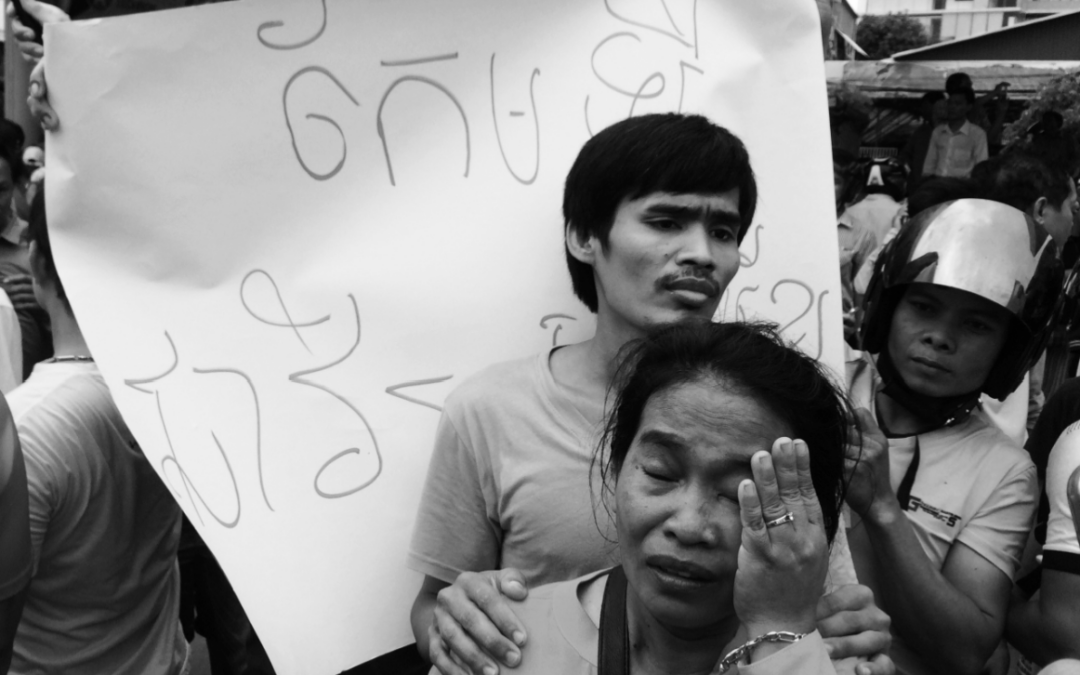
Today, in advance of the fourth anniversary of the killing of prominent political commentator and human rights defender Kem Ley, the ICJ and 29 other organizations called on Cambodian authorities to create an independent Commission of Inquiry to conduct an effective and impartial investigation that is long overdue into Kem Ley’s death.
The organizations further urged Cambodian authorities to cease intimidation and harassment of persons peacefully commemorating his passing.
On 10 July 2016, Kem Ley was shot and killed at a petrol station in central Phnom Penh. Without conducting a prompt, thorough, and independent investigation, and following a half-day trial which was widely criticized for failure to meet international fair trial standards, in March 2017, Oeuth Ang was found guilty of the murder of Kem Ley and sentenced to life imprisonment.
Since 2016, many international and domestic human rights organizations have consistently called on the Cambodian government to set up an independent Commission of Inquiry to conduct a prompt, impartial, and effective investigation into this killing, with emphasis on examining the potential criminal responsibility of persons other than the direct perpetrator, in line with international standards set out in the International Covenant on Civil and Political Rights (ICCPR).
The UN Principles on the Effective Prevention and Investigation of Extralegal, Arbitrary and Summary Executions as well as the revised Minnesota Protocol on the Investigation of Potentially Unlawful Death reinforce the duty of governments to investigate unlawful deaths and to establish an independent commission of inquiry when states, like Cambodia, lack effective procedures to conduct such an investigation in accordance with international standards.
The Cambodian government, has to date, failed to take any steps towards the establishment of such an independent and impartial investigative body. Given the government’s unwillingness to conduct an independent investigation into Kem Ley’s killing, and civil society’s highly warranted lack of trust and confidence in Cambodia’s justice system which lacks the requisite levels of independence to adjudicate cases involving public officials, this body should be established under the auspices of the United Nations and composed of independent experts.
Following the killing of Kem Ley, the Cambodian authorities have continually monitored, harassed, and ultimately disrupted and prohibited planned anniversary memorials of his death. These actions constitute arbitrary restrictions on the rights to freedom of expression and peaceful assembly. The organizations condemned such attempts to stifle free speech and reiterated their call to the Cambodian government to stop such harassment.
The joint statement is available here.
Contact
Frederick Rawski, ICJ Asia and Pacific Regional Director, frederick.rawski(a)icj.org
See also
ICJ, ‘Cambodia: three years and still no effective investigation into Dr. Kem Ley’s killing’, 9 July 2019
ICJ, ‘Cambodia: Commission of Inquiry into killing of Kem Ley should be established without further delay’, 9 July 2018
ICJ, ‘Cambodia: request to create a commission of inquiry into the killing of Kem Ley’, 7 July 2017
ICJ, ‘Cambodia: Kem Ley’s killing demands immediate credible and impartial investigation’, 13 July 2016