May 22, 2020 | News
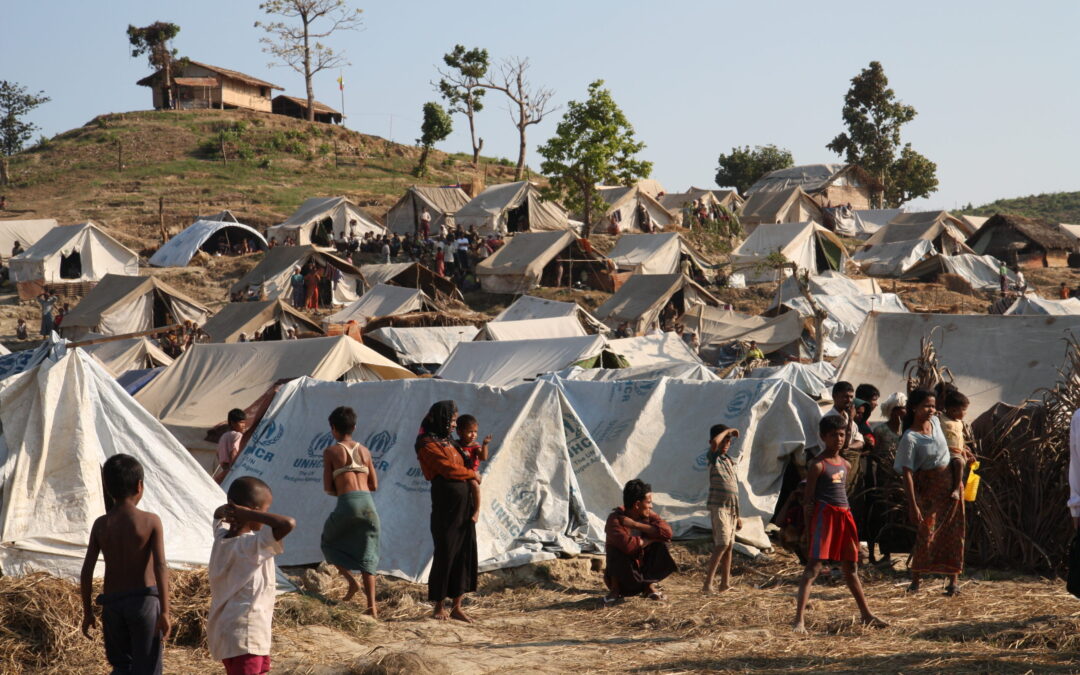
In order to comply substantially with the International Court of Justice’s provisional measures Order in the case of The Gambia v. Myanmar, Myanmar should carry out legal reforms and cooperate with international accountability processes, said the ICJ today.
The Gambia has accused Myanmar of violations of the 1948 Genocide Convention in respect of its treatment of Rohingya population, characterized by acts of widespread killing and displacement of the population.
The call comes as Myanmar is scheduled to report on “all measures taken” to give effect to the provisional measures Order (Order) issued by the Court on 23 January 2020.
“Myanmar has not taken ‘all measures within its power’ to prevent acts of genocide until it implements comprehensive legal and constitutional reforms,” said Sam Zarifi, Secretary General of the International Commission of Jurists. “Accountability lies at the heart of prevention, and so long as the Tatmadaw remains unaccountable to the civilian authorities the cycle of impunity for criminal atrocities within the country will continue.”
Since the Order, Myanmar has taken a limited number of steps linked to its compliance with the Order, including issuing three Presidential Directives encouraging anti-hate speech activities, and ordering compliance with the Genocide Convention and the preservation of evidence of human rights and related violations in Rakhine.
Myanmar has also asserted that the findings of the Government-commissioned Independent Commission of Inquiry (ICOE), which made selective admissions including that war crimes may have been committed during the 2017 “clearance operations” in Rakhine, have been transmitted to the Attorney General and the Commander-in-Chief of the Tatmadaw and that action would be taken “in conformity with military justice procedures if there is credible evidence of any commission of offence by members of the Tatmadaw.”
However, the Government has yet to amend or repeal key laws that facilitate discrimination against the Rohingya, including the 1982 Citizenship Law, 2015 Race and Religion Protection Laws and 2014 Myanmar National Human Rights Commission Law. On 6 May 2020, the International Commission of Jurists published a report on the killing of a journalist, Ko Par Gyi, in September 2014, which condemned the fundamentally flawed “military justice procedures” used to address allegations of serious human rights violations. The report highlighted the many deficiencies in ensuring to accountability for serious human rights violations in Myanmar under its prevailing legal framework, including:
- that several provisions of national laws facilitate impunity for serious human rights violations by soldiers against civilians, shield security forces from public criminal prosecutions and deny victims and their families of the right to truth about violations;
- investigations into unlawful killings routinely lack the independence, impartiality and effectiveness necessary to establish the truth and to provide accountability and redress; and
- the rights of victims and their families are rarely respected, including the right to access information concerning the violations and accountability processes, and the right to remedies and reparations.
The UN Human Rights Council has established an Independent Investigative Mechanism to look at allegations of genocide, crimes against humanity and other atrocities in Myanmar, but the government has failed to extend its cooperation with the mechanism.
“Myanmar’s inability to prevent serious human rights violations under the existing legal framework underscores the need for it to cooperate with international justice processes, including the UN’s Independent Investigative Mechanism for Myanmar – and for the UN Security Council to refer the situation to the International Criminal Court,” added Zarifi.
Download the statement with detailed background information here.
Contact
Sam Zarifi, Secretary General of the International Commission of Jurists, t: +41 79 726 4415; e: sam.zarifi(a)icj.org
Kingsley Abbott, Coordinator of the ICJ’s Global Accountability Initiative, t: +66 94 470 1345; e: kingsley.abbott(a)icj.org
Related work
Report: Remove barriers to justice for killing of journalist Ko Par Gyi
Statement: Why law reform is urgent and possible
Statement: Implement International Court of Justice provisional measures Order without delay
Briefing Paper: Four immediate reforms to strengthen the Myanmar National Human Rights Commission
Briefing Paper: Myanmar’s discriminatory citizenship laws can and must be reformed

May 15, 2020 | Agendas, Events, News
Kazakhstan National University (KazNU) Human Rights Institute in cooperation with the ICJ, the European Association of Lawyers and other partners will hold an online international conference “Law and human rights during the pandemic”.
The event will assemble leading legal experts and practitioners from Central Asia and other countries who will discuss the most pertinent issues for ensuring human rights and access to justice in times of pandemic.
The topics will include sections on human rights during quarantine and emergency situations, and administration of justice during the pandemic.
The event is open for participation upon online registration.
The working language of the event is Russian. The conference will start at 11.00 Nur-Sultan time (GMT +5).
Links
Website of the conference
Agenda in Russian
Agenda in English

May 15, 2020 | Новости, Событие
Институт по правам человека при Казахстанском национальном университете (КазНУ) совместно с Международной комиссией юристов, Европейской ассоциацией адвокатов и другими партнерами проведут онлайн-конференцию «Закон и права человека в условиях пандемии».
В мероприятии примут участие ведущие правовые эксперты и практикующие юристы из Центральной Азии и других стран, которые обсудят наиболее актуальные вопросы, связанные с обеспечением прав человека и доступа к правосудию в условиях пандемии.
Будут рассматриваться такие темы, как права человека во время карантина и чрезвычайного положения, а также отправление правосудия в условиях пандемии.
Чтобы принять участие в мероприятии, нужно пройти онлайн-регистрацию. [HYPERLINK] https://lawyerswebinar.bitrix24.site/?fbclid=IwAR11jXC1yWY54y-JEpAf6F2pQVVbu0ykJG68ygkYRoJIJ20XWP9jcTj-fP4#block371
Рабочим языком конференции является русский. Конференция начнется в 11:00 по Нур-Султану (GMT +5).
Вебсайт конференции: https://lawyerswebinar.bitrix24.site/?fbclid=IwAR11jXC1yWY54y-JEpAf6F2pQVVbu0ykJG68ygkYRoJIJ20XWP9jcTj-fP4#
Программа на русском языке

May 8, 2020 | News
The ICJ today denounced the decision on 5 May 2020 by the Philippines’ National Telecommunications Commission (NTC) to issue an order to ABS CBN Corporation, one of the leading media outlets in the country, to cease its on-air operations.
The ICJ asserted that the action against ABS CBN violates the right to freedom of opinion and expression, which includes the rights of the media to operate without censorship or restraint and the public’s right to access information. This right is guaranteed under Article 19 of the International Covenant on Civil and Poliitical Rights (ICCPR). The Philippines is a State Party to the ICCPR.
“A free and unhindered media is essential in any society to ensure freedom of opinion and expression and other human rights. It is one of the cornerstones of a democratic society,” said Emerlynne Gil, ICJ’s Senior International Legal Adviser.
The NTC’s basis for issuing the order is that ABS CBN’s legislative franchise has expired on 4 May 2020 and action has yet to be taken on its renewal by the House of Representatives. The ICJ fears that the reasons for this delay may be politically motivated.
Given the stakes for freedom of expression, the ICJ urges NTC to follow its own precedents whereby it has allowed broadcast and telecommunications companies to operate beyond their franchise expiry dates, pending the renewal.
“Limitations imposed on the right to freedom of opinion and expression have to pass the general tests, including that of necessity and proportionality, which do not appear to have been met here,” Gil added.
The action taken against ABS CBN is part of a pattern of harassment of independent media by governmental authorities in the Philippines. President Rodrigo Duterte has, in the past, expressed resentment towards ABS CBN for allegedly refusing to air his political ads when he ran for office in 2016. The network is also known to have aired views critical of his administration’s murderous ‘war on drugs’.
In December 2019, President Duterte said that he would make sure that ABS CBN’s franchise would not be renewed. This is not the first time that he has sought to silence a media outlet critical of his administration.
There are at least 11 bills seeking the renewal of the franchise currently pending at the House of Representatives, with the earliest filed in July 2019.
“It is taking the House of Representatives an inordinately long period of time to approve the renewal of ABS CBN’s franchise,” said Gil. “It appears that the allies of this administration in the House are holding the franchise renewal like a sword over ABS CBN’s head to chill it from airing critical views about the government.”
The UN Human Rights Committee, the ICCPR’s supervisory body, has said that States must avoid imposing onerous licensing conditions on broadcast media, and that the criteria for the application of these conditions should be reasonable, objective, clear, transparent, and non-discriminatory.
This action against ABS CBN comes in the middle of the state of public health emergency in the Philippines when access to information is vital in the country’s response to the COVID-19 crisis. The ICJ had earlier raised its concerns on abuses occurring during the lockdown in the Philippines.
The ICJ calls on the Philippine government to uphold and respect freedom of opinion and expression, and ensure that a free press can operate without censorship or restraint.
The ICJ also reminds the government that the public’s access to information is vital to ensure public health and safety during the COVID-19 crisis.
Contact
Emerlynne Gil, Senior International Legal Adviser, t: +662 619 8477 (ext. 206) or e: emerlynne.gil(a)icj.org
May 6, 2020 | Comunicados de prensa, Noticias
La Comisión Internacional de Juristas apoyó la realización de una serie de conversatorios online acerca de los desafíos que enfrentan los sistemas de justicia latinoamericanos en el marco de la emergencia generada por la pandemia.
Estos conversatorios abordaron temas diversos, como los servicios esenciales de justicia, el impacto del teletrabajo en la judicatura, la innovación en la justicia en tiempos de emergencia, la búsqueda de las personas desaparecidas, la situación de personas migrantes y el uso del litigio estratégico como herramienta de defensa de derechos fundamentales.
Esta iniciativa fue organizada por un grupo de mujeres de América Latina que trabajan en temas de justicia en la región, y fue apoyada por la Fundación para el Debido Proceso Legal (DPLF), la Fundación Construir, la Fundación Tribuna Constitucional, el Observatorio de Derechos y Justicia, y la Fundación para la Justicia y el Estado Democrático del Derecho.
Los videos de las sesiones que se realizaron están disponibles en español en los siguientes enlaces:
Conversatorio 1: Servicios esenciales de justicia en tiempos de emergencia
https://www.youtube.com/watch?v=dEW-GJ9J0Po
Conversatorio 2: Teletrabajo y la Judicatura: Juezas en la primera línea de la justicia
https://www.youtube.com/watch?v=pn7h41pGfp8&feature=youtu.be
Conversatorio 3: Innovando en la justicia en tiempos de emergencia
https://www.youtube.com/watch?v=yZ-2y9Ir_RE&feature=youtu.be
Conversatorio 4: La búsqueda de personas desaparecidas
https://www.youtube.com/watch?v=rfWj_gjxJbs&feature=youtu.be
Conversatorio 5: La protección de las personas migrantes
https://www.youtube.com/watch?v=6kDOjklinnw&feature=youtu.be
Conversatorio 6: ¿Como puede el litigio estratégico protegernos frente a los efectos de la pandemia?
https://www.youtube.com/watch?v=IlwcZqq2CJ4&feature=youtu.be
Conversatorio 7: Experiencias nacionales de litigio estratégico frente al COVID-19
https://www.youtube.com/watch?v=Qd-J5pcEX7I&feature=youtu.be
Texto completo, en PDF: Videos-Sistemas-de-Justice-Press-Release-2020-SPA