Mar 26, 2020 | News
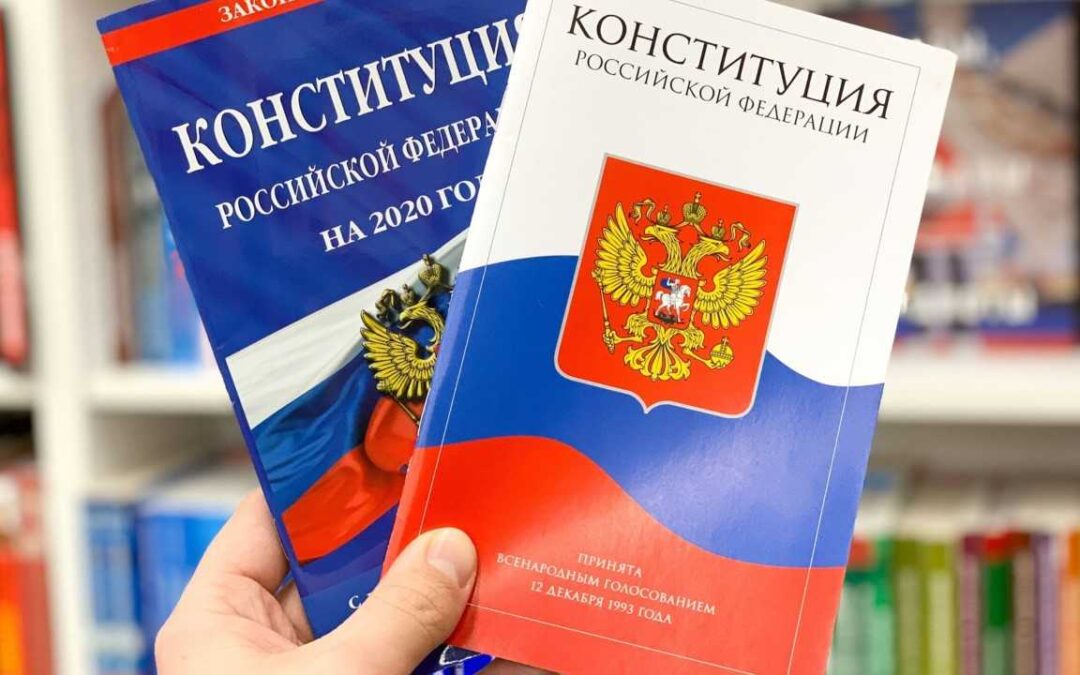
Following the decision to postpone a referendum on amendments to the Russian Constitution, the ICJ calls on the authorities of the Russian Federation to refrain from adoption of the amendments or revise those amendments which are likely to have a detrimental effect on the rule of law and human rights protection.
“Amongst the wide range of amendments proposed, are some that would restrict the implementation of international human rights law, and in particular the decisions of international human rights courts, in the Russian Federation,” said Róisín Pillay, Director of the Europe and Central Asia Programme of the ICJ.
“Other amendments would damage the independence of the Russian judiciary through changes to judicial appointments and dismissal procedures.”
The ICJ draws attention to these issues in a briefing paper on certain amendments to the Constitution of the Russian Federation, published today.
“We urge the Russian authorities to use the opportunity presented by the postponement of the referendum, to reconsider amendments that would damage the ability of the justice system to provide an effective remedy to people whose human rights have been violated,” added Pillay.
Background
On 15 January 2020 the President of the Russian Federation announced a decision to introduce more than forty amendments to the Constitution adopted in 1993. They are to be adopted through an extraordinary procedure which includes public vote, organised specifically for these amendments.
The amendments touch upon a range of issues not necessarily connected with each other. They among other things erode the role of international law and tribunals as well as weaken the independence of the national judiciary.
On 25 March, Russian Federation President Vladimir Putin announced that a planned referendum on the constitutional amendments would be postponed due to COVID-19.
This ICJ briefing paper analyses how these amendments may run contrary to international commitments of the Russian Federation and further impede the judicial independence. The briefing paper addresses three particular changes proposed to the 1993 Constitution:
- The role of international law and of decisions of international courts or other mechanisms (Article 125 of the Constitution)
- Appointment of judges (Article 83 of the Constitution)
- Procedures of appointment and removal for judges (Articles 83, 102 and 128 of the Constitution).
Full Briefing Paper (in PDF): Russia-constitution changes-Advocacy-Analysis Brief-2020-ENG
Mar 26, 2020 | News
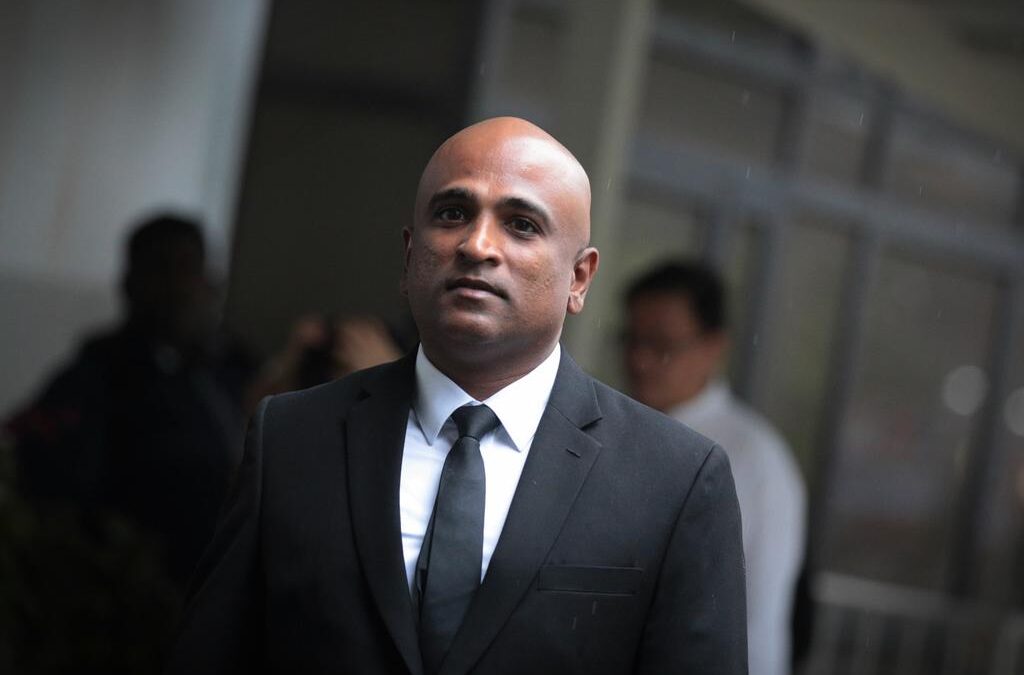
The ICJ, Amnesty International, ARTICLE 19, ASEAN Parliamentarians for Human Rights, CIVICUS and Human Rights Watch today called on Singapore authorities to drop investigations of human rights lawyer M Ravi and two other individuals under Singapore’s contempt of court law and cease their harassment of human rights defenders.
On 13 March, police raided the office of human rights lawyer M Ravi, editor of an independent news website, Terry Xu, seizing his phone, passport and firm’s laptop.
He is apparently under investigation for contempt of court under the Administration of Justice Act (AJPA).
The investigation followed the publication of articles on independent media website ‘The Online Citizen’ (TOC) relating to his client, Mohan Rajangam, a Singaporean who challenged the legality of his extradition from Malaysia in 2015.
The same day, police raided the home of Terry Xu, TOC’s editor, and confiscated his electronic equipment. He is also being investigated for contempt of court under the AJPA, after he published articles on Rajangam’s case. Two other individuals are also being subject to investigation, including Rajangam himself and a writer for the TOC.
Even as the police have stated that the publication online on TOC of parts of Rajangam’s affidavit breached contempt of court regulations, it is unclear what exact content poses a risk of prejudice to the court proceedings.
“The contempt of court doctrine under common law was, for years, used by authorities to curtail speech surrounding politically sensitive topics and cases,” noted Frederick Rawski, ICJ’s Director for Asia and the Pacific.
“After the coming into force of the AJPA, the contempt regime is even more vulnerable for misuse – these current raids and investigations only evidence that how the law can be abused to violate the rights of individuals.”
Investigations of the four individuals for contempt of court continue. The ICJ has been informed that as of 15 March, M Ravi had put the police on notice that the contents of his mobile phone and laptop are subject to legal professional privilege and should remain confidential until a formal ruling is made by a court of law on the matter.
Terry Xu and M Ravi have been targeted and harassed constantly by authorities for information they have released in their professional capacities as an independent journalist and human rights lawyer respectively – notably through abuse of legal mechanisms. Terry Xu is currently fighting pending cases in court relating to alleged defamation of political officials and Singapore’s problematic Protection from Online Falsehoods and Manipulation Act (POFMA). M Ravi has similarly faced action by the Attorney-General’s Chambers for his advocacy against the death penalty.
“In the lead-up to elections, it is even more crucial that the Singapore government ensure that freedom of expression, opinion and information are protected and that independent media is allowed to operate to ensure communication of a diversity of opinions and ideas and inform public opinion,” said Rawski.
“For these reasons we urge the authorities to cease harassment of the four individuals and call on them to drop investigations against them”.
Read the joint statement here.
Contact
Frederick Rawski, ICJ Asia Pacific Regional Director, frederick.rawski(a)icj.org
Background
In its 2019 regional report, ‘Dictating the Internet: Curtailing Free Expression, Opinion and Information Online in Southeast Asia’, the ICJ found that in Singapore contempt of court proceedings have been used to curtail freedom of expression and information under the guise of “maintaining orderly proceedings” and “protecting public confidence in the judiciary”, particularly in cases of online criticism touching on politically sensitive matters.
In October 2017, the Administration of Justice (Protection) Act 2016 came into force, despite well founded concerns that its vague provisions could result in abusive interpretation and implementation, given existing trends of use of contempt of court under common law to limit freedom of expression.
The AJPA lowered the threshold for contempt in what is referred to as “scandalizing the Court”, expanding judicial powers to punish such contempt with increased and onerous penalties. Section 3(1) criminalizes the “scandalizing of court” through (i) “impugning the integrity, propriety or impartiality” of judges by “intentionally publishing any matter or doing any act that… poses a risk that public confidence in the administration of justice would be undermined” (section 3(1)(a)); and (ii) “intentional” publishing of any material which interferes with pending court proceedings, or sub judice contempt (section 3(1)(b)). Section 3(1)(a) reduced the threshold for “scandalizing” contempt to a mere “risk” of undermining public confidence in the judiciary, where the common law test established in the landmark case of Attorney-General v Shadrake Alan was to establish a “real risk” of such undermining of confidence. This exacerbated a standard that was already deeply problematic.
Section 12(1) of the AJPA increased the maximum penalty for “scandalizing” contempt to three years’ imprisonment or a fine of S$100,000 (approx. USD 72,051) or both, when under common law, a six-week imprisonment sentence and S$20,000 (approx. USD 14,410) fine had been deemed appropriate.

Mar 25, 2020 | News
The ICJ today called on the South African government to take urgent and immediate measures to ensure the full protection human rights, including economic, social and cultural rights, in the context of the COVID 19 epidemic.
The call comes as South Africa’s 21-day nationwide lockdown is poised to commence tomorrow, 26 March 2020. As it stands the human rights of the majority of South African residents are under serious threat.
“The ICJ is calling on the South African government to take effective measures ensure that addressing one human rights crisis does need lead to new human rights pressures” said Arnold Tsunga, Director of or the ICJ Africa Programme.
“We therefore call on the authorities to take three urgent steps: 1) Declare a moratorium on all evictions; 2) Ensure emergency provision of water to all; and 3) publically repudiate xenophobic statements made by Minister Khumbudzo Ntshavheni and affirm non-citizens rights to work”.
- Declaration of a moratorium on all evictions:
In the context of COVID-19, evictions are particularly dangerous and life-threatening. Evictions risk the further spread of COVID-19 and make it impossible to stay at home as the World Health Organization has advised.
The UN Special Rapporteur on the Right to Housing, has called for a global ban on evictions worldwide, stressing that: “The logical extension of a logical stay at home policy is a global ban on evictions. There must be no evictions of anyone, anywhere, for any reason. Simply put: a global ban on evictions will save lives”. In South Africa, local social movements and human rights organizations have called for a “moratorium” on evictions, as has Abahlali BaseMjondolo a movement of tens of thousands of “shack dwellers” across the country.
The ICJ calls on President Ramaphosa to declare a moratorium on evictions immediately before the commencement of the nationwide lockdown. South Africa must do so to meet its international legal obligations to protect the rights to housing and health.
- Provision of emergency access to water before the lockdown commences:
Many people in South Africa live in informal settlements and rural settings in which access to water, sanitation and basic services are inadequate or inconsistent. The simple instruction of washing one’s hands to prevent the spread of the virus is extremely difficult, if not impossible, for many.
The President announced on 23 March that “emergency water supplies” would be provided in “informal settlements and rural areas”. However, reports from around the country suggest that with lockdown beginning tomorrow many major informal settlements, including Khayelitsha in Cape Town, still do not have sufficient access to such emergency water.
The ICJ calls on President Ramaphosa to ensure that provision is made for all South Africans to have access to basic services, including water, before the commencement of national lockdown. South Africa must do so to meet its international legal obligations to protect the right to water.
- Protecting the right to work of “everyone” including non-citizens:
On 24 March 2020 speaking on national television, Minister of Small Business and Development in South Africa Khumbudzo Ntshavheni said that only spaza shops “owned by South Africans and managed and run by South Africans” will be allowed to continue operating during nationwide-lockdown, ostensibly to ensure the quality of goods and food.
This statement is discriminatory and in violation of South Africa’s commitments in terms of its own Constitution and international human rights law, to ensure non-discrimination and equal protection of the law. It risks a resurgence of existing xenophobic sentiment at a time of crisis which South Africa can ill afford and threatens the livelihood of foreign nationals.
The ICJ calls on President Ramaphosa to withdraw the statement immediately and reaffirm the internationally recognized right to equality of non-citizens including their right to work.
Contact:
Tim Fish Hodgson, ICJ Legal Adviser, e: tim.hodgson(a)icj.org ; c: +2782871990
Shaazia Ebrahim, ICJ Media Officer, e: shaazia.ebrahim(a)icj.org ; c: +27716706719
Background:
The global Covid-19 pandemic has led South African president Cyril Ramaphosa to announce a 21-day nationwide lockdown which will be effective on 26 March at midnight. This follows on from South Africa’s declaration of a “national disaster” on 15 March and the publication of disaster regulations governing the disaster response.
Global consensus on best practice to combat COVID-19, as recommended by the World Health Organization, is for people to stay at home, maintain social distance and intensify hygiene measures including through frequent washing of hands. However, South Africa has well-documented and extremely high levels of poverty and inequality. A number of problems in complying with global best practice in response to COVID-19.
The disaster regulations require that measures taken to combat COVID-19 are implemented “as far as possible, without affecting service delivery in relation to the realisation of the rights” including the rights to housing and basic services, healthcare, social security and education.
Mar 24, 2020 | Articles, Nouvelles
L’ICJ et 39 autres organisations ont exprimé aujourd’hui leur inquiétude par rapport à la situation de la population carcérale des pays du Moyen-Orient et d’Afrique du Nord face à la pandémie du coronavirus.
À la lumière de la pandémie de COVID-19 − qualifiée « d’urgence de santé publique de portée internationale » par l’Organisation mondiale de la santé (OMS) − nous, les organisations soussignées, exprimons notre vive inquiétude quant à la situation des détenu·e·s et des prisonnier.e.s dans la région du Moyen-Orient et de l’Afrique du Nord (MENA).
Si certains États de la région ont pris des mesures positives pour protéger la population dans son ensemble, la population carcérale reste particulièrement exposée à la propagation du virus.
Plusieurs pays de la région MENA ont déjà des systèmes de santé surchargés, certains considérablement affaiblis par des années de conflit armé. Dans ces pays, les prisons et les centres de détention sont souvent surpeuplés, insalubres et souffrent d’un manque de ressources ; en conséquence, les détenu·e·s se voient régulièrement refuser un accès adéquat aux soins médicaux. Ces difficultés ne font que s’aggraver en période d’urgence sanitaire, exposant les personnes privées de liberté à des risques accrus, tout en accentuant la pression sur des infrastructures de santé en prison déjà fragilisées. De plus, les personnes en détention interagissent régulièrement avec les gardien·ne·s de prison, les policier·e·s et les professionnels de la santé qui sont en contact avec le monde extérieur. Ne pas protéger les prisonnier·e·s et le personnel pénitentiaire contre le COVID-19 peut avoir des conséquences négatives pour le reste de la population.
En vertu du droit international relatif aux droits humains, tout individu a droit au meilleur état de santé physique et mentale susceptible d’être atteint. Les États ayant l’obligation de garantir la réalisation de ce droit sont tenus de veiller à ce que les détenu·e·s et les prisonnier·e·s soient traité·e·s humainement dans le respect de leur dignité et ne soient pas soumis·e·s à des traitements cruels, inhumains et dégradants. Les Règles Nelson Mandela exigent le respect du principe d’équivalence des soins, ce qui signifie que les personnes placées en milieu pénitentiaire doivent pouvoir bénéficier de soins de santé équivalents à ceux mis à disposition de la population civile générale. Cela ne change pas en période de pandémie.
Bien que des restrictions, notamment sur les visites en prison, puissent être imposées pour freiner la propagation de maladies infectieuses comme le COVID-19, elles doivent respecter les principes de proportionnalité et de transparence. Toute mesure, y compris les libérations de prisonnier·e·s, doit être prise conformément à des critères clairs et transparents, sans discrimination.
À la lumière de ce qui précède,
Nous appelons les gouvernements de la région MENA à:
(1) Rendre publiques les politiques et directives spécifiques à leur pays et, le cas échéant, les politiques et lignes directrices mises en place pour empêcher la propagation de COVID-19 dans les centres de détention, les prisons et les commissariats de police.
(2) Partager leurs plans d’interventions d’urgence et dispenser une formation spécifique au personnel et aux autorités compétentes afin de garantir un accès suffisant et durable aux soins de santé et à l’hygiène.
(3) Procéder à un examen approfondi de la population carcérale et, en conséquence, réduire leur population carcérale en ordonnant la libération immédiate:
- des détenu·e·s et prisonnier·e·s « à faible risque », y compris celles et ceux qui ont été condamné·e·s ou placé·e·s en détention préventive pour des infractions non violentes, les personnes placées en détention administrative ainsi que toute personne dont la détention continue ne peut être justifiée;
- des détenu·e·s et prisonnier·e·s particulièrement vulnérables au virus, y compris les personnes âgées et les personnes présentant un état médical sous-jacent grave, tel que des maladies pulmonaires et cardiaques, le diabète ou encore des maladies auto-immunes.
(4) Permettre aux personnes actuellement en liberté surveillée de s’acquitter de leurs obligations depuis leur domicile.
(5) Garantir que les personnes qui restent en détention:
(a) voient leur droit à la santé effectivement respecté en ayant pleinement accès aux soins médicaux nécessaires;
(b) aient accès au test du COVID-19 et à une assistance appropriée selon le principe d’équivalence des soins;
(c) disposent de moyens de communication et de possibilités d’accès au monde extérieur lorsque les visites en personne sont suspendues ;
(d) continuent de jouir de leur droit à une procédure régulière, y compris, sans s’y limiter, le droit de contester la légalité de leur détention, et leur droit de ne pas subir de retards qui rendraient leur détention arbitraire.
Nous appelons l’Organisation mondiale de la santé, le Comité international de la Croix-Rouge et les titulaires de mandat au titre des procédures spéciales du Conseil des droits de l’homme des Nations unies à publier des déclarations publiques et des directives mettant en évidence les recommandations et les meilleures pratiques à l’attention de tous les gouvernements en matière de détention et d’emprisonnement en période de pandémie.
Organisations signataires:
ACAT – France (Action by Christians Against Torture)
Access Now
Al Mezan Center for Human Rights
ALQST for Human Rights
Arab Network for Knowledge about Human rights (ANKH)
Arab Reform Initiative (ARI)
ARCI (Associazione Ricreativa Culturale Italiana)
Association of Detainees and Missing in Sednaya Prison
Association for Freedom of Thought and Expression (AFTE)
Bahrain Centre for Human Rights
Bahrain Transparency Society
Bar Human Rights Committee of England and Wales
CIVICUS
Committee for Justice
Democratic Transition and Human Rights support (DAAM Center)
Digital Citizenship Organisation
DIGNITY – Danish Institute Against Torture
Egyptian Commission for Rights and Freedoms
Egyptian Human Rights Forum
El Nadim Center
HaMoked: Center for the Defence of the Individual
Human Rights First
Initiative franco-égyptienne pour les droits les libertés (IFEDL)
International Commission of Jurists
International Federation for Human Rights (FIDH)
Kuwaiti Transparency Society
Lebanese Centre For Human Rights
medico international e.V., Germany
MENA Rights Group
Mwatana for Human Rights
Physicians for Human Rights – Israel
Project on Middle East Democracy
Reprieve
Robert F. Kennedy Human Rights
Syrian Center For Legal Studies and Researches
Syrian Network for Human Rights
Tahrir Institute for Middle East Policy (TIMEP)
UMAM Documentation & Research (MENA Prison Forum)
Women’s March Global
World Organisation Against Torture
PDF: MENA-Covid-19-Prisons-Advocacy-2020-FRA
Mar 24, 2020 | News
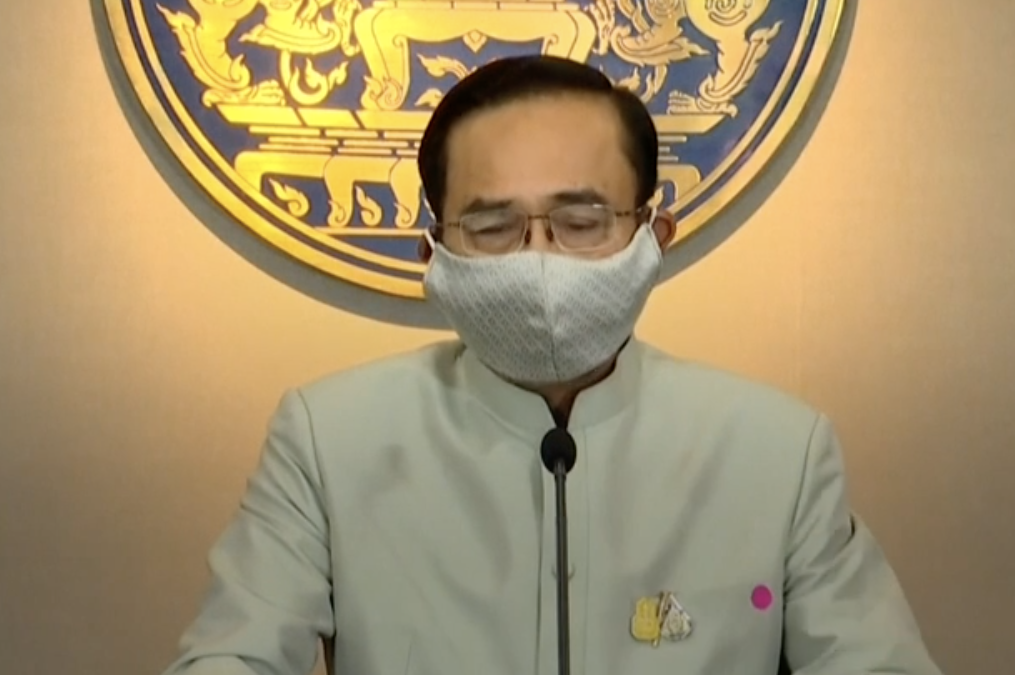
As the Thai government moves to exercise its power under the Emergency Decree on Public Administration in Emergency Situation B.E. 2548 (2005) (“Emergency Decree”) to combat the COVID-19 outbreak, the ICJ reiterates its recommendations made since 2005 regarding lawful and proportionate exercise of this power in a manner consistent with Thailand’s obligations under international law.
The ICJ urges the Thai Government to take these recommendations into consideration when imposing any measures to address the COVID-19 outbreak:
- A state of emergency used to justify any permissible derogation from obligations under international human rights law must meet the standard that an emergency “threatens the life of the nation”, as set out in the International Covenant on Civil and Political Rights. Parliament should play an active role in providing oversight.
- Any limitations on or derogation from the exercise of internationally guaranteed rights should be limited in duration, strictly necessary, and proportionate to the specific threat posed.
- Derogating measures may only limit the scope of other rights to the extent strictly necessary to meet a threat to the life of the nation, but they may not suspend the applicability of any right in its entirety.
- This necessity must be continually re-assessed so that the derogating measures apply for the shortest time possible. Certain human rights, including the right to life, the right to life, the freedom from torture or ill-treatment, the essential elements of arbitrary deprivation of liberty and to a fair trial and the right to an effective remedy can never be restricted even in a state of emergency.
- It should be clearly stated which officials have responsibility for implementing the provisions of the emergency law and what their powers and responsibilities are.
- All officials responsible for implementing the law should be explicitly stated to be under the authority of the ordinary law of Thailand, with no immunity for any criminal acts carried out in the exercise of their responsibilities.
- The decisions and actions of officials exercising powers under the emergency law should be subject to review by the courts.
Download the statement in Thai here.