Nov 24, 2019 | Editorial, Noticias
Una opinión editorial de Alejandro Salinas Rivera, Comisionado de la CIJ (Chile)
A casi un mes de iniciadas las protestas sociales, las fuerzas políticas llegaron a un acuerdo que podría permitir abordar la crisis social evidenciada con las protestas.
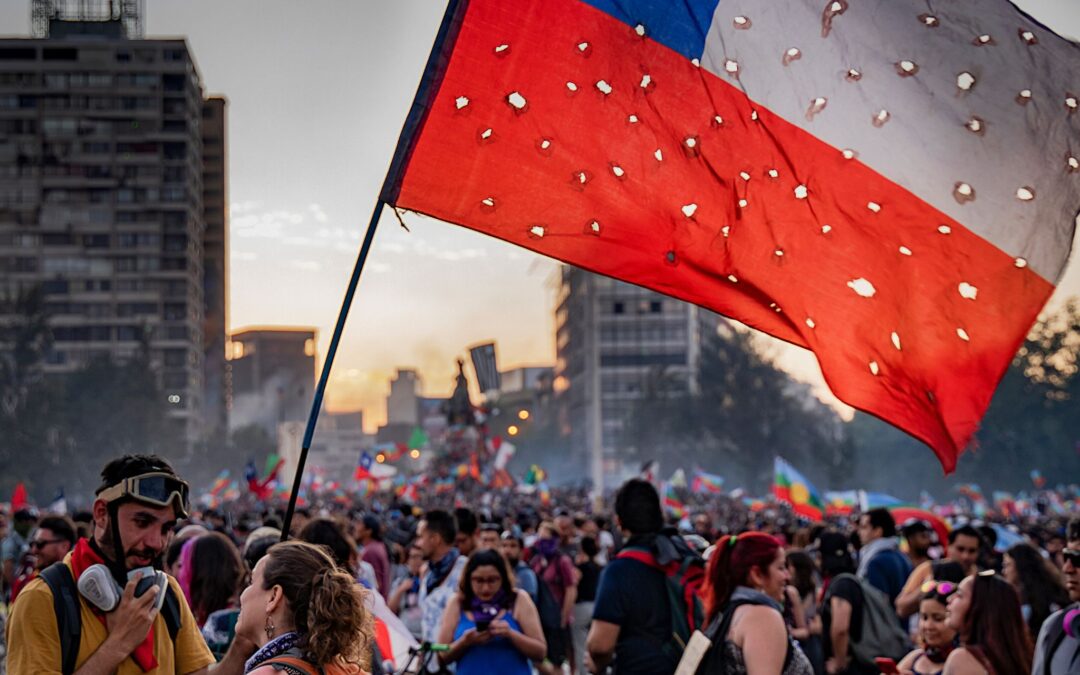
Durante varios días, millones de personas salieron a las calles para solicitar reformas profundas para garantizar los derechos económicos, sociales y culturales. La mayoría de las protestas fueron pacíficas; sin embargo, algunos actos de violencia fueron perpetrados.
La reacción inicial de las autoridades gubernamentales y de otros líderes políticos no permitió abordar con seriedad las preocupaciones y las demandas ciudadanas. Además, hay denuncias sobre graves violaciones de los derechos humanos cometidas por miembros de la fuerza pública. Por ejemplo, el Instituto Nacional de Derechos Humanos (INDH) indicó que representa a 489 personas que sufrieron actos que pueden constituir violaciones a los derechos humanos, y hay más de 200 personas heridas en los ojos por balines de goma.
Acuerdo político alcanzado recientemente
El 15 de noviembre, los partidos políticos con representación parlamentaria (a excepción del Partido Comunista y de pequeños partidos de izquierda), firmaron un acuerdo político que propone un camino para abordar la crisis: la definición de un procedimiento para adoptar una nueva Constitución.
Pero, ¿por qué es tan importante esto en Chile? Porque la Constitución chilena fue redactada y adoptada en 1980 durante la dictadura militar, y aunque se le han introducido modificaciones durante la democracia (1990), todavía refleja el modelo político y social que gobierna el país. La Constitución siempre ha sido considerada como una camisa de fuerza que impide introducir cambios sociales que el país necesita, ya que otorga al Estado un papel subsidiario en la garantía de ciertos derechos económicos y sociales.
El acuerdo político alcanzado estableció una hoja de ruta para realizar el cambio constitucional. Primero, en abril de 2020 se realizará un plebiscito para preguntarle a las personas: a) ¿Quiere usted una nueva Constitución? (Aprueba/ Rechaza); y b) ¿Qué tipo de órgano debiera redactar la nueva Constitución? (Convención Mixta Constitucional o Convención Constitucional).
En segundo lugar, después de los resultados del plebiscito, se llevarán a cabo las elecciones de los miembros que integrarán el organismo encargado de redactar la nueva Constitución (octubre 2020), y después de su redacción, habrá un plebiscito ratificatorio obligatorio.
Este acuerdo político genera esperanza para que se realice un cambio que permita abordar las demandas sociales y mejorar el diseño institucional que se encarga de garantizar los derechos económicos y sociales. Sin embargo, el acuerdo por sí solo no es suficiente. Es necesario, además, tomar medidas inmediatas que permitan lograr acuerdos sustanciales y fortalecer, ahora, la capacidad institucional.
Otras acciones que deben realizarse
Además del acuerdo político alcanzado, hay otras acciones que se deben realizar. Por ejemplo, se debe:
- Adoptar acuerdos políticos específicos que hagan viable el proceso constitucional acordado y que garanticen que dicho proceso responda a las demandas ciudadanas. Así, debe modificarse la Constitución para permitir la convocatoria al plebiscito, y se debe implementar dicho mecanismo en abril de 2020.
- Adoptar políticas públicas específicas para materializar los derechos económicos y sociales que no requieren cambios constitucionales; solo requieren voluntad política. Por ejemplo, se pueden introducir mejorías significativas a los sistemas de salud, de educación y de pensiones.
- Investigar, de manera pronta y efectiva, la actuación de la policía y de las fuerzas de seguridad en el marco de las protestas. Esto requiere una revisión completa de los protocolos de actuación y, posiblemente, la adopción de reformas institucionales.
- Investigar, de manera pronta y efectiva, las denuncias en contra de miembros de la policía y de las fuerzas de seguridad por violaciones graves de los derechos humanos y, cuando la evidencia lo amerite, enjuiciar y sancionar a los responsables. El rol independiente de los jueces y los fiscales es clave para cumplir con esta obligación.
- Investigar, de manera pronta y efectiva, los actos de violencia cometidos durante las protestas, y cuando la evidencia lo amerite, enjuiciar y sancionar a los responsables.
- Fortalecer las instituciones públicas, como las fuerzas policiales (Carabineros), el Instituto Nacional de Derechos Humanos, las oficinas gubernamentales a cargo de las políticas públicas sociales, entre otras.
En suma, el camino que se avecina no es fácil y está lleno de obstáculos para Chile, pero proporciona una esperanza para abordar la crisis social. Por ejemplo, cambiar la Constitución era una tarea pendiente de la democracia chilena, y ahora parece posible. Entre los próximos pasos se encuentra el diseño de un modelo político y social que garantice la equidad, que permita la solidaridad y que garantice plenamente los derechos humanos.
Nov 22, 2019 | News
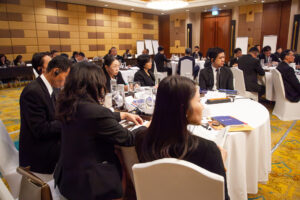
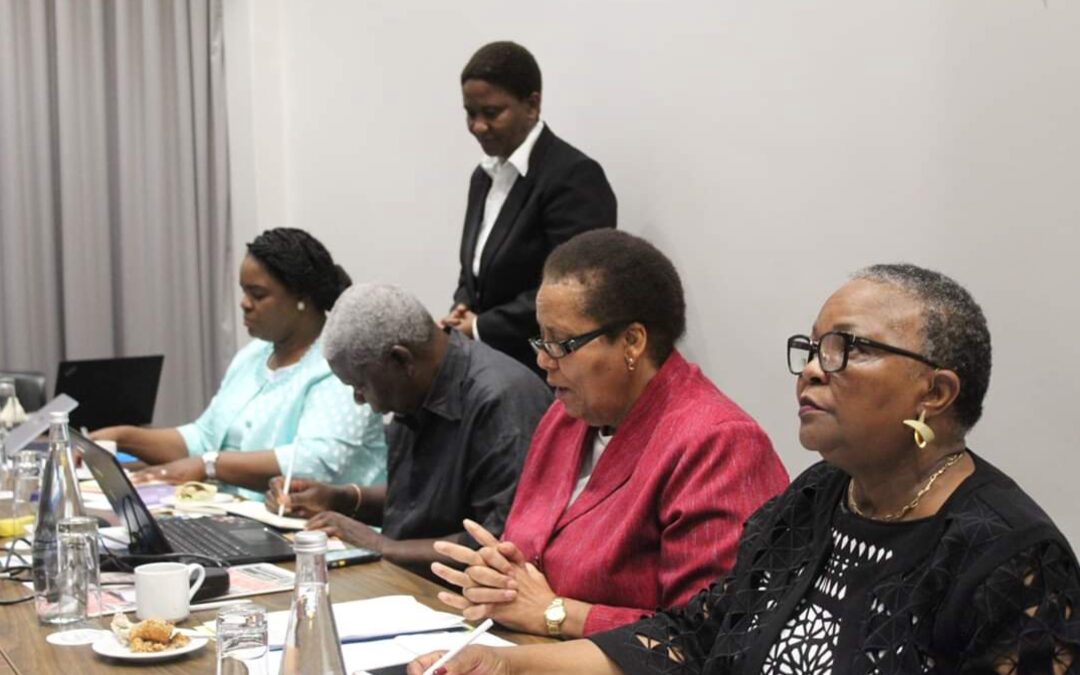
A wide range of stakeholders in Mbabane, Eswatini came together to discuss the challenges they face in combating sexual and gender-based violence (SGBV) in the country.
On 21 November, the ICJ hosted a symposium with representatives of the Attorney General, Ministry of Justice, police, Human Rights Commission and Law Society on cases involving economic, social, and cultural rights and SGBV. The event was followed by an integrated meeting involving State officials in the justice sector to discuss the implementation of the Sexual Offences and Domestic Violence (SODV) Act was discussed.
The Kingdom of Eswatini faces widespread instances of SGBV and it is hoped that new initiatives, such the enactment of the Sexual Offences and Domestic Violence (SODV) Act in 2018, will be effective in addressing the scourge of SGBV in the country.
The symposium was led by Justice Qinisile Mabuza, Principal Judge of the Eswatini High Court and ICJ Commissioner, accompanied by ICJ Commissioners Justice Sanji Monageng of Botswana and Professor Michelo Hansugule of the University of Pretoria, and Justice of the High Court in Zimbabwe Amy Tsanga. The ICJ’s Senior International Legal Adviser Emerlynne Gil gave a presentation on gender stereotypes and international legal standards on SGBV ICJ Africa legal associate Khanyo Farisè and ICJ consultant Mary Pais Da Silva also participated in the symposium.
Speakers emphasized the critical role of the judiciary and other justice sector actors in ensuring that Eswatini meets its legal obligations under international human rights law, including standards governing the African region, to protect survivors of SGBV.
“The judiciary is a critical component in the intervention against SGBV. The judges have to know about human rights, appreciate what SGBV actually entails, understand what those violations mean, and the international standards and local roles where they exist. Judges also should be able to use jurisprudence from other jurisdictions to justify their decisions,” Commissioner Monageng said.
The participants of the symposium, were subsequently joined by representatives from the Department of Public Prosecutions (DPP), the One Stop Care Centre for sexual violence survivors, and the Deputy Prime Minister’s Office, came together to discuss the implementation of the SODV Act. Recommendations included better collaboration with judicial actors, the training of law enforcement agencies on receiving report of sexual violence, better case management and the development of forensic laboratories were made.
Contact
Khanyo Farisè (Legal Associate): e: Nokukhanya.Farise(a)icj.org
Shaazia Ebrahim (Media Officer): e: shaazia.ebrahim(a)icj.org
Nov 22, 2019 | News
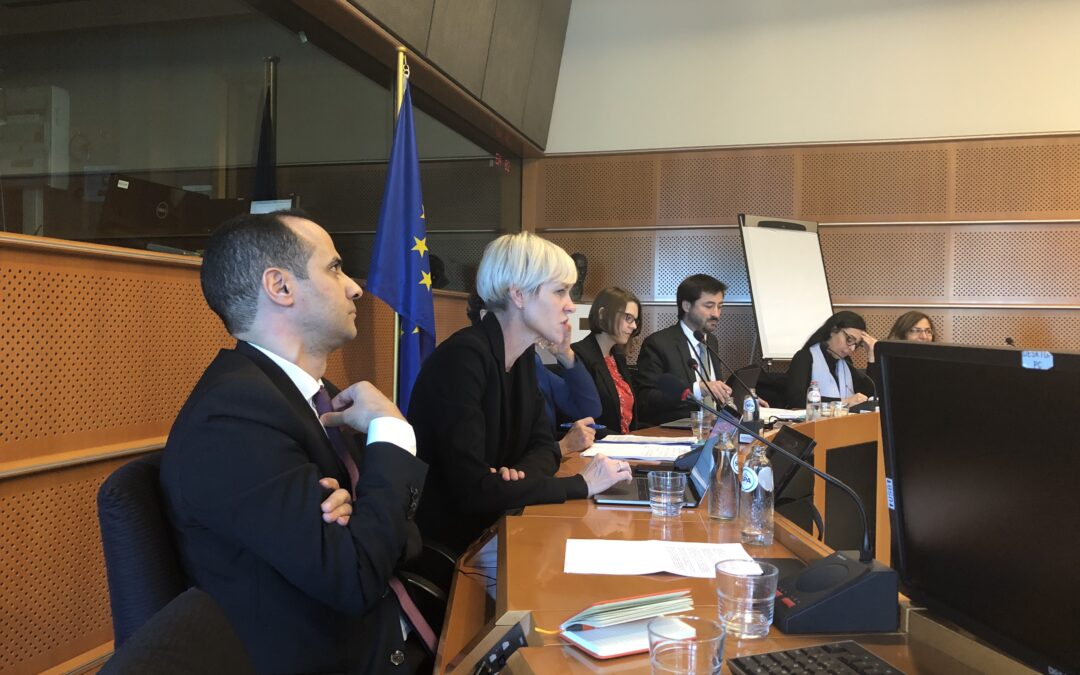
On 20 November 2019, the ICJ and Tineke Strik, Member of the European Parliament, hosted a roundtable discussion in Brussels on the ICJ’s report Accountability for Crimes under International Law in Libya: An Assessment of the Criminal Justice System.
Panelists called for the establishment of a Human Rights Council mandated Commission of Inquiry on Libya and for States to refrain from entering or implementing agreements that could give rise to support for or complicity in violations of international law.
They also called for the intensification of monitoring of Libyan Coast Guard operations and publication of its key findings, and for the European Commission to ensure its cooperation with Libyan authorities is conditional on meeting concrete, verifiable and timebound benchmarks.
At the launch, Said Benarbia and Kate Vigneswaran, MENA Programme Director and Senior Legal Adviser respectively, discussed the findings and recommendations of the ICJ’s report examining the criminal justice framework in Libya. The report finds that investigations and prosecutions of crimes under international law have been limited to a handful of cases, and substantial reforms to the legal framework are required to ensure fair and effective justice in future cases.
In light of the report’s findings, Marwa Mohammed, Head of Advocacy and Outreach for Lawyers for Justice in Libya, discussed the arbitrary detention of thousands of migrants, refugees and asylum seekers in Libya, systematic human rights violations and abuses being committed against them, and absence of options for protection, repatriation and return, including as a result of EU States’ policies.
Philippe Dam, Advocacy Director for Europe and Central Asia at Human Rights Watch, then discussed the engagement of the EU, European Commission and EU States with Libyan authorities, including in the context of violations and abuses committed against migrants, refugees and asylum seekers intercepted by the Libyan Coast Guard.
The panel was introduced by Karolina Babicka, Legal Advisor for the ICJ’s Europe and Central Asia Programme, and moderated by Tinneke Strik. It was attended by representatives of the European Commission, the EEAS, UNHCR, non-government organizations and independent persons
Nov 21, 2019 | News
The Upper House of Parliament must revise the Transgender Persons (Protection of Rights) Bill, 2019, which was passed by the Lower House of Parliament on 5 August 2019.
The Bill does not adequately protect the rights of transgender people, and fails to comply with India’s constitutional and international human rights obligations, the ICJ said today.
The Government introduced the Transgender Persons (Protection of Rights) Bill, 2019, before the Parliament on 19 July 2019. It was passed by the Lok Sabha (the Lower House of Parliament) on 5 August, 2019, despite a lack of consultation with the transgender community and serious weaknesses in the Bill, which would be in violation of the Supreme Court’s NALSA judgment.
“If the Upper House of Parliament adopts the Bill in its current form, without any amendments, it will miss an important opportunity to introduce a law that respects, protects and fulfills the human rights of transgender people as required by the Supreme Court’s decision in NALSA v. UOI and India’s international obligations,” said Frederick Rawski, ICJ Asia Pacific Director.
The current draft, fails to address key concerns that have been repeatedly raised by the transgender community and human rights organizations.
Critically, the Bill appears to continue to mandate sex reassignment surgery for transgender people. This requirement would contravene the Supreme Court’s judgment in NALSA v. UOI, which guarantees the right to self-identification without the need for medical intervention. Further, the Bill does not make provision for affirmative action in employment or education despite the Supreme Court’s mandate in NALSA v. UOI.
Moreover, the Bill sets out lighter sentences for several criminal offences, such as “sexual abuse” and “physical abuse”, when they are committed against transgender people. In addition, the Bill does not adequately define these offences and retains provisions that could be used in a discriminatory manner to target transgender people for criminal prosecution. It also fails to address the lack of an effective mechanism to enforce the legal prohibition against discrimination on the ground of gender identity.
The ICJ has recommended the deletion of provisions that mandate sex reassignment surgery and that set out lighter sentences for criminal offences against transgender people. In addition, the ICJ recommends the inclusion of provisions addressing affirmative action for transgender persons in education and employment.
“We urge the Upper House of Parliament to address these deficiencies before passing the Bill into law, in accordance with India’s constitutional and international law obligations, and to ensure meaningful consultation with the transgender community” Rawski said.
Contact
Maitreyi Gupta (Delhi), ICJ International Legal Adviser for India, e: maitreyi.gupta(a)icj.org, t: +91 7756028369
Read also
ICJ 2019 Report on India Living with Dignity: Sexual Orientation and Gender Identity-Based Human Rights Violations in Housing, Work, and Public Spaces in India. The Report details human rights violations suffered by LGBTQ persons in their family homes, workplaces, and public spaces including streets, public toilets, public transport and shopping centres.
ICJ Briefing Paper on India: Legal and Jurisprudential Developments on Transgender Rights, SAATHII Vistaara Coalition. The paper analyses in detail the domestic judicial developments on transgender rights as well as the legislative process undertaken until the Transgender Persons (Protection of Rights) Bill, 2018 was passed on 17 December 2018.
ICJ Briefing Paper on The Transgender Persons (Protection of Rights) Bill, 2016, analyzes the 2016 Bill, its shortcomings, and India’s international obligations, as it is the basis of the 2018 Bill.
ICJ Briefing Paper on Implementation of NALSA Judgment discusses the 2014 April NALSA decision that affirmed that transgender people have the right to decide their self-identified gender. The paper analyses the responsibilities placed on Indian authorities, gaps in implementation, and India’s relevant international law obligations.
Nov 19, 2019 | News
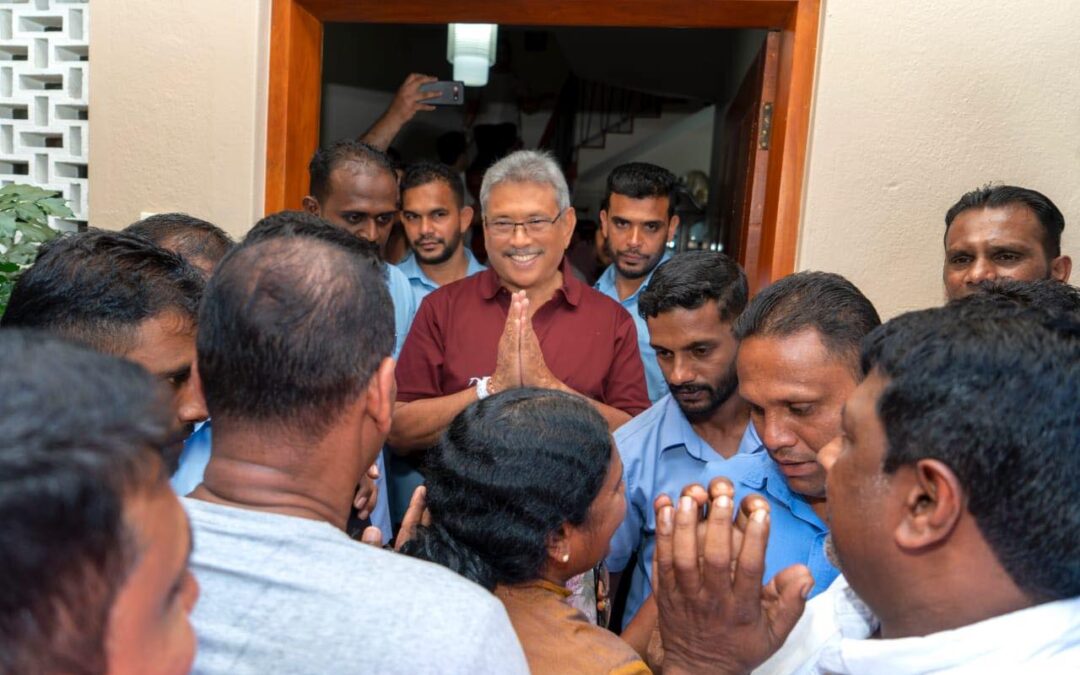
Sri Lanka’s newly elected president, Gotabaya Rajapaksa and his government must demonstrate that they will uphold human rights and rule of law, and ensure that Sri Lanka sustains its international obligations and commitments to justice and accountability, said the ICJ today.
Gotabaya Rajapaksa faces credible allegations of involvement in war crimes and crimes against humanity that took place during the country’s armed conflict.
“The election of Gotabaya Rajapaksa, after a highly polarizing campaign, has alarmed human rights defenders in Sri Lanka and abroad, who have little reason to believe that someone facing such serious allegations of perpetrating human rights violations can be relied upon to meet the country’s obligations under international law,” said Frederick Rawski, ICJ Asia Pacific Director.
Gotabaya Rajapaksa, who won the presidency with 52.25% of votes, served as Sri Lanka’s Secretary of the Ministry of Defence from 2005 to 2015 during the tenure of his brother Mahinda Rajapaksa, at the height of the armed conflict against the Liberation Tigers of Tamil Eelam (LTTE).
Both the military and LTTE perpetrated war crimes and gross human rights violations during the conflict, and particularly during its bloody final stages. As Defence Secretary, Gotabaya was accused of ordering the killing of surrendering LTTE fighters, ordering strikes on civilians and hospitals, and authorizing attacks on human rights defenders.
International condemnation of atrocities committed during the conflict led to the UN Human Rights Council demanding that the Sri Lankan government commit to a process of transitional justice, in view of the systematic failures of accountability mechanisms in Sri Lanka in the past, as documented by the ICJ in its submission to the Human Rights Council, and others. Despite commitments from the Sri Lankan government, the transitional justice process has effectively stalled and impunity has prevailed.
“The ICJ is deeply concerned that even the limited strides made over the past five years in Sri Lanka on transitional justice, positive constitutional amendments and institutional reform will be reversed,” said Rawski.
The ICJ urged the Government to deliver on its commitment to the transitional justice process, including by holding those responsible for human rights violations and abuses accountable, and complying with the obligations set out in United Nations Human Rights Council Resolutions 30/1, 34/1 and 40/1.
Contact:
Frederick Rawski, ICJ’s Asia Director, t +66 644781121; e: frederick.rawski(a)icj.org