Aug 22, 2019 | Comunicados de prensa, Incidencia, Noticias
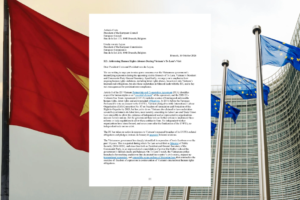
La CIJ se une a 10 organizaciones internacionales y nacionales de Venezuela, para solicitar que el Consejo de Derechos Humanos de Naciones Unidas establezca una Comisión de Investigación (COI) para Venezuela.
La CIJ considera que es necesario una COI independiente, ya que las autoridades venezolanas no han podido o no han estado dispuestas a garantizar la rendición de cuentas de los responsables de las violaciones a los derechos humanos, y el sistema judicial carece de independencia e imparcialidad.
La CIJ ha publicado varios informes acerca de la falta de independencia judicial en Venezuela, las dificultades para que los responsables de las graves violaciones a los derechos humanos sean investigados y juzgados, el abuso de la justicia penal militar, y otras afectaciones al funcionamiento del estado de derecho.
Además, la Alta Comisionada para los Derechos Humanos en su informe de julio de 2019 mencionó que diversas violaciones a los derechos humanos han ocurrido en Venezuela, evidenciadas por el uso excesivo de la fuerza por parte de las fuerzas de seguridad, los ataques a la libertad de expresión, las detenciones arbitrarias, las ejecuciones extrajudiciales, el desmantelamiento de las instituciones que proveen pesos y contrapesos en el país, y las privaciones que constituyen violaciones a los derechos a la alimentación y a la salud.
Asimismo, el Secretario General de la Organización de Estados Americanos designó un Panel de Expertos Internacionales Independientes para analizar la situación del país; dicho panel manifestó en su comunicado de prensa de 2018 “que existe fundamento suficiente para considerar que se han cometido crímenes de lesa humanidad en Venezuela”.
El Consejo de Derechos Humanos de la ONU ha establecido comisiones de investigación en varios países donde ha sido necesario garantizar la adecuada investigación a las violaciones a los derechos humanos, así como la rendición de cuentas por las violaciones generalizadas o sistemáticas cometidas. Se han establecido COIs para Siria, Corea del Norte, Burundi, Yemen, Libia y Eritrea.
La CIJ, junto con las otras organizaciones que suscriben esta iniciativa, ha dicho que la Comisión de Investigación que podría establecerse para Venezuela debería “investigar denuncias de violaciones del derecho internacional de los derechos humanos en Venezuela, incluidas, entre otras, las violaciones asociadas con torturas y trato inhumano, detención arbitraria, discriminación, violaciones a la libertad de expresión, violaciones del derecho a la vida y desapariciones forzadas, así como violaciones de los derechos a la salud y la alimentación. Debería encargarse de establecer los hechos y las circunstancias en las que se cometieron los abusos desde, al menos, 2014, determinando los patrones de abusos e identificando a los responsables y, cuando sea posible, la cadena de mando. El propósito de esta tarea es contribuir a la plena rendición de cuentas, incluyendo por aquellos abusos que constituyen delitos conforme al derecho internacional. (…)”.
***
Para consultar el documento completo de Preguntas y Respuestas elaborado de manera conjunta entre las 11 organizaciones que apoyan esta iniciativa, consulte aquí: Venezuela-COI final-Advocacy-2019-SPA
Aug 21, 2019 | News
The ICJ in collaboration with the Zimbabwe Anti-Corruption Commission (ZACC) and the National Prosecuting Authority (NPA), today launched a broad base anti-corruption awareness campaign in Harare.
The campaign was introduced by the President of Zimbabwe H.E. Cde Emmerson D. Mnangagwa and is expect to effectively run for 15 months.
It will harness different forms of media to spread awareness on the negative impact corruption has on the rule of law, human rights and development.
The anti-corruption awareness campaign is part of a broader longstanding rule of law initiative by the ICJ in collaboration with with stakeholders in the justice sector, to strengthen the rule of law for the protection and promotion of human rights for all, including women and persons from marginalized or disadvantaged groups.
Corruption undermines the rule of law by impeding access to justice through diversions of public resources for private gain.
As such the ICJ, through the support of the EU, is working towards increased transparency and integrity in the justice delivery system in order to increase access to justice for all.
“Zimbabwe has no option but to fight corruption if it is to be a just, peaceful and successful developmental state,” said Arnold Tsunga, ICJ’s Africa Regional Director.
“The reconstituted ZACC has demonstrated a strong desire to pursue its mandate with renewed commitment from other stakeholders in the justice delivery chain,” he added.
The campaign is not undertaken in isolation. It builds on other initiatives to combat corruption under this programme, which include the establishment of an anti-corruption court, training of personnel for the court and various research initiatives.
The campaign seeks to support the national efforts against corruption, and sensitize the public on the negative effects of corruption in society.
It will promote awareness on how to report corrupt practices, how to avoid corrupt practices and the impact of corruption on the public interest.
The campaign acknowledges that different sections of the population engage with media in varying manners. As such it utilises a wide array of approaches designed to build the optimism of the people of Zimbabwe to take an active role in efforts to combat corruption at every level of society.
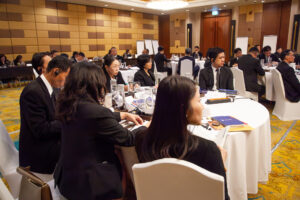
The campaign launch was attended by justice sector actors, civil society representatives, business representatives and the diplomatic.
Contact:
Arnold Tsunga, Director of the Africa Regional Programme, International Commission of Jurists C: +263 77 728 3248, E: arnold.tsunga(a)icj.org
Aug 14, 2019 | News
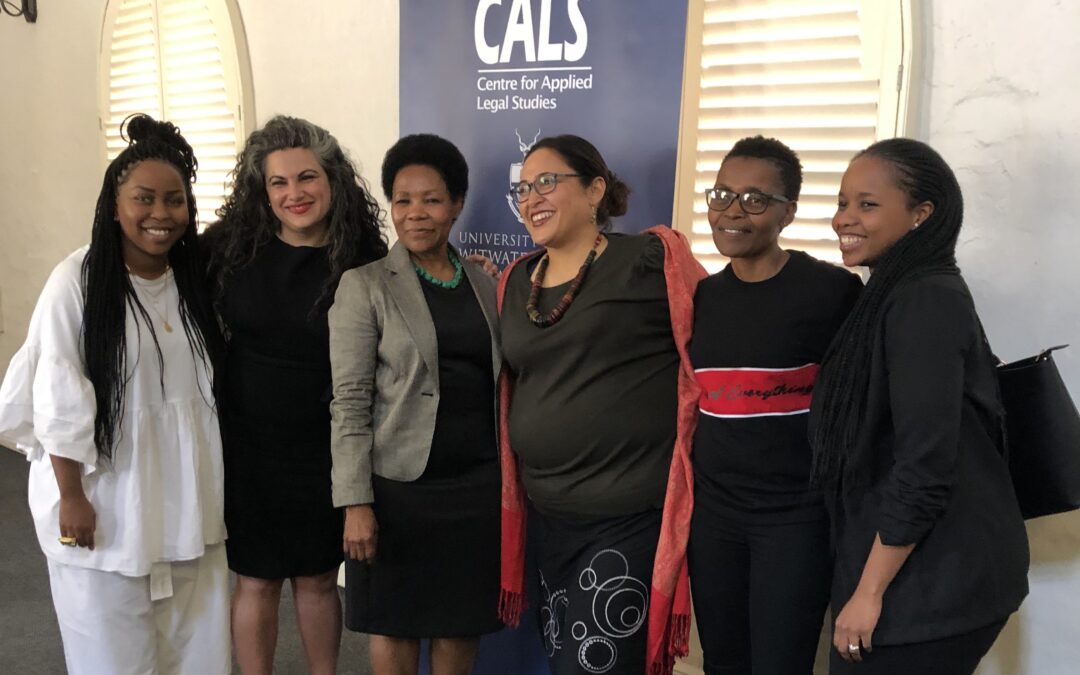
Today, ICJ Commissioner and former Constitutional Court Justice Justice Yvonne Mokgoro delivered the Keynote Address on Women’s Socio-Economic Rights at an event organized by ICJ and the Centre for Applied Legal Studies (CALS) at the University of Witwatersrand in Johannesburg.
The event, which marked Women’s Month in South Africa, was aimed at promoting the contributions of women human rights defenders and public interest lawyers in advancing women’s socio-economic rights in South Africa.
Justice Mokgoro, the first black women Justice of the Constitutional Court of South Africa, called on human rights defenders, lawyers and judges to recommit to fighting the feminization of poverty in South Africa.
“The indignities suffered by women exposed to poverty in our country are graphic, trauma-inducing and all encompassing. The dire need of women in our patriarchal society must be addressed,” she said.
With reference to the South African Constitution, the International Convention on Economic, Social and Cultural Rights and the Convention on the Elimination of All Forms of Discrimination Against Women, Justice Mokgoro implored judges and lawyers in particular to “engender” the full range socio-economic rights by defining their content in a manner which takes into account the impact of human rights violations on women and girls.
The event featured a panel discussion , which included remarks by Tumelo Matlwa and Amelia Rawhani-Mosalakae, lawyers at CALS, who identified who a range of legal provisions and banking practices relating to matrimonial property have a disproportionate impact on women’s rights to property.
The presentation concluded that “poverty is a form of economic violence that has a disproportionate effect on women”.
Fatima Shabodien, Strategy Director at Raith Foundation, focused her presentation on sexual harassment faced predominantly by women in the public interest law sector in South Africa.
Quoting from Indian author Arundathi Roy, Shabodien observed that “there is no such thing as the voiceless only the deliberately silenced”.
Women, she added, “have not been silent in this sector they have been deliberately silenced”. She urged human rights defenders and public interest lawyers to take allegations of sexual harassment seriously.
Nonhle Mbuthuma, a community activist from the Amadiba Crisisis Committee described the difficulties of being a women human rights defender: “I am a human rights activist and it is a difficult task. You are called a lot of names for challenging the government.
All the names don’t scare me – my mother gave me only one name”, she said. Referring to a judgment of the High Court affirming her community’s right to free, prior and informed consent before the commencement of a mining development, she concluded: “I am very proud of the Constitution and judges who said we have the right to give consent to [whether] mining [can take place]. Not the government or big companies. The people.”
She emphasized that women were, and continue to be, at the forefront of the struggle for access to land in South Africa.
Aug 8, 2019 | News
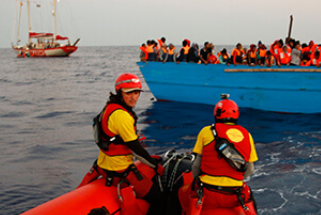
The ICJ called today on Italy and Malta to cooperate to swiftly provide a place of safety for the disembarkment of the 121 migrants, likely including asylum seekers, on board the Open Arms vessel.
Open Arms rescued 123 people that left Libya and were on a situation of distress in international waters, and has been navigating seven days on the Central Mediterranean Sea in search of a place of safety for disembarkment.
Currently Italy and Malta (the nearest States) and Spain (the flag State) have not granted access to their territorial waters.
“When a boat is conducting an operation of rescue it is the duty under international law for neighbouring States to provide a place of safety,” said Massimo Frigo, ICJ Senior Legal Adviser.
“The situation on the boat, with also 30 children and two babies, is rapidly deteriorating and it is of the utmost urgency to allow for their disembarkment,” he added.
“The refusals and lack of cooperation by Italy, Malta and Spain is in contravention of their obligations under the law of the sea,” said Frigo.
“These States should open their harbours and the EU should work hard to ensure that resettlement is ensured so as to relieve pressure from them.”
Relevant provisions of international law include: UN Convention on the Law of the Sea (Article 98); International Convention for the Safety of Life at Sea (SOLAS), Annex, Chapter V; International Convention on Maritime Search and Rescue.
Contact:
Massimo Frigo, ICJ Senior Legal Adviser, t:+41 22 979 3805 ; e: massimo.frigo(a)icj.org
Aug 6, 2019 | News
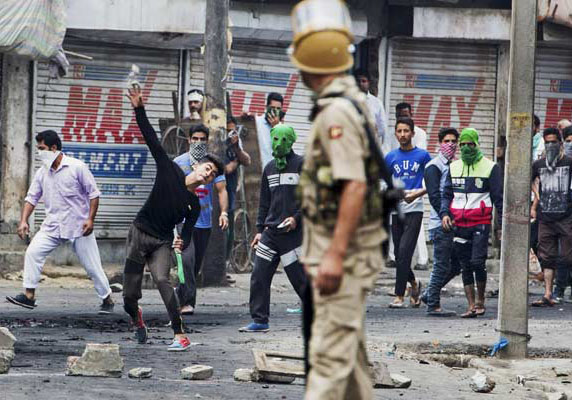
The Indian Government’s revocation of the autonomy and special status of Jammu and Kashmir violates the rights of representation and participation guaranteed to the people of Jammu and Kashmir under the Indian Constitution and in international law and is a blow to the rule of law and human rights in the state and in India, the International Commission of Jurists (ICJ) said.
The Indian Government today pushed through a legislative package effectively eliminating the special status accorded to Jammu and Kashmir under Article 370 of the Indian Constitution, which granted autonomy to Jammu and Kashmir and limited the Indian Government’s legislative powers in the state. The move was preceded by a communication blackout, arbitrary detention of political leaders, banned movement and meetings of people, and increased military presence, purportedly to quell protests.
“The Indian Government has pushed through these changes in contravention of domestic and international standards with respect to the rights of people in Jammu and Kashmir to participate and be adequately represented, accompanied by draconian new restrictions on freedoms of expression, assembly, and travel, and with an influx of thousands of unaccountable security personnel,” said Sam Zarifi, ICJ’s Secretary General.
“The legality of the Indian Government’s measures to eviscerate Article 370 will certainly be tested before the Indian judiciary, which should look closely at the serious violations of proper legislative and Constitutional processes,” Zarifi said. “All eyes are now on the Indian Supreme Court to fulfill its functions in defense of the rights of people of Jammu and Kashmir and the Indian Constitution,” Zarifi said.
The procedure adopted to revoke the special status and autonomy of Jammu and Kashmir appears to be incompatible with judgments and observations of high courts and the Indian Supreme Court, who have clarified that the President of India would need the agreement of the government of Jammu and Kashmir to change its status. The amendments effectively render Article 370 inoperative in its entirety, without meeting the Constitutional requirements in spirit.
The revocation of special status of Jammu and Kashmir without agreement from the state government is contrary to the spirit of Article 370, which envisioned that the will of the people would be taken into account in decisions relating to state’s special status and autonomy.
“The Indian Government rushed through the amendments at a time when Jammu and Kashmir was under the direct rule of the Central Government, and the state legislature was dissolved. As the government of Jammu and Kashmir is not empowered to discharge its functions, it has not been consulted, let alone agreed to the revocation,” Zarifi said.
“The lack of consultation with the people of Kashmir is all the more troubling because the changes pushed by the Indian Government will materially affect Kashmir’s status as India’s only Muslim-majority state, including special rights for citizens of the state to own and hold land and seek education and employment,” Zarifi said.
The Office of the United Nations High Commissioner for Human Rights (OHCHR) in successive reports in 2018 and 2019 has noted that the region of Jammu and Kashmir, under dispute between India and Pakistan since 1947, has been the theatre of grave human rights violations, including unlawful killings, enforced disappearances and torture, committed with impunity by Indian security forces.
The UN High Commissioner for Human Rights in both reports recommended to the Indian Government to “fully respect the right of self-determination of the people of Kashmir as protected under international law”.
The ICJ condemns the legislative steps taken with respect to Jammu and Kashmir, and calls on the Indian Government to implement in full the UN High Commissioner’s recommendations, including respecting the right to self-determination of people of Jammu and Kashmir, and to respect, protect and fulfill the human rights of people in Jammu and Kashmir.
Contact
Sam Zarifi, ICJ Secretary General,e: sam.zarifi(a)icj.org, t: 41 (0)22 979 38 00
India-Jammu Kashmir and Autonomy-News-press release-2019-ENG (full story with additional information, in PDF)