Feb 12, 2019 | Comunicados de prensa, Noticias
Según comienza el juicio a los doce líderes separatistas catalanes ante el Tribunal Supremo de España hoy en Madrid, la CIJ advierte que el juicio en base a la amplia definición de delitos como la rebelión y, posiblemente, la sedición restringen excesivamente los derechos a la libertad expresión, asamblea y asociación.
Los doce líderes políticos – incluyendo altos cargos del Gobierno catalán – han sido acusados en conexión a su participación en un referéndum sobre la independencia de Cataluña que tuvo lugar el 1 de octubre de 2017. Este referéndum se llevó a cabo a pesar de haber sido declarado ilegal por el Tribunal Constitucional.
El proceso de votación durante el referéndum fue parcialmente reprimido por la policía, según informes fidedignos de uso innecesario y desproporcionado de la fuerza suponiendo una violación de las obligaciones de derecho internacional de España.
A la CIJ le preocupa que la Fiscalía, y el Tribunal Supremo, admitiendo la imputación en el caso, han atribuido un significado excesivamente amplio al delito de rebelión bajo el artículo 472 del Código Penal. Según este artículo, el delito requiere de una insurrección violenta para derogar, suspender o modificar el orden constitucional.
Sin embargo, no se acusa a los organizadores del referéndum de utilizar o fomentar la violencia. Se les está juzgando en base a que deberían haber previsto el riesgo de intervención y uso de la fuerza por parte de la policía.
Por lo tanto, se presume que los acusados son penalmente responsables de la violencia que resultó de su decisión de seguir adelante con el referéndum, a pesar de haber sido declarado ilegal.
“La muy amplia definición del delito de rebelión que se está aplicando en este caso amenaza con interferir de forma innecesaria y desproporcionada con los derechos a la libertad expresión, asamblea y asociación,” dijo Róisín Pillay, Directora de la CIJ para Europa y Asia Central.
“La interferencia con la protesta y expresión política pacífica debe estar justificada como estrictamente necesaria y proporcionada según el derecho internacional de los derechos humanos. Cuando manifestaciones pacíficas o acciones políticas, aunque hayan sido declaradas como ilegales por las autoridades, provocan una respuesta excesiva de la policía, lo únicos responsables por el uso de la violencia son la policía y otras autoridades estatales”.
“Es crucial que el Tribunal Supremo, en su consideración de estos cargos, tome plenamente en cuenta las obligaciones de España bajo el derecho internacional de los derechos humanos,” añadió.
A pesar de que el Tribunal Supremo ha sostenido que el uso de la fuerza de las autoridades policiales durante la represión del referéndum del 1 de octubre de 2017 fue “legítima y, por tanto proporcionada”, observadores internacionales han concluido que dicho uso de la fuerza fue excesiva y desproporcionada.
De acuerdo con el derecho internacional de los derechos humanos, el mero hecho de que el uso de la fuerza sea considerado legal bajo la legislación nacional, no significa que por sí mismo pueda ser considerado como necesario o proporcionado.
El Tribunal Supremo ha aceptado también que, si los supuestos presentados por la Fiscalía son probados, podría incluirse el delito de sedición, el cual es cometido por aquellos que se alcen pública y tumultuariamente por la fuerza o fuera de las vías legales, para impedir la aplicación de las leyes y resoluciones gubernativas y judiciales.
“Delitos como sedición o rebelión definidos de una manera ambigua y amplia pueden suponer una violación del principio de legalidad, así como una interferencia arbitraria y desproporcionada con los derechos humanos,” dijo Róisín Pillay.
“En un caso altamente sensible y politizado, tal y como es el referéndum catalán, podría sentar un peligroso precedente de persecución a movimientos pacíficos de independencia y disidencia política, no sólo en España sino a nivel internacional,” añadió.
Varios de los acusados han sido retenidos en prisión preventiva durante largos periodos de tiempo, agravando aún más la interferencia con los derechos a la libertad de expresión, asociación y asamblea, y poniendo en duda la proporcionalidad de la respuesta.
Antecedentes
Las doce personas que están siendo juzgadas en conexión con el referéndum de Octubre de 2017: Oriol Junqueras, ex-vicepresidente de la Generalitat catalana; Carme Forcadell, ex-presidenta del Parlament catalán; ocho ex-consejeros del Gobierno catalán – Jordi Turull, Raül Romeva, Joaquim Forn, Santi Vila, Meritxel Borràs, Dolors Bassa, Josep Rull, Carles Mundó -; Jordi Sànchez, ex-líder de la Asamblea Nacional Catalana (ANC), y Jordi Cuixart, ex-líder de la organización independentista Òmnium Cultural.
El juicio, que comienza el 12 de febrero en el Tribunal Supremo de Madrid, se espera que dure varios meses.
España tiene obligación de proteger la libertad de expresión, incluyendo la expresión política, bajo el artículo 10 de la Convención Europea de Derechos Humanos (ECHR, por sus siglas en inglés) y el artículo 19 del Pacto Internacional de Derechos Civiles y Políticos (ICCPR, por sus siglas en inglés), y la libertad de asamblea y asociación pacíficas bajo el artículo 11 de ECHR y los artículos 21 y 22 de ICCPR. El Comentario General sobre libertad de expresión del Comité de Derechos Humanos afirma que Los Estados partes deben procurar con el mayor cuidado que las leyes sobre traición y las disposiciones similares que se refieren a la seguridad nacional, tanto si se califican de leyes sobre secretos de Estado o sobre sedición, o de otra manera, estén redactadas y se apliquen de conformidad con las condiciones estrictas del párrafo 3 del artículo 19 del ICCPR, lo cual requiere que las restricciones en la libertad de expresión estén legisladas y que sean necesarias en base a propósito legítimo, como la seguridad nacional o el orden público. El derecho a participar en la vida pública está protegido bajo el artículo 25 de ICCPR.
Feb 12, 2019 | Artículos, Noticias
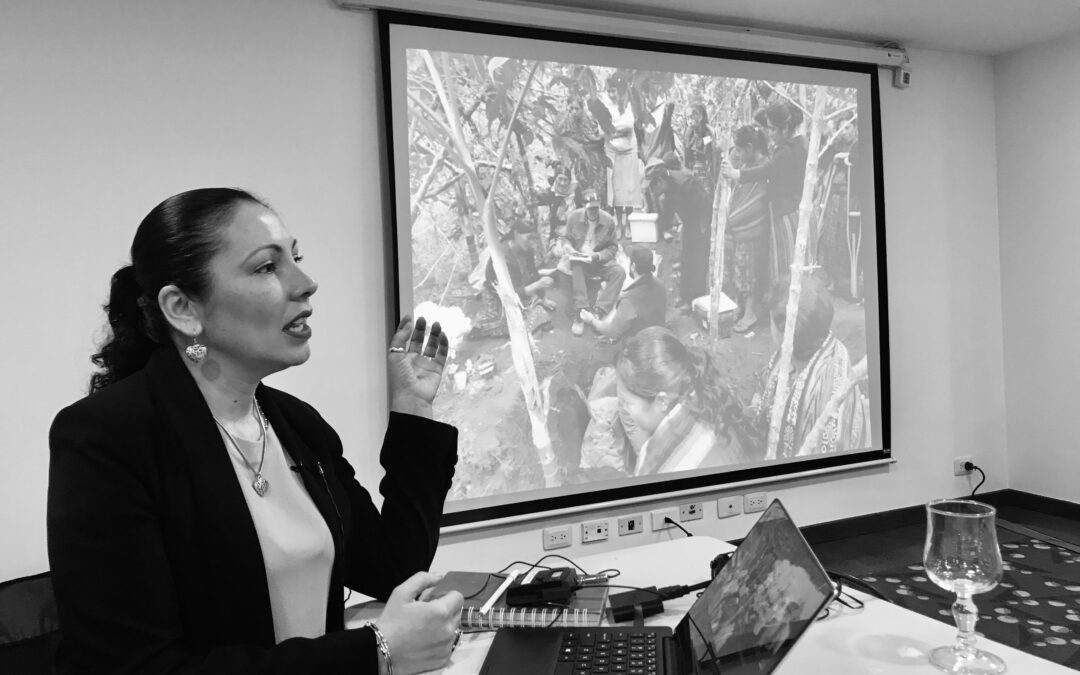
Hoy en Bogotá, Colombia, la CIJ, junto con sus socios en la región, lanzaron el proyecto “Promoviendo justicia para ejecuciones extrajudiciales y desapariciones forzadas en Colombia, Guatemala y Perú”, en el marco de la Iniciativa de Responsabilidad Global de la CIJ.
El objetivo del proyecto es promover la rendición de cuentas y el acceso a recursos efectivos y medidas de reparación para las víctimas y sus familias, en casos de ejecuciones extrajudiciales y desapariciones forzadas en Colombia, Guatemala y Perú.
Este proyecto se implementa en conjunto con la Asociación Red de Defensores y Defensoras de Derechos Humanos de Colombia (dhColombia), el Equipo Argentino de Antropología Forense (EAAF), la Asociación de Familiares de Detenidos-Desaparecidos de Guatemala (FAMDEGUA), el Equipo Peruano de Antropología Forense (EPAF), la Fundación de Antropología Forense de Guatemala (FAFG), y el Instituto de Defensa Legal de Perú (IDL).
Además, Christof Heyns, director del Instituto de Derecho Internacional y Comparado en África de la Universidad de Pretoria, y ex Relator Especial sobre ejecuciones extrajudiciales, sumarias o arbitrarias, se une al proyecto como asesor especial.
En el marco de este proyecto, se realizarán estudios generales sobre los obstáculos existentes para la investigación y judicialización de estas graves violaciones a los derechos humanos en Colombia, Guatemala y Perú, y se documentarán casos emblemáticos de las violaciones ocurridas en dichos países. También, se producirá una guía para uso de la sociedad civil, las víctimas y sus representantes, sobre la investigación y el enjuiciamiento de muertes potencialmente ilegales; y se elaborará una guía para expertos forenses sobre la investigación de estas graves violaciones. Adicionalmente, se realizarán litigios estratégicos y observaciones de audiencias, así como actividades de capacitación que involucren a jueces, fiscales, investigadores, abogados, grupos de víctimas y expertos forenses.
El proyecto cuenta con el apoyo del Instrumento Europeo para la Democracia y los Derechos Humanos (IEDDH).
Contactos:
Kingsley Abbott, asesor legal senior y coordinador de la iniciativa global de rendición de cuentas de la CIJ. Correo electrónico: kingsley.abbott(a)icj.org
Rocío Quintero M, asesora legal, América Latina. Correo electrónico: rocio.quintero(a)icj.org

Feb 12, 2019 | News
As the trial of twelve Catalan separatist leaders begins before the Spanish Supreme Court today in Madrid, the ICJ warns that their trial on broadly defined offences of rebellion and, possibly, sedition unduly restricts rights of freedom of expression, assembly and association.
“The very broad definition of the offence of rebellion being applied in this case risks unnecessary and disproportionate interference with rights of freedom of expression, association and assembly,” said Róisín Pillay, ICJ Europe and Central Asia regional Director.
The twelve political leaders – including high-ranking Catalan government officials – have been charged in connection with their part in the administration on 1 October 2017 of a referendum on Catalonian independence.
The referendum was conduced despite having been declared illegal by the Constitutional Court.
The voting process during the referendum was partially suppressed by the police, with credible reports of the use of unnecessary and disproportionate force in breach of Spain’s international law obligations.
“Interference with peaceful political expression and protest must be justified as strictly necessary and proportionate under international human rights law. Where peaceful protests or political actions, even if declared unlawul by the authorities, provoke an excessive response by the police, it is solely the police and other state authorities who should be held responsible for the violence,” Pillay said.
“It is crucial that the Supreme Court, in its consideration of these charges, takes full account of Spain’s obligations under international human rights law,” she added.
The ICJ is concerned that prosecutors, and the Supreme Court in admitting the indictment in the case, have ascribed an unduly broad meaning to the offence of “rebellion” under article 472 of the Criminal Code.
According to that article, the offence requires violent insurrection to subvert the constitutional order.
But the referendum organizers are not accused of using or advocating violence.
Rather, they are being tried on the basis that they should have foreseen the risk of intervention and the use of force by the police.
It is therefore alleged that the defendants were criminally responsible for the violence that ensued from their decision to carry on with the referendum, despite it being declared illegal.
Although the Supreme Court has held that the use of force by Spanish law enforcement authorities during the repression of the referendum of 1 October 2017 was “legitimate and, as such proportionate”, international observers have concluded that such use of force was excessive and disproportionate.
In accordance with international human rights law, the mere fact that the use of force is considered to be legal under national law, does not of itself mean that it can be considered to be necessary and proportionate.
The Supreme Court has further already accepted that, if the facts alleged by prosecutors are proven, they could amount to the offence of sedition, which is committed by those that that rise up publicly and in a tumultous way, by force or by unlawful means, to impede the implementation of laws or of authorities’ orders.
“Vague, broadly defined offences of sedition or rebellion risk violation of the principle of legality, as well as arbitrary and disproportionate interference with human rights,” said Róisín Pillay.
“In a highly sensitive and politicised case such as that of the Catalonian referendum, they would set a dangerous precedent for the targeting of peaceful independence movements and political dissent, not only in Spain but internationally,” she added.
Several of the accused have already been held in pre-trial detention for lengthy periods, further exacerbating the severity of the interference with rights to freedom of expression, association and assembly, and casting doubt on the proportionality of the response.
Contact
Róisín Pillay, Director, ICJ Europe Programme, t: +32 476 974263 ; e: roisin.pillay(a)icj.org
Background
The 12 people on trial in connection with the October 2017 referendum include Oriol Junqueras (photo), former Catalan vice-president; Carme Forcadell, former Catalan parliament speaker; eight former ministers in the Catalan government – Jordi Turull, Raül Romeva, Joaquim Forn, Santi Vila, Meritxel Borràs, Dolors Bassa, Josep Rull, Carles Mundó -; Jordi Sànchez the former leader of the Catalan National Assembly (ANC); and Jordi Cuixart, former head of the independence organisation Òmnium Cultural.
The trial, which begins on 12 February in the Supreme Court in Madrid, is expected to last for several months.
Spain has obligations to protect freedom of expression, including political expression, under Article 10 of the European Convention on Human Rights (ECHR) and Article 19 of the International Covenant on Civil and Political Rights (ICCPR); and freedom of peaceful assembly and association under Article 11 ECHR and Article 21 and 22 ICCPR.
The Human Rights Committee in its General Comment on freedom of expression has affirmed that: “extreme care must be taken by States parties to ensure relating to national security, whether described as official secrets or sedition laws or otherwise, are crafted and applied in a manner that conforms to the strict requirements of paragraph 3 of article 19 ICCPR, which requires that restrictions on freedom of expression be provided for by law and must be necessary for a legitimate purpose, such as national security or public order .) Rights to participate in public life are protected under Article 25 ICCPR.
Feb 12, 2019 | News
The ICJ has called on Sri Lanka’s President, Maithripala Sirisena, to retract his recent pronouncement that executions would resume in the country notwithstanding a moratorium on capital punishment that has lasted 43 years. The last execution was carried out in Sri Lanka in 1976.
“Resuming executions would be an egregious violation of Sri Lanka’s obligations under international human rights law, a serious threat to human rights in the country, and it would be inconsistent with the global trend towards the abolition of the death penalty,” said Frederick Rawski, ICJ’s Asia-Pacific Director.
Speaking in Parliament last week, President Sirisena vowed to resume executions of those convicted of “drug offences” as early as within the next two months.
The ICJ considers any resumption of executions in Sri Lanka as constituting a violation of international law and an appalling disregard for the international human rights system as a whole.
“At least 150 countries have now either abolished the death penalty or instituted an official or unofficial moratorium. There is a growing understanding around the world that the death penalty is an unacceptable assault on rights and dignity,” Fredrick Rawski added.
The ICJ opposes the death penalty in all circumstances – as it constitutes a violation of the right to life and its imposition constitutes per se cruel, inhuman, or degrading punishment.
The Human Rights Committee, the Treaty Body supervising the implementation of the International Covenant on Civil and Political Rights (ICCPR), by which Sri Lanka is bound, has recently made clear in its General Comment 36 on Right to life that, “it is contrary to the object and purpose of Article 6 [of the ICCPR, which enshrines the right to life] for States parties to take steps to increase de facto the rate and extent in which they resort to the death penalty”, and that, “States parties that are not yet totally abolitionist should be on an irrevocable path towards complete eradication of the death penalty, de facto and de jure, in the foreseeable future. The death penalty cannot be reconciled with full respect for the right to life, and abolition of the death penalty is both desirable and necessary for the enhancement of human dignity and progressive development of human rights.”
Moreover, the UN Human Rights Committee has made it clear that the imposition of the death penalty for “drug offenses” is incompatible with the Covenant.
The UN General Assembly has adopted repeated resolutions, most recently in December 2018, by overwhelming majority in calling for all retentionist States to observe a an immediate moratorium with a view to abolition.
It must be noted that Sri Lanka voted in favor of a moratorium on the use of the death penalty in the 2018 UN GA Resolution. This commitment should not be reversed, but upheld in practice instead, the ICJ says.
The ICJ calls on the Government of Sri Lanka to reject the resumption of executions and to do away with the death penalty once and for all. Instead of planning on resuming executions, the Sri Lankan authorities should focus on effective, evidence-based approaches to crime prevention in manners that conform to international human rights law and standards, such as formulating policies and legislation that address the underlying social and economic causes of criminality, which are also vital to ensuring stability and the rule of law.
The ICJ also urges Sri Lanka to immediately ratify the 2nd Optional Protocol to the International Covenant on Civil and Political Rights, which obligates State Parties to take all necessary measures to abolish the death penalty.
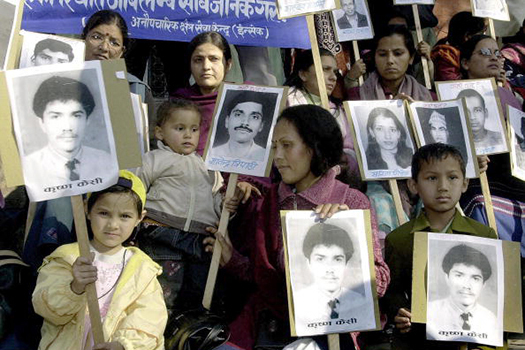
Feb 11, 2019 | News
The ICJ, Amnesty International and TRIAL International today called for the Government of Nepal to commit to a transparent and consultative transitional justice process that complies with international law and the judgments of the Supreme Court of Nepal.
On 6 February, the Government of Nepal extended the mandates of the Truth and Reconciliation Commission (TRC) and the Commission on the Investigation of Enforced Disappearance of Persons (CIEDP) for an additional year and committed to the selection of new commissioners by April 2019.
Following the announcement, the ICJ, Amnesty International and TRIAL International voiced concerns about past approach to transitional justice and urged the Government to ensure that the next two months are used to get the flawed process on track.
The organizations warned that this should not become another missed opportunity to ensure that victims are provided the justice, truth and reparation that they so desperately seek.
“A further one-year extension will be meaningless if measures are not taken to secure the independence and impartiality of the commissions,” said Frederick Rawski, ICJ Asia Pacific Director.
“This can only be achieved through a transparent selection process driven by a genuine will to combat impunity – not just for conflict victims, but for future generations,” he added.
The three organizations reiterated their view that the process to date has failed to deliver justice, truth or reparation for victims of crimes under international law and gross human rights violations or establish laws and institutional safeguards to ensure that such crimes are never repeated.
The organizations underscored the need for independent, competent and impartial commissions, compliance with international law, and the meaningful participation of conflict victims, civil society and National Human Rights Commission in the design and implementation of the process.
“This is a great opportunity for Nepal to learn from its past, as well as experiences from other post-conflict societies, that the credibility of transitional justice process ultimately lies on the integrity, competence, independence and expertise of the commissioners. The independence of the Commission, together with a legal framework in accordance with international law, will make or break the success of the commitment to guarantee justice, truth and reparation,” said Biraj Patnaik, South Asia Director of Amnesty International. “The process for appointing new commissioners must be transparent and open to public scrutiny. Victims and civil society must have a robust opportunity to propose and vet candidates.”
The organizations also noted with disappointment that substantive legal concerns raised repeatedly by victims, civil society and the international human rights community have gone unanswered.
The government has not given a clear indication as to whether or how these concerns will be addressed.
“In addition to its obligation to ensure that conflict victims have access to an effective remedy and reparation, the authorities have a separate and independent obligation to investigate and if there is sufficient admissible evidence, prosecute those suspected of criminal responsibility in fair trials before ordinary civilian courts – and, if found guilty, punish them with appropriate penalties which take into account the grave nature of the crimes,” said Helena Rodríguez-Bronchú, Head of TRIAL International’s program in Nepal.
“These obligations are clearly established in international law, as well affirmed in ruling after ruling by the Supreme Court. It is about time that the Government stopped proposing measures that are clearly inconsistent with the letter and spirit of those judgements,” she added.
Concerns raised about existing, and proposed, legislation include: disparities between the definitions of specific crimes under international law and human rights obligations and violations under national, and international law; inadequate provisions to ensure that serious crimes under international law are subject to criminal accountability (including punishment proportionate to the seriousness of the crimes); and a reliance on compensation at the expense of other forms of reparation and remedy for conflict survivors and their families
The ICJ, Amnesty International and TRIAL International had previously submitted a legal analysis of draft transitional justice legislation circulated in 2018, including recommendations on how to ensure compliance with international law and good practices.