Jul 20, 2017 | Artículos, Noticias
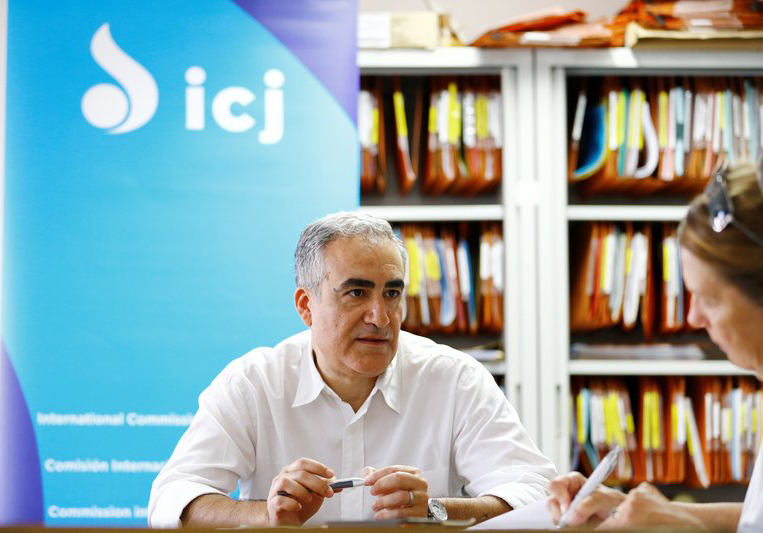
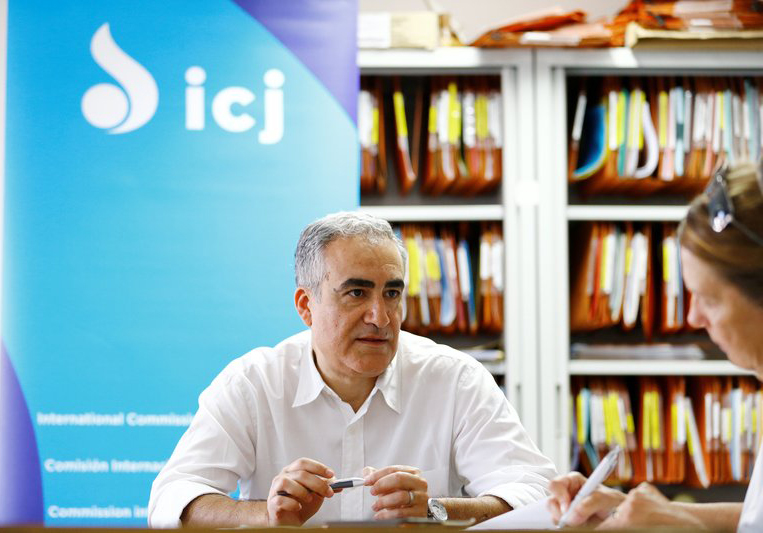
Una entrevista del Secretario General de la CIJ Sam Zarifi con la periodista de Reuters Stephanie Nebehay.
El presidente estadounidense Donald Trump es parte de una nueva estirpe de líderes en el mundo que, como el venezolano Nicolás Maduro, quieren utilizar su mandato democrático para socavar el estado de derecho, dijo el miércoles el jefe de una ONG de derechos humanos y asuntos jurídicos.
Saman Zia-Zarifi, secretario general de la Comisión Internacional de Juristas (ICJ por sus siglas en inglés), que tiene su sede en Ginebra, llama a Trump un “populista autoritario” y lo compara a los líderes de países como Venezuela, Turquía, Filipinas o Hungría.
Zarifi, que nació en Irán y se mudó a Estados Unidos cuando era adolescente, citó como ejemplo la restricción a los viajes impuesta por el gobierno de Trump a los ciudadanos de seis países de mayoría musulmana.
“Lo que es diferente ahora es que se usa un cierto tipo de populismo para contrarrestar la noción del estado de derecho”, dijo Zarifi en una entrevista en la sede de la ICJ, que está conformada por 60 jueces y abogados destacados del mundo que buscan proteger los derechos humanos y el imperio de la ley.
“El nuevo populismo tiene un cierto descaro que es nuevo. No es que están negando que están violando derechos, lo que dicen es que pueden violar derechos porque de alguna manera están empoderados por el pueblo”, señaló.
Zarifi, que encabeza la ICJ desde abril, dijo que esta nueva generación de populistas incluye a Nicolás Maduro de Venezuela, Tayyip Erdogan de Turquía y Rodrigo Duterte de Filipinas; al primer ministro Viktor Orban de Hungría y al líder del partido oficialista de Polonia, Jaroslaw Kaczynski.
“Yo diría que en Estados Unidos Trump es un populista autoritario. Tiene tendencias autoritarias pero aún hay mecanismos de control y equilibrio”, estimó Zarifi. “Así es que no es una figura totalmente autoritaria”.
La Corte Suprema revisó partes del decreto del gobierno de Trump que establecía restricciones al ingreso de viajeros de Irán, Libia, Somalia, Sudán, Siria y Yemen, una normativa que según Trump busca combatir el terrorismo.
La decisión del tribunal, de acuerdo a Zarifi, pondría a prueba “la salud del sistema de equilibrios” de los poderes en Estados Unidos.
En Venezuela, Maduro busca establecer una Asamblea Constituyente con autoridad para reformar a Constitución y cerrar el Congreso dominado por la oposición, con una votación prevista para el 30 de julio.
Foto: Reuters / Pierre Albouy
Jul 20, 2017 | News
An interview of ICJ Secretary General Sam Zarifi with Reuters journalist Stephanie Nebehay.
GENEVA (Reuters) – Donald Trump is one of a new breed of leaders around the world who seek to use their democratic mandate to undermine the rule of law, the head of a legal and human rights watchdog said on Wednesday.
Branding the U.S. president an “authoritarian populist”, Saman Zia-Zarifi, secretary-general of the Geneva-based International Commission of Jurists (ICJ), compared him to the leaders of Turkey, the Philippines, Hungary and Venezuela.
Zarifi cited as an example Trump’s travel ban on nationals from six Muslim-majority countries, a policy that he called “highly problematic” under the U.S. constitution and international law.
“What is different now is that a certain kind of populism is being used to actually counter the notion of the rule of law,” Zarifi said in an interview at the headquarters of the ICJ, which is composed of 60 eminent judges and lawyers from all regions who seek to protect human rights and the rule of law.
“The new populism has a certain shamelessness about it that is new. It’s not that people are denying that they are violating rights, what they are saying is they can violate rights because somehow they are empowered by the people,” he said.
Zarifi, who took over at the ICJ in April, said the new breed of populists included Turkey’s President Tayyip Erdogan, Venezuela’s Nicolas Maduro, the Philippines’ Rodrigo Duterte, Hungary’s Prime Minister Viktor Orban and Jaroslaw Kaczynski, head of Poland’s ruling party.
“I would say that in the U.S., Trump is an authoritarian populist. He has authoritarian tendencies but he still is facing checks and balances,” Zarifi said. “So he is not a full-blown authoritarian figure.”
The U.S. Supreme Court revised parts of Trump’s executive order banning travellers from Iran, Libya, Somalia, Sudan, Syria and Yemen, a policy Trump says is aimed at tackling terrorism.
“Looking at it again from the point of view of U.S. law – I’m an American lawyer – it seems highly problematic,” said the Iranian-born Zarifi, who moved to the United States as a teenager and holds a law degree from Cornell University.
Supreme Court rulings would be, he said, “a test for the health of the system of checks and balances in the U.S.”
Turkish Judiciary “Politically Compromised”
A crackdown by Erdogan’s government has led to the arrest of 50,000 people and the suspension of 150,000 in the year since a failed military coup in Turkey where the judiciary is “now politically compromised”, Zarifi said.
The Turkish government has said the action is justified by the gravity of the threat to the state from the coup attempt.
On Monday, the state prosecutor asked a court to remand the local Amnesty International director and nine other activists in custody pending trial for membership of a terrorist organisation.
Erdogan was quoted by Turkish media this month as saying they were detained on the basis of intelligence and that the judiciary would make its own decision.
But Zarifi said the judiciary should have thrown the case out.
“The handling of the case highlights the very serious concerns – and alarm in fact at this point – that we have raised about the independence of the judiciary and the legal system in Turkey over the last few years.”
Photo Credit: Reuters / Pierre Albouy
Jul 19, 2017 | Noticias
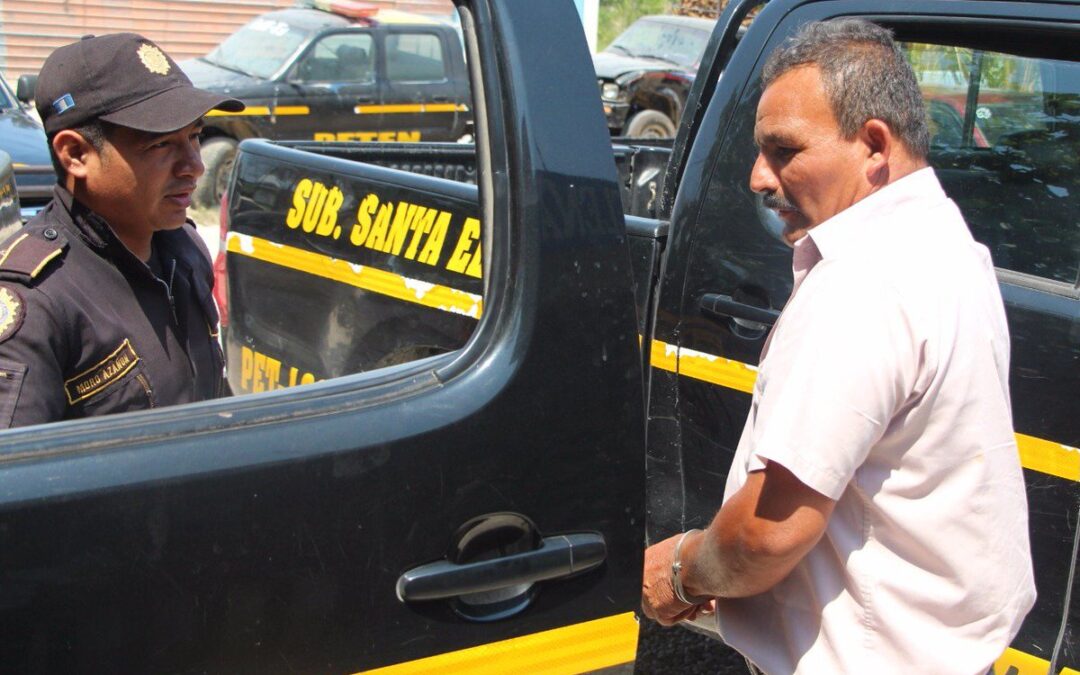
El 28 de marzo, el defensor de derechos humanos de la comunidad La Mestiza, don Jovel Tobar, fue detenido por efectivos de la Policía Nacional Civil.
Desde entonces, permanece detenido; el proceso lo instruye la Jueza Karla Hernández del Juzgado Pluripersonal de Primera Instancia, Narcoactividad y Delitos contra el Ambiente, por el presunto delito de Usurpación de Área Protegida.
El proceso penal contra Jovel Tobar y su detención, se dan como respuesta por sus actividades como defensor de derechos humanos.
En particular, la detención de Jovel Tobar se da cuando la comunidad de La Mestiza, junto a otras comunidades, habían logrado avanzar en el establecimiento de una mesa de diálogo de alto nivel con las autoridades guatemaltecas, para discutir su “Propuesta Alternativa de Desarrollo Integral y Sostenible de las Comunidades afectadas por la declaratoria de Áreas Protegidas de Laguna del Tigre y Sierra Lacandón”.
Desde el inicio, el proceso penal fue declarado en reserva, denegándole a Jovel Tobar su derecho a un juicio público, en violación a los artículos 14 del Pacto Internacional de Derechos Civiles y Políticos y 8 de la Convención Americana sobre Derechos Humanos.
La CIJ considera que el proceso penal contra Jovel Tobar constituye una forma de criminalización de la legítima protesta social y del ejercicio de la defensa de los derechos humanos y que su detención es arbitraria.
La CIJ recuerda que la justicia debe ser administrada por jueces independientes, imparciales, idóneos, profesionales y éticos, ya que de ello depende, en última instancia, que exista una recta administración de justicia, garante de los derechos humanos.
Asimismo, fiscales y jueces deben abstenerse de perseguir penalmente y criminalizar el ejercio legítimo de la defensa de los derechos humanos.
La CIJ ha podido constatar que en los casos de persecución penal de defensores de derechos humanos, fiscales y jueces han criminalizado el ejercicio de la defensa de los derechos humanos.
En tal sentido, la CIJ exige que los órganos encargados de establecer la responsabilidad de jueces y juezas, inicien una investigación en este caso, para determinar si la función de la Jueza del Juzgado Pluripersonal de Primera Instancia, Narcoactividad y Delitos contra el Ambiente, se ha llevado a cabo en forma independiente e imparcial.
Dicha investigación debería cuando menos determinar: a) si existían argumentos objetivos y válidos para declarar el proceso bajo reserva; b) si se ha respetado el principio de celeridad en el proceso; c) las razones por las cuáles no se otorgó una medida sustitutiva a favor de Jovel Tobar; y d) cualquier otro aspecto, que se relacione con la falta de independencia o con la parcialidad de la jueza mencionada.
Ramón Cadena, Director de la CIJ para Centro América finalizó expresando: “Todo parece indicar que al señor Tobar se le persigue por la vía del Derecho Penal, para dar un castigo ejemplar a toda la comunidad La Mestiza e intimidar a sus pobladores. Ojalá que la Comisión Internacional contra la Impunidad (CICIG) inicie una investigación en el departamento de El Petén por este y otros casos de criminalización. Exigimos la inmediata e incondicional liberación del Señor Jovel Tobar y el archivo de la causa penal en su contra.”
Jul 18, 2017 | Advocacy, Analysis briefs, News
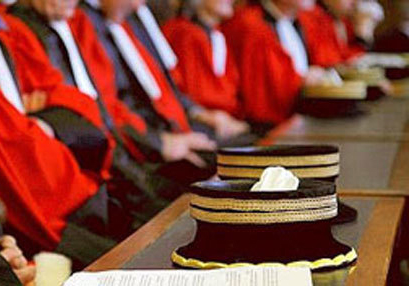
The ICJ today called on the Tunisian authorities to adopt and apply procedures for the Specialized Criminal Chambers (SCC) that are clear and comply with international human rights law and standards.
The statement came following a high-level mission to Tunisia from 12 to 15 July 2017 in which the ICJ engaged with senior judicial officials, including the President of the Cassation Court, members of the High Judicial Council, SCC judges, and other stakeholders.
An ICJ analysis, Procedures of the Specialized Criminal Chambers in light of international standards, was published at the end of the mission.
“While the Specialized Criminal Chambers have the potential to contribute to addressing impunity and deliver justice for victims in Tunisia, ambiguity about the procedures to be followed by these Chambers risks undermining their effectiveness,” warned Said Benarbia, Director of the ICJ Middle East and North Africa Programme.
As detailed in the ICJ analysis, the lack of clarity comes in part from the 2013 transitional justice Law, which is seen by many stakeholders as setting up a special regime, separate from the existing criminal justice system.
There is fear that the SCC may decide not to apply the existing ordinary criminal procedures, while at the same time no detailed procedures specific to the SCC have yet been adopted.
The creation of such a gap would risk serious breaches of international standards of fairness and justice.
For example, the 2013 Law seems to give the Truth and Dignity Commission (Instance Vérité et Dignité, IVD) exclusive power to refer cases to the SCC.
However, no procedures specific to the SCC implement the rights of an accused to examine witnesses interviewed by the IVD or to access all documents and evidence collected by the IVD in order to prepare his or her defence, as required by international standards and the ordinary code of criminal procedure.
The 2013 Law also fails to clarify the role of prosecutors and investigating judges in addressing such cases, including by making their own determination in relation to charges, standard of proof, and whether these cases should be brought before the SCC.
“Clarifying the procedures to be applied by the Specialized Criminal Chambers and ensuring their full compliance with international standards, including those relating to fair trial, are a prerequisite to fully establish the truth about human rights violations, hold those responsible to account, and ensure that the proceedings are fair to the victims and accused,” added Benarbia.
The ICJ set out a list of recommendations with a view to assisting the Tunisian authorities in their efforts in achieving these objectives, including by:
- Amending article 42 of the 2013 Law and related provisions to clearly provide victims of gross human rights violations with direct access to the SCC, including when victims did not submit a file to the IVD;
- Amending provisions of the IVD Guides to ensure that the review process and the possibility to challenge IVD’s decisions will apply to decisions not to transfer a case to the SCC and that such review be based on objective criteria for considering gross human rights violations in line with international standards;
- Establishing specialized prosecution services, investigating judges, and judicial police in line with international standards and with adequate resources to work in coordination with the SCC;
- Clarifying the relationship between the SCC and other ordinary criminal chambers and civil and other courts;
- Amending the legal framework to clearly provide that cases investigated by the IVD are to be transferred to specialized prosecutors who are to carry out their functions as defined in the CCP and in line with international standards;
- Ensuring that the IVD’s investigative function complements the role of the specialized judicial institutions in charge of the investigation and prosecution; and
- Amending the CCP and ensuring that any related provision of any other procedures adopted for the SCC fully respect fair trial guarantees.
Contact
Theo Boutruche, Legal Adviser of the ICJ Middle East and North Africa Programme, tel: +33 642837354, e-mail: theo.boutruche(a)icj.org
Tunisia-Memo on SCC Procedures-Advocacy-Analysis Brief-2017-ENG (full memo in English, PDF)
Tunisia-SCC procedures memo-News-2017-ARA (full story in Arabic, PDF)
Tunisia-Memo on SCC Procedures-Advocacy-Analysis Brief-2017-ARA (full memo in Arabic, PDF)
Jul 13, 2017 | News
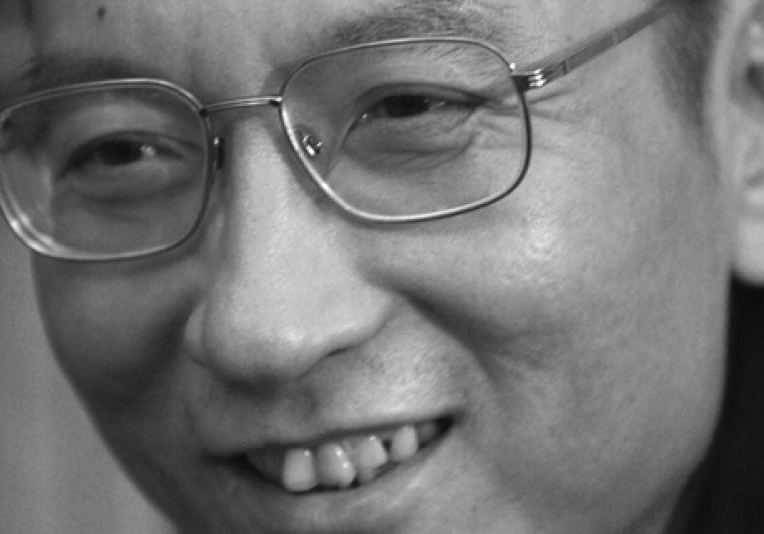
The ICJ today mourns the passing of Chinese human rights defender and Nobel Peace Prize winner, Liu Xiaobo. Liu Xiaobo was awarded the Nobel Peace Prize in 2010 and was described as the “foremost symbol of the struggle for human rights in China.”
He passed away today at the First Hospital of China Medical University, while still in the custody of Chinese authorities.
He has been imprisoned since 2009, after being found guilty for “subverting state power”, for calling for a new constitution in China. His wife, poet Liu Xia, remains under house arrest in Beijing.
In May 2017 authorities announced that he had been diagnosed with late-stage liver cancer.
Chinese authorities refused calls that he be allowed to travel to receive medical treatment abroad.
The ICJ honors Liu Xiaobo for his peaceful and unrelenting pursuit for human rights in China, and calls on the government to end the house arrest, and guarantee the freedom of movement, of Liu Xia.
Sam Zarifi, ICJ’s Secretary General said: “Liu Xiaobo will continue to serve as an inspiration not only for those fighting for human rights in China, but also for all human rights defenders working to promote and protect human rights all over the world.”
The ICJ believes that the death of Liu Xiaobo should serve as a wake up call to the Government of China that they cannot simply and brutally silence dissenting voices.
Liu Xiaobo’s death only serves to amplify his call for human rights and upholding the rule of law in China.
The ICJ has consistently called upon the Chinese government to end the harrassment and unlawful detention of lawyers and human rights defenders.