Dec 3, 2013 | Новости, Статьи
Сегодня МКЮ рассмотрела слушание по делу Зинаиды Мухортовой, адвоката, задержанной до недавнего времени в психиатрическом учреждении, предположительно из за выполнения своих профессиональных обязанностей, но выпущенной 1 ноября.
На слушании 2 декабря Карагандинский областной суд подтвердил законность ее задержания, поддерживая ранее принятое решение Балхашского городского суда 20 августа 2013 года о предоставлении ходатайства прокуратуры о задержании адвоката.
«Вероятность ее повторного задержания для законного осуществления ее профессии поднялась после этого решения», – прокомментировала Альмаза Османова, наблюдатель МКЮ, присутствовавшая на слушании.
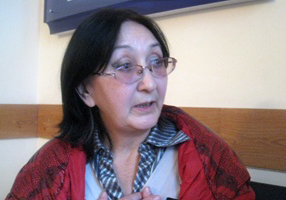
Заместитель начальника медицинского учреждения, в котором была задержана Зинаида Мухортова (фото), доктор Р.Р. Искаxaков присутствовал на слушании и настаивал на законности ее задержания.
МКЮ ранее сообщала об отказе доктора Искахакова освободить адвоката Мухортову до завершения всех судебных процессов.
Миссия МКЮ по наблюдению за судом состояла из двух наблюдателей: Альмазы Османовой, практикующего юриста из Кыргызстана и Каюма Юсуфова, практикующего юриста из Таджикистана.
МКЮ прежде уже делала заявления после задержания адвоката Мухортовой и последующего освобождения из психиатрического учреждения:
Казахстан: МКЮ приветствует освобождение адвоката, содержавшейся в психиатрическом учреждении
Казахстан: Содержание адвоката в психиатрической лечебнице должно быть прекращено
Контакты:
Роушин Пиллей, директор Региональной программы МКЮ по Европе, roisin.pillay(a)icj.org
Тимур Шакиров, правовой советник Региональной программы МКЮ по Европе, temur.shakirov(a)icj.org
Dec 3, 2013 | News, Publications, Reports, Thematic reports
Lawyers continue to encounter impediments to the exercise of their professional functions and freedom of association, as well as pervasive corruption, although they have been able to act with greater independence, says the ICJ in a new report launched today.
Right to Counsel: The Independence of Lawyers in Myanmar – based on interviews with 60 lawyers in practice in the country – says authorities have significantly decreased their obstruction of, and interference in, legal processes since the country began political reforms in 2011.
“The progress made in terms of freedom of expression and respect for the legal process is very visible,” said Sam Zarifi, ICJ Asia-Pacific director. “But despite the improvements, lawyers still face heavy restrictions and attacks on their independence, which can result in uncertainty and fear, particularly when it comes to politically sensitive issues.”
Systemic corruption continues to affect every aspect of a lawyer’s career and, as a result, is never absent from lawyers’ calculations vis-à-vis legal fees, jurisdictions and overall strategy.
“Corruption is so embedded in the legal system that it is taken for granted,” Zarifi said. “When the public also generally assumes that corruption undermines the legal system, this severely weakens the notion of rule of law.”
“Lawyers in Myanmar, as elsewhere, play an indispensable role in the fair and effective administration of justice,” Zarifi added. “This is essential for the protection of human rights in the country and the establishment of an enabling environment for international cooperation towards investment and development.”
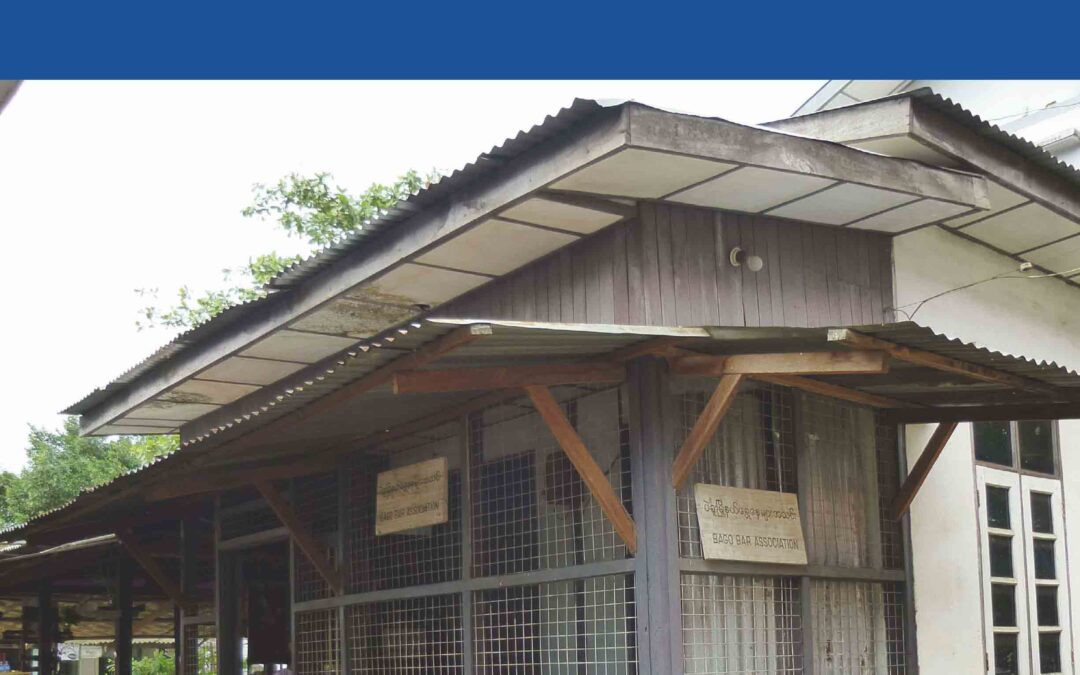
But lawyers in Myanmar lack an independent Bar Council, the report says, noting that the Myanmar Bar Council remains a government-controlled body that fails to adequately protect the interests of lawyers in the country and promote their role in the fair and effective administration of justice.
The ICJ report shows that other multiple long-standing and systemic problems affect the independence of lawyers, including the poor state of legal education and improper interferences on the process of licensing of lawyers.
In its report, which presents a snapshot of the independence of lawyers in private practice in Myanmar in light of international standards and in the context of the country’s rapid and on-going transition, the ICJ makes a series of recommendations:
- The Union Attorney-General and Union Parliament should significantly reform the Bar Council to ensure its independence;
- The Union Attorney-General and Union Parliament should create a specialized, independent mechanism mandated with the prompt and effective criminal investigation of allegations of corruption;
- The Ministry of Education should, in consultation with the legal profession, commit to improving legal education in Myanmar by bolstering standards of admission to law school, law school curricula, and instruction and assessment of students.
Contact:
Sam Zarifi, ICJ Asia-Pacific Regional Director, (Bangkok), t:+66 807819002 e-mail: sam.zarifi(a)icj.org
Craig Knowles, ICJ Media & Communications, (Bangkok), t:+66 819077653, e-mail: knocraig(a)gmail.com
Myanmar-Right to Counsel-publications-report-2013-ENG (download full text in pdf)
MYANMAR-Right to Counsel-Publications-report-2015-BUR (Burmese version in pdf)
Dec 3, 2013 | News
Today, the ICJ observed a hearing in a case concerning Zinaida Mukhortova, a lawyer detained until recently in a psychiatric facility, allegedly for carrying out her professional duties, but released on 1 November.
At the hearing on 2 December, the Karaganda Regional Court confirmed the lawfulness of her detention, upholding the earlier decision of the Balkhash City Court of 20 August 2013, to grant the motion of the Prosecutor’s Office to detain the lawyer.
“The likelihood of her repeated detention for the lawful exercise of her profession has risen following this decision,” Almaza Osmanova, an ICJ observer present at the hearing, commented.
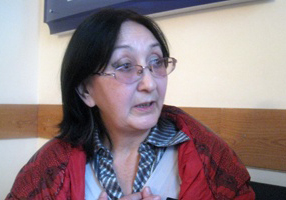
The deputy Head of the Medical Facility in which Zinaida Mukhortova (photo) was detained, Doctor R.R. Iskahakov was present at the hearing and insisted on the lawfulness of her detention.
The ICJ previously reported Doctor Iskahakov’s refusal to release lawyer Mukhortova until all the court proceedings had been completed.
The ICJ trial observation mission consisted of two observers: Almaza Osmanova, a practicing lawyer from Kyrgyzstan and Kayum Yusufov, a practicing lawyer from Tajikistan.
The ICJ has previously made statements following lawyer Mukhortova’s detention and subsequent release from the psychiatric facility:
Kazakhstan: ICJ welcomes release of a lawyer from psychiatric detention
Kazakhstan: psychiatric detention of lawyer must be ended
Contact:
Róisín Pillay, Director, ICJ Europe Programme, roisin.pillay(a)icj.org
Temur Shakirov, LegalAdviser, ICJ Europe Programme, temur.shakirov(a)icj.org
Nov 27, 2013 | News
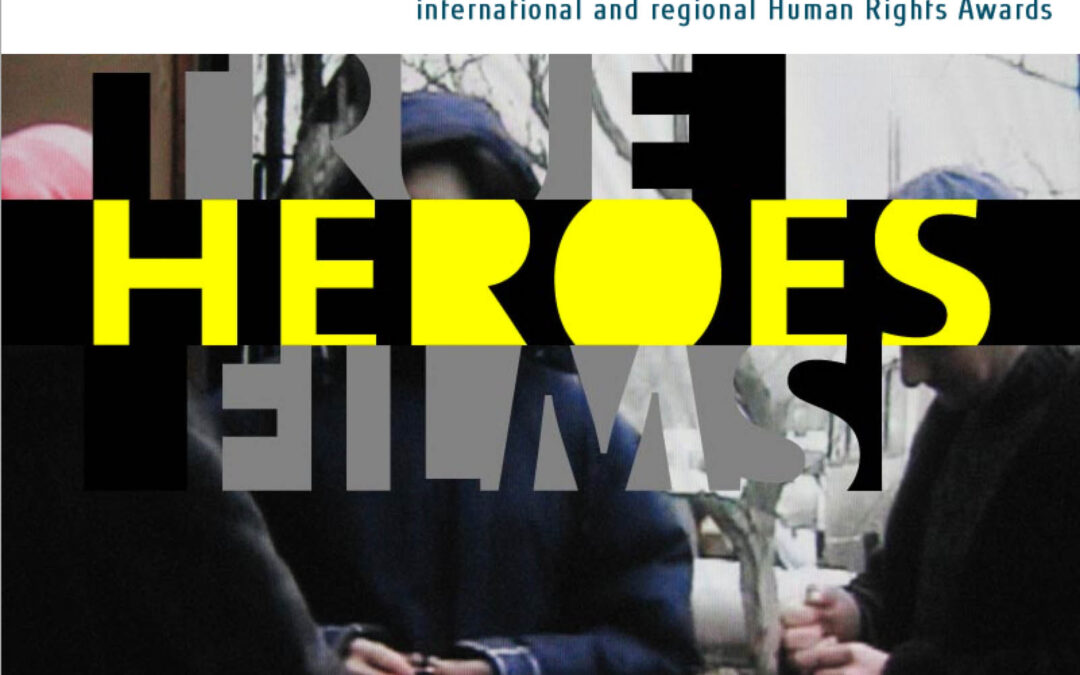
Today, the True Heroes Foundation (THF), a work partner of ICJ, launched the first-ever digest of human rights awards on www.trueheroesfilms.org.
The number of human rights awards has surged with over 50 new awards created in just the last 13 years.
The THF Digest brings together in a searchable manner 117 such awards with key information on each of them and links to their websites.
The Digest provides for the first time an overview of hereto scattered information and gives a unique tool to those who want to make nominations.
Going back over 100 years, it covers for the moment only international and regional awards. National awards are (not yet) included.
For more information on the content of the Digest (what is covered and how) read carefully the section “About the Digest” on www.trueheroesfilms.org
For additional information: jhrp.oxfordjournals.org

Nov 26, 2013 | News
The ICJ is calling on the Malaysian Government to immediately drop the criminal charge against human rights defender Lena Hendry for screening the film ‘No Fire Zone: the Killing Fields of Sri Lanka.’
The case has been fixed for case management and the defence lawyers filed an application to set aside, permanently stay or quash the charges against Lena Hendry.
“Subjecting Lena Hendry to criminal prosecution simply for screening a documentary violates her rights and contravenes Malaysia’s obligations to uphold freedom of expression,” said Sam Zarifi, ICJ’s Asia-Pacific Regional Director.
On 3 July 2013, Pusat Komas, a Malaysian human rights advocacy organization where Lena Hendry works, and Kuala Lumpur and Selangor Chinese Assembly Hall Civil Right Committee (KLSCAH CRC) screened the film “No Fire Zone”, a documentary on the war crimes and human rights abuses allegedly committed at the end of the Sri Lankan civil war in 2009.
Immediately following the screening, 30 officers from the Malaysian Ministry of Home Affairs and the police entered the hall and recorded the identity of all persons who attended the event.
The authorities then arrested Lena Hendry and two colleagues, Anna Har and Arul Prakash, and interrogated them for three hours at Dang Wangi police station.
On 19 September 2013, Lena Hendry was charged under section 6(1)(b) of the Film Censorship Act 2002 for showing a film that had not been approved by the Board of Censors.
If found guilty, she could be fined up to RM30,000 (approximately USD 9,322) and sentenced to up to three years imprisonment.
“The Malaysian government told the UN Human Rights Council during its universal periodic review that it maintains a ‘strong commitment to the rule of law, to upholding respect for human rights, and…widening the democratic space”, said Sam Zarifi. “That commitment is inconsistent with prosecuting human rights defenders for disseminating documentary human rights information.”
Under international law and standards, Malaysia must respect the right to freedom of expression of all persons, including the right to seek and impart information of all kinds.
In the case of human rights defenders, the UN Declaration on Human Rights Defenders imposes a special duty on States not only to respect this right, but also to protect those who exercise this right through their exposure of human rights violations.
The ICJ calls on the Malaysian Government to safeguard freedom of expression and uphold the right of individuals to expose and disseminate information on human rights questions, including the documentation of human rights abuses.